
Frost Quakes (Cryoseisms): When Frozen Ground Explodes Without Warning
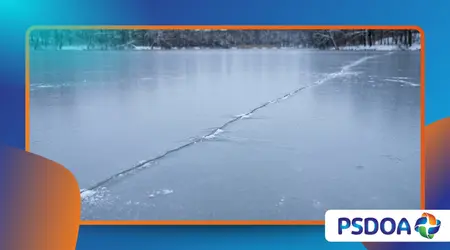
Frost Quakes (Cryoseisms) are nature’s most startling winter alarm clock, shaking neighborhoods from Maine to Ontario as the deep freeze of 2025 intensifies.
Anúncios
These explosive events happen when moisture trapped in the soil freezes so rapidly that the expanding ice shatters the surrounding frozen earth.
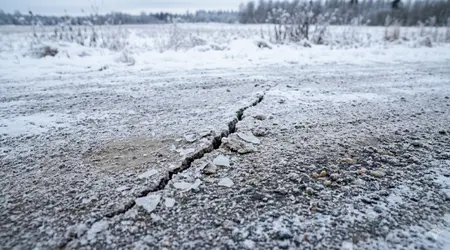
Unlike tectonic shifts, these localized tremors occur entirely near the surface. They terrify residents with booming sounds that mimic crashing trees or heavy explosions, yet they leave no trace except for thin cracks in the mud.
The 2024-2025 winter season has seen a spike in these events across North America.
Dramatic temperature swings, where unseasonably warm rain is followed by a polar vortex, create the perfect recipe for ground-level seismic activity.
Scientists now track these “ice quakes” with greater precision using urban seismic networks.
These tools allow us to distinguish between a threat from deep within the Earth and the simple physics of freezing water.
What causes the ground to explode during a frost quake?
Frost Quakes (Cryoseisms) require a specific sequence of meteorological events. First, the ground must be saturated with liquid water from recent rain or heavy snowmelt.
Second, the temperature must plummet from above freezing to well below zero in just a few hours. This thermal shock prevents the water from seeping away, forcing it to freeze in place.
Why does ice expansion create a boom?
Water expands by nine percent when it turns into ice. In a confined space like saturated soil, this expansion generates immense pressure against the rigid, frozen topsoil.
When the stress exceeds the ground’s strength, the earth cracks violently. This sudden release of energy sends out a high-frequency shockwave that sounds like a gunshot or heavy thud.
++ The Sinking Forest of Lake Kaindy: Trees Growing Underwater
How does thermal contraction play a role?
As the air cools rapidly, the top layer of soil contracts while the layer beneath it is still expanding. This opposing physical force stretches the ground until it reaches a literal breaking point.
This specific mechanical failure is unique to the winter months. It explains why these quakes never happen in the summer, regardless of how much rain falls on the land.
Where are these phenomena most likely to occur?
Geographic location and soil composition determine the frequency of Frost Quakes (Cryoseisms). Regions with sandy or gravel-filled soil are particularly prone because they hold significant amounts of water near the surface.
The “Cryoseism Belt” typically includes the Great Lakes region and New England. In 2025, even mid-latitude areas are reporting these booms as polar air masses move further south than usual.
Also read: Floating Islands: Vegetation Rafts That Move With Wind and Current
What environmental conditions are necessary?
A lack of snow cover is the most important factor for a quake to occur. Snow acts as a thermal blanket, insulating the soil from the biting cold air.
Without this insulation, the frost line can penetrate deep into the wet soil very quickly. This direct exposure to the frigid atmosphere is what triggers the explosive Frost Quakes (Cryoseisms).
Read more: Glowing Fungi: The Forests That Shine at Night
Is the timing predictable?
Most cryoseisms occur between midnight and dawn when the air temperature hits its absolute minimum. This is the moment of peak thermal stress for the moisture trapped in the soil.
Residents often wake up in a panic during these hours, thinking someone hit their house. However, the lack of damage to surrounding structures usually confirms it was just a frost quake.
Why are frost quakes becoming more common in 2025?
Climate volatility is the primary reason we hear more about Frost Quakes (Cryoseisms) today.
Our modern winters feature frequent “thaw-freeze” cycles that keep the soil saturated before a sudden arctic blast hits.
In previous decades, a steady deep freeze would lock the ground for months. Now, the erratic weather creates multiple opportunities for these seismic events to happen throughout a single winter season.
What does the data say about these events?
According to a 2024 study published in Seismological Research Letters, urban centers are seeing a 15% increase in reported cryoseisms. This rise correlates with the loss of consistent, early-season snowpack in metropolitan areas.
The researchers used high-density sensors to prove that these events are purely meteorological.
They confirmed that Frost Quakes (Cryoseisms) are a surface-level response to rapid atmospheric cooling, not deep-seated geological movement.
How can homeowners tell the difference?
If you feel a jolt but your neighbors two streets away felt nothing, it was likely a cryoseism. Tectonic earthquakes have lower frequencies and travel much further, shaking entire cities rather than just a few homes.
Have you ever wondered if that loud bang in the night was a burglar or just the planet reacting to the cold? Understanding the physics of ice can help you sleep better during the next polar vortex.
What is the best analogy for a frost quake?
Think of a glass bottle filled with water placed in a freezer. If the water freezes too fast, the bottle cannot hold the pressure and eventually shatters with a sharp pop.
The earth’s surface acts as the glass bottle in this scenario. When the “water” (soil moisture) expands, the “bottle” (the ground) must crack to make room for the ice.
Frost Quakes vs. Tectonic Earthquakes
| Feature | Frost Quakes (Cryoseisms) | Tectonic Earthquakes |
| Origin | Surface Level (1-2 meters) | Deep Underground (Kilometers) |
| Primary Cause | Rapid Ice Expansion | Tectonic Plate Movement |
| Sound | Loud “Boom” or “Crack” | Deep, Low Rumble |
| Scale | Localized (One or two houses) | Regional (Entire cities) |
| Season | Strictly Winter | Any Season |
| Risk | Minor Foundation Cracks | Significant Structural Damage |
In conclusion, Frost Quakes (Cryoseisms) are a fascinating reminder of the immense physical forces at work in our daily environment.
While they are loud and frightening, they are generally harmless events that highlight the intersection of meteorology and geology.
As our winters become more unpredictable, these icy explosions will likely remain a staple of the 2025 weather cycle.
By staying informed about the conditions that cause them, we can view these events as a rare natural wonder rather than a cause for alarm.
Have you ever experienced a sudden “boom” during a cold snap? Share your experience in the comments!
Frequently Asked Questions
Can a frost quake damage my house?
While Frost Quakes (Cryoseisms) can cause small cracks in driveways or concrete foundations, they rarely cause significant structural failure. Most damage is cosmetic and easily repaired in the spring.
Are they dangerous to people?
No, cryoseisms are not dangerous. The shaking is too localized and small to cause buildings to collapse. The biggest “danger” is the fright they cause when they happen in the middle of the night.
Do I need to report a frost quake?
You can report your experience to local weather stations or geological surveys. This data helps scientists map where Frost Quakes (Cryoseisms) are most frequent and understand how our changing climate affects ground stability.
Is there a way to prevent them on my property?
Proper drainage is the best defense. If you can keep the soil around your foundation dry by using gutters and downspouts, there will be less water to freeze and expand.
Why do they sound so loud?
The sound is loud because it is a high-frequency shockwave traveling through the frozen ground. In the quiet of winter nights, these sounds carry very well, making a small crack sound like a major explosion.
