
The Real Origins of Common Superstitions
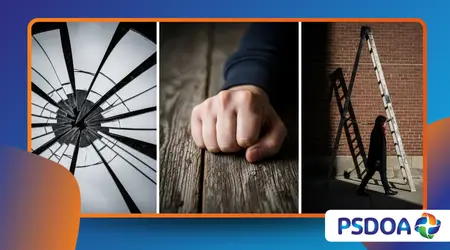
Real Origins of Common Superstitions often trace back to practical survival strategies or ancient religious taboos rather than mere irrationality or random cultural accidents.
Anúncios
In our hyper-digital 2025, we might think we have outgrown these “silly” habits, yet many of us still hesitate before walking under a ladder.
Understanding the historical context of these behaviors reveals a fascinating intersection between human psychology and historical necessity.
By dissecting the Real Origins of Common Superstitions, we discover that our ancestors were often reacting to very real dangers in their immediate environments.
Why Do We Avoid Walking Under Ladders and Spilling Salt?
The Real Origins of Common Superstitions regarding ladders are deeply rooted in both ancient theology and basic medieval construction safety.
Many historians point toward the triangle formed by a leaning ladder, representing the Holy Trinity in early Christian belief systems.
Breaking that triangle was once considered a sacrilegious act that invited demonic presence into one’s life.
Beyond the spiritual, medieval streets were narrow, and a ladder usually meant a worker was overhead dropping heavy tools or hot tar.
What is the Connection Between Ladders and Ancient Execution?
In medieval Europe, ladders were frequently associated with the gallows, where the condemned would climb to meet their fate.
Walking beneath the ladder was thought to place you in the path of the departing, often vengeful, spirits of the dead.
This grim association lingered in the collective memory, transforming a fear of death into a general omen of bad luck.
Today, we simply call it “safety first,” but the shadow of the gallows remains in our subconscious hesitation.
++ Forgotten Natural Disasters That Reshaped Civilizations
How Did Salt Become a Symbol of Divine Protection?
Spilling salt is a classic example within the Real Origins of Common Superstitions that highlights the high economic value of past commodities.
In Roman times, salt was so precious it served as a form of currency the root of the word “salary.”
Wasting such a vital preservative was seen as an invitation to misfortune and poverty. To counter the “evil” of waste, one would toss a pinch over the left shoulder to blind the devil waiting there.
Also read: The Ancient Female Warriors Who Ruled Empires
Why is the Left Shoulder Targeted for Warding Off Evil?
Historical traditions often viewed the left side as the “sinister” side, where bad spirits supposedly lingered to tempt individuals.
By throwing salt in that direction, you were metaphorically protecting your weakest spiritual flank from the influence of bad luck.
Interestingly, Leonardo da Vinci’s The Last Supper depicts Judas Iscariot knocking over a salt cellar.
This artistic choice reinforced the link between spilled salt and betrayal for generations of observers throughout the Western world.
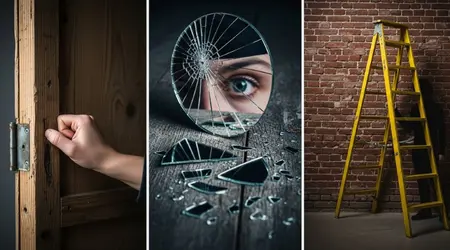
How Did Mirrors and Black Cats Become Omens of Misfortune?
Investigating the Real Origins of Common Superstitions reveals that mirrors were once viewed as windows into the very soul of a person.
If a mirror broke, the reflection and thus the soul was thought to be shattered, leading to seven years of physical sickness.
This specific timeframe stems from the Roman belief that the body and soul renewed their vitality in seven-year cycles.
A broken mirror meant waiting for a full biological cycle to pass before your spiritual health could truly be restored.
Read more: History’s Forgotten Plagues and Pandemics
Why Did Black Cats Suffer During the Middle Ages?
The dark reputation of black cats flourished during the 14th century when they were erroneously linked to witchcraft and the devil.
This misguided fear led to a massive cull of feline populations across Europe, which had devastating unintended consequences.
Ironically, killing the cats allowed the rat population to explode, accelerating the spread of the Bubonic Plague.
This historical tragedy shows how a superstition can create a much deadlier reality than the one it originally feared.
What is the Truth Behind the Seven Years of Bad Luck?
The cost of early mirrors made of polished volcanic glass or silver was astronomical for the average household. Breaking one was a financial catastrophe that would take a laborer years of hard work to pay off or replace.
Therefore, the “bad luck” was often quite literal: seven years of debt and financial struggle for the family. Fear of the supernatural was a powerful tool used by the wealthy to ensure servants handled expensive glass with extreme care.
How Do Ancient Beliefs Influence Modern Superstitions?
Many people in 2025 still avoid black cats despite our scientific understanding of genetics and animal behavior.
Research by the Gallup Organization suggests that nearly 25% of adults still admit to being “at least somewhat” superstitious in their daily lives.
This persistence suggests that superstitions act as a “mental safety net” during times of high global uncertainty.
Even if we don’t believe in the devil, the act of “knocking on wood” provides a brief, comforting sense of control.
Why Do We Knock on Wood to Protect Our Luck?
The practice of knocking on wood is a prominent feature in the Real Origins of Common Superstitions across many cultures.
Many ancient Europeans believed that protective spirits or powerful deities resided within the trunks of majestic trees like oaks.
By tapping on the bark, people were either calling upon these spirits for protection or thanking them for a stroke of luck.
It was a physical gesture of gratitude and a humble request for continued safety in a dangerous world.
What Role Did the Celts Play in This Tradition?
The Celts were among the most prominent practitioners of “tree-knocking,” believing that wood could absorb or ground negative energy.
If someone bragged about their success, they would quickly touch wood to prevent jealous spirits from overhearing and ruining their fortune.
This act is like grounding an electrical wire to prevent a short circuit in your own personal luck. Just as the wire sends excess energy safely into the earth, the wood was thought to absorb the “shock” of pride.
How Did Christian Tradition Adopt the Wooden Knock?
Over time, Christian missionaries adapted this pagan habit by linking it to the wood of the Holy Cross. Touching wood became a way to invoke the protection of the ultimate sacrifice and ward off the influence of evil.
Regardless of the religious path, the core intent remained identical: a humble physical action to guard against the “evil eye” of envy.
It remains one of the most widely practiced Real Origins of Common Superstitions in modern corporate offices and sports arenas.
What Original Example Explains the Persistence of Superstition?
Consider a modern professional athlete who wears the same unwashed socks during a winning streak. While they logically know the socks don’t score goals, the ritual reduces their pre-game anxiety and focuses their competitive mind.
This “placebo effect” of superstition provides a psychological edge that can lead to actual, measurable performance improvements.
When the mind feels “lucky,” the body often follows suit with more confident and precise movements.
Historical Comparison of Common Superstitions
| Superstition | Original Practical Reason | Ancient Spiritual Belief | 2025 Modern Interpretation |
| Ladder | Avoid falling tools/debris | Breaking the Holy Trinity | General “Safety First” awareness |
| Spilled Salt | High cost/Preservative value | Protecting the “sinister” side | Minor ritual for social comfort |
| Broken Mirror | Extreme cost of replacement | Shattering the human soul | Acknowledgment of fragility |
| Knocking Wood | Grounding “proud” energy | Waking tree-dwelling spirits | Psychological ritual for luck |
| Black Cat | Nighttime camouflage/Rats | Familiars of witches/demons | Pop-culture icon and pet love |
In conclusion, the Real Origins of Common Superstitions prove that these quirks of human behavior were once essential tools for navigation and survival.
Whether it was the high price of salt, the danger of falling tools, or the grounding of spiritual energy, our rituals served a purpose.
Today, as we navigate the complexities of 2025, these habits connect us to a past where the world felt a little more magical and a lot more dangerous.
While we may not fear the gallows under a ladder anymore, the rituals remain a deeply human way to seek order in a chaotic universe.
Do you have a personal ritual that you simply can’t let go of, even knowing its history? Share your experience in the comments below!
Frequently Asked Questions
Why is the number 13 considered so unlucky?
The Real Origins of Common Superstitions regarding 13 often point to the Code of Hammurabi, which allegedly omitted the 13th law.
It is also tied to the 13 guests at the Last Supper, where the 13th guest was Judas, the traitor.
Does “Bless You” after a sneeze have a historical origin?
Yes. During the Great Plague of Rome in 590 AD, Pope Gregory I ordered people to pray for those who sneezed. It was believed that a sneeze was an early sign of the plague, and the blessing was a literal prayer for survival.
Why is opening an umbrella indoors considered bad luck?
This began in Victorian England with the invention of the “Paragon” umbrella, which had dangerous metal ribs.
Opening them in a small room often caused eye injuries or broke household items, leading to the “bad luck” label for safety reasons.
Is there any scientific benefit to being superstitious?
Some psychologists believe that superstitions can reduce stress and provide a sense of control in unpredictable situations.
This “illusion of control” can improve performance by boosting confidence, even if the ritual itself has no physical power.
Why do people say “Break a Leg” to actors?
One theory is that by wishing for the opposite of a good performance, you are tricking the “jealous spirits” who would otherwise want to ruin the show. It is a way of protecting the actors from their own success.
