
Cognitive Offloading: How We Use Tech to Replace Memory
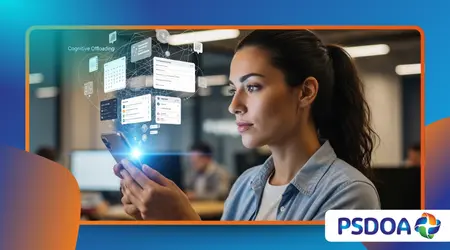
Cognitive Offloading has become the primary mental strategy for the modern era, as we increasingly rely on digital tools to store our memories.
Anúncios
In 2026, the boundary between biological thought and external silicon storage has blurred significantly, creating a symbiotic relationship with our ubiquitous devices.
Our brains naturally seek efficiency, often choosing to delegate heavy data retention to smartphones rather than consuming precious internal metabolic energy.
This transition represents a major shift in human evolution, where the ability to find information now outweighs the biological necessity of memorizing facts.
Understanding Mental Outsourcing
- The Mechanism: Why our neurons prefer saving “where” to find data instead of the data itself.
- Psychological Impact: Exploring how digital dependence alters our long-term memory capacity and attention spans.
- Adaptive Advantages: The benefits of freeing up “mental RAM” for complex problem-solving and creative tasks.
- Risk Factors: Examining the “digital amnesia” effect when our external hard drives are temporarily unavailable.
What is the psychology behind our digital dependence?
The phenomenon of Cognitive Offloading describes our tendency to use physical or digital tools to reduce the cognitive demand of a task.
Anúncios
Whether using a GPS or a simple shopping list, we are essentially extending our minds into our environment to save mental effort.
Neuroscientists suggest that our brains treat smartphones as an extension of our working memory, a process often referred to as the extended mind.
We no longer feel the need to memorize phone numbers because we trust our digital companions to hold that information securely for us.
How does the “Google Effect” work?
A landmark study by Dr. Betsy Sparrow showed that we are less likely to remember information when we expect it to be online.
This psychological bias ensures that our brain prioritizes the location of the resource over the specific details of the information being retrieved.
By treating the internet as a collective external memory bank, we conserve biological resources for high-level synthesis and emotional processing.
However, this reliance means our internal knowledge base becomes shallower, often leaving us stranded if the digital connection fails during critical moments.
++ Hyperphantasia: When Mental Images Feel Almost Real
Why do we trust silicon over neurons?
Human memory is notoriously fallible, prone to distortions, emotional biases, and fading over time, whereas digital storage remains perfectly consistent and precise.
We offload data because we recognize our biological limitations and seek a more reliable record of our lives, schedules, and complex facts.
In 2026, this trust has reached new heights with AI assistants that predict our needs before we even formulate a specific thought.
This predictive Cognitive Offloading allows us to navigate life with less friction, even if it makes us more vulnerable to technological disruptions.
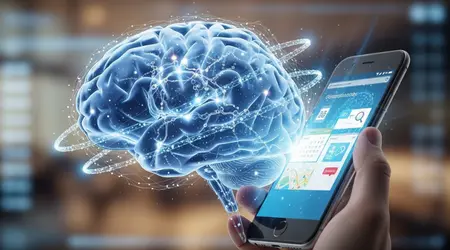
How does offloading change our biological brain structure?
Continuous Cognitive Offloading is physically reshaping our neural pathways, favoring rapid retrieval skills over deep, contemplative storage of complex information.
Neuroplasticity allows the brain to adapt to this “outsourced” lifestyle, potentially shrinking the regions responsible for spatial navigation and long-term retention.
London taxi drivers once famously grew their hippocampi by memorizing maps, but modern drivers using GPS show significantly less growth in these areas.
This change suggests that when we stop using a mental “muscle,” the brain reallocates those resources to other, more frequent activities.
Also read: The Rise of Digital Nomad Burnout
Is digital amnesia a real threat?
Experts warn that we are losing the “anchors” of our personal history as we outsource the recording of our lives to social media.
When we don’t actively engage in the process of remembering, the emotional weight of those memories can diminish, leading to a sense of detachment.
Digital amnesia occurs when the brain stops trying to encode information because it assumes a camera or an app has already done it.
This leaves us with thousands of photos but very few vivid, internal recollections of the actual events we supposedly captured.
Read more: Revenge Scrolling: Staying Awake Out of Spite
How can we balance tech and memory?
Maintaining a “hybrid mind” requires intentional practice, such as occasionally navigating without a map or memorizing key facts without searching for them.
This mental resistance training ensures that our biological hardware remains sharp even as we embrace the convenience of our advanced software.
Using technology as a partner rather than a replacement is the key to psychological health in the mid-2020s.
We must decide which information is worth keeping in our souls and which is merely data suited for a digital cloud.
What are the long-term consequences for human intelligence?
Frequent Cognitive Offloading might actually be enhancing our collective intelligence by allowing us to process vast amounts of data simultaneously.
By clearing the clutter of raw facts, we can focus on moral reasoning, philosophical inquiry, and advanced creative innovations that machines cannot replicate.
Think of your brain as a chef; if an assistant chops the vegetables, the chef can focus entirely on the flavor profile.
This division of labor between human and machine could lead to a golden age of human creativity and unprecedented scientific breakthroughs.
Does offloading hinder deep learning?
Education systems in 2026 struggle with the fact that students can solve problems without understanding the underlying principles by using automated tools.
True expertise requires a deep, internalized knowledge base that offloading often bypasses in favor of quick results and immediate task completion.
Without the “struggle” of memorization, the brain may fail to form the complex connections necessary for truly original and groundbreaking thought.
We must ensure that our digital crutches do not become permanent wheelchairs for our intellectual development and critical thinking skills.
Why is the “Extended Mind” concept controversial?
Philosophers argue about where the “self” ends and the device begins, especially as neural interfaces become more common in our daily lives.
If your memories are on a server, is that server a part of your identity or just a tool you happen to use?
This debate is central to the Cognitive Offloading era, as we redefine what it means to be a sentient, knowledgeable human.
As we merge more deeply with our tech, the definition of intelligence continues to shift from “what you know” to “what you can do.”
Cognitive Impact and Memory Distribution Table
| Activity Type | Internal Brain Effort | External Tool Used | 2026 Behavioral Shift | Long-term Impact |
| Navigation | High (Spatial Mapping) | GPS / Satellite AR | Total Reliance on Tech | Reduced Hippocampus |
| Scheduling | Medium (Time Tracking) | AI Calendar / Alerts | Zero Manual Planning | Lower Anxiety |
| Fact Retention | High (Encoding) | Search / LLMs | Keyword-only Storage | Shorter Attention |
| Calculation | Medium (Logic) | Smart Calculators | Lost Mental Math Skills | Fast Execution |
| Communication | Low (Basic Recall) | Auto-suggest / AI | Automated Responses | Standardized Tone |
| Creativity | Extreme (Synthesis) | Design Software | Prompt-based Drafting | Hybrid Innovation |
| Observation | High (Deep Focus) | Wearable Cameras | Record-first Approach | Digital Amnesia |
| Socializing | Medium (Emotional) | Social Graph Apps | Connection Management | Shallow Networks |
According to a 2025 report from the Global Institute of Cognitive Science, 72% of professionals feel “lost” without digital access to their notes.
This statistic highlights that Cognitive Offloading is no longer a choice but a systemic requirement for functioning in the modern, high-speed workforce.
Using a smartphone to remember a grocery list is like using a bicycle to move faster; it doesn’t mean you’ve forgotten how to walk.
However, if you never walk, your legs eventually wither, and the same principle applies to our precious, organic neural networks.
Is your smartphone an assistant, or is it becoming the master of your memories and your daily identity?
The answer lies in how often you choose to look up from the screen and engage with the world using only your mind.
Balancing the efficiency of silicon with the depth of biology is the greatest psychological challenge of our generation in this digital landscape.
We must guard our internal wisdom while welcoming the external tools that allow us to reach for the stars.
Which piece of information would you be most terrified to lose if your digital devices suddenly vanished forever? Share your experience in the comments!
Future Perspectives
The Cognitive Offloading trend is inevitable, yet our humanity is defined by the memories we hold dear in our hearts.
By choosing what to outsource, we define the boundaries of our own consciousness in an increasingly automated and high-tech world.
Frequently Asked Questions
Does cognitive offloading make us less intelligent?
Not necessarily; it changes the type of intelligence we use, shifting focus from data storage to data processing and creative synthesis.
Is it bad for children to use tablets for learning?
Balance is vital; children need to develop foundational memory and spatial skills before relying heavily on digital offloading tools for education.
How can I improve my biological memory?
Engage in “active recall” and “spaced repetition” without digital aid to strengthen the neural pathways associated with long-term information retention.
What is the “Transaction Memory” theory?
This theory suggests we use people (and now tech) as external memory partners, knowing “who” knows what instead of knowing the facts ourselves.
Does Cognitive Offloading contribute to stress?
While it reduces immediate task pressure, the fear of losing access to our digital “brain” can create a new type of modern anxiety.
