
War of Jenkins’ Ear: The Conflict Sparked by One Ear
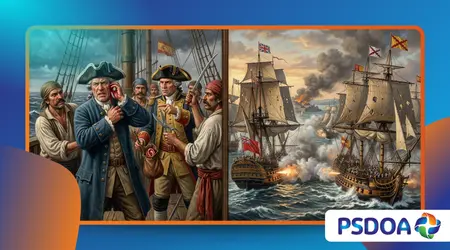
The War of Jenkins’ Ear represents a wild historical moment where a pickled body part served as the ultimate catalyst for an international geopolitical explosion.
Anúncios
Historians often discover that deep-seated trade animosities require only a tiny, dramatic spark to ignite a full-scale assault between massive global empires.
British merchants in the eighteenth century desperately wanted to break Spain’s tight monopoly on lucrative commercial shipping routes across the Caribbean Sea.
This journalistic retrospective uncovers how an isolated incident on the high seas transformed into a sprawling conflict that reshaped colonial boundaries forever.
Core Historical Undercurrents
- The Smuggling Crisis: How illegal British merchant shipping challenged Spanish territorial sovereignty and naval authority.
- The Guardacostas Aggression: The brutal defensive tactics Spanish patrol vessels used against foreign traders.
- Parliamentary Theatre: How the exhibition of a severed ear whipped British public sentiment into a pro-war frenzy.
- Global Consequences: The shift from a localized Caribbean trade dispute into the massive War of the Austrian Succession.
What triggered the spectacular breakout of this conflict?
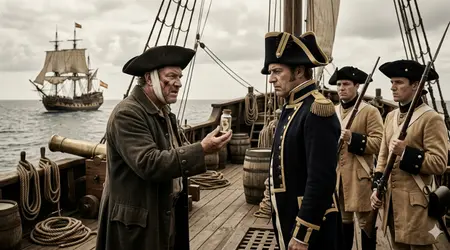
The War of Jenkins’ Ear began conceptually in 1731 when Spanish coast guards boarded the British brig Rebecca near the coast of Cuba.
Commander Julio León Fandiño accused the British captain, Robert Jenkins, of smuggling illicit goods through waters strictly reserved for Spanish merchant fleets.
During the tense confrontation, Fandiño severed Jenkins’ left ear with his cutlass, allegedly telling him to show it to the British king.
Jenkins saved his severed ear, preserving it in a jar of pickle juice, waiting for the right political moment to demand justice.
Why did the ear take seven years to matter?
British Prime Minister Robert Walpole spent years suppressing anti-Spanish anger to protect international trade agreements and preserve fragile peace in Western Europe.
Opposition politicians finally brought Jenkins before the House of Commons in 1738, using his pickled ear to humiliate Walpole’s cautious pacifist government.
++ Taured Man Case: The Passport Mystery That Still Baffles
How did the public react to the parliamentary show?
Sensationalist London newspapers seized the story, turning a long-forgotten smuggling incident into a matter of supreme national honor and imperial pride.
People flooded the streets demanding immediate military retaliation against Spanish ships, making a peaceful diplomatic resolution absolutely impossible for politicians to achieve.
How did imperial trade rivalries fuel the fire?
While the public focused on the severed ear, the British Parliament looked at the lucrative Asiento de Negros monopoly contract.
This precious agreement allowed Britain to supply enslaved laborers to Spanish colonies, a highly profitable enterprise that merchants wanted to expand aggressively.
British traders consistently bypassed Spanish customs by hiding extra contraband goods inside their officially permitted trade vessels during standard port inspections.
Spain naturally retaliated by increasing aggressive naval patrols, turning the Caribbean into a volatile powder keg ready to blow at any moment.
Also read: The Secret Communications of WWII Resistance Movements
What was the economic value of the Asiento?
The contract allowed South Sea Company investors to generate massive fortunes, creating an direct link between human trafficking and British state finance.
When Spain began confiscating British ships for violating customs laws, the wealthy elite in London viewed it as a direct threat to their portfolios.
Siehe auch: Urban Farming vs. Urban Gardening: Was ist der Unterschied?
How did Spain defend its massive trade monopoly?
King Philip V deployed heavily armed guardacostas vessels to board, search, and seize any foreign ship sailing too close to Spanish colonial ports.
These mercenary captains operated under a commission system, meaning their crews only received payment if they successfully captured and plundered a smuggling boat.
What were the catastrophic military outcomes of the fighting?
The War of Jenkins’ Ear brought immense devastation to the Americas, culminating in the disastrous British siege of Cartagena de Indias in 1741.
Admiral Edward Vernon commanded a massive British armada of 186 ships, launching what became the largest naval amphibious operation of that historical era.
Spanish defender Blas de Lezo, despite having only six ships and a severely outnumbered garrison, held the fortified colonial city with legendary tactical brilliance.
The British forces suffered a humiliating defeat, losing thousands of men to enemy fire and a devastating outbreak of yellow fever in camp.
What do historical naval records reveal about casualties?
Authentic archival data from the campaign reveals that the British military suffered an astonishing loss of over 18,000 men during the conflict.
The vast majority of these casualties occurred due to tropical diseases rather than actual combat, completely breaking the offensive capabilities of Vernon’s fleet.
Imperial Fleet Allocations and Casualties (1739-1748)
| Empire Involved | Initial Fleet Strength (Ships) | Major Battle Outcome | Primary Cause of Death |
| Great Britain | 186 vessels at Cartagena | Total Tactical Defeat | Yellow Fever & Malaria |
| Spain | 6 capital ships at Cartagena | Successful Defensive Hold | Direct Combat Injuries |
How did the conflict spread to Georgia?
General James Oglethorpe led British colonial forces from Georgia into Spanish Florida, launching an aggressive siege against the fortress of St. Augustine.
Spanish counter-attacks at the Battle of Bloody Marsh failed to recapture Georgia, freezing the colonial border exactly where it sat before the war.
Why does this absurd conflict remain relevant today?
Analyzing the War of Jenkins’ Ear allows modern citizens to understand how easily elite factions can weaponize sensational media to hide corporate greed.
The conflict functions like a modern political campaign where a catchy slogan or meme distracts voters from the real economic motives driving a policy.
History shows that empires frequently use emotional propaganda to justify military campaigns that are actually designed to capture foreign infrastructure and resources.
Would any rational British citizen volunteer to die in a humid Caribbean swamp just to avenge a smuggler’s ear?
What is the lasting legacy of Blas de Lezo?
The one-legged, one-eyed Spanish admiral became a national hero, proving that defensive fortresses could successfully repel massive maritime invasions with proper strategy.
His victory ensured that Spanish remained the dominant language across South America, altering the cultural trajectory of the western hemisphere for centuries.
How did the war officially reach its conclusion?
The conflict eventually dissolved into the wider War of the Austrian Succession, drawing every major European superpower into a massive continental struggle.
The Treaty of Aix-la-Chapelle in 1748 finally restored the original pre-war borders, proving the entire bloody endeavor achieved absolutely nothing for either empire.
The Final Reckoning of Imperial Hubris
The strange history of the War of Jenkins’ Ear exposes the raw mechanics of eighteenth-century imperialism and the dangers of media-driven public anger.
We have explored how a pickled ear, a disputed trade contract, and a disastrous naval siege shaped the map of the Americas.
This conflict reminds us that small incidents can have massive consequences when two superpowers are looking for an excuse to fight.
By studying these forgotten pages of history, we gain a clearer understanding of how economic interests drive global politics.
Let us look past the sensational headlines of our own era to discover the real forces shaping our contemporary world.
Did you know that a single ear could change the history of an entire continent? Share your thoughts on this bizarre conflict in the comments below!
Frequently Asked Questions
Did Robert Jenkins actually lose his ear in the assault?
Yes, authentic naval logs and parliamentary transcripts confirm that Spanish coast guard captain Julio León Fandiño cut off Jenkins’ ear in April 1731.
Where did the phrase “War of Jenkins’ Ear” come from?
Historian Thomas Carlyle coined the distinctive term in 1858, more than a century after the fighting ended, to highlight the absurdity of the trigger.
What happened to Prime Minister Robert Walpole after the war started?
The disastrous early defeats and rising military debts severely weakened Walpole’s political power, forcing his historic resignation from office in 1742.
Was George Washington’s family involved in this Caribbean war?
Yes, George Washington’s older half-brother, Lawrence Washington, served under Admiral Vernon and later named his famous estate, Mount Vernon, in his honor.
