
Parkour as Urban Protest and Cultural Identity
Parkour as urban protest and cultural identity defines how traceurs transform rigid architectural barriers into open avenues for personal sovereignty and political expression today.
Anúncios
Concrete structures across global metropolises have long enforced commercial boundaries, surveillance protocols, and strict movement guidelines designed to dictate daily human routines.
By vaulting over municipal fences and sprinting across neglected rooftops, practitioners subvert these urban constraints to reclaim public space for genuine civic engagement.
The evolution of l’art du déplacement from a niche suburban discipline into a global movement highlights society’s growing friction with restrictive architectural design.
When young traceurs navigate physical obstacles, they challenge the commercialization of modern cities while forging a distinct collective identity rooted in freedom, physical resilience, and spatial autonomy.
This comprehensive investigation examines the socio-political impact of discipline movement, exploring how tactical athleticism reshapes our relationship with urban environments.
Key Highlights
- Spatial Reclamation: How traceurs repurpose hostile architecture into playgrounds for creative expression.
- Political Resistance: The role of athletic defiance in challenging municipal surveillance and commercialization.
- Cultural Identity: Building global community through shared physical philosophy and spatial subversion.
- Urban Governance: How municipal authorities react to unsanctioned movement in public spaces.
What Is the Political Meaning Behind Modern Parkour Practices?
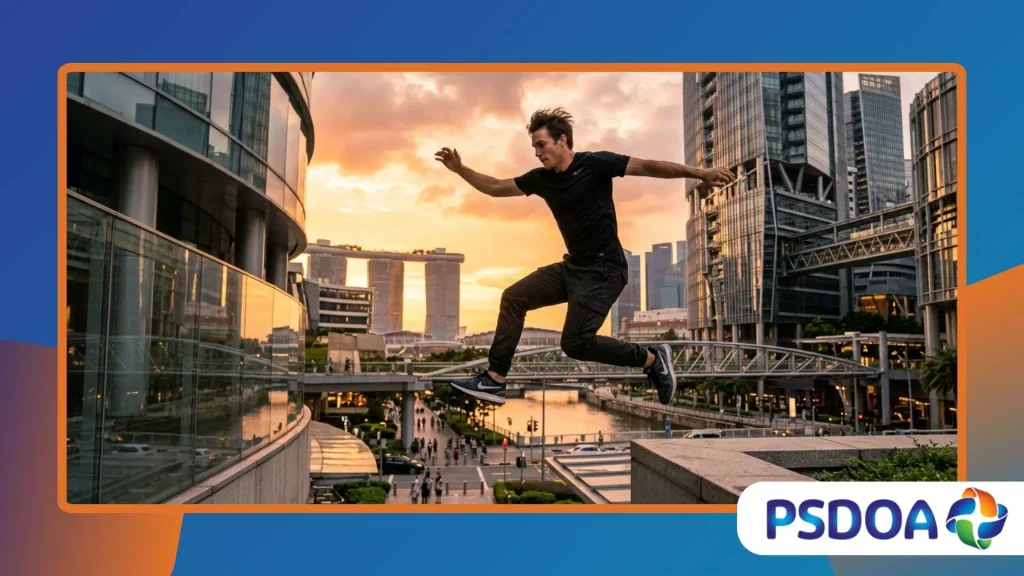
How Does Unsanctioned Movement Challenge Urban Architecture?
Hostile architecture silently dictates how citizens navigate public squares, utilizing anti-homeless spikes, divided benches, and defensive barriers to control body positioning.
Traceurs actively resist these spatial constraints by converting restrictive cement ledges into launching pads, effectively neutralizing the intended exclusionary function of defensive urban design.
Through spontaneous vaults and precision jumps, practitioners demonstrate that public spaces belong to the citizens rather than corporate developers or municipal planners.
The physical engagement with the built environment transforms passive pedestrians into active spatial negotiators who expose the authoritarian nature of modern city planning.
When a traceur scales an eight-foot security wall, they challenge the legal definitions of trespass and public ownership in broad daylight.
This dynamic interaction between athlete and architecture turns rigid concrete into an evolving canvas for personal agency, proving that physical movement remains a potent form of peaceful civilian resistance.
Why Do Traceurs View Public Spaces as Arenas of Resistance?
City centers are increasingly designed as hyper-commercialized corridors where non-consumptive human presence is viewed with official suspicion by authorities.
Parkour as urban protest and cultural identity redefines these privatized plazas into open spaces where human agility replaces monetary transactions as the primary form of engagement.
By refusing to follow designated walkways, practitioners challenge the capitalistic mandate that dictates how urban land must be experienced.
This refusal to conform turns everyday urban obstacles into symbolic battlegrounds for creative human freedom against municipal control.
Traceurs view every concrete wall, security railing, and surveillance camera as an invitation to demonstrate physical sovereignty over corporate surroundings.
Like a flowing river reshaping a rigid canyon, traceurs continuously adapt to urban barriers to prove that human spirit cannot be contained by architectural design.
++ Sephora Kids Trend: The New Consumer Microculture
How Has L’Art du Déplacement Shaped Subcultural Resistance?
Originating in the Parisian suburb of Lisses during the late 1980s, l’art du déplacement emerged as a direct response to suburban isolation and social exclusion.
Founders David Belle and the Yamakasi group utilized physical training to navigate dreary public housing estates, creating a movement methodology that prioritized self-reliance and mental strength.
This foundational ethos quickly transformed into a recognized global subculture that rejects traditional sports commercialization and institutional governance.
The movement philosophy emphasizes functional fitness, community support, and environmental mastery over competitive trophies or organized league structures.
Today, practitioners across global cities maintain this countercultural ethos by organizing unsanctioned jams in public squares and sharing techniques through decentralised digital networks.
This grassroots solidarity strengthens their collective culture, ensuring that physical agility remains directly linked to social liberation and spatial autonomy.
How Does Parkour Build Cultural Identity Across Global Cities?
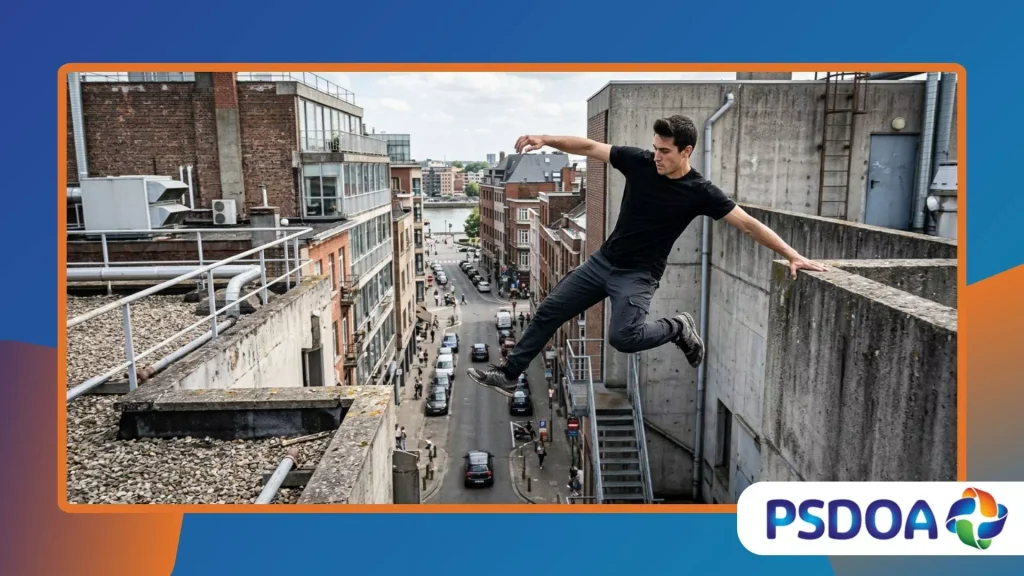
What Role Does Spatial Sovereignty Play in Subcultural Bonding?
Spatial sovereignty refers to an individual’s fundamental right to occupy, alter, and experience public spaces without seeking commercial permission or municipal clearance.
Within traceur communities, shared conquest of complex physical environments builds deep psychological bonds and mutual trust among participants.
When practitioners gather to train on intimidating urban structures, they establish a shared culture centered on risk management and spatial reclamation.
This shared experience creates an inclusive international identity that transcends geographical boundaries, socioeconomic classes, and language barriers.
A traceur from London can seamlessly train alongside practitioners in Tokyo or São Paulo, sharing a universal understanding of movement efficiency and spatial awareness.
Their shared spatial philosophy transforms disconnected concrete jungles into interconnected arenas of human empowerment and mutual respect.
Also read: Mushroom Foraging Groups: Nature Meets Counterculture
How Do Traceurs Transform Hostile Architecture into Playgrounds?
Defensive urban architecture attempts to discipline human bodies through exclusionary design features, such as slanted surfaces, metal nubs, and gated enclosures.
Traceurs view these defensive measures not as impassable obstacles, but as specialized equipment that demands creative technical solutions.
Through cat leaps, wall runs, and tic-tacs, practitioners playfully dismantle the psychological intimidation intended by defensive municipal design.
This creative subversion turns hostile urban landscapes into dynamic playgrounds where agility and imagination outweigh corporate control.
By reinterpreting defensive ledges as landing zones, traceurs reveal the absurd over-regulation present in modern city developments.
Their physical creativity transforms cold, unwelcoming architectural features into engaging challenges that celebrate human potential and physical freedom.
Read more: Seapunk, Cybergoth, and Other Internet-Born Aesthetics
Why Is Physical Freedom Essential for Marginalized Urban Youth?
For young people living in densely populated urban centers, accessible public spaces for recreation and creative expression are increasingly scarce.
High facility fees, strict security presence, and commercialized youth spaces frequently exclude lower-income communities from participating in traditional athletic activities.
Parkour as urban protest and cultural identity provides an accessible alternative that requires no expensive equipment, membership fees, or specialized athletic facilities.
By training in free public parks, stairwells, and abandoned industrial sites, marginalized youth reclaim their right to the city while developing physical resilience and confidence.
According to research published by the International Review for the Sociology of Sport, unsanctioned movement disciplines provide urban youth with crucial psychological empowerment and social capital within heavily regulated environments.
This free athletic outlet fosters personal empowerment, turning spatial restriction into an ongoing celebration of youth autonomy.
Why Is Parkour Recognized as a Modern Form of Social Protest?
How Does Athletic Subversion Counter Municipal Surveillance?
Modern cities feature widespread CCTV networks, private security patrols, and algorithmic monitoring systems designed to enforce social conformity.
Traceurs disrupt these surveillance networks by moving unpredictably through urban environments, often vanishing over rooftops or across private boundaries before security personnel can react.
Their rapid, non-linear trajectories challenge the static coverage of fixed cameras and automated tracking systems.
This athletic agility demonstrates the inherent vulnerabilities of high-tech municipal surveillance while asserting the individual’s right to unmonitored movement.
By occupying camera blind spots and navigating vertical urban spaces, traceurs highlight the oppressive nature of continuous civic monitoring.
Their kinetic subversion serves as a visible reminder that human agility can always outmaneuver bureaucratic efforts to control public space.
What Is the Relationship Between Body Sovereignty and Spatial Rights?
Body sovereignty demands that individuals maintain absolute authority over their physical movements within public spaces without facing arbitrary state interference.
When security guards attempt to ban traceurs from public plazas, they enforce corporate ownership over shared municipal land.
Traceurs assert their body sovereignty by calmly defending their constitutional right to train peacefully in public spaces that belong to all citizens.
This ongoing friction between traceurs and security forces underscores the broader struggle over who truly controls urban space in contemporary society.
By asserting their physical rights through disciplined movement, traceurs defend public spaces for all community members.
Their commitment to spatial freedom demonstrates that bodily expression must remain unrestricted by commercial interests or defensive architecture.
Parkour as urban protest and cultural identity highlights this continuous demand for spatial justice across modern metropolises.
How Do Global Movements Use Traceur Techniques in Activism?
Beyond individual practice, movement techniques are increasingly utilized within broader civil rights demonstrations and environmental movements worldwide.
During political protests in France, Chile, and Hong Kong, activists proficient in movement disciplines have successfully navigated police barricades and heavy urban roadblocks to deliver medical supplies.
Their spatial awareness allows them to move safely through dense crowds and escape hazardous situations during civil unrest.
This practical application demonstrates how athletic subversion can directly support grassroots political resistance against authoritarian governance.
By viewing urban spaces as dynamic, three-dimensional networks, active traceurs assist civilian movements in reclaiming public squares during critical political demonstrations.
Their physical mastery transforms urban geography from a tool of police control into a tactical advantage for democratic expression.
Informative Overview of Urban Movement Dynamics
| Dimension of Urban Practice | Traditional City Guidelines | Traceur Subcultural Approach | Broader Social Impact |
| Spatial Navigation | Linear pathways, sidewalk boundaries, and pedestrian zones. | Three-dimensional pathmaking across walls, rails, and roofs. | Reclaims privatized infrastructure for free public expression. |
| Architectural Purpose | Commercial utility, traffic flow, and security segregation. | Creative reinterpretation of structural surfaces and barriers. | Exposes defensive hostiles in modern urban design. |
| Civic Engagement | Passive consumption, monitored movement, and compliance. | Active physical participation, risk management, and spatial autonomy. | Restores community presence in corporate public plazas. |
| Community Structure | Membership fees, organized leagues, and regulated facilities. | Grassroots jams, peer mentorship, and digital open networks. | Provides accessible physical outlets for marginalized youth. |
Reclaiming the Future of Our Urban Spaces
The ongoing expansion of commercial infrastructure and municipal surveillance continues to test the boundaries of civilian freedom in modern cities worldwide.
Parkour as urban protest and cultural identity offers a vital counter-perspective to this hyper-regulated environment, demonstrating that human creativity and agility can overcome architectural control.
By transforming restrictive municipal barriers into dynamic avenues for personal growth, traceurs continuously defend the democratic nature of public space for future generations.
As city planners continue to deploy defensive design strategies, the physical subversion practiced by traceurs remains an essential reminder of our fundamental spatial rights.
Reclaiming our concrete jungles requires constant vigilance, active physical engagement, and a commitment to preserving open public spaces for creative human interaction.
By supporting unsanctioned movement and challenging exclusionary architecture, we preserve the vibrant cultural identity of our global cities. Share your experiences with urban architecture in the comments below!
Frequently Asked Questions
Is practicing movement discipline in public spaces legally considered a form of protest?
While movement discipline is primarily practiced as an athletic pursuit, its non-traditional use of public infrastructure often serves as a form of spatial protest against corporate privatization.
Courts generally classify unsanctioned movement under trespassing or municipal ordinance violations rather than explicit political speech.
However, the intentional subversion of hostile architecture inherently communicates a clear message regarding public spatial rights and individual bodily autonomy within modern cities.
How do municipal authorities typically react to traceurs training on civic property?
Municipal reactions vary widely depending on local regulations, security policies, and architectural management approaches within specific urban jurisdictions.
Many city officials deploy private security, install anti-skate devices, and issue fine warnings to deter unsanctioned athletic activities on public property.
Conversely, progressive municipalities are beginning to collaborate with local traceurs to design dedicated parkour parks that balance public safety with creative movement expression.
What is the difference between free running and traditional l’art du déplacement?
Traditional l’art du déplacement focuses primarily on practical movement efficiency, environmental adaptability, and physical conditioning designed to overcome obstacles quickly during emergency situations.
Free running incorporates aesthetic tricking, acrobatic flips, and creative self-expression that prioritizes visual artistry over strict movement utility and speed.
Despite these technical distinctions, both disciplines share foundational roots in spatial reclamation and human empowerment within built environments.
Can hostiles in urban architecture completely prevent traceurs from training?
Hostile architectural features like metal nubs and slanted ledges rarely deter experienced traceurs from utilizing public infrastructure for physical training.
Instead of blocking movement, defensive design features frequently present novel technical challenges that traceurs analyze and solve through creative jump adaptations.
This continuous cycle of architectural restriction and physical adaptation demonstrates the ultimate futility of relying solely on defensive design to control human behavior.
How can local communities support the preservation of open public spaces?
Local communities can support open public spaces by actively opposing defensive architectural installations and advocating for inclusive urban planning initiatives.
Attending municipal town hall meetings, supporting grassroots recreation programs, and opposing the privatization of civic plazas helps maintain accessible spaces for all residents.
By encouraging creative physical activities like movement training, communities foster vibrant, safe, and democratic urban environments for future generations.
