
Blue Volcanoes: Why Sulfur Fires Glow at Night
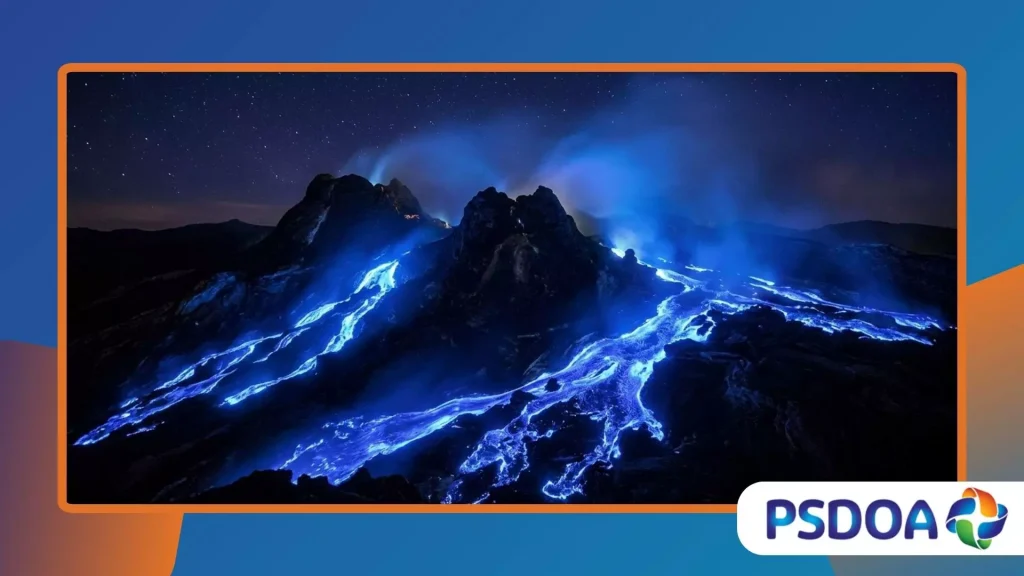
Blue Volcanoes illuminate the pitch-black Indonesian night with ethereal electric-blue flames, creating one of Earth’s most mesmerizing natural spectacles.
Anuncios
Volcanologists and intrepid explorers travel to remote calderas to witness pressurized sulfur gases igniting at blistering temperatures.
This rare geochemical phenomenon occurs when high-temperature sulfur combustion meets ambient atmospheric oxygen under extreme pressure.
Understanding this fiery display reveals the fascinating intersection of planetary geology and elemental chemistry.
Navigating this rare geological marvel requires understanding how volcanic sulfur deposits interact with atmospheric oxygen during nocturnal eruptions.
Anuncios
Researchers study these glowing vents to decode subterranean thermal dynamics and chemical reactions safely.
Think of these molten pathways as giant natural chemical reactors glowing in the dark. Are you ready to uncover the science behind these electric-blue flames?
Navigating Volcanic Sulfur Phenomena
- Investigating subterranean sulfur gas pressure and high-temperature ignition mechanisms.
- Analyzing spectral characteristics of burning liquid sulfur under nocturnal conditions.
- Evaluating environmental hazards faced by sulfur miners working near active blue flames.
- Documenting geological surveys of Indonesian calderas famous for blue fire displays.
What Are Blue Volcanoes and Where Do They Occur?
Blue Volcanoes represent a rare geological manifestation where ignited sulfuric gases produce striking electric-blue flames across rugged volcanic terrain.
The most famous active site sits within the complex Kawah Ijen volcano system located in East Java, Indonesia. Imagine a ghostly blue fire cascading down dark mountain slopes like liquid neon under a starry tropical sky.
Geological surveys confirm that immense subterranean pressure forces superheated sulfur gases through rocky fissures constantly.
Scientific field data published by volcanology institutes indicates that gas temperatures at these active vents frequently exceed six hundred degrees Celsius.
When these pressurized gases contact ambient oxygen in the night air, spontaneous combustion occurs instantly.
Daytime sunlight washes out these brilliant blue flames, making nighttime observation the only way to witness the glowing phenomenon. This breathtaking spectacle attracts daring scientists and adventurous travelers from across the globe.
How Do Subterranean Gases Escape?
Fissures deep within the volcanic crater floor act as natural conduits for volatile gases trapped under extreme pressure.
As magma heats surrounding mineral deposits, gaseous sulfur rises rapidly toward the surface vents. This continuous venting process sustains the nocturnal fire displays.
++ Nieve marina: La extraña ventisca submarina en las profundidades oceánicas
Why Are Flames Visible Only at Night?
The combustion of pure sulfur produces a brilliant blue light that lacks the intensity required to pierce daylight glare.
Darkness provides the essential contrast needed to observe the glowing neon-blue flames flickering against black rocks. Nighttime field expeditions remain mandatory for proper visual study.
Lea también: Velos de polvo: capas atmosféricas que tiñen de púrpura las puestas de sol.
What Role Does Kawah Ijen Play?
Kawah Ijen serves as the world’s primary research benchmark for studying persistent liquid sulfur combustion and acidic crater lakes.
Geologists analyze its unique mineral composition to understand similar volcanic activity on other planetary bodies. The site offers unmatched scientific value.
How Does Sulfur Combustion Create Electric-Blue Flames?
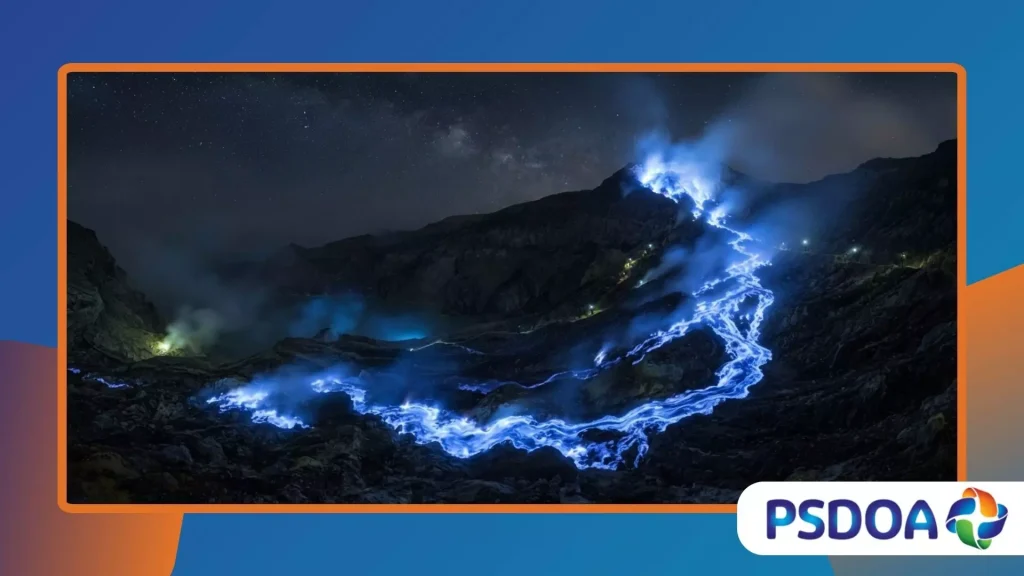
Blue Volcanoes derive their signature coloration from the unique chemical combustion of pure sulfur burning in high-oxygen environments.
Liquid sulfur erupts from volcanic vents at extreme temperatures, immediately catching fire and sending towering blue flames into the air.
Think of this reaction as a giant natural blowtorch fueled entirely by elemental earth minerals. The emitted light stems from excited molecular sulfur species relaxing back to lower energy states.
Spectroscopic analyses conducted by chemical researchers prove that sulfur molecule emissions dominate the visible wavelength spectrum during combustion.
Unlike typical carbon-based campfires emitting warm yellow and red hues, pure sulfur creates cold electric-blue photon emissions.
This distinct chemical signature makes volcanic sulfur fires unique among natural terrestrial phenomena. Chemistry and geology unite to paint the nocturnal landscape in vibrant neon colors.
Leer más: Nubes Mammatus: Explicación de las nubes de tormenta con forma de burbuja
What Chemical Reactions Trigger the Glow?
Gaseous hydrogen sulfide and sulfur dioxide mix with atmospheric oxygen, reaching flashpoints that ignite spontaneous combustion without warning.
The resulting reaction produces sulfur dioxide gas and intense blue light radiation simultaneously. Every vent acts as a self-sustaining chemical reaction chamber.
Why Does Liquid Sulfur Flow Like Water?
Superheated sulfur melts into a mobile red-orange liquid that pools around volcanic vents before cascading down rocky slopes while burning.
As the liquid sulfur cools during its descent, it solidifies into bright yellow crystalline deposits. This physical transformation completes the cyclical geological process.
How Do Atmospheric Conditions Affect Flames?
High humidity and strong wind gusts can distort the delicate blue flames, causing them to flicker wildly or extinguish momentarily.
Calm, clear nights provide optimal viewing conditions for researchers capturing photographic evidence of the glowing sulfur rivers. Weather dictates the visibility of the spectacle.
What Are the Environmental and Human Impacts of Sulfur Mining?
Blue Volcanoes provide both breathtaking natural beauty and grueling daily labor conditions for local miners extracting solid sulfur blocks.
Traditional miners climb deep into the toxic crater daily, harvesting hardened sulfur deposits without advanced personal protective equipment.
Imagine navigating dense, choking clouds of sulfur dioxide gas while balancing heavy loads across rocky terrain. Economic necessity drives these brave workers to harvest valuable mineral deposits from active volcanic vents.
Health assessments conducted by occupational safety organizations highlight severe respiratory hazards faced by miners working near active sulfur vents without respirators.
Continuous exposure to acidic volcanic fumes causes long-term lung damage and chronic health complications among local mining communities.
Balancing traditional mineral extraction with modern worker safety remains a critical challenge for regional authorities. Preserving human health is just as important as studying the geology.
How Do Miners Extract Solid Sulfur?
Workers guide ceramic pipes into active volcanic vents to condense sulfur gas into flowing liquid sulfur streams.
Once the liquid cools and hardens into bright yellow blocks, miners break the mass apart using heavy iron bars. Manual extraction requires immense physical endurance.
What Respiratory Risks Do Workers Face?
Inhaling high concentrations of sulfur dioxide gas triggers severe coughing fits, throat irritation, and acute pulmonary distress among unprotected individuals.
Local organizations advocate for mandatory gas masks and modern safety gear to protect workers. Safety reforms progress slowly in remote regions.
How Does Tourism Impact Local Economies?
Eco-tourism surrounding the nocturnal blue fires generates vital supplemental income for surrounding villages and families living near the volcano.
Guided night tours provide sustainable economic alternatives to traditional hazardous mining labor. Tourism bridges financial gaps successfully.
Volcanic Phenomena Comparison Matrix
The structured table below contrasts traditional red-lava volcanic eruptions with the unique characteristics of sulfur-based blue volcanoes.
| Volcanic Feature | Standard Magmatic Eruptions | Sulfur-Based Blue Volcanoes |
| Material primario | Silicate magma and molten rock | Liquid sulfur and volcanic gases |
| Flame Color | Warm orange, red, and yellow | Striking electric-blue luminescence |
| Optimal Viewing | Visible during both day and night | Visible exclusively during pitch-black nights |
| Primary Hazard | Pyroclastic flows and lava bombs | Toxic sulfur dioxide gas clouds |
Illuminating Earth’s Most Extraordinary Geochemical Marvels
Blue Volcanoes remind us of the incredible chemical diversity and hidden wonders waiting to be discovered across our dynamic planet.
By examining the complex interplay of sulfur combustion, atmospheric pressure, and geological venting, we deepen our understanding of Earth.
These glowing nocturnal spectacles challenge our imagination and inspire continued scientific exploration across remote frontiers.
Take a moment to reflect on the astonishing power of natural chemistry. What other hidden geological mysteries do you hope science unlocks next? Share your experience in the comments below!
Preguntas frecuentes
Why are the flames blue instead of red or yellow?
Pure sulfur combustion emits specific photon wavelengths dominated by excited molecular sulfur species, producing a cold electric-blue light rather than carbon-based warm hues.
Can tourists visit blue volcanoes safely?
Yes, visitors can explore sites like Kawah Ijen with experienced local guides, provided they wear proper gas masks to protect against toxic sulfur dioxide fumes.
Do blue volcanoes exist outside of Indonesia?
While Kawah Ijen in Indonesia is the most famous and accessible site, similar sulfur combustion phenomena occur in rare volcanic vents globally under specific geological conditions.
How hot are the burning sulfur gases?
Volcanic sulfur gases exiting the subterranean fissures frequently exceed six hundred degrees Celsius, instantly igniting upon contact with atmospheric oxygen.
Why is sulfur mining dangerous at these sites?
Miners face extreme physical labor, steep rocky descents, and continuous exposure to toxic sulfur dioxide gas clouds that cause severe respiratory damage over time.
