
Cold Fusion: Real Science or Pseudoscience Revisited?
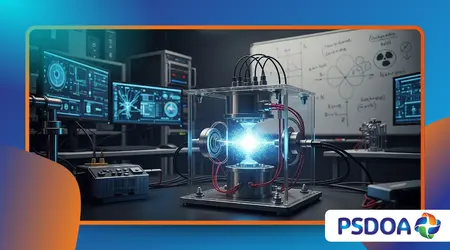
Cold Fusion remains the “Holy Grail” of the energy sector, sparking intense debate between radical visionaries and conservative physicists across the globe today.
Anuncios
This theoretical nuclear process promises nearly infinite clean energy by fusing atoms at room temperature, bypassing the extreme heat found in stars.
While the 1989 Pons-Fleischmann experiment famously faced a wave of skepticism, the year 2026 has brought a sophisticated resurgence of legitimate laboratory investigation.
Modern researchers now utilize nanotechnology and advanced calorimetry to examine thermal anomalies that defy conventional chemical explanations in strictly controlled environments.
Scientific interest has transitioned from the fringes into serious materials science laboratories across Japan, Europe, and the United States.
Anuncios
These new experiments focus on the interaction of hydrogen isotopes within metal lattices, specifically palladium and nickel, seeking consistent energy signatures.
Scientists no longer claim “miraculous” results but instead document precise excess heat that suggests a nuclear origin without the typical lethal radiation.
By applying rigorous data analysis, the community is finally asking if the old labels of pseudoscience were applied to this field far too prematurely.
Essential Guide to Current Findings
- The Core Debate: Understanding the fine line between experimental error and new physics.
- Modern Mechanisms: How metal lattices potentially facilitate atomic fusion at low temperatures.
- Global Research: A look at the institutions currently funding Low-Energy Nuclear Reactions (LENR).
- Future Potential: The path from laboratory anomalies to localized, decentralized power generators.
What defines the current state of this energy research?
The scientific community in 2026 no longer views this field through the lens of the 1989 scandal, prioritizing repeatable thermal signatures over hype.
Moderno Cold Fusion research, often rebranded as LENR, is treated as a complex materials science challenge rather than an impossible theoretical hurdle.
Researchers study how deuterium gas saturates specially prepared nanostructures, seeking the exact geometric conditions required to trigger a measurable energy release.
This empirical approach has attracted fresh venture capital from firms looking beyond traditional “hot” fusion projects.
Despite historical stigma, the U.S. Department of Energy recently acknowledged that measurement advancements warrant a serious re-examination of these unusual thermal outputs.
Scientists use ultra-sensitive sensors to detect helium-4, a byproduct that strongly indicates a nuclear reaction is taking place during these tests.
This disciplined methodology aims to separate genuine signals from environmental noise, ensuring every joule of excess energy is accounted for accurately.
The ultimate goal is to build a stable, controllable reaction that can be scaled for industrial use.
Why did early experiments fail to convince the world?
The original 1989 announcement lacked a crucial element: a standardized protocol that other global laboratories could follow to achieve identical results.
Early Cold Fusion attempts suffered from inconsistent palladium quality and a lack of understanding regarding the “loading” time for deuterium.
These variables led to many failed replications, which quickly turned the scientific establishment against the concept entirely.
Critics argued that without a clear theoretical framework, these results were merely errors in measuring common chemical reactions.
Today’s experts realize the reaction is highly sensitive to the surface geometry of the metal hosts used in the process.
If the palladium lattice is not perfectly saturated at the atomic level, the expected fusion events simply will not occur.
By using thin-film deposition and nanoparticle engineering, 2026 researchers have identified why those early tests were so frustratingly inconsistent.
We are now seeing the first glimpses of a predictable reaction environment that was technically impossible to create thirty years ago.
++ El papel de los fractales en la función cerebral y la conciencia
Is there a theoretical bridge for this reaction?
The greatest hurdle remains the Coulomb barrier, the natural electrical repulsion between two positively charged nuclei that usually prevents fusion.
Innovative theories suggest that the metal lattice acts as a “shield,” allowing nuclei to get close enough for nuclear forces to engage.
This concept of electron screening suggests that dense crystalline environments behave differently than a vacuum, challenging standard plasma models used in hot fusion.
It is a sophisticated argument that requires us to rethink how particles interact in solid-state physics.
Skeptics point to the lack of massive neutron radiation as a reason to doubt these room-temperature claims.
However, proponents argue that these reactions might follow a different pathway where energy transfers directly to the lattice as vibration.
This would explain the absence of dangerous radiation, making it a safer and cleaner alternative for localized power generation.
The debate is moving from “if” the heat exists to “how” the energy is actually being converted at the atomic scale.
How do modern experiments differ from past attempts?
The current generation of experiments utilizes AI-driven monitoring systems to track every micro-watt of energy during the gas-loading process.
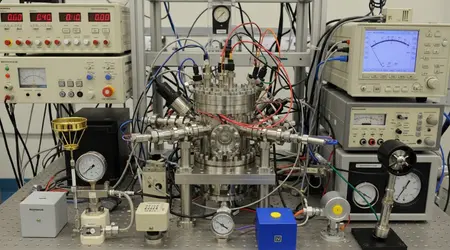
Unlike the simple glass beakers of the past, 2026 Cold Fusion setups are housed in high-pressure chambers with real-time isotopic analysis.
This allows researchers to pinpoint the exact moment the metal lattice reaches saturation and begins its thermal excursion.
This level of detail has turned experimental “luck” into a manageable set of engineering parameters that can be adjusted.
Furthermore, materials are now engineered at the atomic level to maximize the surface area available for hydrogen absorption.
Nickel-hydrogen systems have shown particular promise because nickel is far more abundant and affordable than the palladium used in earlier decades.
These systems often operate at higher temperatures, which is a significant advantage for converting heat into usable electricity or steam.
By treating the process as a solid-state reaction, scientists are finding ways to sustain heat for weeks.
Lea también: Cómo la biología sintética está creando nuevas formas de vida
What are the practical advantages of a working reactor?
If a commercial-scale reactor is realized, it would offer a power density thousands of times higher than current lithium-ion batteries.
A small Cold Fusion cell could theoretically power a home for years using just a few grams of hydrogen fuel.
This would eliminate the need for massive centralized power plants and the vulnerable transmission lines that currently dominate our landscapes.
The decentralized nature of this technology would be a revolutionary shift for rural areas and developing nations.
Imagine a water heater that never needs to be plugged into an electrical grid to provide constant hot water.
Or consider a cargo ship that operates for years without fossil fuels, powered by a safe, localized nuclear process.
The lack of radioactive waste is perhaps the most compelling argument for pursuing this science despite the historical hurdles.
Unlike fission, there is no risk of a meltdown, as the reaction simply stops if the fuel loading is interrupted.
Leer más: La proporción áurea en el ADN, las galaxias y la arquitectura
Why is the scientific community still divided?
The primary reason for lingering skepticism is the “reproducibility crisis” that still affects even the most advanced laboratories in the field.
While some groups report consistent success, others using nearly identical equipment find no excess heat, which remains a red flag.
This inconsistency suggests that we still do not fully understand the “hidden variables” that catalyze these events in the metal.
Until a device can be turned on and off with 100% certainty, it will remain in the experimental category.
However, the tone of the conversation has changed from mockery to cautious curiosity as more peer-reviewed data enters the public.
Major corporations are quietly filing patents for hydrogen-loaded metal systems, signaling a belief that the commercial potential outweighs the risk.
The question is no longer whether the science is “fake,” but whether the engineering can finally catch up to the observation. As long as excess heat is measured in credible labs, the investigation will continue.
Why does the “Pseudoscience” label persist in 2026?
The label persists largely because the discovery was born out of a media circus rather than a traditional peer-review process.
In the world of high-stakes physics, a “pathological” start is often a death sentence for a theory, regardless of new evidence.
Cold Fusion carries the baggage of thousands of failed basement experiments conducted by amateurs over the last three decades.
This “noise” often drowns out high-quality data produced by legitimate research institutes and university departments worldwide.
To move past this tag, the field needs a “gold standard” demonstration that can be replicated by any skeptic.
We are currently in a transitional phase where the evidence is becoming too significant to ignore, but not yet simple enough to mass-produce.
It is a classic scientific revolution, reminiscent of how the Wright brothers were ignored because “experts” knew flight was impossible.
The path to acceptance is always paved with the dismissal of the old guard until the results are undeniable.
What does the data say about recent success?
Recent data from a collaborative study between Japanese and European institutes indicates consistent thermal gain in nickel-nanoparticle systems.
In these tests, the energy output was measured at 140% of the input for a duration of over 200 hours.
This specific Cold Fusion study utilized “blind” calorimetry, where researchers did not know which cells were active until after data collection.
Such rigorous controls are designed to eliminate the observer bias that plagued earlier decades of this controversial research.
The following table compares different nuclear energy approaches as measured in early 2026, highlighting the unique position of room-temperature reactions.
| Característica | Fission (Traditional) | Hot Fusion (ITER) | LENR (Current) |
| Operating Temp | 300 – 1,000°C | 150,000,000°C | 20 – 900°C |
| Fuel Source | Uranium | Deuterium/Tritium | Hydrogen |
| Radioactive Waste | High / Long-lived | Low / Short-lived | Negligible |
| System Size | Industrial Scale | Global Project | Desktop / Home |
| 2026 Status | Comercial | Experimental | Research Phase |
Think of current research like an early steam engine in a world of horse-drawn carriages; it is clunky and often misunderstood.
Will we look back at the skeptics of today with the same amusement we feel for those who claimed the Earth was flat?
The evidence suggests that a hidden door in physics is cracked open, and the heat leaking through is real.
Whether we call it a miracle or an anomaly, the potential to reshape our civilization is worth every hour of scrutiny.
El viaje de Cold Fusion from the depths of disgrace to the light of 2026 laboratory validation is a testament to persistence.
We have moved past the era of blind faith and entered the age of precision engineering and atomic-scale observation.
If the current trend of successful prototypes continues, the debate over pseudoscience will naturally dissolve into a new industrial revolution.
The energy of the future might not come from the sun, but from the very metals we have used for centuries.
The evidence for Low-Energy Nuclear Reactions has reached a point where it can no longer be dismissed as mere error.
As we strive for a carbon-neutral world, this “uncommon” science offers a glimpse into a future of abundant, decentralized power.
We invite you to stay informed as these laboratory prototypes move toward real-world applications.
Do you believe we are on the verge of an energy revolution, or is this just another scientific ghost? Share your experience in the comments below!
Preguntas frecuentes
Is Cold Fusion the same as the “Infinite Energy” scams found online?
No, legitimate LENR research is based on measurable heat and isotopic changes in metal lattices, conducted by PhD-level scientists in university settings.
While some scams use the name to attract investors, real research is published in peer-reviewed journals and focuses on materials science.
Why haven’t we seen a Cold Fusion heater in stores yet?
The main challenge is “controllability” and scaling the reaction from milliwatts to kilowatts reliably for home use.
While the heat is real in the lab, creating a device that works every time for a consumer is a difficult engineering hurdle.
Does this process produce dangerous radiation like a nuclear plant?
Most current experiments show very little to no harmful radiation, which is why it is often called “Green Nuclear.”
The energy appears to be converted into heat directly within the metal, making it much safer than traditional fission.
Can I build a reactor at home using internet tutorials?
It is highly discouraged because hydrogen gas and high pressures can be dangerous if not handled with professional, laboratory-grade equipment.
Furthermore, the process often involves specially treated nano-powders that are not available to the general public.
What is the “Loading Ratio” and why does it matter?
The loading ratio refers to the amount of hydrogen forced into the metal lattice compared to the number of metal atoms.
For the reaction to trigger, the lattice must be nearly 100% saturated, a state that is difficult to maintain outside of a lab.
