
Arcoíris de niebla: Los fantasmales arcoíris blancos que se forman en la densa niebla

Arcos de niebla Aparecen como arcos luminosos e incoloros contra el fondo gris de una espesa niebla, creando una de las ilusiones ópticas más inquietantemente bellas de la naturaleza.
Anuncios
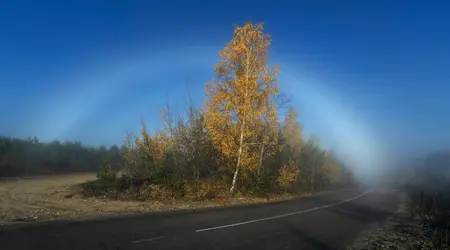
Estos "arcoíris fantasma" carecen del vibrante espectro de sus primos de la lluvia, presentando en cambio un brillante resplandor blanco que parece flotar en el aire.
En 2026, los aficionados a la meteorología buscarán estos esquivos arcos en las regiones costeras o en las altas montañas, donde la humedad se encuentra con el ángulo perfecto de la luz solar matutina.
Comprender la ciencia que hay detrás de este fenómeno revela una compleja interacción de la luz que desafía nuestra percepción cotidiana del cielo.
Información esencial sobre la atmósfera
- La escala de humedad: El tamaño de las gotas determina si se observa un espectro vívido o un arco blanco pálido y fantasmal en el cielo.
- Difracción vs. Refracción: La física específica que provoca que la luz se difumine en un resplandor blanco en lugar de dividirse en distintos colores del arcoíris.
- Puntos de observación óptimos: Consejos para encontrar la combinación adecuada de ángulos bajos del sol y bancos de niebla densa para un avistamiento exitoso.
- La conexión con la gloria: Comprender por qué estos arcos blancos suelen aparecer junto con otros fenómenos ópticos raros como el "Espectro de Brocken".
¿Cómo crean la luz y el agua estos arcos fantasmales?
Visible Arcos de niebla Este fenómeno se produce cuando la luz solar interactúa con gotas de agua significativamente más pequeñas que las que se encuentran en una lluvia típica.
Anuncios
Mientras que las gotas de lluvia refractan la luz como pequeños prismas, las gotitas de niebla son tan minúsculas que provocan que las ondas de luz se superpongan y se difuminen.
Este proceso, conocido como difracción, atenúa los colores, dejando una banda ancha y brillante de luz blanca que domina el horizonte brumoso.
Se trata de un delicado equilibrio meteorológico en el que el aire debe estar saturado pero a la vez lo suficientemente transparente como para que penetre la luz solar.
¿Por qué importa el tamaño de las gotas?
Las gotas de lluvia suelen medir entre 1 y 2 milímetros, pero las gotitas de niebla a menudo tienen un diámetro inferior a 0,05 milímetros.
Esta escala microscópica impide la reflexión interna necesaria para separar los colores, lo que da como resultado una banda monocromática que parece de otro mundo y etérea.
Imagina un arcoíris como una transmisión nítida y de alta definición, y un arco de niebla como el brillo suave y borroso de una antigua pantalla de televisión analógica.
Cuanto más pequeños sean los "píxeles" de agua, más se mezclan los colores hasta que solo queda la luz blanca pura.
++ Nubes de Kelvin-Helmholtz: olas oceánicas que se forman en el cielo.
¿Cuál es el papel de la difracción?
La difracción se produce cuando las ondas de luz encuentran un pequeño obstáculo o abertura, lo que provoca que se curven y se dispersen en diferentes direcciones.
En un banco de niebla, estas ondas interfieren entre sí tan rápidamente que los colores individuales se vuelven indistinguibles para el ojo humano.
El resultado es un arco más amplio y pálido que a veces puede parecer el doble de ancho que un arcoíris estándar.
Sirve como recordatorio visual de que la naturaleza opera en escalas que rara vez percibimos sin la ayuda de condiciones atmosféricas específicas.
¿Por qué a estos fenómenos se les suele llamar arcoíris fantasma?
El término Arcos de niebla Captura la imaginación por su apariencia pálida y translúcida que parece desvanecerse tan rápido como aparece.
Históricamente, los marineros y los alpinistas los veían con una mezcla de asombro y superstición, llamándolos "perros del mar" o presagios de cambio.
En 2026, las apreciaremos como obras maestras de la óptica atmosférica, pero conservarán esa cualidad antigua y misteriosa que desafía la fotografía sencilla.
Su falta de pigmento hace que parezcan más una energía espectral que un efecto físico de la luz y el agua.
Lea también: Hongos brillantes: los bosques que brillan de noche
¿Dónde puedes encontrarlos?
Los acantilados costeros en lugares como San Francisco o las Tierras Altas de Escocia proporcionan el escenario perfecto para que se manifiesten estos arcos blancos.
Necesitas tener el sol a tu espalda y una densa pared de niebla justo delante para captar el resplandor.
Las regiones montañosas también ofrecen vistas privilegiadas cuando las nubes se asientan en los valles, creando un "mar de nubes" bajo los pies del observador.
Estos avistamientos a gran altitud suelen ser los más vívidos, ya que el aire por encima de la niebla es excepcionalmente claro y brillante.
Leer más: Manantiales de azufre que cambian de color con el clima
¿Cómo se relacionan con la Gloria?
Un arco iris de niebla suele enmarcar una "Gloria", que es una serie de anillos de colores que rodean la sombra de la cabeza del observador.
Esta combinación crea un efecto surrealista similar a una diana en la niebla, una imagen que ha inspirado innumerables leyendas de espíritus de la montaña.
Ver tu propia sombra proyectada en un arco blanco es como adentrarse en un sueño donde las leyes de la física del mundo han cambiado.
Es una de las pocas ocasiones en que podemos ver la proyección directa de nuestra presencia sobre la atmósfera misma.
¿Por qué 2026 es el mejor momento para detectarlos?
Observación de Arcos de niebla Su uso ha aumentado recientemente debido a una mejor monitorización por satélite de alta resolución y a una creciente comunidad de meteorólogos aficionados que comparten coordenadas.
Las aplicaciones meteorológicas en tiempo real ahora alertan a los fotógrafos sobre las condiciones específicas de humedad y luz necesarias para que se formen estos arcos.
Los cambios climáticos también están alterando los patrones de niebla en las zonas tradicionalmente afectadas, lo que hace que el estudio de estos fenómenos sea más relevante para los científicos atmosféricos.
Estamos aprendiendo más sobre cómo las partículas en suspensión en el aire influyen en el brillo y la amplitud de estos puentes espectrales.
¿Qué dicen las últimas investigaciones?
Un estudio de 2025 realizado por el Revista Internacional de Óptica Atmosférica Se ha confirmado que la contaminación urbana puede, de hecho, intensificar el brillo de un arcoíris de niebla al proporcionar más puntos de nucleación.
Esta investigación sugiere que nuestro entorno cambiante está alterando sutilmente las características visuales incluso de los fenómenos "fantasma" más naturales.
Los datos muestran que, si bien los arcoíris estándar son cada vez más raros en algunas regiones áridas, las nieblas costeras específicas necesarias para que se formen arcos blancos se mantienen estables.
Esto las convierte en un capricho fiable, aunque todavía poco común, para aquellos dispuestos a desafiar el aire húmedo de la mañana.
¿Cómo se puede fotografiar uno?
Para capturar un arco blanco se necesita un objetivo gran angular y ajustes de exposición precisos para evitar que se quemen los delicados reflejos de la niebla.
Debido a que el contraste es tan bajo, el procesamiento posterior a menudo ayuda a resaltar la sutil estructura de los "bordes" internos.
En 2026, los sensores de los teléfonos inteligentes modernos finalmente alcanzaron un punto en el que pueden detectar la tenue luminosidad del arco.
Sin embargo, ninguna imagen digital puede reemplazar realmente la experiencia de ver un puente enorme y resplandeciente materializarse en la silenciosa niebla gris.
Comparación de las ópticas Rainbow y Fogbow
| Característica | Arcoíris estándar | Arcos de niebla | Causa |
| Color primario | Espectro completo (VIBGYOR) | Blanco brillante / Pálido | Tamaño de la gota |
| Diámetro de la gota | 1,0 – 2,0 mm | < 0,05 mm | Tensión superficial |
| Física principal | Refracción y reflexión | Difracción | Interferencia de ondas |
| Ancho aparente | Estrecho, afilado | Amplio, difuso | Dispersión de la luz |
| Posición del Sol | Detrás del observador | Detrás del observador | Retrodispersión |
| Flecos interiores | Raro (Supernumerario) | Común (rojizo/azulado) | Interferencia |
| Ubicación común | chubascos | Niebla costera / Montañas | Humedad local |
| Nivel de rareza | Común | Raro / Escurridizo | Sensibilidad climática |
La presencia de Arcos de niebla Sirve como una señal silenciosa de las complejidades ocultas dentro de nuestra propia atmósfera.
Según el Administración Nacional Oceánica y Atmosférica (NOAA)Estos arcos son matemáticamente predecibles pero visualmente impredecibles, lo que convierte cada avistamiento en un evento único.
Imagina la niebla como una pantalla de proyección gigante y translúcida que solo revela sus secretos cuando el sol incide sobre ella exactamente a 42 grados.
Es una obra maestra de sincronización, donde unas pocas micras de agua marcan la diferencia entre un espectáculo colorido y un brillo fantasmal.
¿Por qué encontramos belleza en la ausencia de color cuando estamos tan acostumbrados a la vibrante saturación de la vida moderna?
Esta pregunta persiste mientras uno se encuentra frente a un arco blanco, sintiendo una paz que solo una mañana tranquila y neblinosa puede brindar.
El mundo está lleno de maravillas invisibles, y el arco blanco es quizás la más modesta y magnífica de todas ellas.
No pide nada más que tu atención y la voluntad de permanecer en el frío hasta que la luz se abra paso.
A medida que la niebla se disipa y el arco se desvanece en el cielo azul, el recuerdo de aquel puente fantasmal permanece.
Es un recordatorio de que incluso en los momentos más grises de nuestras vidas, hay un brillo oculto esperando ser descubierto.
¿Alguna vez has atravesado un banco de niebla y te has sentido como si estuvieras dentro de una habitación blanca resplandeciente? ¡Comparte tu experiencia en los comentarios!
El puente espectral
En resumen, Arcos de niebla Son un testimonio de la sutil belleza de la difracción y de las maravillas microscópicas del ciclo del agua.
Al detenernos a observar a estos gigantes pálidos, reconectamos con un lado de la naturaleza que es a la vez frágil y perdurable.
Preguntas frecuentes
¿Puedo ver un arcoíris de niebla por la noche?
Sí, se les llama "arcoíris lunares" o "arcoíris de niebla lunar", y son aún más raros, ya que aparecen cuando una luna llena brillante choca con un banco de niebla.
¿Son peligrosas las zonas de niebla para la aviación?
El arco en sí es inofensivo, pero la densa niebla necesaria para su formación plantea importantes desafíos de navegación tanto para pilotos como para marineros.
¿Por qué los bordes a veces son ligeramente rojos o azules?
Los colores son muy tenues porque la difracción no es perfecta; el borde exterior puede mostrar un ligero tinte rojo, mientras que el borde interior aparece ligeramente azulado.
¿Los arcos de niebla solo ocurren en la Tierra?
Los científicos creen que podrían producirse efectos ópticos similares en cualquier planeta con una atmósfera brumosa, como Titán, la luna de Saturno, aunque los colores serían diferentes.
Reflexión final: La próxima vez que llegue la niebla, no te quedes dentro; busca el arco blanco que demuestra que incluso las sombras pueden brillar.
