
El bosque que se hunde en el lago Kaindy: árboles que crecen bajo el agua

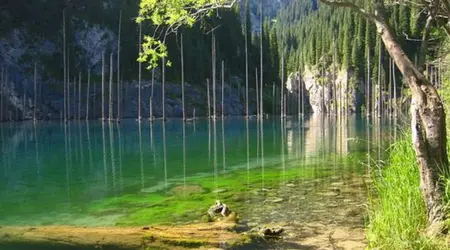
Bosque que se hunde en el lago Kaindy presenta una anomalía impresionante en la que antiguos abetos se yerguen bajo aguas alpinas turquesas en las remotas montañas de Kazajstán.
Anuncios
La naturaleza creó esta obra maestra tras un enorme deslizamiento de piedra caliza que bloqueó un desfiladero montañoso. Este fenómeno geológico transformó un exuberante valle en una profunda cuenca.
El agua fría de la montaña inundó lentamente la zona, sumergiendo los árboles. Hoy, el Bosque que se hunde en el lago Kaindy sigue siendo un testimonio del poder tectónico y la preservación.
Los científicos visitan este sitio con frecuencia para estudiar su singular composición química. Este lugar demuestra que incluso los terremotos destructivos pueden dejar tras de sí maravillas naturales increíbles y duraderas.
¿Cómo se formó esta maravilla geológica?
El origen de este lago se remonta a un evento catastrófico ocurrido en 1911. Un gran terremoto movió la tierra y creó una presa de roca natural e impenetrable.
Anuncios
El agua de lluvia y la nieve derretida finalmente llenaron el cráter recién formado. Bosque que se hunde en el lago Kaindy surgió cuando el agua creciente ahogó los abetos existentes.
++ Islas flotantes: balsas de vegetación que se mueven con el viento y la corriente
¿Qué papel jugó el terremoto de 1911?
El terremoto de Kebin alcanzó una impresionante magnitud de 7,7 en la escala de Richter. Estos temblores provocaron el deslizamiento de tierra que taponó el estrecho valle montañoso.
Este desprendimiento de rocas actuó como un corcho enorme en una botella. Sin una vía de drenaje, el valle se transformó en... Bosque que se hunde en el lago Kaindy.
El gran volumen del deslizamiento garantizó la estabilidad de la presa. Esta estabilidad permitió que el lago persistiera durante más de un siglo sin desecarse.
Los geólogos estudian este fenómeno para comprender la estabilidad de las montañas. El lago sigue siendo un ejemplo perfecto de un "lago sísmico" formado por cambios topográficos repentinos.
Lea también: Hongos brillantes: los bosques que brillan de noche
¿Por qué los árboles permanecen en pie?
Los árboles sumergidos no se pudrieron ni se derrumbaron como la madera común. Las gélidas temperaturas del agua impiden que las bacterias responsables de la descomposición prosperen.
Estos abetos actúan como una cápsula del tiempo natural. Debido al frío, el Bosque que se hunde en el lago Kaindy Conserva notablemente bien las estructuras orgánicas.
Curiosamente, las copas expuestas de los árboles están blanqueadas. Se asemejan a los mástiles de barcos hundidos que emergen de las aguas profundas y cristalinas.
Bajo la superficie, las agujas suelen permanecer adheridas a las ramas. Este fenómeno crea un inquietante bosque invertido que cautiva a todo buceador visitante.
¿Qué hace que el entorno submarino sea único?
Explorar las profundidades del lago revela un mundo surrealista, teñido de azul. La claridad del agua permite que la luz del sol penetre profundamente, iluminando las agujas de abeto preservadas.
Buceo en el Bosque que se hunde en el lago Kaindy Se siente como volar por un bosque helado. El contraste visual entre la superficie y las profundidades es impresionante.
Leer más: Manantiales de azufre que cambian de color con el clima
¿Por qué la visibilidad del agua es tan alta?
El lago se encuentra a una altitud de 2000 metros sobre el nivel del mar. Esta gran altitud mantiene el agua prístina y libre de la mayoría de los contaminantes comunes.
La piedra caliza que formó la presa también filtra el agua entrante. Esta filtración contribuye a la transparencia cristalina del agua. Bosque que se hunde en el lago Kaindy.
Los niveles de algas se mantienen bajos debido a las temperaturas extremadamente frías. Esta ausencia de niebla orgánica garantiza que la visibilidad a menudo supere los veinte metros para los buceadores.
Los fotógrafos valoran esta claridad para capturar imágenes de alta definición del abeto. La luz juega maravillosamente con las ramas sumergidas, cubiertas de algas, y las rocas calizas.
¿Cómo afecta el agua fría a la conservación?
La temperatura del agua rara vez supera los seis grados Celsius. Esta refrigeración es la principal razón por la que las agujas de abeto no se han desintegrado después de un siglo.
La madera sumergida suele ablandarse y descomponerse en unas pocas décadas. Sin embargo, la Bosque que se hunde en el lago Kaindy Mantiene su madera estructuralmente sana.
Un informe limnológico de 2023 confirmó la baja actividad microbiana en la cuenca. Esta investigación explica por qué el bosque parece congelado en el tiempo desde 1911.
Piense en el lago como un gigantesco refrigerador natural al aire libre. Protege las delicadas agujas de la descomposición típica de lagos más cálidos y menos profundos.
¿Por qué es importante este fenómeno para la ciencia?
Los investigadores utilizan el lago para estudiar la conservación orgánica a largo plazo en agua dulce. Esto proporciona información sobre cómo reaccionan ciertos ecosistemas a inundaciones repentinas y permanentes.
El Bosque que se hunde en el lago Kaindy Sirve como laboratorio natural para buceadores. Aquí prueban equipos especializados para aguas frías y técnicas de navegación submarina a gran altitud.
¿Qué podemos aprender de la madera sumergida?
Los científicos analizan los anillos de los árboles para comprender el clima antes de 1911. La conservación permite realizar estudios dendrocronológicos precisos de la antigua picea de Schrenk.
Estos datos ayudan a reconstruir patrones climáticos históricos en Asia Central. Bosque que se hunde en el lago Kaindy guarda secretos sobre el pasado ambiental de la región.
Además, el sitio muestra cómo la naturaleza se recupera tras un trauma geológico. La nueva vida acuática se ha adaptado a la presencia de las estructuras forestales esqueléticas sumergidas.
Los árboles actúan ahora como anclas para diversos tipos de algas de montaña. Esta relación crea una red trófica única y localizada dentro de las frías aguas alpinas.
¿Cómo está afectando el cambio climático al lago?
Datos recientes sugieren que el derretimiento de los glaciares podría aumentar los niveles de agua. Un aumento en los niveles podría ejercer mayor presión sobre la presa natural de piedra caliza con el tiempo.
Monitoreo de la Bosque que se hunde en el lago Kaindy Es vital para la seguridad local. Una ruptura de la presa afectaría significativamente a las aldeas ubicadas más abajo en el valle.
Los veranos más cálidos también podrían aumentar lentamente la temperatura del agua. Incluso un ligero aumento podría acelerar la descomposición de las preciadas agujas de abeto sumergidas.
¿Seguirán nuestros hijos viendo estas agujas verdes dentro de cincuenta años? Proteger este frágil sitio es esencial para preservar el singular patrimonio natural de Kazajistán.
Características principales del lago Kaindy
| Característica | Datos / Detalle | Significado |
| Año de formación | 1911 (Terremoto de Kebin) | Resultado de un evento de 7,7 en la escala de Richter |
| Temperatura del agua | Aprox. 6 °C (43 °F) | Factor clave en la conservación orgánica |
| Especies de árboles | Picea schrenkiana (pícea de Schrenk) | Endémica de las montañas de Tien Shan |
| Profundidad máxima | Aproximadamente 30 metros | Sumerge la mayor parte del bosque original |
| Altitud | 2.000 metros sobre el nivel del mar | Garantiza una alta claridad y pureza del agua. |
El Bosque que se hunde en el lago Kaindy sigue siendo una de las anomalías naturales más inquietantes y hermosas del mundo.
Creado por un violento terremoto, ahora se erige como un monumento pacífico y congelado a la resiliencia de la naturaleza.
Desde los mástiles fantasmales en la superficie hasta las agujas preservadas debajo, el lago ofrece una visión poco común de un pasado sumergido.
De cara al 2025, preservar este sitio es crucial tanto para el estudio ecológico como para el turismo. Este lago demuestra que incluso los movimientos de tierra más destructivos pueden dejar un legado de absoluta maravilla.
¿Has visto alguna vez un bosque que prospera bajo el agua? ¡Comparte tus impresiones o experiencias de viaje en los comentarios!
Preguntas frecuentes
¿Es posible nadar en el lago Kaindy?
Sí, pero el agua está extremadamente fría todo el año. La mayoría de los visitantes prefieren ver los árboles desde la orilla o usar trajes secos especiales para bucear.
¿Por qué los troncos de los árboles son blancos en la parte superior?
Las partes expuestas de los troncos están blanqueadas por el sol y erosionadas por el viento. Esto crea la apariencia de un mástil fantasma sobre la línea de flotación.
¿Puedo bucear para ver las agujas?
Solo buceadores certificados en aguas frías deberían intentar explorar las profundidades. La gran altitud y las aguas heladas requieren habilidades avanzadas y equipo especializado.
¿Dónde está ubicado exactamente el lago?
Se encuentra en el Parque Nacional de los Lagos Kolsai, en Kazajistán, en las montañas de Tien Shan, cerca de la frontera con Kirguistán.
¿Están todavía vivos los árboles?
No, los árboles murieron poco después de ser sumergidos en 1911. Están biológicamente muertos, pero físicamente preservados por el agua fría y pobre en oxígeno.
¿Cómo llego al lago?
La mayoría de los viajeros viajan en vehículos 4x4 desde Almaty. El camino es accidentado, especialmente durante la temporada de lluvias o a finales del invierno.
