
Floating Islands: Vegetation Rafts That Move With Wind and Current
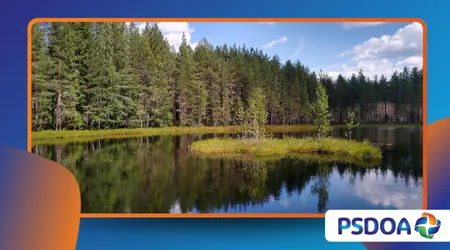
Floating Islands are among the most captivating and scientifically intriguing natural phenomena on Earth, defying our typical notions of stable landmasses.
Anúncios
These aren’t mythical creations but genuine rafts of dense vegetation, soil, and peat. These buoyant ecosystems drift across bodies of water, propelled by both wind and underlying currents.
The study of Floating Islands is rapidly evolving, moving from folklore to serious ecological research in 2025.
How are Floating Islands Formed and Where Do They Occur?
Floating Islands originate through several complex natural processes, most commonly in freshwater environments like lakes, marshes, and slow-moving rivers.
The primary mechanism involves the breakdown and decomposition of organic matter. Over time, this matter primarily thick layers of bog moss, reeds, and sedges accumulates.
Anúncios
This mass eventually forms a dense, interwoven mat, often buoyant due to gases trapped in the decomposing peat below.
What are the Primary Mechanisms of Island Formation?
One key formation mechanism is the buildup of peat over stagnant water. In wetlands, especially bogs, decaying plant material settles but does not fully decompose due to low oxygen levels.
This forms a spongy, buoyant layer. Another mechanism is the ‘lift-off’ event, where established shoreline vegetation becomes detached.
Extreme water level fluctuations or storm surges can break off large chunks of shoreline, turning them into nomadic Floating Islands.
Also read: Sulfur Springs That Change Color With the Weather
What Makes These Islands Naturally Buoyant?
The remarkable buoyancy of Floating Islands is primarily attributed to two factors: the structure of the vegetation and the presence of trapped gases.
Many water-loving plants, like papyrus or cattails, have highly porous, air-filled stems.
Below the vegetation, anaerobic decomposition of the submerged organic material produces methane and other gases.
These trapped gas bubbles provide the necessary lift, turning the dense mat into a naturally inflated, self-propelled raft.
Read more: Red Sprites and Blue Jets: Lightning’s Upper-Atmosphere Relatives
Where are the Most Famous Examples of Natural Floating Islands Found?
Natural Floating Islands are globally distributed, occurring wherever shallow, nutrient-rich waters meet abundant vegetation. They are particularly famous in places with large, ancient wetlands.
The Okavango Delta in Botswana, one of the world’s largest inland deltas, is renowned for its vast, shifting islands.
Lake Titicaca in Peru/Bolivia is also famous, though those islands are largely artificial (Uros people).
Why are Floating Islands Crucial Ecosystems for Biodiversity?
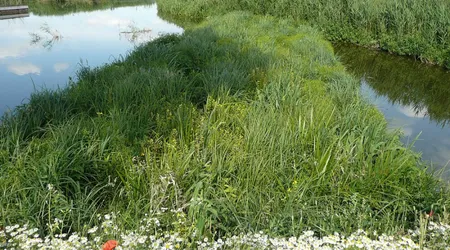
Floating Islands function as unique, mobile habitats, dramatically increasing the biological diversity of the waters they traverse.
They act as miniature, isolated ecosystems, fostering species that may not survive on the static shore.
Their mobility introduces plant and animal species to new areas, playing a surprising role in gene flow and species distribution. For conservation biologists, Floating Islands are dynamic ecological laboratories.
++Glowing Fungi: The Forests That Shine at Night
How Do These Islands Support Unique Plant and Animal Life?
The stability and moisture within the island’s peat layer allow large trees and specific wetland plants to root deeply.
These islands provide critical nesting sites for birds, protected from terrestrial predators like foxes or wildcats.
Furthermore, they offer shelter for juvenile fish and amphibians in their submerged root systems, which create complex underwater refuges.
The island’s movement ensures a constant turnover of nutrients and ecological niches.
What Role Do Floating Islands Play in Species Dispersal?
The capacity of Floating Islands to move makes them natural vectors for biogeographic dispersal. They carry seeds, small invertebrates, reptiles, and even small mammals across water bodies, sometimes over long distances.
This transport mechanism is essential for the genetic exchange between otherwise isolated plant and animal populations.
It ensures that species can colonize new areas, especially after local extinctions or environmental changes.
What is the Analogous Concept of Islands in Evolutionary Theory?
The study of Floating Islands mirrors the classic biological analogy of oceanic islands (like the Galápagos).
These rafts create temporary, isolated habitats subject to unique evolutionary pressures. The species that manage to survive the “raft ride” must be resilient and adaptable.
This process, known as “island biogeography,” helps scientists understand the mechanisms of colonization and subsequent specialization of species in restricted areas.
What Statistical Data Highlights Their Ecological Value?
A 2023 ecological study of the Floating Islands in Lake Naivasha, Kenya, revealed a significant finding.
It showed that the biomass of submerged invertebrate species (crucial for the local food web) was 45% higher within the island’s root mats than in adjacent open water beds.
This statistic underscores their immense ecological importance. The density of living material within the rafts provides a concentrated, highly productive habitat not found in the surrounding aquatic environment.
How Do Floating Islands Move and What Are the Associated Risks?
The movement of Floating Islands is governed by a combination of meteorological and hydrological forces.
They are not merely passive drifters but follow predictable, yet often complex, movement patterns dictated by physics.
Understanding and predicting their movement is vital, as a massive Floating Island poses considerable risks to infrastructure, including dams, bridges, and hydroelectric power stations.
What Forces Drive the Movement of These Vegetation Rafts?
The primary drivers of island movement are wind stress and water currents. Due to their large surface area above the water, islands act like sails, catching the wind. Submerged portions catch the deeper currents.
The combined effect of these forces determines their trajectory, which can sometimes be circular within a lake or highly linear along a river.
Their density and root depth determine how strongly they are affected by wind versus current.
What Examples Exist of Floating Islands Creating Significant Hazards?
Large, dense Floating Islands can pose significant hazards. A notable example occurred in the 1990s at Lake Kariba, on the border between Zambia and Zimbabwe.
Massive rafts of Salvinia molesta (Kariba weed) blocked intake pipes. Another incident in Texas involved a large island impacting a bridge foundation during a storm.
This necessitates monitoring and mitigation efforts, sometimes requiring mechanical breakup or permanent tethering of the rafts.
How Does Human Intervention Affect the Dynamics of Floating Islands?
Human activities, particularly the construction of dams and hydroelectric reservoirs, drastically change the dynamics of water bodies, often leading to an increase in Floating Islands. Reservoirs typically have fluctuating water levels.
These changes, combined with increased nutrient runoff (eutrophication), fuel rapid growth of aquatic weeds.
This often results in the formation of larger, more stable islands than found in natural, undisturbed systems.
What Mitigation Strategies Are Used to Manage Large Floating Islands?
Managing large, hazardous Floating Islands requires specialized strategies.
One approach is biological control, introducing specific insects or pathogens that naturally feed on the dominant vegetation (e.g., the use of weevils against the Kariba weed).
Another method, used in reservoir management, is the installation of floating booms or barriers to physically deflect islands away from critical infrastructure like dam spillways or hydroelectric intakes.
Comparison of Natural vs. Artificial Floating Island Functions
| Feature | Natural Floating Islands (e.g., Okavango) | Artificial Floating Islands (e.g., Uros) | Ecological/Human Function |
| Formation Basis | Peat accumulation, gaseous buoyancy, shoreline lift-off | Woven layers of harvested reeds (Totora) | Method of Buoyancy |
| Mobility | Driven by wind, current, and water fluctuation (uncontrolled) | Anchored, or manually moved by people (controlled) | Movement Control |
| Primary Vegetation | Native wetland species (reeds, papyrus, sedges) | Maintained reed layers for structural integrity | Material Source |
| Ecological Role | Biodiversity refugia, seed dispersal vector | Sustainable living platform, cultural heritage preservation | Primary Purpose |
The phenomenon of Floating Islands reveals a powerful and dynamic side of nature, where land itself is mobile.
From their complex formation through gaseous buoyancy to their critical role as biological dispersal vectors, these rafts are ecological marvels.
The study of Floating Islands demands attention not only for their scientific curiosity but also for their direct impact on biodiversity and essential infrastructure.
It asks a compelling question: If entire islands can drift and change shape, how fixed is our perception of geography itself?
The next time you view a large body of water, consider the hidden, moving landmasses beneath the surface. Share your thoughts on the surprising mobility of these ecosystems below!
Frequently Asked Questions
Are Floating Islands made of plastic waste?
No, natural Floating Islands are primarily made of dense organic material, like peat, reeds, and soil.
While plastic pollution can gather in water bodies, it does not form the stable, cohesive, and actively vegetated structure characteristic of these natural rafts.
Can trees grow on a Floating Island?
Yes, many Floating Islands, especially the larger, older ones found in the Okavango Delta, can support mature trees.
The thick, compacted peat layer provides enough structural stability and nutrient retention for large roots to develop.
Do people ever live on natural Floating Islands?
While some ancient cultures, like the Uros people on Lake Titicaca, construct and live on artificial reed islands, living on natural Floating Islands is generally impractical due to their uncontrolled movement and potential instability.
They are usually too unpredictable for permanent settlement.
How long can a Floating Island survive?
The lifespan of a Floating Island varies greatly. Smaller, younger rafts may break up quickly in storms.
However, large, well-established islands with a dense peat layer and tree cover can survive for decades or even centuries, continually evolving in size and shape.
Can a Floating Island completely block a river?
Yes, in certain extreme conditions, particularly in hydroelectric reservoirs where large amounts of vegetation are created, huge Floating Islands can consolidate and temporarily block water flow, especially around narrow channels or intakes.
This necessitates regular monitoring and removal efforts.
