
Forgotten Subterranean Cities Designed as War Shelters
Forgotten Subterranean Cities, designed as massive civil defense shelters, stand as stark monuments to the 20th century’s relentless fear of global conflict.
Anúncios
These vast, hidden complexes, often built deep beneath major capitals, were engineered for human survival during nuclear or large-scale conventional attacks.
They represent an incredible, often overlooked, civil engineering feat.
These projects were intended to house thousands for months, complete with independent air, water, and power systems.
While many were never fully utilized for their intended purpose, their existence reveals the profound psychological impact of the Cold War era on urban planning and infrastructure development.
Anúncios
Why Did Governments Invest in Massive Underground Shelters?
The invention of the atomic bomb shifted warfare from localized battles to the potential for total societal annihilation. This existential threat spurred desperate, colossal defensive measures.
Governments needed a viable, if terrifying, answer to the question: How do you save key personnel and large civilian populations from the catastrophic effects of an air strike or nuclear fallout?
++ The Steam Cannon: Why It Was Abandoned by Militaries
What Was the Primary Threat Driving Construction?
The primary driver was the threat of nuclear weapons, which presented two major dangers: the immediate blast/heat wave and the long-term, deadly radioactive fallout.
Underground construction provided maximum shielding from both. The sheer mass of the earth above the shelters was the most effective protection available against gamma radiation.
Also read: The Great Forgotten Plan for Bicycle Highways
What Was the Underlying Psychological Rationale?
Beyond physical protection, these shelters provided a crucial psychological assurance to the populace and maintained governmental continuity. They were a visible commitment to survival.
The promise of survival, however slim, helped manage public fear and prevented widespread panic during escalating international crises.
Read more: Auto-Learning Machines Before the Age of Computers
The City as an Insurance Policy
These Forgotten Subterranean Cities were essentially the largest, most expensive “insurance policy” ever taken out by governments.
The premium was the immense cost of construction, paid in exchange for the slim hope of societal continuity after an event that no one truly expected to survive unscathed.
How Were These Underground Cities Engineered for Survival?
These subterranean complexes were far more sophisticated than simple basements. They were entirely self-contained environments, designed to support life independent of the hostile surface for extended periods.
The goal was complete isolation and self-sufficiency, ensuring that life could proceed, albeit temporarily, even if the world above was irrevocably poisoned.
What Technologies Provided Independent Air and Water?
The shelters relied on massive, filtered ventilation systems equipped with specialized High-Efficiency Particulate Air (HEPA) filters and chemical scrubbers to remove radioactive particles and toxins from the incoming air.
Deep water wells and reservoirs, often hundreds of meters below ground, guaranteed a clean, reliable water supply, shielded from surface contamination.
How Did They Manage Power and Waste?
These complexes contained dedicated power plants, often relying on large diesel generators and massive fuel reserves, to ensure continuous electricity for lighting, filtration, and communication.
Waste management involved complex sealing and storage systems, designed to contain and sanitize human and biological waste before the population could safely emerge.
The Moscow Metro as a Dual-Purpose System
During the Soviet era, portions of the Moscow Metro system were specifically engineered with blast doors, ventilation filters, and designated secure areas.
These dual-purpose spaces could rapidly convert into emergency civil defense centers.
This integration allowed the city to maintain a functional public transport system while having immediate, large-scale shelter capacity ready for activation during the Cold War peaks.
Which Famous Examples Have Been Forgotten Subterranean Cities?
Many nations involved in the Cold War or facing high geopolitical tension constructed these facilities. Several have since been declassified and partially repurposed, revealing their hidden history.
These sites are now fascinating historical artifacts, showcasing the intense engineering required to plan for the end of the world as we knew it.
Where is the Massive City of Derinkuyu Located?
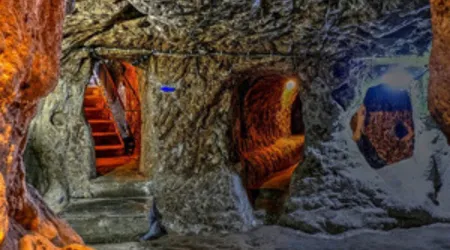
Turkey’s Cappadocia region contains Derinkuyu, an ancient, multi-level subterranean city rediscovered and later investigated.
While pre-dating modern conflict, it serves as a powerful model of sustained underground habitation.
It could house up to 20,000 people and included wine presses, stables, and schools. Its existence inspired modern planners seeking blueprints for long-term underground community survival.
What Was the Purpose of Cheyenne Mountain Complex (NORAD)?
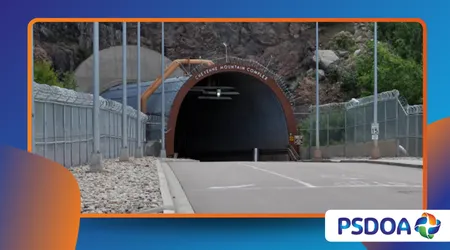
The Cheyenne Mountain Complex in Colorado, built during the height of the Cold War, was designed to be the highly protected command center for NORAD (North American Aerospace Defense Command).
Its operations center is mounted on massive coil springs inside a granite mountain, protecting it from a powerful nuclear blast. It represents the height of military-grade underground design.
The Greenbrier Bunker in West Virginia
The US government secretly built a massive, luxury fallout shelter beneath the Greenbrier Resort for the entire US Congress. It was operational from the late 1950s until its declassification in 1992.
This facility included separate dormitories, a hospital, and an assembly hall. It stands as a powerful symbol of the government’s commitment to continuity of operations.
What Has Happened to These Forgotten Subterranean Cities Today?
With the end of the Cold War, the immediate threat of nuclear exchange diminished, and many of these expensive bunkers were decommissioned or repurposed.
Their current uses range from mundane storage to specialized data centers.
Their vast, controlled environments and inherent security make them surprisingly valuable assets in the modern digital age, providing security for data instead of human life.
How Are They Being Repurposed for the Digital Age?
The same features that protected people from radiation thick concrete, stable temperatures, and high security now make them ideal for housing sensitive data.
Many former command bunkers and military shelters have been converted into secure, environmentally stable data centers and high-security storage facilities.
What is the Heritage and Tourism Value?
Some of these sites, such as the former bunker under the Greenbrier or certain Soviet-era complexes, have been partially opened for tourism. They offer a tangible, chilling glimpse into Cold War anxieties.
These tours educate the public on the psychological and material costs of preparing for catastrophic conflict.
A report from the UK’s Historic England (2024 analysis) noted that over 60% of documented large-scale, deep-level civilian and military bunkers built during the Cold War across Europe have been either partially or fully sold off or repurposed for commercial, rather than defensive, uses since 1995.
| Underground Complex | Location (Era) | Original Purpose | Current Primary Use (2025) | Key Engineering Feature |
| Cheyenne Mountain | Colorado, USA (Cold War) | NORAD Command Center | Secure Data/IT Infrastructure & Backup Center | Buildings mounted on giant springs |
| Derinkuyu | Cappadocia, Turkey (Ancient) | Long-term Civilian Refuge | Tourist Attraction & Archaeological Site | Massive stone rolling doors for defense |
| The Greenbrier Bunker | West Virginia, USA (Cold War) | Shelter for U.S. Congress | Commercial Data Center/Historical Tours | Decontamination rooms and large hospital |
| Beijing Underground City | Beijing, China (Sino-Soviet Split) | Mass Civilian Air-Raid Shelter | Partially closed/storage, some private business | Vast network of tunnels connecting schools/homes |
Conclusion: Lessons from the Deep
The Forgotten Subterranean Cities remind us of a volatile past, a time when global superpowers planned meticulously for their own obliteration.
These engineering marvels stand as a testament to the extremes of human fear and the corresponding ingenuity required to overcome it.
Their transition from war shelters to data centers reflects a shift in global priority: protection of information is now as critical as the protection of life.
Does the continued presence of these deep, secure spaces suggest a persistent, low-grade anxiety about the future?
Share your thoughts on how these forgotten structures can teach us about our present-day risks in the comments below!
Frequently Asked Questions
Are any large government bunkers still fully operational today?
Yes. Key military command centers and government continuity sites, though modernized, are maintained in a state of readiness in several major global powers (US, Russia, China).
Were these bunkers ever actually used by civilians during an attack?
Most major, purpose-built fallout bunkers were never activated for their intended use. However, public spaces like the London Underground were heavily used as air-raid shelters during World War II.
How long were people expected to stay underground?
Depending on the design and the perceived threat (e.g., nuclear fallout), duration varied from a few weeks to several months. Complexes were stocked with enough food, water, and medicine for the designated period.
What challenges does maintaining a subterranean city present?
Major challenges include managing humidity and mold, preventing water ingress, and ensuring continuous, filtered ventilation. These require massive, costly maintenance programs.
What unique safety feature did Derinkuyu have?
Derinkuyu had enormous, multi-ton circular stone rolling doors at critical junctions. These could be rolled into place from the inside to seal off levels and prevent intruders or gas attacks.
