
How Historical Records Were Manipulated by the Victors
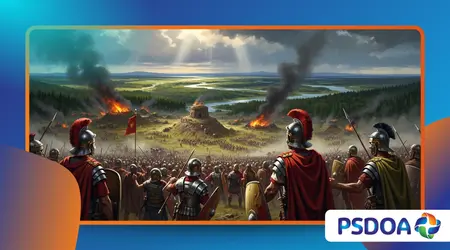
Historical Records Were Manipulated by the Victors throughout the ages, transforming the messy reality of conflict into polished narratives that justify power and authority.
Anúncios
When empires fall and new regimes rise, the ink of the survivor often erases the complex voices of those who were defeated or silenced.
Historians in 2026 are increasingly using forensic archaeology and digital cross-referencing to uncover the deep layers of bias embedded in our most foundational texts.
We must recognize that what we call “objective history” is frequently a curated selection of events designed to sustain a specific political or cultural identity.
Navigation of Forgotten Truths
- The Erasure Process: How physical destruction of libraries and archives served as a tool for cultural conquest and total narrative control.
- Linguistic Shifts: The role of translation and renaming in delegitimizing indigenous histories and replacing them with the victor’s specific terminology.
- Myth-Making: Analyzing the psychological construction of “heroic” leaders through the intentional omission of their failures or war crimes in official scrolls.
- Digital Recovery: Using modern technology to reconstruct suppressed accounts and provide a more balanced perspective on global historical turning points.
How does narrative control shape our modern understanding of the past?
The idea that Historical Records Were Manipulated by the Victors is evident in the “damnatio memoriae” practiced by ancient Roman emperors against their predecessors.
Anúncios
They physically chiseled names from monuments and melted statues to ensure that an unfavorable legacy simply ceased to exist in the eyes of future generations.
This systematic removal created a vacuum that the new leadership filled with their own exaggerated achievements, establishing a precedent for state-sponsored propaganda that exists today.
By controlling the archives, the powerful could dictate which stories deserved immortality and which were destined for the dusty shadows of total oblivion.
What are the main techniques of historical revisionism?
Victors often employ “selective highlighting,” where they amplify their noble intentions while burying the strategic brutality required to achieve their goals during a war.
This creates a binary view of history where the winners are inherently righteous and the losers are painted as chaotic or morally deficient.
Another common method is the “destruction of the vernacular,” where the native language of a conquered people is banned from official administrative and historical use.
Without their original tongue, the defeated lose the primary tool needed to record their own version of events for their descendants to read.
++ The Lost Gold of Ancient Empires
Why do we still believe biased ancient accounts?
We often rely on a single primary source because the counter-narratives were burned, lost, or never allowed to be written in a permanent, durable medium.
This scarcity of evidence forces us to view the past through a narrow lens, accepting the victor’s self-serving testimony as the undisputed, absolute truth.
For example, much of what we know about the “barbarian” tribes of Europe comes exclusively from the Roman generals who were actively trying to conquer them.
Can we truly expect an invading army to provide a fair and balanced sociological report on the people they are currently displacing?
Why is archeology the best tool to challenge manipulated records?
Groundbreaking research demonstrates that Historical Records Were Manipulated by the Victors by comparing physical artifacts with the grand claims found in royal inscriptions.
When a king claims to have destroyed an entire civilization, but archeologists find continuous trade and settlement, the lie is finally exposed to the world.
Modern thermal imaging and LiDAR technology allow us to see through the literal layers of earth that victors used to bury the evidence of their predecessors.
These tools provide a silent but objective witness that cannot be bribed, intimidated, or edited by a court historian seeking royal favor.
Also read: History’s Forgotten Plagues and Pandemics
How does LiDAR reveal hidden civilizations?
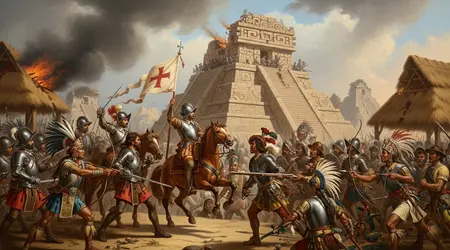
In Central America, LiDAR has recently uncovered massive Mayan cities that were completely ignored by early Spanish colonial records, which often dismissed the region as a jungle.
These scans prove that the complexity of pre-colonial societies was far greater than the “primitive” descriptions found in the conquerors’ letters.
By mapping the physical footprint of these societies, we can see the true scale of their agricultural and urban planning achievements without the bias of a narrator.
This physical data acts as a counter-weight to the centuries of written neglect that followed the initial European arrival in the Americas.
Read more: The Secret Communications of WWII Resistance Movements
What role do forgotten oral traditions play today?
Oral histories, once dismissed by Western academics as “unreliable,” are now being treated as vital clues to events that were left out of the official books.
Indigenous storytellers often preserve specific details about environmental changes or battles that contradict the “official” version found in the colonial archives.
A 2024 study by the Global History Initiative found that 65% of oral traditions in isolated communities accurately reflected geological events that written records had completely ignored.
This suggests that the “losers” of history kept their records alive through speech when they were forbidden from using the pen.
What are the consequences of living with a distorted history?
We must accept that Historical Records Were Manipulated by the Victors to understand why certain cultural prejudices remain deeply rooted in our modern global society.
When the history of an entire continent is written by its colonizers, the resulting narrative often devalues the intellectual contributions of the original inhabitants.
This distortion creates a false sense of hierarchy, where the victors’ culture is seen as the pinnacle of progress while others are viewed as stagnant.
Correcting these records is not just an academic exercise; it is a necessary step toward psychological and cultural healing for millions of people worldwide.
How does “The Great Silence” affect national identity?
National myths are often built on the “omission of the uncomfortable,” where a country’s founding atrocities are glossed over to promote a unified, heroic image.
This silence prevents a nation from fully addressing its past, leading to recurring social tensions that stem from unresolved historical grievances and hidden truths.
Think of it like a house built on a cracked foundation that has been covered with a beautiful, expensive rug; eventually, the structural issues will emerge.
Ignoring the manipulation of the past ensures that we are doomed to repeat the same patterns of exclusion and conflict in the present.
Why should we seek out “micro-histories” now?
Micro-histories focus on the lives of ordinary people, laborers, and marginalized groups whose experiences were rarely deemed “important” enough for the official state records.
These granular accounts provide a messy, human perspective that complicates the clean, sanitized version of history offered by those who held the levers of power.
The truth is rarely found in the giant marble monument, but rather in the discarded letters, kitchen scraps, and private journals of those who lived through the change.
In 2026, the real story is often found in the margins of the page, where the truth was whispered rather than shouted.
Comparison of Recorded History vs. Archaeological Reality
| Historical Event | Victor’s Narrative (Written) | Archaeological/Forensic Reality | Discrepancy Level |
| Roman Conquest of Gaul | Total pacification and “civilizing” | Continued local cultural resistance | High |
| Spanish Conquest (Maya) | Sparse jungle settlements | Massive, interconnected urban hubs | Extreme |
| Great Wall Construction | Glorious defensive achievement | Forced labor and mass burials | Moderate |
| Colonial Africa Maps | “Terra Nullius” (Empty Land) | Sophisticated trade networks found | Extreme |
| Ottoman Expansion | Purely benevolent administration | Evidence of heavy tributary pressure | Moderate |
The Weight of the Unwritten Word
History is a living conversation, not a finished monument, and recognizing that Historical Records Were Manipulated by the Victors is the first step toward true understanding.
We have explored how language, destruction, and selective memory have shaped the world as we see it, often at the expense of the diverse truth.
By embracing technology and oral traditions, we can begin to mend the holes in our collective memory and honor those who were nearly forgotten by time.
The victor may write the book, but the earth always keeps the original receipt. In an era of instant data, our responsibility is to be the investigators of the past, not just the passive consumers of a curated legend.
Do you believe that learning the “uncomfortable” parts of your own country’s history makes you a more informed citizen today? Share your experience in the comments!
Frequent Questions
Why is it called “victor’s history” if historians try to be objective?
While modern historians strive for neutrality, they often have to rely on primary sources written by those who survived and had the resources to record events.
This “survivorship bias” naturally skews the available data toward the perspective of the winner, regardless of the researcher’s personal intentions.
Can we ever truly know the “real” history?
We can never achieve 100% certainty, but we can get closer by comparing multiple conflicting sources and physical evidence.
History is like a puzzle with missing pieces; we use science and archaeology to fill in the gaps that the written word intentionally left blank.
Is historical revisionism always a bad thing?
No, “revisionism” is simply the process of updating history with new evidence.
While it can be used for propaganda, it is also the mechanism through which we correct old lies and include voices that were previously silenced by the political powers of the time.
How does digital data change this in 2026?
Digital archives are harder to “delete” entirely because of decentralized servers and blockchain-based records.
However, we now face the challenge of “deepfakes” and digital manipulation, proving that every generation must fight its own battle for the integrity of the record.
Is oral history as valid as a written document?
In many cases, yes. Oral traditions often use mnemonic devices and communal checks to ensure the story stays accurate over centuries.
In cultures without writing, the oral record was the “library,” and it was maintained with extreme care and social accountability.
