
Magnetoreception: The Hidden Sense Humans May Possess
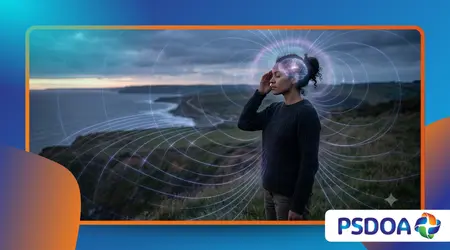
Magnetoreception is a fascinating biological frontier that challenges our fundamental understanding of human sensory capabilities in 2026.
Anúncios
While birds and sea turtles famously navigate via Earth’s magnetic field, the existence of this latent “sixth sense” in humans remains one of the most provocative debates in modern neuroscience.
Researchers continue to investigate whether hidden remnants of this ancient evolutionary trait persist within our physiology.
Could we be walking around with an invisible compass embedded deep within our cells, waiting for our conscious minds to finally acknowledge its presence?
Navigation Mechanics
- The Biological Compass
- Cryptochromes and Light
- Evolutionary Vestiges
What is the biological basis of this hidden sense?
Scientists define this phenomenon as the ability to detect magnetic fields to navigate or orient spatially. Many migratory species utilize this skill to cross vast oceanic distances without external tools.
Current research suggests that humans might possess cryptochromes, proteins sensitive to magnetic fields, within their retinas. These proteins react to the planet’s geometry, potentially influencing how our brains process direction.
Understanding this mechanism could rewrite our textbooks on human perception. If we prove this capacity exists, it opens doors to understanding how ancient ancestors navigated without celestial markers.
How does the human brain process magnetic signals?
Brain imaging studies show that specific regions activate when humans are exposed to rotating magnetic fields in laboratory settings. These involuntary reactions indicate a deep, subconscious response to magnetism.
We process these signals differently than visual or auditory input. Rather than “seeing” lines, subjects report subtle shifts in spatial awareness or inexplicable urges to face a certain direction.
Your neural pathways might be filtering this data as background noise. Evolution often suppresses secondary senses to prevent sensory overload, prioritizing sight and sound for immediate survival and danger detection.
++ How Lichen Is Changing What We Know About Symbiosis

Are humans truly capable of sensing magnetic poles?
The evidence is mounting but remains strictly experimental, far from common knowledge.
Recent trials at Caltech demonstrated that participants’ brain waves fluctuated when artificial magnetic fields shifted around their heads.
Unlike a magnetic needle, our internal sense is likely diffuse and weak. We do not experience a “north-pointing” feeling, but rather a slight adjustment in our internal GPS.
Is it possible that our modern dependence on GPS technology has simply atrophied a skill we once relied upon daily? We have traded our biological intuition for digital convenience.
Also read: How Ant Colonies Mimic Human Traffic Systems
Why do some researchers remain highly skeptical?
Critics argue that current findings often lack the necessary repeatability required for scientific consensus.
They believe that perceived sensitivity might stem from subtle environmental cues, not magnetic detection.
Rigorous controls are difficult to maintain in these experiments, as electromagnetic interference from modern electronics is pervasive. Shielding a laboratory from all noise is an engineering nightmare.
Scientific skepticism is the bedrock of progress, ensuring we do not mistake coincidence for biology. Every breakthrough in this field faces immense pressure to prove its validity beyond doubt.

How does modern technology interact with our biology?
Our world is saturated with artificial magnetic fields from power lines and devices. This “magnetic smog” could theoretically obscure the weak signal provided by the Earth’s natural magnetic field.
Think of it like trying to hear a whisper in a crowded stadium. Your body might be trying to interpret the Earth’s quiet signal while being drowned out by the roar.
Understanding the impact of this noise is essential for future studies. Researchers must isolate test subjects in specialized “Faraday cages” to minimize the interference from the city environment.
Read more: The Bizarre Science Behind Negative Mass
Which tools are used to test human sensitivity?
Scientists use Helmholtz coils to create precise, controllable magnetic environments for human subjects. These devices allow researchers to simulate the Earth’s field and flip it at will.
Data collection involves electroencephalography (EEG) to monitor real-time brain responses.
By observing these spikes, scientists correlate magnetic changes with physiological shifts in the human nervous system.
The study of Magnetoreception requires high-tech hardware to ensure validity.
Without such equipment, confirming whether a person actually senses the field remains statistically impossible to verify accurately today.
Can we train ourselves to develop this ability?
Some enthusiasts claim that intentional practice can sharpen our awareness of magnetic directions. By consciously focusing on spatial orientation, they hope to unlock dormant, ancient sensory pathways.
However, no peer-reviewed data currently supports the idea that this sense can be learned. It appears to be an innate, hardwired potential rather than a skill like chess or athletics.
Learning to navigate without devices is a rewarding endeavor regardless. It forces us to engage with our surroundings, building a deeper connection with the natural world around us daily.
What are the potential impacts of this discovery?
Confirming human Magnetoreception would be a monumental achievement in human biology. It would suggest that we are more deeply connected to the planet’s physics than we ever imagined.
Imagine a future where we develop wearable tech to amplify this sense, allowing us to navigate deep subterranean caves or dense forests with intuitive, biological certainty.
This discovery could explain human behavior in ways we never predicted. It opens a path to studying how ancient migrations were possible before the invention of the magnetic compass.
What is the current scientific consensus in 2026?
Current data indicates a subtle, involuntary neural response rather than a conscious sensory experience. We are not yet walking around with functional “internal maps” like migratory birds possess.
A study in 2024 confirmed that human alpha-band brain activity decreases when the magnetic environment changes. This is a significant piece of evidence that our brains are indeed processing magnetism.
The Magnetoreception field is evolving rapidly, moving from pseudoscience toward verified biological inquiry. Every year, new, more precise datasets emerge, narrowing the gap between theory and established reality.
How do we differentiate between myth and biology?
Distinguishing between folklore and biology is the scientist’s greatest challenge. Many cultures speak of an “inner sense” of direction, but verifying this as a magnetic function requires extreme diligence.
We must rely on quantitative data, such as brain imaging and behavioral tests, rather than anecdotal stories. Evidence must hold up under the harshest scientific review.
The rigorous process of the scientific method keeps us honest. By demanding high standards, we ensure that when we finally confirm this sense, it stands on unshakable ground.
Where does the research go from here?
Future research will focus on the role of iron-rich cells in the human body. Finding magnetite crystals in human tissue would be the “smoking gun” for this sensory ability.
Collaboration between neuroscientists, biologists, and physicists is now standard. This interdisciplinary approach ensures that the study of Magnetoreception is tackled from every possible angle of modern inquiry.
We are just scratching the surface of what it means to be human. As we refine our tools, the boundaries of our known senses will undoubtedly continue to expand.
What is the summary of these findings?
We have established that while Magnetoreception remains unconfirmed as a conscious human sense, strong evidence points toward subconscious neural processing. The mystery continues to captivate the scientific community.
The integration of advanced magnetic shielding and brain imaging has brought us closer than ever to a definitive answer. Whether we have a compass or not, we are searching.
| Feature | Human Status | Animal Status |
| Conscious Awareness | Undetermined | Strong |
| Neural Sensitivity | Observed in Brain Waves | Well-Documented |
| Evolutionary Use | Uncertain / Vestigial | Essential for Migration |
Final Thoughts and Moving Forward
The investigation into human Magnetoreception is more than just a search for a new sense; it is a quest to understand our connection to the Earth.
We are finding that the lines between biology and physics are increasingly blurred, revealing a complex organism adapted to a dynamic planet.
As we stand in 2026, the potential for discovery remains high. Whether this sense is a relic of the past or a hidden strength for the future, the pursuit itself enriches our understanding of the human condition.
What do you think? Do you feel an innate “pull” when you are lost in nature? Share your experiences in the comments below, and let’s keep this conversation moving toward the next great scientific breakthrough.
Frequently Asked Questions
1. Is this sense the same as having a good sense of direction?
No, a sense of direction is usually learned through visual landmarks and experience. A magnetic sense would be an involuntary, biological detection of the Earth’s field.
2. Could magnets in our jewelry affect this sense?
Potentially, yes. If humans are sensitive to magnetic fields, common magnetic accessories could theoretically interfere with our ability to process the planet’s much weaker natural signal.
3. Will we ever be able to “turn on” this sense?
Current research does not suggest this is possible through training. It seems to be a hardwired, subconscious reaction rather than a skill you can master.
4. Why haven’t we discovered this before?
Because the signal is incredibly weak and easily masked by the electromagnetic noise of modern civilization, making it nearly impossible to detect without specialized laboratory equipment.
