
Methane Bubble Lakes Frozen in Time
Methane bubble lakes represent one of Earth’s most mesmerizing yet critical cryospheric wonders, capturing ancient organic gases trapped beneath crystalline sheets of winter ice.
Anúncios
As an investigative journalist specializing in rare natural phenomena, observing these frozen aquatic ecosystems reveals profound insights into our planet’s complex climatic feedback loops.
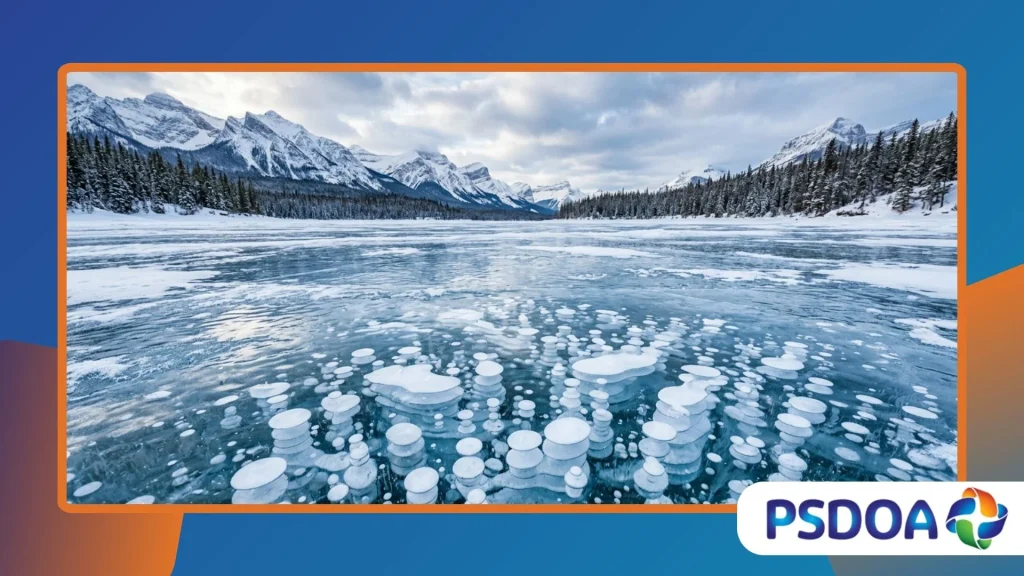
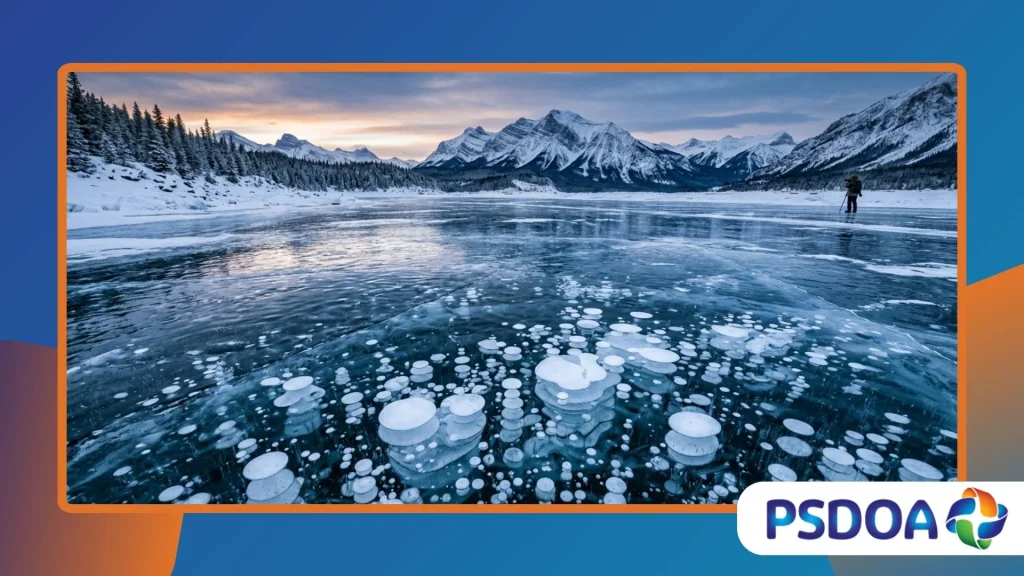
Beneath the glassy, windswept surfaces of remote sub-zero water bodies, trapped microbial processes create ethereal white orbs and towering vertical columns frozen mid-ascent.
Understanding these arresting formations requires exploring the delicate balance between ancient biological decomposition and sudden atmospheric warming trends occurring across northern high-latitude regions today.
- Understanding the cryospheric mechanics behind trapped subsurface gases.
- Examining historical microbial activity preserved within sub-zero sediments.
- Analyzing modern climate implications of sudden gas release events.
- Reviewing global scientific monitoring strategies and field data metrics.
What Are Methane Bubble Lakes and How Do They Form?
Where Do Subsurface Gases Originate in Frozen Ecosystems?
Organic matter accumulating at the benthic zone undergoes anaerobic digestion by specialized archaea microorganisms throughout prolonged sub-zero winters.
These resilient microbes break down submerged leaf litter, peat, and organic sediments, continuously generating flammable hydrocarbon gases within deep basin muds.
Over successive seasons, minute gas pockets accumulate near the lake bed before breaking loose and rising toward the freezing water surface.
When early winter cold snaps freeze the upper water column rapidly, ascending vapor pockets become permanently suspended inside solid crystal matrices.
This rapid thermal locking creates stunning visual formations resembling frozen chains of pearls or pristine aquatic sculptures preserved indefinitely.
Scientists from the Alfred Wegener Institute documented thousands of distinct vertical pathways where gas bubbles remain locked inside pristine columnar ice structures.
++ Marine Snow: The Strange Underwater Blizzard in Deep Oceans
Why Do These Frozen Formations Fascinate Modern Researchers?
The exceptional clarity of winter ice allows glaciologists to examine individual gas pockets without disturbing the delicate underlying aquatic sediment layers.
Each trapped bubble acts as a microscopic time capsule preserving isotopic signatures of ancient atmospheric compositions from decades or centuries past.
Researchers utilize specialized core drills to extract ice samples, measuring methane concentrations to reconstruct historical decomposition rates across changing climates.
Furthermore, these freezing aquatic environments challenge our fundamental understanding of microbial life surviving under intense hydrostatic pressure and near-freezing temperatures.
The visual splendor of these suspended white spheres attracts winter photographers and extreme adventurers to remote sub-zero destinations every single year.
Yet beneath this breathtaking aesthetic lies a serious scientific indicator regarding global carbon cycles and accelerating permafrost degradation.
Why Are Methane Bubble Lakes Crucial for Global Climate Research?
How Does Trapped Gas Impact Contemporary Atmospheric Warming?
Methane functions as an exceptionally potent greenhouse gas, trapping thermal radiation within the Earth’s atmosphere significantly more effectively than carbon dioxide over shorter timescales.
When spring temperatures finally arrive and seasonal ice sheets melt rapidly, massive quantities of accumulated gas vent directly into the atmosphere.
Recent atmospheric studies published by Arctic research groups indicate that sustained temperature increases are accelerating winter thaw cycles across major Siberian and Canadian reservoirs.
This accelerated release creates a dangerous positive feedback loop where escaping greenhouse gases further amplify regional warming trends and permafrost thawing.
Consequently, climatologists monitor these frozen aquatic systems continuously using satellite telemetry and automated gas-flux chambers deployed across remote wilderness areas.
Quantifying exact emission volumes helps researchers refine global climate models, improving predictive accuracy regarding future temperature trajectories and polar ecosystem stability.
Also read: Dust Veils: Atmospheric Layers That Turn Sunsets Purple
What Do Scientific Field Studies Reveal About Emission Rates?
Comprehensive field expeditions conducted across remote high-latitude water bodies reveal startling variations in seasonal gas accumulation and sudden venting magnitude.
Researchers measure bubbling intensity by deploying submerged sonar arrays and automated floating chambers designed to capture escaping gases precisely upon ice breakup.
Data collected during recent winter seasons demonstrates that localized geothermal anomalies can trigger premature melting and localized gas bursts beneath thick sheets.
Analyzing the isotopic carbon signatures within these captured samples confirms that a significant portion of the gas originates from ancient Pleistocene deposits.
These empirical findings underscore the urgent necessity for expanded international monitoring networks dedicated to tracking cryospheric greenhouse gas dynamics in real time.
Without comprehensive data collection, predicting the exact tipping points of sub-zero carbon release remains one of modern climatology’s greatest challenges.
Which Regions Host the Most Prominent Frozen Gas Phenomenon?
Where Can Observers Find Iconic Sub-Zero Gas Formations?
Lake Abraham situated in the Canadian province of Alberta stands globally renowned for producing some of the most visually striking trapped gas displays.
Strong regional winds sweep the surface snow away, exposing the transparent blue ice and the mesmerizing white methane spheres trapped underneath.
Similarly, Lake Baikal in Russia and various remote reservoirs across northwestern Siberia exhibit breathtaking displays of suspended hydrocarbon bubbles during peak winter months.
These geographically isolated locations share specific climatic conditions characterized by prolonged sub-zero temperatures, minimal early snowfall, and deep organic-rich benthic zones.
Visitors traveling to these remote environments witness firsthand the delicate interplay between fierce winter weather and active biological processes operating beneath solid ice sheets.
Local conservation authorities carefully regulate winter access to protect the fragile ice architecture from structural damage caused by heavy human foot traffic.
Read more: Mammatus Clouds: The Bubble-Shaped Storm Clouds Explained
How Do Local Ecosystems Adapt to Extreme Sub-Zero Conditions?
Aquatic life beneath thick winter ice must adapt to severely restricted oxygen levels and prolonged periods of total darkness lasting several months.
Certain specialized fish species and benthic invertebrates lower their metabolic rates dramatically, surviving in microscopic pockets of oxygenated water near inflow channels.
Meanwhile, microbial communities thrive within the sediment layer, maintaining baseline metabolic functions even as surface water temperatures hover near freezing point.
The structural integrity of the winter ice sheet itself depends heavily on wind patterns, water depth, and subterranean thermal currents flowing from surrounding watersheds.
Understanding these intricate ecological relationships ensures that conservationists can protect both the unique aesthetic qualities and the delicate biological balance of these habitats.
Preserving these pristine environments remains vital for ongoing scientific research and the protection of vulnerable high-latitude wilderness areas.
Comparative Metrics of Major Cryospheric Gas Reservoirs
| Feature / Metric | Lake Abraham (Canada) | Lake Baikal (Russia) | Siberian Arctic Reservoirs |
| Primary Gas Composition | Biogenic Methane (CH4) | Methane and Carbon Dioxide | Thermogenic and Biogenic Methane |
| Average Winter Ice Thickness | 30 to 60 centimeters | 70 to 120 centimeters | 90 to 150 centimeters |
| Peak Viewing Season | January through February | February through March | Late December through April |
| Primary Research Focus | Carbon flux and tourism impact | Deep-water limnology and ecology | Permafrost thaw and emissions |
Environmental Reflections on Cryospheric Preservation
Preserving the integrity of sub-zero aquatic ecosystems requires coordinated global action to mitigate accelerating greenhouse gas emissions and stabilize regional temperatures.
As rising global temperatures threaten the longevity of seasonal ice covers, protecting these natural phenomena becomes an urgent international priority.
Researchers emphasize that public awareness combined with rigorous scientific monitoring can inspire meaningful policies aimed at reducing carbon footprints worldwide.
What steps can individual communities take today to help safeguard these fragile natural wonders for future generations? Share your perspective in the comments below.
Frequently Asked Questions
What causes the white spheres to appear inside the solid winter ice?
Ancient organic matter decomposing at the lake bed produces hydrocarbon gases that rise toward the surface and freeze inside the thickening ice sheets.
Where is the most famous location to observe these suspended gas formations?
Lake Abraham located in Alberta, Canada, is widely celebrated for its crystal-clear ice and stunning vertical columns of trapped winter gases.
Why are scientists closely monitoring these remote sub-zero aquatic ecosystems?
Researchers study these locations to measure greenhouse gas emissions and understand how permafrost thawing accelerates global climate change feedback loops.
How dangerous is the gas trapped beneath the frozen surface?
While the gas is flammable, the amounts released naturally do not pose an immediate physical danger to visitors exploring the frozen outdoor environment.
When is the optimal time of year to witness this phenomenon safely?
Peak viewing typically occurs during January and February when sub-zero temperatures create thick, transparent ice sheets free from heavy surface snow.
