
Revenge Scrolling: Staying Awake Out of Spite

Revenge Scrolling is a widespread, modern behavioral phenomenon where individuals intentionally delay sleep to reclaim personal time lost to daytime obligations.
Anúncios
Often dubbed “sleep procrastination,” this habit is driven by a deep psychological need for autonomy, even if it is self-destructive. It’s a silent protest against a demanding schedule.
This late-night digital binge, usually involving endless scrolling through social media or streaming content, provides a fleeting sense of freedom.
Yet, this defiance comes at the heavy cost of chronic sleep deprivation and impaired next-day function.
What is Revenge Scrolling and Why Does It Happen?
Revenge Scrolling, or “bedtime procrastination,” is the voluntary failure to go to bed at the intended time, despite having no external obstacles preventing sleep.
Anúncios
It’s not about insomnia; it’s a deliberate choice rooted in a feeling of being overburdened.
The behavior is essentially a coping mechanism born from feeling a complete lack of control over one’s daily life, especially the personal time available between work and responsibilities.
How Does the Feeling of Lost Control Fuel the Behavior?
Individuals often perceive their entire day as dedicated to obligations work, chores, family demands, and commutes. The only time truly free for self-directed leisure is late at night.
Delaying sleep becomes a way to extend this precious, autonomous period. The person psychologically fights back against the demands that have consumed their daylight hours, seeking retribution against the clock.
++ How Influencers Reshape Body Image and Self-Esteem
Where Did the Term Originate?
The concept gained global attention after circulating on Chinese social media platforms under the phrase “bàofùxìng áoyè” (Sleep deprivation for revenge), which directly translates to “revenge staying up late.”
This term perfectly captures the underlying psychological motivation: the defiant sense of revenge against a demanding life schedule that has stolen personal time from the individual.
Also read: The Cognitive Effects of Living in “Always-On” Mode
Why is the Choice of Scrolling So Prevalent?
The choice of scrolling or binge-watching offers low-effort, high-reward stimulation. It requires minimal cognitive function, making it appealing when the individual is already mentally exhausted from the day’s stress.
It provides a quick dopamine hit, reinforcing the destructive cycle. The immediate pleasure of a new video or post overcomes the abstract consequence of morning fatigue.
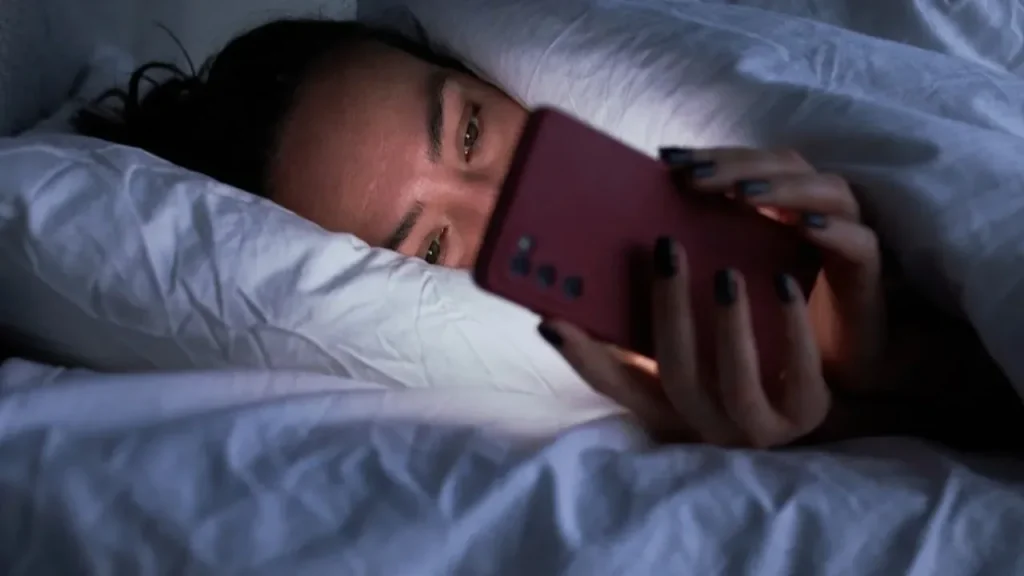
What are the Psychological Drivers Behind Sleep Procrastination?
The decision to stay awake late, despite knowing the consequences, is often governed by psychological factors related to self-regulation and impulse control. It is an immediate reward system overriding future well-being.
The perceived gain of immediate gratification the fun of watching one more episode or checking one more feed outweighs the abstract future cost of fatigue, especially when self-control is low.
Read more: Why People Believe Their Pets Understand Them
Why Does the Brain Struggle with Late-Night Self-Control?
As the day ends, cognitive resources, including the ability to resist impulses, become depleted. This state is known as “ego depletion.”
When exhausted, the brain finds it much harder to enforce the discipline necessary to put down the phone and prioritize long-term sleep health over short-term pleasure, fueling the desire for Revenge Scrolling.
How Does the Fear of Missing Out (FOMO) Play a Role?
Social media scrolling is inherently linked to the Fear of Missing Out (FOMO). People feel compelled to check updates, fearing the world will move on without them while they are asleep.
The desire for continuous connection keeps the mind engaged and activated. This directly fights against the necessary winding-down process for sleep, making bedtime difficult.
The ‘Just One More Episode’ Trap
Consider a professional who works 10 hours daily. When they finally sit down at 10 PM, the thought of immediately turning off the TV feels unfair. They justify watching “just one more episode,” which quickly spirals into three.
This small act of defiance grants an illusory sense of control over their leisure time, temporarily satisfying the need for autonomy before the inevitable crash the next morning.
How Does Perfectionism Contribute to the Delay?
Paradoxically, perfectionists often fall victim to sleep procrastination. They use daylight hours to meticulously complete tasks, leaving zero buffer time for relaxation.
The overwhelming need for order during the day creates an intense psychological pushback at night. The brain demands unstructured, guilt-free decompression time before resting.
What are the Documented Consequences of Chronic Sleep Delay?
The primary consequence of Revenge Scrolling is chronic sleep deprivation, which has severe, documented effects on both cognitive and physical health. The behavior actively impairs daily performance.
Insufficient sleep leads to a deterioration in concentration, problem-solving skills, and emotional regulation, creating a vicious cycle of fatigue and further procrastination.
How Does Sleep Deprivation Affect Next-Day Performance?
When the body misses deep, restorative sleep cycles (REM and deep NREM), the brain cannot consolidate memories or clear metabolic waste products efficiently.
This results in slower reaction times, impaired decision-making, and reduced creativity the following day. Essentially, the “revenge” taken the night before severely punishes the next-day self.
What is the Impact on Emotional Regulation?
Chronic fatigue significantly reduces one’s ability to manage stress and control emotional responses. Individuals become more irritable, anxious, and prone to mood swings.
This compromised emotional state can strain relationships and increase susceptibility to depressive or anxiety disorders over time, damaging mental health long-term.
The Circadian Rhythm Disruption
Staying up late due to Revenge Scrolling confuses the body’s natural circadian rhythm, the internal clock that regulates sleep-wake cycles. Late-night blue light exposure further suppresses melatonin production.
The disrupted rhythm makes it difficult to fall asleep even on nights when one tries to go to bed early. The body expects to be awake and active due to the established routine.
How Does Financial Productivity Suffer?
Sleep deprivation is a direct liability in the workplace. Reduced cognitive function translates directly into missed details, poor judgment in meetings, and lower overall efficiency.
The time “stolen” at night is repaid with drastically reduced productivity during prime working hours, often costing more in lost output than was gained in leisure.
How Can Individuals Break the Cycle of Revenge Scrolling?
Breaking this pattern requires addressing both the behavioral habit and the underlying psychological need for control. Simply trying to sleep earlier often fails because the root cause isn’t solved.
Effective strategies focus on creating structured personal time earlier in the day and establishing rigid, non-negotiable electronic boundaries before bed, demonstrating true self-mastery.
Why is Scheduling ‘Revenge Time’ Important?
Instead of waiting for the late hours, schedule dedicated, protected leisure time immediately after essential duties. This time must be treated as sacred and non-negotiable.
By consciously reclaiming personal time during the day, the psychological need for late-night defiance diminishes significantly. This preemptive strategy neutralizes the impulse to seek revenge.
How Should the Electronics Ban Be Implemented?
Institute a “Digital Sunset” a firm cut-off time (e.g., 9:30 PM) after which all non-essential screens are powered down and moved out of the bedroom. The bedroom must be strictly reserved for sleep.
This physical and temporal barrier is crucial because the mere presence of a device is often enough to trigger the scrolling habit. The lack of blue light aids natural melatonin release.
The Power of the Analog Wind-Down
Instead of scrolling, engage in a genuine analog activity for 30 minutes before bed. This could be reading a physical book, listening to calm music, or journaling.
This non-screen activity allows the brain to transition smoothly from the active state to the resting state, supporting the natural onset of sleep. It satisfies the need for autonomy constructively.
What is the Role of Mindful Reflection?
Take five minutes before bed to review the next day’s schedule and mentally check off completed tasks from the current day. This provides a sense of closure and organizational control.
This simple act can alleviate the anxiety and feeling of incomplete tasks that often drives the urge to postpone sleep. It puts the mind at ease.
A longitudinal study published in the Journal of Applied Psychology (2024 data) indicated that employees who self-reported consistently sleeping less than 6.5 hours per night due to intentional sleep delay showed a 25% increase in daily task errors and a measurable decline in professional engagement.
This confirms the high professional cost of Revenge Scrolling.
| Strategy Component | Behavioral Goal | Psychological Benefit | Time Frame Example |
| Scheduled Leisure | Reclaim daytime personal time | Eliminates the psychological need for ‘revenge’ | 6:30 PM – 7:30 PM, non-negotiable |
| Digital Sunset | Strict device cut-off | Reduces temptation and blue light exposure | 9:30 PM, all devices out of bedroom |
| Analog Wind-Down | Shift focus from stimulation to rest | Allows the brain to enter sleep mode naturally | 10:00 PM – 10:30 PM, read a book |
| Mindful Closure | Review/plan the next day | Reduces anxiety and gives a sense of control | 5 minutes before lights out |
Conclusion: Reclaiming Autonomy Through Discipline
Revenge Scrolling is a poignant demonstration of the modern struggle for autonomy in a high-demand world.
While born from a justified desire for personal time, it is a futile and damaging form of resistance against the biological clock.
The most effective “revenge” against an overwhelming schedule is not staying up late, but embracing the discipline of sleep to maximize performance and happiness the following day.
By mastering self-regulation, we regain true control over our lives. Isn’t it time to trade that fleeting late-night defiance for genuine, restorative power?
Share your best tips for ending the scroll and winning back your sleep in the comments below!
Frequently Asked Questions
Is Revenge Scrolling the same as insomnia?
No. Insomnia is the inability to fall or stay asleep despite having the opportunity. Revenge Scrolling is the deliberate choice to delay sleep, even when feeling tired.
Is this phenomenon only seen in young people?
While it is prominent among young adults due to technology use, the underlying behavior (sleep procrastination) affects all ages and is a recognized coping mechanism against excessive daytime demands.
What is the psychological term for this behavior?
The formal psychological term is “bedtime procrastination”. The “revenge” element is a colloquial, cultural term describing the emotional drive behind the procrastination.
How does blue light from screens affect sleep?
Blue light suppresses the release of melatonin, the hormone that regulates sleep-wake cycles. This makes the brain alert, directly inhibiting the feeling of sleepiness.
What single thing can I do to stop this tonight?
The single most effective action is enforcing the Digital Sunset. Plug your phone in another room or far away from the bed at least one hour before your intended sleep time.
