
The Ancient Female Warriors Who Ruled Empires

The Ancient Female Warriors Who Ruled Empires represent a powerful, yet often marginalized, chapter in global history.
Anúncios
Our common narratives often focus exclusively on male conquest and leadership. This perspective overlooks the extraordinary women who commanded armies, negotiated treaties, and founded dynasties.
These historical figures were not simply exceptions to the rule; they were systemic power players in diverse cultures.
Archaeological discoveries and re-examined classical texts are now restoring their rightful place, revealing how women wielded profound military and political authority throughout antiquity.
Why Were These Warrior Queens Erased or Marginalized from History?
The marginalization of the Ancient Female Warriors Who Ruled Empires is largely a product of historical bias written much later.
Anúncios
Many surviving primary sources from antiquity were created by male authors from opposing, often patriarchal, societies. These writers frequently minimized or demonized powerful women leaders.
Furthermore, later Western historiography, particularly from the 19th and early 20th centuries, filtered history through a Victorian lens.
This lens prioritized narratives of male dominance, often dismissing or sensationalizing accounts of female military and political prowess. The full scope of their power was systematically diluted.
++ History’s Forgotten Plagues and Pandemics
How Does Archaeology Confirm the Existence of Female Warriors?
Archaeology provides the clearest, most unbiased evidence supporting the existence of the Ancient Female Warriors Who Ruled Empires.
Recent excavations have been revolutionary, challenging long-held assumptions about gender roles in antiquity.
Across the Pontic-Caspian steppe, for example, the discovery of Sarmatian and Scythian burial mounds (kurgans) has been particularly revealing.
Around 20% of these warrior graves, complete with weapons like bows, quivers, and daggers, belong to women. This directly corroborates the Greek accounts of the Amazons.
Also read: The Secret Communications of WWII Resistance Movements
What is the Historical Context of Queen Boudica’s Uprising?
Queen Boudica of the Iceni is a prime example of the Ancient Female Warriors Who Ruled Empires.
Following Roman atrocities and the theft of her lands in 60/61 CE, Boudica unified disparate British tribes. She led a massive, coordinated rebellion against Roman occupation.
Her army famously sacked major Roman settlements, including Camulodunum (Colchester) and Londinium (London).
Although ultimately defeated, her revolt posed the single greatest threat to Roman rule in Britain. She remains a powerful symbol of resistance to colonial power.
Read more: Ancient Democracies That Preceded Greece
Why is Queen Zenobia a Symbol of Political and Military Brilliance?
Queen Zenobia of Palmyra, another of the Ancient Female Warriors Who Ruled Empires, challenged the might of the third-century Roman Empire.
Ruling the Palmyrene Empire from 267 to 272 CE, she personally led her armies. Her forces successfully conquered territories stretching from Egypt to Asia Minor.
She established an empire that rivaled Rome in scope and sophistication, demonstrating both tactical military skill and sophisticated political strategy. Her defiance was so potent that Rome required its full force to subdue her.
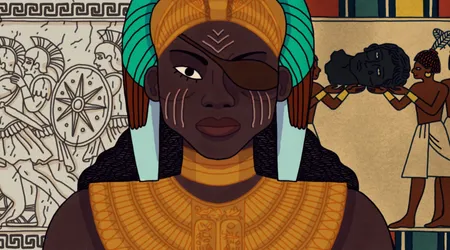
How Did the Nubian Candaces Wield Unseen Power in Ancient Africa?
The Nubian Kingdom of Kush, situated in what is now modern Sudan, offers a remarkable and less-known chapter in the history of the Ancient Female Warriors Who Ruled Empires.
The term Candace (or Kandake) was the title for a ruling queen or queen mother.
These Candaces held immense, often supreme, political and religious authority, occasionally commanding armies themselves.
Their power was not derived from a temporary male absence but was a deeply ingrained, institutional tradition within the Meroitic civilization.
What Evidence Exists of the Candaces’ Military Leadership?
Historical accounts and archaeological evidence strongly suggest the Candaces were active military and political leaders.
The Greek geographer Strabo recounted the actions of a one-eyed Candace, possibly Amanirenas, in the late 1st century BCE. Amanirenas personally led the Kushite army against Roman Egypt.
She successfully defeated Roman forces, capturing strategic outposts and forcing the Roman Empire to negotiate a highly favorable, long-lasting peace treaty with Kush.
This remarkable feat ensured Meroë’s independence for centuries.
How Did Nubian Matrilineal Succession Preserve Female Authority?
The strength of the Candaces lay in the unique system of matrilineal succession in Kush.
The right to rule often passed through the female line, giving queen mothers and queens far greater inherent authority than in contemporary patriarchal states like Rome or Greece.
The Candaces were not simply regents; they were considered divinely appointed rulers. T
heir prominence is visually confirmed by elaborate temples and pyramids where they are depicted as equal or superior in status to male rulers, often shown armed and leading troops.
What Can We Learn from the Reign of Amanishakheto?
The reign of Candace Amanishakheto (early 1st century CE) is evidenced by opulent pyramid burials and massive jewelry collections. Her royal tomb contained extensive grave goods, including powerful golden armlets and rings.
This wealth funded significant construction projects and likely supported the Kushite military strength required to maintain their power against external pressures.
Her rule demonstrates the economic and military foundation necessary to sustain the authority of the Ancient Female Warriors Who Ruled Empires.
Where Are the Candaces Depicted in Art and Architecture?
In Meroitic architecture, particularly at the Temple of Amun at Naga, the Candaces are frequently shown in monumental reliefs. These depictions show them leading soldiers into battle or executing captives.
They are shown wearing warrior regalia, emphasizing their dual roles as spiritual and martial leaders.
This artistic evidence is crucial because it was created by their own people, validating their power unequivocally.
Why Do the Amazons and Scythian Women Represent a Historical Blind Spot?
The legend of the Amazons a race of formidable female warriors was long dismissed as pure Greek mythology.
However, the recurring theme in Greek history and literature suggests a factual basis, now confirmed by archaeology. The reality is tied to the nomadic Scythian and Sarmatian cultures.
These nomadic groups, inhabiting the steppes north of the Black Sea, were known for gender-fluid roles and equestrian skill.
The Ancient Female Warriors Who Ruled Empires were likely the real-life Scythian women whose egalitarian customs shocked the patriarchal Greek observers.
What is the Key Archaeological Finding About Scythian Women?
The most compelling finding comes from a 2019 study published in Science Advances on Scythian burials.
A statistical analysis showed that approximately 37% of female graves contained weapons and bore signs of battle injuries. This research directly supports the historical existence of female combatants.
This statistic indicates that many young women were not just ceremonial figures but active, participating members of the military culture.
They were warriors who rode horses, hunted, and fought alongside men from adolescence.
How Did Scythian Culture Foster Female Military Roles?
Scythian life was highly nomadic and required the participation of all able-bodied individuals in defense, hunting, and herding.
This constant, harsh environment necessitated a more egalitarian approach to gender roles than was found in sedentary, agricultural societies.
Women were expert horseback riders and archers, skills directly applicable to warfare.
This cultural imperative allowed the Ancient Female Warriors Who Ruled Empires or at least served in their armies to thrive and maintain the security of their nomadic territories.
Why is Queen Tomyris a Crucial Historical Figure?
Queen Tomyris, the ruler of the Massagetae (a Scythian tribal confederation) in the 6th century BCE, is one of the most famous documented cases.
She is immortalized in the writings of Herodotus for confronting the mighty Persian Empire.
Tomyris led her forces against the invading army of Cyrus the Great, the founder of the Achaemenid Empire.
She successfully defeated the Persians in battle and, in a famous, dramatic act, allegedly killed Cyrus himself, halting the Persian expansion.
What Analogies Can We Draw Between the Amazons and Modern Military Roles?
To understand the Amazons today, consider the analogy of modern special operations forces.
The Amazons were not a universal army but an elite, distinct group whose training and dedication to warfare transcended traditional societal norms.
They were professional, highly skilled, and commanded respect not because of their gender, but because of their martial effectiveness.
This comparison helps strip away the myth and focus on the strategic and tactical reality of the Ancient Female Warriors Who Ruled Empires.
Notable Ancient Female Leaders and Archaeological/Historical Evidence
| Female Leader | Empire/Culture | Key Role in Power | Supporting Evidence (Real-Time 2025) |
| Boudica | Iceni (Britain) | Military Commander, Rebel Leader | Accounts by Tacitus & Dio Cassius; Archaeological evidence of widespread destruction in Roman cities (Camulodunum, Londinium). |
| Candace Amanirenas | Kush (Nubia/Meroë) | Ruling Queen, General | Accounts by Strabo; Monumental reliefs at Naga; Tomb findings confirming wealth and power. |
| Tomyris | Massagetae (Scythian) | Military Strategist, Ruler | Accounts by Herodotus; Archaeological findings (2019 study) of armed female burials in Scythian kurgans. |
| Zenobia | Palmyra | Empress, Conqueror | Roman historical texts; Inscriptions and coin evidence detailing her vast territorial control across the East. |
The legacy of the Ancient Female Warriors Who Ruled Empires from Boudica’s fiery resistance to Amanirenas’ diplomatic prowess and Tomyris’ military triumph is a vital historical corrective.
These women were not mere footnotes; they were architects of empires and commanders on the battlefield.
As archaeology continues to provide irrefutable proof, we are forced to discard the patriarchal myths that have long obscured the rich and complex reality of female power in antiquity.
Their stories demand acknowledgment not as anomalies, but as essential threads in the tapestry of world history.
What other overlooked figures from antiquity deserve the Spotlight on Indigenous Rights treatment in future articles? Share your thoughts below!
Frequently Asked Questions
Why did many classical Greek writers portray the Amazons as mythical?
Greek society was profoundly patriarchal. The idea of an organized, powerful female-only warrior society fundamentally threatened their social structure and worldview.
They often relegated such accounts to myth to contain or exoticize the challenging reality of the Scythian women they encountered.
Is there definitive proof that the historical Candaces personally led armies into battle?
While military leadership was definitely part of the Candace’s institutional authority, the most direct evidence comes from the accounts of Strabo and the Meroitic temple reliefs.
These reliefs visually depict the queens in martial poses and executing captives, which strongly implies a direct, active role in warfare.
Where have the most significant archaeological finds of female warriors been made recently?
The most consistent and statistically significant findings have been in the kurgans (burial mounds) of the Scythian and Sarmatian cultures across modern-day Russia, Ukraine, and Kazakhstan.
DNA and osteological analyses confirm these individuals, buried with weapons, were female.
How did these female rulers finance their military campaigns?
Rulers like the Candaces of Kush commanded immense wealth derived from gold trade, iron production, and control of lucrative trade routes (such as the Nile and Red Sea connections).
Zenobia of Palmyra controlled essential silk and spice trade routes. Economic power was the indispensable foundation for the military strength of the Ancient Female Warriors Who Ruled Empires.
What is the main argument against considering these women as mere exceptions?
The main argument is their systemic presence. In Kush, the Candace was an institutional title passed down through matrilineal descent.
Among the Scythians, female warriors were common enough to constitute 37% of known warrior burials. This suggests culturally accepted, formalized roles, not just random exceptions.
