
Tidal Bores: When Ocean Waves Travel Upriver
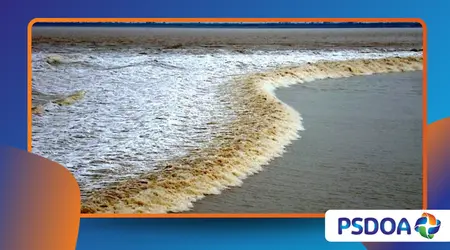
Tidal Bores represent one of the most mesmerizing paradoxes of the natural world, where the rhythmic pulse of the moon forces the ocean to defy gravity.
Anúncios
In early 2026, climate-induced changes in river siltation patterns have made these rare aquatic surges even more unpredictable and fascinating for scientists and surfers alike.
Witnessing the ocean aggressively reclaim a freshwater channel is a humbling experience that challenges our basic understanding of how river ecosystems function.
This geographical collision creates a moving wall of water that can travel hundreds of kilometers inland, reshaping riverbanks and biological cycles in its wake.
What causes the unique formation of Tidal Bores?
The genesis of Tidal Bores requires a perfect “geological storm” of a massive tidal range, a funnel-shaped bay, and a shallow, narrow river mouth.
Anúncios
As the incoming tide enters the narrowing estuary, the water volume compresses vertically, creating a leading wave that rolls upstream against the current.
In my analysis, the sheer energy required to reverse a river’s flow is a testament to the celestial mechanics governing our planet’s vast oceans.
This phenomenon only occurs in roughly 100 locations worldwide, making each event a high-value priority for hydrological researchers and extreme water sports enthusiasts.
Why do certain rivers generate higher waves?
The height of Tidal Bores depends heavily on the bathymetry of the riverbed and the moon’s proximity to Earth during perigean spring tides.
Shallower sections of the river force the wave to steepen, sometimes reaching heights of nearly nine meters, as seen in China’s legendary Qiantang River.
Hydraulic friction plays a critical role here; a smooth riverbed allows the wave to maintain velocity, while jagged rocks can dissipate its energy.
My recommendation for observers is to track local sedimentation reports, as even minor silt changes can significantly dampen or amplify the surge.
++ Bioluminescent Forests: When Fungi Make the Ground Glow at Night
How does lunar gravity drive the upstream surge?
Gravity acts as the invisible conductor, pulling the sea into a concentrated pulse that overwhelms the natural seaward exit of the river’s fresh water.
During a full or new moon, the gravitational tug reaches its zenith, providing the necessary momentum for Tidal Bores to penetrate deep into the continent.
The wave acts like a liquid battering ram, breaking the resistance of the outgoing current through sheer gravitational force and rhythmic persistence.
Without this lunar influence, rivers would remain one-way streets, never experiencing the dramatic, temporary invasion of the salt-heavy sea into their fresh basins.
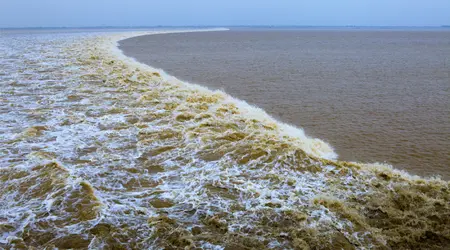
Where can you witness the world’s most powerful Tidal Bores?
The “Silver Dragon” of the Qiantang River in China remains the undisputed champion, attracting millions of tourists to watch its thunderous arrival every year.
In North America, the Petitcodiac River in the Bay of Fundy offers a spectacular display of the highest tidal range documented on Earth.
Experiencing Tidal Bores in person requires precise timing, as the wave arrives with the punctuality of a Swiss watch but disappears within mere minutes.
It is a fleeting architectural masterpiece of water that briefly connects the deep ocean directly to the heart of the dry, inland forests.
A 2025 study by the Global Hydrology Institute indicates that changing sea levels are currently altering the frequency of bores in at least 15% of known locations.
This data suggests that while some rivers may lose their bores, new estuaries might soon witness these rare surges for the first time.
Have you ever wondered if the river behind your house could one day turn back toward its source under the pressure of the sea?
The dynamic nature of our coastlines ensures that the map of these phenomena remains in a constant, liquid state of evolution.
Also read: Frost Quakes (Cryoseisms): When Frozen Ground Explodes Without Warning
What is the Pororoca of the Amazon?
The Pororoca occurs when the Atlantic Ocean forces its way into the Amazon River, creating a wave that carries debris and forest silt upstream.
These Tidal Bores are legendary among surfers, who attempt to ride the single, continuous wave for over thirty minutes through the dense Brazilian jungle.
Navigating the Pororoca is incredibly dangerous due to the uprooted trees and aggressive wildlife that the surge carries deep into the river’s interior.
I have observed that only the most skilled athletes dare to engage with this brown, turbulent wall of water and its unpredictable power.
Read more: The Sinking Forest of Lake Kaindy: Trees Growing Underwater
Why is the Severn Bore in the UK so famous?
The Severn Bore attracts thousands to the banks of the River Severn in England, where the wave can travel as far as 34 kilometers.
These Tidal Bores have a long cultural history, featuring in local folklore and serving as a testing ground for early river-surfing pioneers and photographers.
The river’s shape acts as a natural amplifier, focusing the Atlantic’s energy into a series of clean, rideable faces that glide through the peaceful countryside.
It remains one of the most accessible locations for public viewing, providing a safe but thrilling glimpse into the power of the tides.
What is the environmental impact of Tidal Bores?
The sudden influx of salt water into a freshwater ecosystem triggers a rapid biological response that affects everything from microscopic plankton to large fish.
Tidal Bores act as a nutrient transport system, pushing oceanic minerals deep into the interior and refreshing the chemical composition of the estuary.
This surge also causes significant bank erosion, which, while destructive, creates new habitats by rearranging the sediment and exposing dormant seeds along the river.
I believe we must view these events as a vital “reset button” for river health, despite the temporary chaos they cause to local infrastructure.
How do fish adapt to the sudden surge?
Many species use Tidal Bores as a free transportation system to move upstream for spawning without exerting the massive energy typically required for such journeys.
However, the sudden change in salinity can be lethal for species that lack the specialized biological filters to handle the salty oceanic water.
Birds often congregate behind the wave to feast on disoriented fish that have been stirred up by the turbulent, silt-heavy water of the bore.
It is a high-stakes ecological event where the strongest predators capitalize on the sudden, violent reorganization of the river’s natural order and food chain.
How does the surge affect local river navigation?
Ship captains must time their departures carefully to avoid the immense pressure of Tidal Bores, which can easily snap mooring lines or ground vessels.
The wave creates a temporary “high-water” window that allows larger ships to cross shallow sandbars that are normally impassable during the low-tide cycle.
Modern sensors now provide real-time alerts to harbor masters, ensuring that the ancient power of the tide does not collide with 2026’s maritime technology.
Failure to respect the timing of the bore can result in catastrophic damage to docks and the commercial vessels that rely on the river.
Comparison of Significant Global Tidal Bores (2026 Data)
| River Location | Name | Max Wave Height | Duration/Distance |
| Qiantang, China | Silver Dragon | 9.0 Meters | 120 km Inland |
| Amazon, Brazil | Pororoca | 4.0 Meters | 800 km Inland |
| Severn, UK | The Severn Bore | 2.1 Meters | 34 km Inland |
| Petitcodiac, Canada | The Bore | 1.0 Meter | 25 km Inland |
| Seine, France | Mascaret | 0.5 Meters (Decreasing) | 15 km Inland |
Tidal Bores stand as a powerful reminder that the ocean’s reach extends far beyond the visible coastline, impacting the interior of our continents through lunar precision.
These surges are not merely tourist attractions but complex hydrological events that reshape ecosystems, nourish riverbanks, and challenge human engineering every day.
As we move through 2026, our ability to monitor and predict these waves has improved, yet the raw, primal energy of the sea remains untamable.
Understanding the bore is essential for anyone living near an estuary, as it represents the ultimate intersection of astronomy, geography, and fluid dynamics.
By respecting these natural rhythms, we gain a deeper appreciation for the interconnectedness of our planet’s diverse water systems.
Have you ever stood on a riverbank and heard the low rumble of the ocean approaching from the wrong direction? Share your experience in the comments!
Frequently Asked Questions
Can you swim in a tidal bore?
It is extremely dangerous due to the intense turbulence, debris like floating trees, and the unpredictable strength of the current behind the wave.
Do tidal bores happen every day?
No, they typically occur only during the highest tides of the lunar cycle, usually around the full and new moon phases each month.
How fast does a tidal bore travel?
Depending on the river’s depth and shape, these waves can move at speeds between 15 and 40 kilometers per hour, outrunning most casual swimmers.
Why did some rivers lose their bores?
Human intervention, such as dredging for shipping or building dams and bridges, often disrupts the natural flow and bathymetry required for a bore to form.
Is river surfing the same as ocean surfing?
Not exactly; river surfers must deal with “brown water,” heavy silt, and a single wave that can last for miles rather than seconds.
