
How Vexillology Became a Hyper-Niche Online Obsession

Vexillology Became a Hyper-Niche Online Obsession during the mid-2020s, as digital communities sought deeper meaning through the geometric simplicity of national and regional flags.
Anúncios
This fascinating shift proves that even the most academic disciplines can transform into viral sensations when fueled by passionate internet subcultures.
Modern enthusiasts no longer just study history; they actively redesign the world’s symbols using sophisticated graphic software and historical data.
We are witnessing a unique era where a simple piece of colored fabric becomes a battleground for identity, aesthetics, and political expression.
Mapping the Vexillological Trend
- Historical Roots: From military signaling to modern digital design communities.
- Design Principles: The “Five Basic Principles” that dictate what makes a flag truly iconic.
- Community Platforms: How Reddit and Discord fueled the rise of the “vexillology circlejerk” and serious analysis.
- Real-World Impact: Examples of cities and states adopting fan-made designs as official symbols.
Why did flag study capture the digital imagination?
The reason Vexillology Became a Hyper-Niche Online Obsession lies in our innate desire for visual order within a chaotic information landscape.
Flags offer a clean, mathematical way to categorize complex histories and cultural identities into a single, scalable image.
Younger generations find comfort in the rigid rules of flag design, often using these symbols to represent micro-identities that traditional geography ignores.
This digital “flag-waving” serves as a shorthand for belonging in an increasingly fragmented social media world.
What are the “Five Principles” of flag design?
The North American Vexillological Association (NAVA) popularized five rules: keep it simple, use meaningful symbolism, use two to three colors, no lettering, and be distinctive.
These constraints act as a creative challenge for online artists who strive for the “perfect” minimalist aesthetic.
Online hobbyists often spend weeks debating the exact shade of blue on a proposed banner, treating these rules with religious fervor.
This dedication ensures that the resulting designs are not only beautiful but also mathematically balanced and easy to recognize.
++ Modern Anarchist Subcultures and Digital Organizing
How do “flag memes” drive subculture growth?
Humor is the primary gateway for many new enthusiasts, with “bad flag” memes acting as a viral entry point into the deeper hobby.
Communities mock over-complicated designs, such as the former flag of Pocatello, to teach design theory through comedy and satire.
These jokes often evolve into sophisticated “alternate history” projects where users imagine flags for fictional empires or future space colonies.
By blending humor with heraldic tradition, the community maintains a high level of engagement that persists across multiple digital platforms.
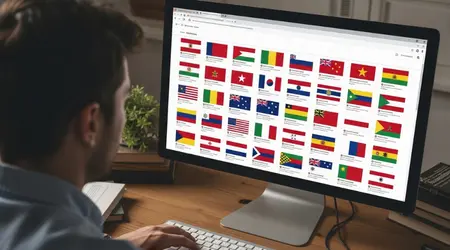
How does vexillology influence real-world government decisions?
It is clear that Vexillology Became a Hyper-Niche Online Obsession because its influence has successfully jumped from the screen to the flagpole.
Many American states, including Minnesota and Utah, recently updated their flags following intense pressure and design submissions from online communities.
Governments now recognize that a poorly designed flag is a missed branding opportunity for tourism and local pride.
By listening to the niche experts online, officials are adopting symbols that citizens actually want to wear on t-shirts and hats.
Also read: The Revival of Paganism in Online Microcultures
Why did Minnesota change its flag in 2024?
The previous design was widely criticized for being a “seal on a bedsheet,” a term used for flags that are indistinguishable at a distance.
Public outcry, fueled by online vexillologists, led to a commission that selected a strikingly simple, star-themed replacement.
This change demonstrated that flags are living symbols, not static historical artifacts that must remain untouched forever.
The new Minnesota flag represents a modern, inclusive identity that was refined through thousands of public and digital critiques.
Read more: The Subculture of Trainhoppers in Modern America
Can a flag boost a city’s local economy?
A great flag, like Chicago’s four stars, creates a sense of “brand equity” that residents use to signal their hometown loyalty.
When a city adopts a design that follows vexillological principles, it often sees an explosion in local merchandise and organic marketing.
Think of a flag as a logo for a community; if it’s ugly, nobody wants to represent it.
Successful redesigns prove that aesthetic quality directly correlates with civic engagement and the strength of a local cultural identity.
Why is the “Redesign Movement” so controversial?
The fact that Vexillology Became a Hyper-Niche Online Obsession hasn’t come without significant friction between traditionalists and modern minimalist designers.
Some critics argue that the “NAVA rules” produce boring, corporate-looking symbols that lack the grit and soul of historical banners.
This tension creates a vibrant intellectual environment where history buffs and graphic designers constantly clash over the definition of “good” art.
These debates prevent the hobby from becoming stagnant, forcing every participant to defend their aesthetic choices with historical evidence.
What is the “Corporate Minimalism” critique?
Detractors claim that new flags look too much like tech startup logos, losing the intricate details that told a region’s unique story.
They argue that “simple” isn’t always “better” if it results in a sterile symbol that feels disconnected from the past.
However, proponents argue that a flag’s primary job is to be visible from a distance while flapping in the wind.
This functionalist approach prioritizes clarity over complexity, ensuring the symbol can perform its basic duty as a recognizable signal.
How does vexillology handle political sensitivity?
In 2026, the community is at the forefront of “decolonizing” flags, removing symbols of past oppression in favor of indigenous representations.
This process requires a delicate balance of historical honesty and a forward-looking vision for a unified community.
By providing a platform for these discussions, the vexillology subculture helps society navigate difficult conversations about heritage and change.
The flag becomes a canvas for reconciliation, allowing diverse groups to find common ground in a shared, newly designed symbol.
Is this niche hobby sustainable in the long term?
As Vexillology Became a Hyper-Niche Online Obsession, many wondered if it was just a passing fad or a lasting academic shift.
The continued growth of the International Federation of Vexillological Associations (FIAV) suggests that the digital interest is translating into formal scholarship.
We are seeing a new generation of historians who view visual symbols as equally important to written records.
This multidisciplinary approach ensures that the study of flags will remain relevant as long as humans need to signal their identity.
What role does AI play in flag creation?
Generative AI tools are now being used to iterate through thousands of color combinations and geometric patterns in seconds.
This allows designers to test the “distinctiveness” of a new flag against every other official banner in existence.
While AI handles the technical execution, the human element remains essential for assigning meaning and emotional weight to the colors.
A machine can draw a flag, but only a human can decide that a specific shade of green represents “hope for the future.”
How do online “Worldbuilding” projects use flags?
Fantasy and sci-fi writers use vexillology to add layers of realism to their fictional universes, creating flags that reflect their world’s lore.
These creators often consult the online community to ensure their fictional banners follow the rules of “believable” heraldry.
This crossover between gaming, writing, and history keeps the subculture fresh and attracts people from diverse creative backgrounds.
It proves that the “niche” is actually a broad intersection of art, politics, and historical storytelling.
Global Flag Redesign Statistics (2020-2026)
| Region | Previous Design Type | New Design Influence | Popularity Increase |
| Utah, USA | Seal on Blue | Minimalist Beehive | +400% in merchandise |
| Minnesota, USA | Detailed Seal | North Star Theme | +250% in civic polls |
| Mississippi, USA | Controversial Symbol | Magnolia Floral | High (National Praise) |
| Various Cities | Text-heavy | Geometric/Graphic | High (Community-led) |
| Digital Communities | N/A | High-Concept/Experimental | Massive (Viral Growth) |
Symbols of a Digital Generation
The journey of how Vexillology Became a Hyper-Niche Online Obsession highlights a broader trend of finding depth in the seemingly simple.
We have explored how a mix of design theory, meme culture, and political change turned a dry academic subject into a vibrant community.
These digital enthusiasts are not just observing history; they are literally redrawing the map, one pixel at a time.
In a world of fleeting digital content, flags offer a sense of permanence and pride that resonates with people across all borders.
As we continue to redefine our identities in the 21st century, the banners we fly will remain the ultimate expression of who we are.
Do you think your city or state needs a flag redesign, or do you prefer the traditional “seal on a bedsheet” look? Share your experience in the comments below!
Frequent Questions
Why are so many American city flags so ugly?
Most were designed by committees in the mid-20th century who treated them like letterheads rather than flags.
They often included small text and complex seals that are impossible to read when the flag is actually flying.
Can I legally design a flag for my own neighborhood?
Anyone can design and fly a flag for their home or neighborhood as a form of personal expression.
While it won’t be “official” without government approval, many neighborhoods use them to build local spirit and identity.
What is the most “perfect” flag according to vexillologists?
The flag of Japan is often cited as a masterpiece of minimalism and symbolism.
It uses a single shape and two colors to represent a profound cultural concept, making it recognizable from any distance.
How do I get involved in the online vexillology community?
The “Vexillology” subreddit and various Discord servers are the best places to start sharing your designs and learning the theory.
Most communities are very welcoming to beginners who are eager to learn the “Five Principles.”
Is there a difference between Vexillology and Heraldry?
Vexillology is the study of flags, while Heraldry is the study of coats of arms and family crests.
While they share many rules and histories, they are distinct academic fields with their own specific terminologies.
