
Nacreous Clouds: The Rare Polar Clouds With Rainbow Colors
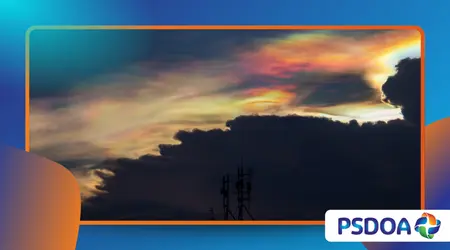
Nacreous Clouds represent one of the most breathtaking yet terrifyingly complex spectacles that our planet’s atmosphere can manifest during the freezing polar winters.
Anúncios
These shimmering, iridescent structures present a visual masterpiece in the twilight sky, casting vivid pastel hues that resemble mother-of-pearl shifting under soft light.
Scientists watch these formations with deep analytical scrutiny because their mesmerizing beauty conceals a dark, destructive chemical mechanism threatening our global environmental stability.
This real-time 2026 update explores the delicate balance between atmospheric awe and ecological vulnerability, shifting our perspective on these high-altitude phenomena.
Key Atmospheric Themes
- The Stratospheric Canvas: Why these formations only materialize at extreme altitudes under unique, freezing conditions.
- The Iridescent Spectrum: Understanding the physics of light diffraction through microscopic ice crystals in the dark sky.
- Ozone Layer Destruction: The chemical reactions that turn these beautiful displays into catalyst sites for environmental damage.
- Observational Hotspots: Identifying the best geographical locations and times to witness this rare polar phenomenon safely.
What are polar stratospheric clouds and how do they form?
The phenomenon known as Nacreous Clouds occurs exclusively in the stratosphere, roughly fifteen to twenty-five kilometers above the frozen surface of the earth.
Unlike common tropospheric clouds composed of dense liquid water, these rare structures require temperatures to drop below a freezing minus seventy-eight degrees Celsius.
The extreme cold allows trace amounts of ambient moisture to freeze into perfectly uniform, microscopic ice crystals that drift slowly through the thin air.
As the setting sun strikes these high-altitude formations from beneath the horizon, it creates an intense, glowing illumination that captures the global imagination.
How does light create the mother-of-pearl effect?
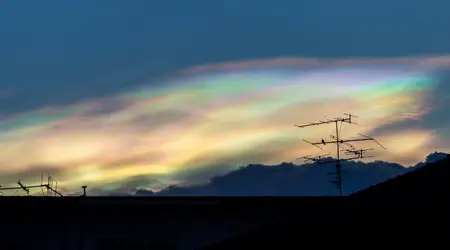
Diffraction occurs when sunlight passes through the uniform ice crystals, scattering the light waves into distinct, shimmering waves of pink, violet, and green.
This process behaves exactly like a oil slick on a wet pavement, twisting ordinary white light into a shifting, dynamic display of pure color.
++ Fairy Circles: The Mysterious Perfect Circles in Desert Grass
Why are they so rare for typical skywatchers?
Most humans live far outside the polar circles, where the stratosphere rarely reaches the extreme, icy temperatures needed to trigger this crystalline growth.
When a stray formation drifts southward over Scotland or Scandinavia, it makes international news headlines because the sight is so profoundly alien and unexpected.
Why does this beautiful phenomenon threaten the ozone layer?
The chemical reality of Nacreous Clouds is far less poetic than their visual appearance, serving as a dangerous catalyst for modern ozone depletion.
These icy surfaces provide a reactive stage where harmless chlorine reservoirs convert into highly destructive free radicals when exposed to early spring sunlight.
A single chlorine atom can dismantle thousands of vital ozone molecules, tearing temporary holes in our planet’s essential ultraviolet radiation shield.
Researchers from the British Antarctic Survey have documented these precise interactions, warning that increased stratospheric cooling could accelerate this hazardous process significantly.
Also read: Frost Quakes (Cryoseisms): When Frozen Ground Explodes Without Warning
What substances accelerate this chemical destruction?
Man-made chlorofluorocarbons, though heavily regulated today, still linger in the upper atmosphere, seeking out these ice crystals to initiate their destructive work.
The clouds gather these pollutants together, amplifying their harmful potential just as the polar regions emerge from the long, dark winter months.
Read more: The Sinking Forest of Lake Kaindy: Trees Growing Underwater
How do scientists track this atmospheric damage?
Satellites equipped with advanced infrared sensors monitor the density and spread of these formations, mapping their correlation with local ozone drops.
This continuous data stream helps meteorologists predict ultraviolet spikes, providing vital warnings to communities living in high-latitude zones across the world.
What do the latest 2026 meteorological observations show?
Recent data compiled by the World Meteorological Organization indicates an unusual 12% increase in stratospheric ice formations over the northern hemisphere this winter.
This statistical rise suggests that while our ground temperatures fluctuate wildly, the upper atmosphere is trapping less heat, growing colder over time.
Observing Nacreous Clouds in real-time gives climate scientists a sensitive thermometer to measure these massive, high-altitude thermal shifts across the globe.
The following table contextualizes these observations, detailing the specific traits that separate these stratospheric giants from the ordinary clouds we see daily.
Atmospheric Cloud Typology and Characteristics (2026 Data)
| Cloud Classification | Altitude Range (km) | Ideal Formation Temperature | Primary Environmental Impact |
| Tropospheric (Common) | 0 – 12 km | Variable (Above -40°C) | Local Weather & Precipitation |
| Nacreous (Type II) | 15 – 25 km | Below -78°C | Ozone Depletion Catalyst |
| Nitric Acid (Type I) | 15 – 25 km | Below -75°C | Chemical Pollutant Storage |
| Noctilucent | 76 – 85 km | Below -120°C | Mesospheric Climate Indicator |
Where are the latest sightings occurring right now?
Recent reports from observers in Kiruna, Sweden, describe massive, glowing ribbons of color stretching across the twilight sky during the early morning hours.
These live accounts confirm that winter atmospheric waves are pushing polar air further south, creating brief viewing windows for lucky enthusiasts in Scotland.
How can photography enthusiasts capture this event?
Witnessing Nacreous Clouds requires a clear view of the polar horizon during the precise moments of civil twilight just after sunset.
Because these formations sit so incredibly high in the atmosphere, they remain brightly illuminated long after the ground has plunged into total darkness.
An amateur photographer captured an incredible sequence in Norway last week, showing the colors shifting from bright gold to deep, neon violet.
Use a tripod and a long exposure setting to bring out the subtle contrast between the glowing stratospheric ice and the dark tropospheric clouds.
What equipment works best for twilight shooting?
A mirrorless camera with a high dynamic range sensor allows you to capture the intense contrast without blowing out the delicate pastel gradients.
Avoid using automatic filters, as the natural phenomenon possesses an organic vibrancy that digital software often distorts into looking fake or artificial.
How can you distinguish them from regular rainbows?
Regular rainbows require active rainfall and appear opposite the sun, while these iridescent clouds wrap around the sun’s position from immense altitudes.
Think of them as permanent neon signs etched into the edge of space, remaining stable for hours while ordinary weather systems rush past below.
Balancing Visual Splendor with Ecological Awareness
The ongoing study of Nacreous Clouds reminds us that nature’s most stunning creations can sometimes harbor the most delicate environmental warnings.
We have explored how these stratospheric wonders form through extreme cold, casting beautiful light while simultaneously hosting reactions that thin our protective ozone layer.
Enjoying the visual magic of our atmosphere should always be matched by a deep commitment to reducing the industrial pollutants that fuel its destruction.
As we move through 2026, tracking these polar anomalies remains a vital duty for scientists protecting the long-term health of our biosphere.
Let us look up at the twilight sky with both a sense of wonder and a renewed dedication to preserving the invisible shields that keep us safe.
Have you ever been lucky enough to spot a glowing pearl cloud during a cold winter evening? Share your experience in the comments below!
Frequently Asked Questions
Are nacreous clouds dangerous to look at directly?
No, they are perfectly safe to view with the naked eye, as they merely reflect and diffract natural sunlight during the twilight hours.
Do these clouds produce snow or rain on the ground?
No, they exist far too high in the dry stratosphere to produce any weather or precipitation that could reach the earth’s surface.
Why are they called mother-of-pearl clouds?
The name derives from the old poetic term “nacre,” which describes the iridescent internal layer found inside certain mollusk shells.
Can global warming make these rare clouds appear more frequently?
Yes, because greenhouse gases trap heat close to the ground, they cause the upper stratosphere to become significantly colder, encouraging ice crystal growth.
