
Marine Snow: The Strange Underwater Blizzard in Deep Oceans

Marine Snow is the captivating phenomenon occurring in our vast oceans, acting as a vital bridge between the sunlight-drenched surface and the dark, mysterious seafloor.
Anúncios
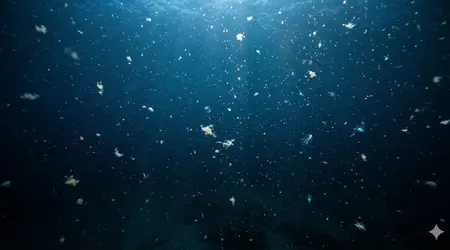
Imagine trillions of tiny white flakes drifting silently through the crushing pressures of the deep sea, creating an ethereal scene that resembles a winter storm.
This constant descent provides essential nourishment to creatures living in the abyss, sustaining life where photosynthesis is impossible due to the total absence of sunlight.
Scientists have spent decades studying this complex process, revealing how surface productivity directly impacts the health and biodiversity of the deepest marine ecosystems on Earth.
Without this biological conveyor belt, the abyssal plains would essentially be vast, barren deserts, unable to support the diverse communities that currently thrive there today.
Understanding this mechanism is crucial for modern oceanography, especially as we seek to comprehend how climate change might alter these delicate nutrient transport systems globally.
Key Points Covered
- Definition of the phenomenon.
- How it sustains deep-sea life.
- The role of organic detritus.
- Technological advancements in monitoring.
- Environmental implications and future research.
What is Marine Snow and how does it form?
The formation of this material begins near the surface, where microscopic phytoplankton, zooplankton, and other organisms live, grow, reproduce, and eventually reach their life’s end.
When these organisms die, they form aggregates with fecal pellets, mucus, and inorganic matter, creating sticky, drifting particles that grow larger as they slowly sink.
This aggregation process resembles how dust bunnies collect under furniture, transforming small, individual pieces of debris into substantial, nutrient-rich clumps that reach the ocean bottom.
What components make up these particles?
Microscopic plants called diatoms are primary contributors, providing a carbon-rich foundation that forms the bulk of the material descending through the water column every single day.
Beyond phytoplankton, gelatinous substances secreted by various marine animals act as biological glue, binding these disparate pieces together into cohesive, snow-like flakes of organic material.
Chemical analysis shows these particles contain nitrogen, phosphorus, and essential minerals, which are crucial nutrients that deep-sea animals require to build tissues and maintain metabolic functions.
++ Steam Devils: Rare Tornado-Like Vortices
How does the sinking process work?
Gravity is the main driver behind this journey, though water density and turbulence play significant roles in determining how long particles remain in the water column.
Some smaller particles may take weeks to reach the bottom, while larger, heavier aggregates fall much faster, sometimes reaching the depths in just a few short days.
During this descent, bacteria actively colonize the surface of the Marine Snow, breaking down complex organic molecules and recycling nutrients back into the surrounding seawater supply.
Read more: The Sinking Forest of Lake Kaindy: Trees Growing Underwater
How fast does the material actually descend?
Research indicates that the settling velocity varies significantly, influenced by particle size, shape, and the density of the surrounding water at different ocean depths and temperatures.
While some researchers previously underestimated these speeds, current telemetry data shows that larger, more compact aggregates can descend at rates exceeding one hundred meters per day.
This rapid transport ensures that a substantial portion of the carbon fixed by surface photosynthesis successfully reaches the seafloor, providing immediate food for benthic communities.
Why is this phenomenon vital for ocean life?
The deep ocean floor depends entirely on this influx of energy to support its vast and unique biological communities, which have evolved in complete, eternal darkness.
Think of it like a remote village that relies exclusively on a single supply truck arriving periodically; if the truck stops, the entire village faces starvation.
This analogy highlights the fragility of abyssal ecosystems, which possess no local food production and must rely on this external, gravity-driven source of imported biological energy.
Also read: Frost Quakes (Cryoseisms): When Frozen Ground Explodes Without Warning
Who consumes the drifting debris?
A wide variety of organisms, from microscopic bacteria to deep-sea cucumbers, sponges, and brittle stars, aggressively feed on these falling particles as they reach the bottom.
Many animals have evolved specialized appendages to catch these drifting morsels, while others simply filter the water or vacuum the sediment where the material eventually settles.
Even predators in the deep sea rely on this process, as their prey species are ultimately sustained by the nutritional value provided by the constant Marine Snow.
What happens to the carbon cycle?
This biological pump is a major mechanism for sequestering carbon, as the sinking organic matter stores atmospheric carbon in deep-sea sediments for thousands of years afterward.
By moving carbon from the surface to the depths, the ocean effectively mitigates the greenhouse effect, playing a massive role in regulating the Earth’s global climate.
Scientists estimate that this process exports gigatons of carbon annually, making it one of the most significant, yet invisible, biogeochemical cycles occurring on our entire planet.
How does it affect biodiversity?
Regions with higher surface productivity, such as coastal upwelling zones, experience more intense “blizzards,” leading to higher concentrations of life and greater biodiversity on the seafloor.
Conversely, the vast, open ocean centers, often called “blue deserts,” receive significantly less material, supporting much lower densities of life in those deep, isolated regions.
This direct correlation between surface and bottom life reminds us that the ocean is a single, interconnected system, regardless of the vast distances separating its layers.
How do researchers study this elusive event?
Monitoring this process is notoriously difficult because it happens in the deep, dark, and high-pressure environments that are notoriously expensive and challenging for humans to access.
Specialized sediment traps, deployed by research vessels, sit at various depths for months to collect the falling material, providing a snapshot of the ongoing oceanic flux.
Modern autonomous vehicles and high-resolution cameras now allow us to visualize these events in real-time, capturing data that was previously impossible to acquire with older technology.
What role do autonomous sensors play?
Robotic landers equipped with sophisticated sensors now measure the chemical composition of the water column, identifying the specific types of organisms contributing to the flux.
These autonomous platforms can operate for months without human intervention, providing continuous, longitudinal data that helps researchers understand seasonal and interannual variability in the ocean.
Artificial intelligence now processes the massive amounts of imagery collected by these cameras, identifying particle sizes and densities far faster than any human scientist ever could.
Are there any statistics available?
According to data from the Woods Hole Oceanographic Institution, the global flux of organic carbon to the deep sea is estimated at approximately 2 to 10 gigatons annually.
This single statistic underscores the immense scale of this biological transport mechanism, highlighting why it remains a central focus of climate change research and ocean conservation.
As surface temperatures rise, changes in plankton composition may alter the quality of the Marine Snow, potentially impacting the food security of deep-sea ecosystems worldwide.
What does the future look like?
Ongoing research is focused on how warming oceans, ocean acidification, and increased stratification might disrupt this vital transport system, potentially starving deep-sea organisms of their food.
International collaboration between oceanographic institutes is increasing, aiming to create a global network of sensors that provide a comprehensive, real-time view of these oceanic “blizzards.”
Ultimately, our ability to protect these ecosystems depends on our capacity to monitor, understand, and predict the impacts of human activities on these hidden ocean processes.
Comparison of Particle Types
| Type of Particle | Primary Source | Size Range | Importance |
| Phytoplankton | Surface Algae | < 0.5 mm | Essential Nutrient Base |
| Fecal Pellets | Zooplankton | 0.5 – 2 mm | High Energy Content |
| Mucus Aggregates | Marine Animals | 2 – 10 cm | Carbon Sequestration |
| Mineral Dust | Aeolian Deposition | 0.1 – 1 mm | Weight/Sinking Assist |
Conclusion and Final Thoughts
We have explored the fascinating, complex world of Marine Snow, understanding how it sustains life across the vertical expanse of our blue, mysterious, and productive oceans.
This phenomenon bridges the gap between the sunlit surface and the dark seafloor, acting as a critical lifeline that supports unique, highly specialized deep-sea biological communities.
The role of this organic flux in global carbon sequestration reminds us that the health of the deep ocean is fundamentally linked to our own planetary climate.
As human activities continue to influence the oceans, we must prioritize understanding and protecting these vital, invisible systems that quietly regulate the life-support functions of Earth.
Have you ever imagined the ocean as a living, breathing machine that snows its own nutrients? Please share your thoughts and questions in the comments below!
Frequently Asked Questions
What is the primary function of these particles?
They transport carbon and essential nutrients from the ocean’s surface to the deep seafloor, sustaining life in the abyss.
Why is it called “snow”?
It is named for the visual appearance of white, organic particles slowly drifting through the water column, mimicking a blizzard in the deep sea.
How does climate change affect this process?
Rising ocean temperatures and acidification can change plankton communities, which potentially alters the nutritional quality and quantity of the material reaching the deep sea.
Can humans observe this directly?
Yes, via specialized cameras on deep-sea submersibles or robotic landers, though it remains a technically challenging and expensive endeavor.
Is this the only food source for deep-sea life?
While it is the primary food source for many, some deep-sea communities also rely on chemosynthesis near hydrothermal vents, which do not depend on surface sunlight.
