
Earth Breathing: The Rare Phenomenon of Pulsating Ground
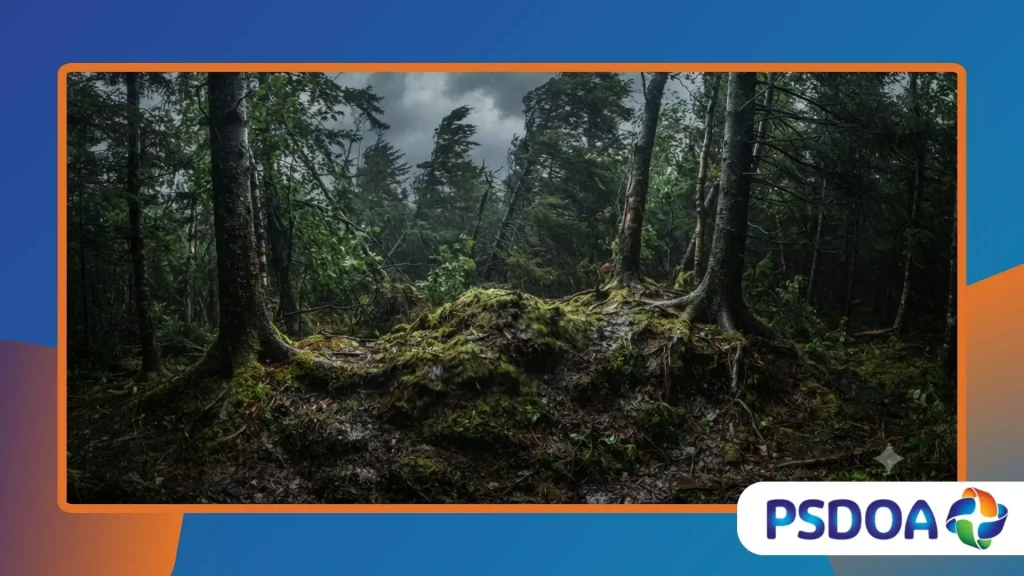
Earth breathing happens when vast forest floors rhythmically rise and fall, creating the eerie illusion that the planet itself inhales and exhales.
Anúncios
Recent viral footage captured in wooded regions across Canada and northern Europe left millions of spectators completely stunned by this uncanny geological spectacle.
Heavy winds interact with saturated root networks to produce these bizarre surface oscillations.
Nature continuously reminds humanity of its hidden mechanical forces operating beneath our feet.
Witnessing a pulsating terrain challenges our conventional understanding of solid ground stability.
Anúncios
Scientists explain that this phenomenon relies on complex hydro-geological mechanisms hidden beneath shallow topsoil layers.
Exploring these breathing landscapes unlocks fascinating insights into forest ecosystem dynamics and subsurface hydrology.
Are you prepared to discover what truly causes the forest floor to heave like a living chest?
Navigating the Mechanics of Pulsating Terrain
- Uncovering atmospheric wind coupling mechanisms that trigger surface heaving.
- Analyzing subsurface root mat elasticity and saturated peat bog dynamics.
- Evaluating historical documentation of pulsating ground reports across Canada.
- Distinguishing natural oscillation events from active seismic fault movements.
What Causes the Ground to Rise and Fall?
Earth breathing primarily occurs when high-velocity gales sweep across dense forests rooted in thick, water-logged peat moss.
The wind pushes violently against tall evergreen tree crowns, transferring massive mechanical leverage down through rigid trunks directly into root systems.
This immense lateral force lifts the superficial root mat away from underlying bedrock or saturated clay layers.
Think of the forest floor as a giant air mattress where stepping or pushing on one corner causes another section to inflate outward.
Researchers from geological survey institutes confirm that soil saturation levels dictate whether a forest floor can successfully oscillate under wind pressure.
When continuous heavy rains fill subsurface hollows, the entire topsoil layer floats on a temporary hydraulic cushion of water.
Once winds subside, gravity pulls the elevated root system back down into its original resting position.
This cyclical motion mimics biological respiration with astonishing precision.
How Do Tree Roots Act as Levers?
Mature conifers possess extensive shallow root systems that interlock tightly with neighboring trees across expansive woodland tracts.
When gales strike the upper canopy, these interconnected root plates act as giant wooden levers anchored into soft soil.
The leverage generated is strong enough to peel entire carpets of moss and turf upward.
++ Marine Snow: The Strange Underwater Blizzard in Deep Oceans
Why Do Peat Bogs Facilitate This Movement?
Peatlands consist of spongy, decomposed organic matter holding tremendous amounts of trapped water beneath a fibrous green surface.
This semi-liquid subsurface lacks rigid structural attachment to deep geological formations, allowing upper turf layers to slide and flex freely.
Water acts as a lubricant reducing friction during wind-driven displacement waves.
Also read: Dust Veils: Atmospheric Layers That Turn Sunsets Purple
Can Seismic Activity Trigger Ground Pulsing?
True wind-induced ground breathing differs fundamentally from seismic surface waves generated by tectonic plate friction during earthquakes.
Seismic tremors rupture deep rock strata instantly, whereas forest heaving involves slow, elastic deformation of superficial organic layers.
Monitoring equipment easily distinguishes between atmospheric pressure waves and genuine tectonic events.
Where Can You Witness This Rare Geological Spectacle?
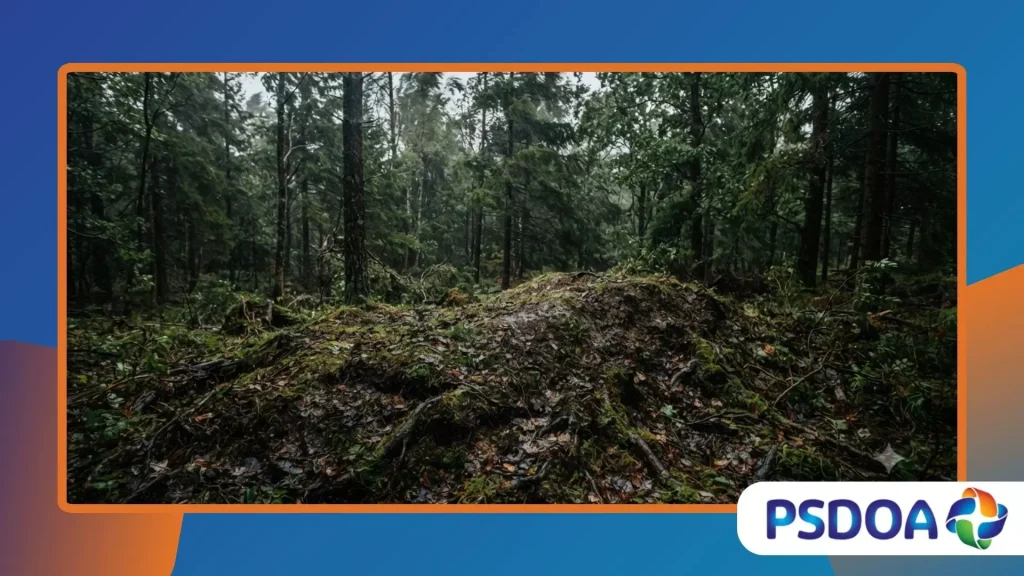
Documenting Earth breathing typically requires visiting remote boreal forests, boggy wetlands, or sub-arctic taiga regions during severe autumn windstorms.
Areas experiencing high seasonal precipitation combined with shallow bedrock formations provide the ideal structural conditions for surface oscillation.
Local residents in rural Quebec and Newfoundland have shared generational tales of walking on bouncing forest floors.
These isolated ecosystems guard secrets of dynamic soil mechanics that rarely make standard science textbooks.
Field researchers studying these phenomena use high-precision tiltmeters and laser leveling instruments to measure vertical soil displacement during storms.
Data collected by geomorphologists reveals that surface ground can rise by up to thirty centimeters during peak wind gusts.
Such dramatic physical movement proves that solid earth possesses surprising flexibility under extreme atmospheric pressure.
Science continues to map these hidden underground reactions with increasing accuracy.
Read more: Mammatus Clouds: The Bubble-Shaped Storm Clouds Explained
What Role Do Tiltmeters Play in Research?
Scientific instruments called tiltmeters measure microscopic changes in surface angle and ground slope during high-wind weather events.
Researchers anchor these sensors securely into stable bedrock beneath the floating root mats to record precise vertical movement data.
This telemetry helps quantify the exact force exerted by swaying forests.
Why Are Boreal Forests Prime Locations?
Boreal ecosystems feature thin, acidic soils resting on top of impermeable glacial shields covered by thick moss blankets.
These specific environmental conditions prevent deep root penetration, forcing root networks to spread laterally near the surface.
Consequently, the upper organic layer remains unanchored and vulnerable to wind uplift.
How Do Local Wildlife React to Pulsing Soil?
Forest animals like moose and small burrowing mammals instinctively avoid areas experiencing severe ground oscillation during violent storms.
The shifting terrain disrupts underground nests and creates an unstable footing that poses physical hazards to wildlife.
Nature clears these zones until atmospheric calm returns completely.
Why Is This Phenomenon Captivating Modern Scientists?
Investigating Earth breathing provides crucial data regarding carbon release cycles and ecosystem responses to shifting climatic precipitation patterns.
As heavy rainfall events increase globally, more forest floors reach complete soil saturation, potentially raising the frequency of surface heaving.
A geological study published in the Journal of Geophysical Research noted that saturated organic soils exhibit unique viscoelastic properties under stress.
Understanding these subterranean mechanics helps ecologists model long-term forest resilience against extreme weather anomalies.
Consider this environmental reality: watching a solid forest floor ripple like ocean waves shatters our innate trust in terrestrial permanence.
Just as deep-sea vents reveal alien biological realms, surface pulsing reminds us that Earth’s crust is continuously active.
Preserving these wild wetlands allows researchers to study natural hydrological cycles free from urban interference.
How might future climate shifts alter the structural stability of our planet’s ancient woodlands?
How Do Climate Shifts Impact Soil Saturation?
Increasing global precipitation frequency keeps northern peatlands continuously saturated, maximizing the hydraulic lift potential beneath forest roots.
Prolonged wet seasons prevent organic soils from drying out and locking into stable bedrock positions. Climate modeling must account for these mechanical soil changes.
What Dangers Do Unstable Forest Floors Present?
While visually fascinating, walking across actively pulsating ground during a gale carries real risks of falling into opening sinkholes or trapped water pockets.
Forest rangers advise hikers to stay away from remote bogs during severe windstorm warnings. Safety always precedes scientific curiosity in extreme weather conditions.
How Has Drone Technology Improved Field Studies?
Modern researchers deploy autonomous aerial drones equipped with LiDAR to map entire forest floor topography before and after wind events.
These high-resolution digital elevation models capture millimeter-scale ground deformation instantly.
Technology transforms remote wilderness observation into precise quantitative science.
Geological Dynamics and Surface Oscillation Matrix
The comparative table below outlines the key physical differences between standard seismic tremors, sinkhole collapses, and wind-driven ground breathing.
| Phenomenon Type | Primary Trigger Force | Typical Depth of Action | Surface Observable Effect |
| Seismic Tectonic Faulting | Underground plate friction | Deep crustal strata | Sudden violent shaking and fracturing |
| Subsurface Sinkhole Collapse | Groundwater erosion of limestone | Intermediate bedrock layers | Abrupt vertical ground depression |
| Wind-Driven Ground Breathing | Atmospheric gale force winds | Superficial organic soil mats | Rhythmic rising and falling motion |
Embracing the Dynamic Nature of Our Planet
Exploring the mystery of Earth breathing proves that our world is an interconnected system where air, water, and earth constantly interact.
By studying how gale-force winds lift entire forest floors, we gain deeper appreciation for the complex physics governing natural landscapes.
These rare geological spectacles remind us to look closer at the living earth beneath our shoes. Step outside into your local wilderness and observe how resilient nature truly remains.
What hidden natural wonders have you discovered during your outdoor adventures? Share your insights in the comments below!
Frequently Asked Questions
Is the ground actually breathing air in and out?
No, the ground is not inhaling or exhaling air like a biological lung, despite the popular colloquial term used by locals.
The rhythmic motion is entirely mechanical, caused by wind leverage lifting and dropping elastic root mats over water-logged soil.
Can ground pulsing damage nearby human infrastructure?
Because this phenomenon typically occurs in remote, uninhabited boreal forests and deep wetlands far from cities, it poses zero threat to human buildings.
Roads and homes are built on stable geological foundations away from shifting peat bogs.
How long does a ground pulsing event last?
The physical movement of the forest floor persists only as long as high-velocity wind gusts actively buffet the tree canopy above.
Once the storm passes and winds die down, the elastic turf settles back into its stable resting position.
