
Cahokia Collapse: The Lost City That Vanished Suddenly
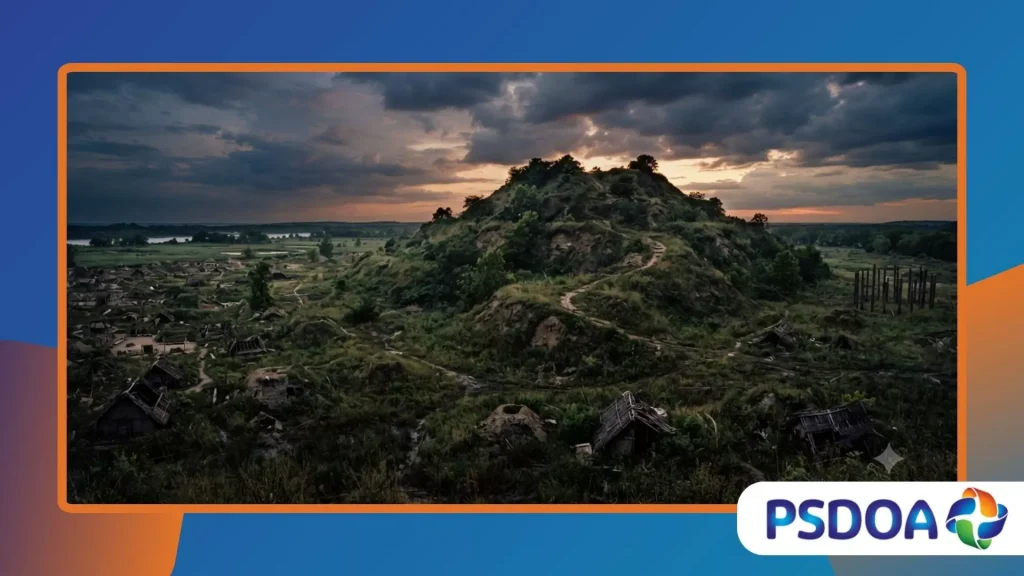
Cahokia Collapse remains one of North America’s most fascinating archaeological mysteries, detailing how a massive pre-Columbian metropolis vanished into the American Midwest wilderness.
Anúncios
Long before European settlers arrived, indigenous Mississippian builders constructed towering earthen pyramids across the Mississippi River floodplain near modern St. Louis.
This thriving metropolis rivaled major medieval European cities in population density, trade networks, and sophisticated architectural planning.
Scholars continue investigating why tens of thousands of residents completely abandoned this metropolitan center by the fourteenth century.
Unraveling this historical puzzle requires analyzing environmental degradation, social stratification, and climate shifts recorded in sediment layers across the region.
Anúncios
Modern excavations reveal a complex society that grew too fast for its surrounding ecosystem to sustain permanently.
Each discovered artifact challenges conventional timelines regarding indigenous urbanization in North America.
Are you prepared to uncover the shocking truth behind America’s lost ancient city?
Exploring Ancient American Urban Centers
- Investigating peak urban demographics and monumental earthwork construction techniques at the site.
- Analyzing environmental stress factors, deforestation rates, and agricultural depletion crises.
- Examining socio-political upheaval, trade network fractures, and sudden population migrations.
- Reviewing advanced archaeological mapping technologies reshaping our understanding of indigenous history.
What Was Cahokia and How Did It Rise to Power?
Cahokia Collapse began only after centuries of unprecedented growth fueled by fertile river soils and strategic trade river junctions.
Mississippian engineers erected over one hundred monumental earthen mounds, anchored by the massive Monks Mound rising above the floodplains.
Think of this ancient city as a bustling economic engine that commanded commerce across an entire continent.
Thousands of citizens traded copper, marine shells, and agricultural goods daily across expansive central plazas.
Recent archaeological studies published in American antiquity journals estimate that peak urban population exceeded twenty thousand residents during the twelfth century.
This demographic concentration required immense resource mobilization, intensive maize agriculture, and strict sociopolitical organization overseen by hereditary elites.
Neighboring communities sent tribute and labor to support the expanding religious and political capital.
Yet this rapid expansion planted the very seeds of its eventual ecological downfall.
How Did Maize Agriculture Fuel Growth?
Extensive cultivation of high-yield maize varieties provided the reliable caloric surplus necessary to sustain dense urban populations year-round.
Farmers utilized rich alluvial floodplain soils alongside the Mississippi River to secure massive annual harvests.
This agricultural abundance freed up thousands of laborers to construct monumental earthen architecture.
++ The Kingdom of Aksum: Africa’s Forgotten Superpower
Why Were Earthen Mounds Constructed?
Monumental mounds served as elevated stages for elite residences, temples, and sacred civic rituals reinforcing political authority.
Building these massive structures required moving millions of baskets of earth by hand across decades of collaborative labor.
These towering monuments visually dominated the landscape, projecting centralized power across the entire valley.
Also read: The Ancient City Hidden Beneath Modern Mexico City
What Role Did Trade Networks Play?
Expansive river networks allowed merchants to import luxury goods from the Rocky Mountains, the Great Lakes, and the Gulf Coast.
Obsidian blades, marine shell beads, and native copper flowed steadily into central markets, enriching elite merchant classes.
Commerce bound distant tribal confederations into a singular, interconnected economic sphere.
Why Did the Metropolis Experience Rapid Environmental Failure?
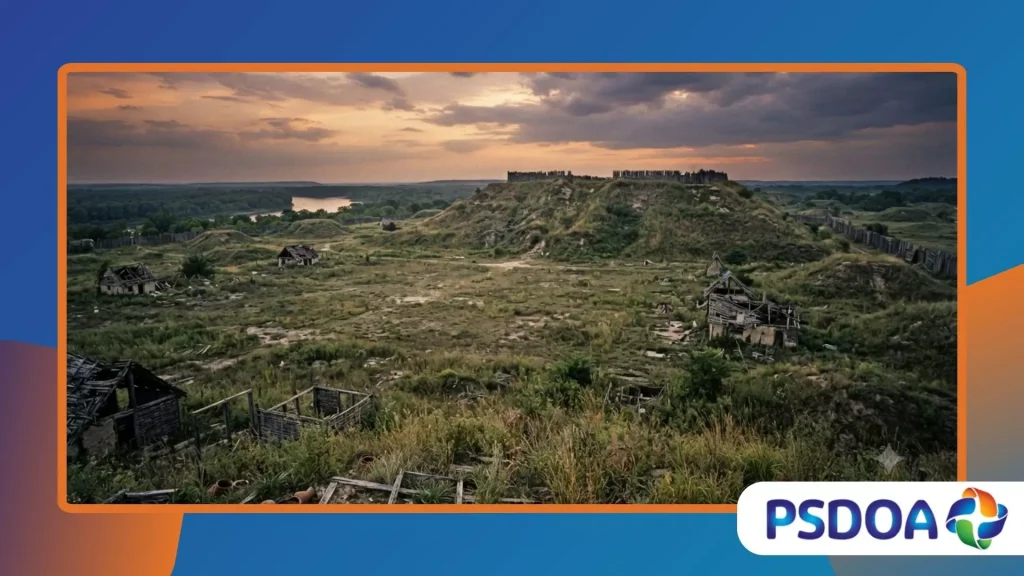
Cahokia Collapse accelerated rapidly as intense resource demands stripped the surrounding landscape of timber resources and vital topsoil.
Citizens cut down millions of mature trees to fuel cooking fires, construct defensive palisades, and build hundreds of substantial residential dwellings.
Think of the metropolis as an insatiable beast that devoured its own habitat until no green buffers remained.
Severe deforestation triggered massive soil erosion, destructive seasonal flooding, and localized climate destabilization across the valley floor.
Scientific sediment core analysis confirms that severe droughts during the thirteenth century compounded these man-made ecological disasters catastrophically.
Crop yields plummeted just as population density peaked, sparking fierce social competition for dwindling food reserves and arable land.
Elite rulers lost their ideological authority as religious ceremonies failed to bring rain or restore agricultural fertility.
Desperate families packed their belongings and fled the valley, seeking survival among neighboring tribal groups.
Read more: Operation Northwoods: The Declassified False Flag Proposal
How Did Deforestation Trigger Flooding?
Removing mature forest cover along surrounding bluffs eliminated natural water absorption barriers during heavy spring rainfall events.
Torrents of muddy runoff rushed unhindered into residential quarters, ruining stored grain supplies and eroding foundations.
Ecological imbalance directly transformed a thriving urban sanctuary into an environmental hazard.
Why Did Social Unrest Erupt Among Citizens?
Food scarcity and resource depletion fostered deep class divisions, violent skirmishes, and systemic political instability across urban neighborhoods.
Defensive wooden palisades built around elite precincts indicate rising internal fear of civil rebellion and external raids.
Society fractured along competitive lines when communal survival mechanisms failed entirely.
What Do Soil Cores Reveal About Drought?
Microscopic analysis of lakebed sediment and tree rings documents an extended multi-decade drought plaguing the North American interior.
This natural climate anomaly crippled maize production across the Mississippi Valley precisely when populations were highest.
Nature delivered a fatal blow to an already overextended urban infrastructure.
What Legacy Did the Abandoned City Leave Behind?
Cahokia Collapse marked not the absolute extinction of Mississippian culture, but rather a dispersion of its surviving population across North America.
Descendants migrated toward the southeast and plains, blending their advanced architectural and agricultural traditions with other indigenous communities.
Modern visitors walking through the preserved historic site today witness silent earth mounds guarding centuries of human ambition.
Preserving these sacred monuments ensures future generations remember the magnificent achievements of America’s first urban planners.
Consider a modern parallel: abandoning an overpopulated metropolis mirrors contemporary urban migration patterns away from resource-depleted industrial zones.
Archaeologists utilizing advanced drone LiDAR mapping continue uncovering forgotten suburban homesteads hidden beneath centuries of modern agricultural topsoil.
Every newly discovered courtyard deepens our understanding of complex pre-Columbian societies that once flourished across the continent.
Protecting these archaeological reserves honors the enduring historical resilience of indigenous ancestral heritage.
How Do LiDAR Scans Reveal Hidden Suburbs?
Laser-pulse airborne scanning penetrates dense vegetation and plowed topsoil to map unexcavated suburban foundations and residential property lines.
Researchers discovered thousands of previously unknown home sites radiating outward from central plazas.
Technology bridges the vast chasm between our modern era and ancient Mississippian civilization.
Why Is Public Preservation Crucial Today?
Encroaching modern suburban expansion and heavy industrial agriculture threaten remaining ancient earthworks throughout the American Midwest daily.
State and federal heritage protection programs fight to preserve remaining mounds against commercial real estate development.
Safeguarding these archaeological landmarks secures our collective historical memory from permanent erasure.
How Do Descendant Tribes View the Site?
Modern Native American nations maintain profound spiritual and ancestral connections to the monumental earthen architecture left behind by their forebears.
Tribal elders advocate for respectful archaeological practices that honor human burials and sacred historical spaces.
Collaborative stewardship ensures indigenous voices guide future research initiatives at the historic site.
Archaeological Data Matrix of Mississippian Centers
The comparative table below outlines demographic and structural characteristics of major pre-Columbian Mississippian urban centers.
| Archaeological Site | Peak Population Estimate | Primary Architectural Feature | Estimated Abandonment Period |
| Cahokia (Illinois) | 15,000 – 20,000 | Monks Mound & Woodhenge | Fourteenth Century |
| Moundville (Alabama) | 1,000 – 3,000 | Rectangular Plaza & 29 Mounds | Sixteenth Century |
| Etowah (Georgia) | 1,000 – 2,500 | Massive Effigy Mounds & Defenses | Sixteenth Century |
Reclaiming the History of America’s First Metropolis
Studying the Cahokia Collapse provides critical lessons regarding environmental sustainability, resource management, and societal resilience during climate crises.
By analyzing how past civilizations mismanaged local ecosystems, we gain valuable insights applicable to modern urban environmental challenges.
True historical appreciation requires acknowledging both the magnificent architectural triumphs and the tragic ecological missteps of ancient societies.
Take a moment to reflect on how modern cities manage their natural resources against similar environmental pressures.
What lessons can contemporary urban planners learn from the rise and fall of ancient America’s greatest metropolis?
Frequently Asked Questions
What caused the final abandonment of the ancient city?
A combination of severe environmental degradation, extensive deforestation, extended thirteenth-century droughts, and resulting social unrest forced residents to abandon the urban center.
Are visitors allowed to climb the historic earth mounds?
Visitors can legally climb Monks Mound via a designated wooden staircase to experience panoramic views of the surrounding floodplain, though smaller mounds remain off-limits to protect fragile structures.
How long did the ancient metropolis thrive before its decline?
The city experienced rapid expansion beginning around the year 1050 CE, reaching its political and demographic peak during the twelfth century before declining rapidly in the 1300s.
