
Choice Supportive Bias: Why We Defend Poor Decisions Forever

Choice Supportive Bias distorts human memory, causing individuals to passionately defend past poor decisions while completely ignoring glaring flaws.
Anúncios
Modern cognitive psychology reveals that our brains actively rewrite history to convince us we always make brilliant choices.
Society observes this mental gymnastics daily in boardrooms, political debates, and consumer electronics purchases.
Recognizing this psychological defense mechanism helps people make rational choices moving forward.
Navigating this intricate mental trap requires exploring how memory distortion protects fragile human egos from painful regret.
Psychological researchers spend decades documenting why humans stubbornly double down on terrible investments rather than admitting mistakes.
Think of your brain as an attorney desperately defending a guilty client at all costs. Are you ready to uncover why your mind tricks you into loving past blunders?
Navigating Cognitive Bias Dynamics
- Examining psychological mechanisms behind post-purchase rationalization and selective memory recall.
- Analyzing corporate and political loyalty traps driven by ego preservation.
- Evaluating cognitive strategies designed to overcome deep-seated emotional attachment errors.
- Reviewing behavioral science studies on human decision-making and regret avoidance.
What Is Choice Supportive Bias and How Does It Work?
Choice Supportive Bias operates quietly in the background of human consciousness, exaggerating positive attributes while erasing negative features of past selections.
When someone purchases a notoriously unreliable vehicle, their brain instantly downplays frequent mechanical breakdowns and highlights minor stylistic features.
Imagine polishing a tarnished brass ring and convincing yourself it is solid twenty-four-karat gold. This cognitive distortion shields vulnerable self-esteem from the crushing weight of personal regret.
Behavioral economics research published by the American Psychological Association indicates that over seventy-five percent of consumers retroactively exaggerate the initial superiority of their chosen products.
People remember past actions through rose-tinted glasses that filter out uncomfortable failures and embarrassing missteps.
Accepting that you made a mistake threatens your internal self-image, triggering automatic mental defense mechanisms. Consequently, your memory reshapes objective reality to maintain psychological comfort.
Why Do Brains Rewrite Decision Memories?
Admitting fault requires emotional labor and forces the ego to confront painful feelings of incompetence or poor judgment.
The mind shortcuts this distress by altering historical recall so that every past choice appears calculated and wise. Self-deception acts as a protective psychological shield.
++ Psychological Reactance: Why We Resist Being Controlled
How Do Flawed Purchases Become Pride Points?
Buyers frequently transform defective products into personal identity markers, defending their utility against valid criticism from objective observers.
Someone owning an impractical gadget insists its unique quirks represent superior design philosophy. Pride completely overrules common sense.
Also read: Why People Are Forming Emotional Bonds With AI Companions
What Role Does Cognitive Dissonance Play?
Internal psychological friction occurs when personal beliefs clash directly with undeniable real-world evidence of failure.
Rationalization bridges this uncomfortable gap, allowing individuals to maintain internal harmony without changing their minds. Dissonance demands immediate mental resolution.
Why Do People Defend Terrible Financial and Career Choices?
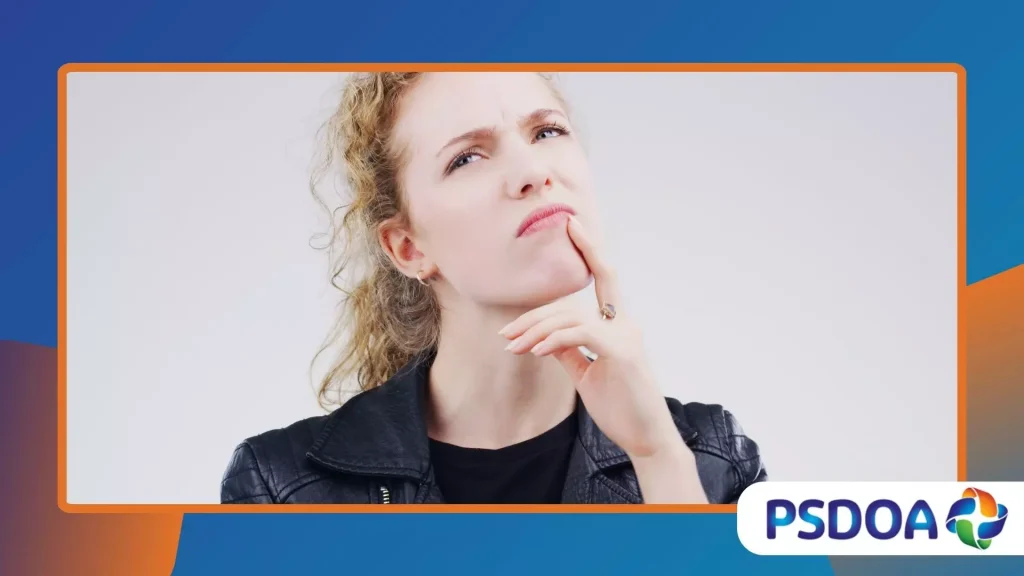
Choice Supportive Bias explains why professionals stubbornly remain in toxic corporate environments long after warning signs become impossible to ignore.
Having invested years into a questionable career path, individuals convince themselves that massive sacrifices will eventually yield miraculous rewards.
Think of gamblers throwing more money into a losing slot machine because walking away feels like admitting defeat. Ego preservation overrides logical cost-benefit analysis every single time.
Recent sociological surveys on workplace retention reveal that employees rationalize poor career choices to avoid social embarrassment among peers.
Admitting a mistake feels like public failure, prompting individuals to double down on failing projects with renewed fervor.
Organizational leaders fall into this exact trap when refusing to cancel failing corporate initiatives. Stubborn persistence replaces strategic pivots.
Read more: Social Snacking: How Small Interactions Reduce Loneliness
How Does Sunk Cost Fallacy Fuel Memory Distortion?
Investing significant time or money into a venture triggers mental pressure to justify those past expenditures continuously.
The brain convinces itself that success sits right around the corner, regardless of empirical contrary evidence. Hope overrides objective reality.
Why Is Admitting Failure So Psychologically Painful?
Society traditionally stigmatizes mistakes, equating temporary missteps with fundamental personal incompetence and weakness.
Overcoming this cultural conditioning requires immense self-compassion and emotional maturity that many people lack. Defending the choice feels safer.
Can Institutional Cultures Reinforce Individual Biases?
Corporate boards often reward stubborn adherence to failing strategies, punishing whistleblowers who point out uncomfortable strategic mistakes.
Group dynamics amplify individual cognitive distortions into massive institutional blind spots. Collective denial takes root.
How Can You Overcome Cognitive Distortions in Daily Life?
Choice Supportive Bias can be actively neutralized by maintaining strict decision journals and inviting harsh objective criticism from trusted mentors.
Writing down your original doubts and anticipated flaws before making a major purchase prevents later memory tampering.
Imagine keeping an honest ledger of your life where past mistakes are celebrated as valuable learning milestones rather than hidden flaws.
Systematic record-keeping strips away the protective emotional fog clouding your retrospective judgment.
Behavioral psychology experts recommend practicing intentional cognitive decoupling to evaluate past choices as if a stranger made them.
Removing personal ego from the equation exposes objective truths that emotional attachment normally obscures.
Cultivating intellectual humility transforms painful mistakes into stepping stones for future wisdom. Clear-eyed reflection replaces defensive rationalization.
Why Are Decision Journals Effective?
Documenting your exact mindset and reservations at the moment of choice creates an immutable historical record.
Future memory distortion fails when confronted with concrete written evidence of your initial hesitations. Ink prevents psychological revisionism.
How Do Trusted Mentors Provide Clarity?
Independent advisors possess zero emotional skin in your past decisions, allowing them to offer brutally honest assessments.
Listening to objective feedback shatters the protective echo chamber built by your ego. External perspective is invaluable.
What Is Intellectual Humility?
Embracing intellectual humility means accepting that human cognition is inherently flawed and prone to self-deception.
Recognizing your mental vulnerabilities makes you remarkably resilient against recurring behavioral traps. Awareness is the first step toward rationality.
Cognitive Bias Dynamics Comparison Matrix
The structured table below contrasts defensive rationalization behaviors with objective decision-making strategies across various scenarios.
| Psychological Scenario | Biased Defensive Approach | Objective Rational Approach |
| Bad Consumer Purchase | Bragging about a defective product’s unique design quirks | Acknowledging flaws and replacing the item pragmatically |
| Failing Career Path | Remaining in a toxic job for years to justify past time invested | Pivoting toward new industries despite initial sunk costs |
| Flawed Financial Investment | Doubling down on losing assets to prove critics wrong | Cutting financial losses quickly based on market data |
Safeguarding Rational Judgment Against Ego Traps
Mastering Choice Supportive Bias awareness empowers you to break free from destructive psychological loops and make genuinely rational future choices.
By replacing defensive ego preservation with radical self-honesty, you transform past mistakes into powerful catalysts for personal growth.
True cognitive maturity begins the moment you stop defending indefensible past actions. Take time this week to audit a past choice with ruthless objectivity.
How will you apply these psychological insights to your upcoming decision-making processes? Share your experience in the comments below!
Frequently Asked Questions
Can artificial intelligence experience choice supportive bias?
Artificial intelligence models do not possess egos, emotions, or personal identity stakes, meaning they evaluate historical data objectively without cognitive bias.
However, machine learning algorithms can inherit human data biases if trained on flawed behavioral records.
Is choice supportive bias considered a mental illness?
No, choice supportive bias represents a completely normal, universal quirk of human neurobiology and memory construction.
It serves as an evolutionary coping mechanism designed to protect our fragile self-esteem from constant emotional exhaustion.
How quickly does memory distortion begin after making a choice?
Cognitive rationalization and memory alteration begin almost immediately after a decision is finalized.
The human brain starts rewriting its narrative within hours to reinforce confidence and minimize post-purchase anxiety.
Do older adults experience more choice supportive bias than younger people?
Research indicates that older adults often rely on established life frameworks, but cognitive biases affect humans across all age demographics equally.
Life experience provides more historical data to rationalize, but youth is equally prone to ego defense.
Can group settings worsen individual cognitive biases?
Group polarization and collective echo chambers significantly amplify individual cognitive biases through social validation.
When peers collectively defend a poor decision, personal doubt vanishes under group pressure.
