
Aokigahara History: Japan’s Forest Linked to Ancient Myths
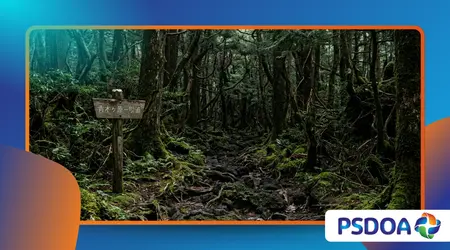
Aokigahara History reveals a landscape defined by volcanic fury and haunting legends that stretch back centuries. Nestled at the base of Mount Fuji, this dense forest possesses an atmosphere that defies simple explanation.
Anúncios
Visitors often describe an uncanny silence, where the thick volcanic soil absorbs sound, creating an environment that feels disconnected from the modern world.
Exploring this forest requires a deep respect for both its geological origins and its profound significance within Japanese folklore and cultural memory.
Key Aspects Explored
- Geological formation and the Sea of Trees.
- The interplay between yūrei myths and forest lore.
- Conservation efforts in the 2026 climate.
- Separating modern sensationalism from historical reality.
What Defines the Geologic Origins of the Sea of Trees?
The terrain emerged following the massive eruption of Mount Fuji in 864 AD.
Molten lava flooded the northern slope, cooling into a jagged, uneven landscape that eventually hosted a thriving, isolated ecosystem of moss and hemlock.
Ancient inhabitants recognized the forest as a mysterious space, separate from the fertile lands below.
The volcanic soil creates a unique magnetism, causing compasses to falter, which adds a layer of scientific curiosity to the broader Aokigahara History narrative documented by local geologists.
How Does the Terrain Influence Local Mythology?
Rugged lava tubes beneath the surface serve as frozen portals to a subterranean world. These caves, some staying frigid even during sweltering summers, naturally became centers for prayer and spiritual reflection for mountain ascetics known as Shugendō practitioners.
Local legends suggest these caves harbor spirits, leading to centuries of caution among villagers. The forest became a boundary between the mundane human world and the volatile, powerful domain of the gods residing within the mountain’s peak.
++ Taured Man Case: The Passport Mystery That Still Baffles
Why Is the Forest Environment So Unique?
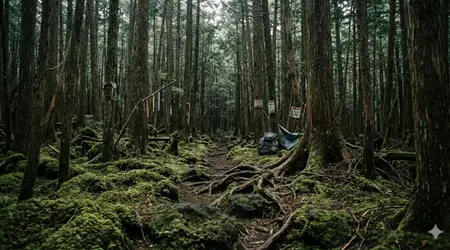
The sheer density of the trees prevents sunlight from reaching the ground for much of the day. This creates a perpetual twilight, encouraging the growth of rare mosses that blanket the lava rocks in deep, velvety shades of green.
Researchers note that this microclimate acts as a natural time capsule.
Every step off the trail reveals a terrain that has remained largely untouched by major human development, preserving a raw, prehistoric aesthetic that feels strikingly alien to modern eyes.
Why Are Myths and Legends Central to Aokigahara History?
Traditional Japanese beliefs emphasize the presence of yūrei, or ghosts, lingering in spaces where human life has been intense or tragic. In the local consciousness, the forest serves as a quiet vessel for these restless spirits, grounded in centuries of folklore.
The narrative of Aokigahara History often blends historical reality with supernatural caution.
Elders traditionally warned younger generations against venturing too deep into the woods, fearing that once a person crossed the threshold, the forest might claim them through confusion or spiritual entrapment.
Also read: The Secret Communications of WWII Resistance Movements
What Role Do Yūrei Play in Cultural Narratives?
These spectral figures represent unfulfilled desires or unresolved grief, deeply embedded in Japanese dramatic arts like Noh and Kabuki.
By projecting these stories onto the forest, society creates a physical space to contemplate mortality, fear, and the enduring power of memory.
An analogy for this phenomenon is a mirror; the forest does not necessarily create the darkness, but it reflects the collective anxieties of the culture that surrounds it.
This perspective helps demystify why the location holds such a specific, somber place in the national identity
Read more: Urban Farming vs. Urban Gardening: Was ist der Unterschied?
How Do Historical Records Contrast With Sensationalism?
Serious historical accounts provide a much more mundane, albeit fascinating, view of the region.
Samurai sometimes used the outskirts for training, and villagers harvested wood on the fringes, maintaining a functional relationship with the land for hundreds of years.
Distinguishing between Aokigahara History and modern media portrayals is crucial for accuracy.
Current studies suggest that the sensationalist “cursed” branding is a relatively recent Western invention, largely ignoring the complex, centuries-old relationship between the local Fuji communities and the mountain.
| Feature | Historical Reality | Popular Myth |
| Origin | 864 AD Volcanic Eruption | Supernatural manifestation |
| Usage | Traditional wood gathering | Spirit domain |
| Terrain | Porous lava rock | Bottomless pits |
| Cultural View | Respectful boundary | Haunted wasteland |
How Is Conservation Managed in 2026?
Modern environmental agencies now prioritize the protection of the forest’s delicate ecosystem.
With the increase in global tourism, officials focus on keeping visitors on marked paths to prevent erosion and damage to the fragile moss layers that define the terrain.
Effective management is a core part of preserving Aokigahara History for future generations.
Local authorities have implemented strict monitoring systems, using drone technology to assess environmental health without disturbing the quiet dignity of the woods, ensuring the forest remains a site of ecological wonder.
What Are the Challenges of Modern Preservation?
The sheer volume of human interest poses a threat to the forest’s silence and stability. Protecting the site requires a delicate balance between public interest and the need to maintain a tranquil, undisturbed natural environment that adheres to historical preservation standards.
Environmental data from 2025 indicates that over 80% of the core forest remains completely pristine, thanks to rigorous path enforcement.
This statistic demonstrates that human interaction can be managed through education, turning a site of myth into an example of sustainable natural preservation.
Why Should We Protect This Unique Space?
Preservation is not just about biology; it is about protecting the cultural heritage of the Yamanashi Prefecture.
The forest provides a living lesson in geology and folklore, offering a unique space where the physical Earth tells a story of survival and change.
One example of this commitment is the “Clean Aokigahara” campaign, which engages local volunteers in removing micro-waste.
This hands-on approach transforms the relationship between the people and the forest, moving past fear toward a model of stewardship and deep, historical appreciation.
How Do Experts Interpret the Future of the Forest?
Experts suggest that the future of the region relies on shifting the narrative from mystery to education.
By highlighting the intricate volcanic biology, the site offers visitors a profound encounter with Japan’s natural heritage, moving far beyond the superficial myths that dominated the early 2000s.
Ultimately, Aokigahara History persists as a testament to the resilience of nature. As we look forward, the goal remains clear: to ensure that the Sea of Trees remains a place of reflection, scientific discovery, and profound geological beauty for centuries to come.
Could we perhaps find more peace by viewing this forest as a masterpiece of nature rather than a landscape of sorrow?
Your thoughts on how we balance tourism with historical sanctity are vital; please share your experience or reflections in the comments below.
Frequently Asked Questions
Is the forest truly bottomless?
No, this is a myth based on the deep, irregular volcanic fissures. The ground is solid rock, though it is covered in thick, uneven layers of moss and soil.
What is the significance of the 864 AD eruption?
The Jōgan eruption was a major historical event that fundamentally altered the landscape of the Fuji region, creating the specific environment that became the Aokigahara forest.
Can visitors enter the forest freely?
Visitors are highly encouraged to stay on marked hiking trails. The terrain off-path is dangerous due to hidden lava tubes and the risk of disorientation in the dense canopy.
How does modern media influence the perception of the site?
Much of the current “cursed” reputation in the West stems from internet sensationalism, which often obscures the genuine ecological and local cultural history of the area.
