
How Lichen Is Changing What We Know About Symbiosis
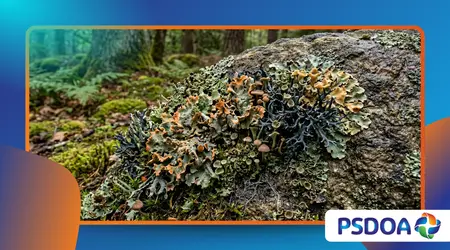
Lichen Is Changing What We Know About Symbiosis, challenging the classic textbook definitions that scientists have dutifully repeated for well over a century.
Anúncios
For decades, biology students learned that a lichen is simply a predictable, monogamous partnership between a single fungus and a photosynthetic alga.
Recent genomic discoveries prove this traditional view is incredibly incomplete, revealing a bustling microscopic metropolis teeming with unexpected basidiomycete yeasts and complex bacterial communities.
This structural revelation forces a profound shift in evolutionary biology, proving that cooperation in nature is rarely a simple, two-party contract.
Instead, these resilient organisms demonstrate that survival in the harshest environments requires a multi-layered corporate network of organisms working in unison.
By studying these hidden interactions, researchers are unlocking new pathways for biotechnological innovation, sustainable agriculture, and advanced pharmaceutical development worldwide.
Key Highlights
- The Classic Myth: Why the traditional dual-partner definition of lichen is officially obsolete.
- The Third Partner: How the discovery of basidiomycete yeasts revolutionized evolutionary biology.
- Practical Impact: What lichen ecosystems teach us about synthetic biology and future medicine.
What Is the New Scientific Consensus on Lichen Structure?
For generations, the scientific community treated lichen as the ultimate poster child for a straightforward, dual-organism mutualistic relationship.
Textbooks universally declared that the fungus provided physical shelter and moisture, while the microscopic algae offered vital sugars through solar photosynthesis.
This elegant, simple narrative collapsed when researchers realized that many lichens failed to grow properly in sterile laboratory environments without unidentified missing components.
Advanced metagenomic sequencing finally solved this mystery by revealing an invisible universe of secondary yeasts and complex bacterial colonies embedded within the structural cortex.
These newly discovered microbes are not accidental hitchhikers or superficial surface contamination; they are essential structural pillars that dictate the organism’s physical shape and chemical defenses.
Consequently, this complex biological arrangement shifts our entire understanding of evolutionary survival from isolated partnerships to radical, multi-kingdom cooperation.
How Did Researchers Overlook the Third Partner for a Century?
Traditional microscopic techniques naturally favored organisms that were easy to stain and view under standard laboratory lenses, leaving transparent elements completely invisible.
Early biologists focused heavily on the dominant fungal filaments and vibrant green algal cells, missing the incredibly thin layers of specialized basidiomycete yeasts.
Because these yeasts reside deeply embedded within the tough outer micro-layer of the lichen cortex, they easily evaded detection by standard observation methods for decades.
Modern genetic sequencing bypassed these physical visual limitations completely by analyzing the collective DNA of the entire organism simultaneously.
When scientists extracted total genetic material from various wild populations, the data consistently flagged unique genetic signatures belonging to entirely different evolutionary branches.
This technological leap proved that our reliance on traditional visual tools created a massive blind spot in understanding complex microbial systems.
++ The Science of Sleep Paralysis and Shadow Hallucinations
Why Do Specific Yeasts Matter for Environmental Survival?
These hidden yeasts act like specialized chemical engineers, producing vital secondary metabolites that defend the host organism from intense solar radiation and aggressive natural predators.
Without this specific fungal contributor, the lichen cannot synthesize the complex acids required to dissolve solid rock surfaces and establish physical roots.
The yeast component essentially acts as an advanced shield, allowing the collective organism to thrive in toxic, heavy-metal-rich environments where single species perish.
Consider the practical example of Bryoria tortuosa and Bryoria fremontii; one produces a lethal yellow acid while the other remains a dull, non-toxic brown.
Visually and genetically, their primary fungi and algae are virtually identical, which baffled taxonomists for generations.
The sole distinguishing factor is the abundance of specific basidiomycete yeasts, proving these hidden partners dictate the chemical output and survival strategy of the whole ecosystem.
How Does Multi-Species Symbiosis Transform Modern Biotechnology?
The realization that Lichen Is Changing What We Know About Symbiosis opens incredible new doors for industrial biochemistry and sustainable product manufacturing.
Because lichens naturally produce unique, complex chemical compounds to survive extreme stress, understanding their collaborative synthesis allows engineers to replicate these processes in controlled environments.
Industries are currently looking at these multi-layered systems to revolutionize how we manufacture everything from specialized textiles to advanced agricultural biostimulants.
| Microscopic Component | Main Biological Function | Industrial & Practical Application |
| Ascomycete Fungus | Creates the main structural matrix and anchors the organism | Biomimetic structural materials and eco-friendly packaging |
| Photosynthetic Algae | Converts sunlight into vital glucose and organic sugars | Biofuel production and natural nutritional supplements |
| Basidiomycete Yeast | Synthesizes specialized defensive chemicals and pigments | Advanced antimicrobial agents and industrial dyes |
| Bacterial Microbiome | Fixes atmospheric nitrogen and resists external pathogens | Sustainable agricultural fertilizers and soil bioremediation |
Furthermore, studying how these diverse kingdoms communicate without destroying each other provides an excellent blueprint for designing highly stable, synthetic multi-species fermentations.
If human engineers can successfully mimic this natural corporate micro-management, we can create resilient bioreactors that are far less vulnerable to external contamination.
This biological shift transforms lichen from an obscure forest organism into a masterclass for future industrial design.
Also read: How Ant Colonies Mimic Human Traffic Systems
What Are the Real-World Applications in Modern Medicine?
As global bacterial resistance renders traditional antibiotics increasingly obsolete, the pharmaceutical sector desperately requires entirely new chemical blueprints for drug development.
Lichens naturally produce unique, highly potent structural compounds that exhibit remarkable antiviral, antibacterial, and intense anti-inflammatory properties.
Because these compounds originate from a multi-partner defense system, they target pathogens through complex molecular pathways that single-cell organisms struggle to bypass.
Recent university trials confirm that specific lichen extracts effectively inhibit the growth of highly resistant hospital superbugs without harming surrounding mammalian tissue.
By understanding how the yeast and fungal components collaborate to synthesize these defensive molecules, pharmacologists can now synthesize these complex structures synthetically.
This breakthrough promises to yield a brand new generation of targeted therapies, saving millions of lives from drug-resistant infections.
Read more: The Bizarre Science Behind Negative Mass
How Does This Discovery Improve Agricultural Resilience?
Modern industrial agriculture relies far too heavily on artificial chemical fertilizers that systematically degrade long-term soil health and pollute regional water systems.
Lichen systems provide a natural alternative, as their specialized bacterial networks are exceptionally proficient at pulling inert nitrogen directly from the atmosphere.
By isolating and studying these specific nitrogen-fixing bacterial strains, agricultural scientists are developing custom bio-inoculants for commercial food crops.
Imagine a world where corn and wheat crops naturally resist severe droughts because they are inoculated with symbiotic microbial shields derived from resilient alpine lichens.
These natural mixtures form a protective biofilm around plant roots, drastically reducing the total amount of clean water and chemical inputs required for harvest.
This approach directly addresses global food security challenges, ensuring stable crop yields amidst unpredictable, rapidly shifting climate patterns.
Why Is This Paradigm Shift Reshaping Our Evolutionary Theories?
The profound realization that Lichen Is Changing What We Know About Symbiosis fundamentally challenges the ultra-competitive, Darwinian model of survival of the fittest.
For over a century, evolutionary theory heavily emphasized fierce individual competition as the primary driving force behind all biological advancement and species diversification.
Lichens elegantly demonstrate that absolute cooperation, rather than relentless destruction of your neighbor, is often the most effective strategy for multi-millennial survival.
This biological reality forces us to view complex organisms not as isolated genetic individuals, but as walking, evolving ecological communities.
It implies that major evolutionary leaps occur when entirely different branches of life permanently merge their distinct genetic capabilities to form something entirely new.
This cooperative perspective reshapes how we view the history of life on Earth and alters our search parameters for alien life on distant planets.
How Does Lichen Redefine Biological Individuality?
In traditional zoology, an individual animal possesses a single, clearly defined genome that remains consistent across all of its physical cells.
Lichens completely shatter this concept because their physical body contains multiple distinct genomes belonging to entirely different biological kingdoms.
When you look at a single leafy structure on a tree, you are looking at a tightly coordinated collective, not a singular creature.
“We are discovering that nature rarely operates via isolated individuals; life is inherently an interconnected network of cooperative genetic systems.”
This fluid definition of individuality forces philosophers and geneticists alike to reconsider what truly constitutes a single, distinct living being.
If a physical entity requires three distinct kingdoms of life to exist, treating it as a single species is a convenient human fiction.
This realization aligns perfectly with human microbiome discoveries, proving that all complex life is ultimately a walking ecosystem.
What Does This Teach Us About Extraterrestrial Life?
Astrobiologists routinely use the extreme survival capabilities of lichens as a predictive model for potential living organisms on the frozen surface of Mars.
Because these multi-partner organisms can survive the brutal vacuum of outer space, they are premier candidates for interplanetary colonization theories.
If life exists elsewhere in our harsh solar system, it most likely relies on similar multi-kingdom symbiotic strategies to endure extreme environmental stress.
When searching for biosignatures on distant exoplanets, space agencies can no longer simply look for signs of single, isolated organisms.
They must analyze atmospheric data for chemical imbalances that suggest complex, multi-tiered metabolic cooperation occurring on a planetary scale.
Lichens prove that life does not just adapt to harsh environments; it builds collaborative networks to completely rewrite the rules of survival.
final considerations
Ultimately, Lichen Is Changing What We Know About Symbiosis by proving that nature favors deep, intricate collaboration over isolated, aggressive competition.
The classic definition of a dual partnership has permanently evolved into a fascinating narrative of complex, multi-kingdom microscopic cities thriving in the most inhospitable zones.
This shift completely redefines our fundamental understanding of biological individuality, evolutionary history, and the true limits of terrestrial life.
As we continue to decode the complex chemical conversations occurring within these resilient organisms, we unlock invaluable blueprints for medicine, agriculture, and sustainable engineering.
The humble lichen invites us to look closer at the natural world, reminding us that true strength lies in collaborative unity. What are your thoughts on this incredible microscopic shift? Share your experience in the coments!
Frequently Asked Questions
What is the new third partner discovered in lichens?
Scientists discovered that specific basidiomycete yeasts are essential structural and chemical components embedded within the outer cortex of many traditional lichen species.
How does this discovery change the definition of symbiosis?
It proves that symbiosis is not just a simple, two-party mutual agreement, but can be a complex, multi-kingdom cooperative network functioning as a single organism.
Why can’t scientists easily grow lichens in laboratory settings?
Lichens are incredibly difficult to cultivate in labs because they require precise, multi-species environmental triggers and specific bacterial interactions to form their complex structures.
Can lichen symbiosis help fight human diseases?
Yes, the unique defensive chemicals produced by the collaborative efforts of lichen partners offer powerful new blueprints for creating highly effective, next-generation antibiotic medications.
