
Chronobiology: How Body Clocks Shape Human Performance
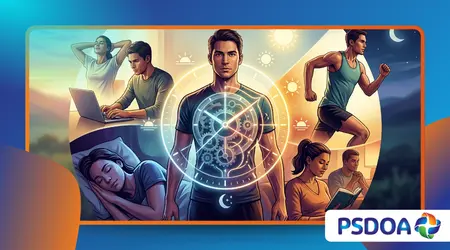
Chronobiology dictates the hidden rhythm of your daily survival, orchestrating cellular repairs, hormonal surges, and cognitive peaks without your conscious consent.
Anúncios
Right now, your master biological clock a cluster of nerve cells known as the suprachiasmatic nucleus is measuring environmental light changes to synchronize your organs with the rotation of the Earth.
This complex internal pacing explains why a modern biological disruption feels less like simple fatigue and more like profound physical misalignment.
When we ignore these ancient genetic rhythms to accommodate late-night screen exposure or rigid corporate schedules, our metabolic efficiency drops and mental clarity completely fractures.
Highlights of Time-Based Performance
- The Master Clock: How the suprachiasmatic nucleus governs your organs.
- Chronotypes: The genetic reality behind early birds and night owls.
- The Cost of Misalignment: Links between circadian disruption and chronic disease.
- Peak Optimization: Timing food, exercise, and deep focus for maximum output.
What Is the Science Behind Your Biological Clock?
Every living organism on Earth shares a fundamental biological truth: we evolved under a reliable cycle of day and night.
The field of chronobiology investigates these precise cyclical patterns, demonstrating that our bodies do not operate on a continuous, flat baseline of efficiency.
Instead, thousands of cellular genes turn on and off at specific times, regulating everything from core temperature to immune responses.
Society often treats wakefulness and sleep as simple binary choices controlled entirely by willpower. However, molecular biology reveals that our tissues require rhythmic consistency to prevent cellular chaos and oxidative stress.
When your liver expects fasting but receives a midnight snack, the local peripheral clock clashes violently with the master clock in your brain.
What if we stopped fighting our biology and started structuring our entire economy around these internal cellular schedules?
Recent clinical trials in 2026 show that matching medical treatments to these cycles significantly improves patient recovery speeds.
This shift proves that time-of-day tracking is a critical variable for human health rather than a niche lifestyle trend.
How Does the Suprachiasmatic Nucleus Control You?
Nestled safely inside the hypothalamus sits the supreme director of your biological symphony: the suprachiasmatic nucleus (SCN).
This tiny structure processes raw light data traveling directly from your retinas, using that information to determine exactly when to flood your bloodstream with cortisol or melatonin.
It acts like a conductor maintaining a strict tempo for an orchestra of trillions of independent cells.
++ How Lichen Is Changing What We Know About Symbiosis

Why Do Peripheral Clocks Matter in Daily Life?
While the SCN serves as the main conductor, your heart, lungs, and kidneys possess their own distinct peripheral clocks.
These localized systems stay synchronized through regular behavioral cues, such as consistent meal times and physical movement.
If you eat a heavy meal at 3:00 AM, you throw these peripheral systems into complete metabolic confusion.
Also read: How Ant Colonies Mimic Human Traffic Systems
When Did Evolution Encode These Internal Rhythms?
These internal timing mechanisms developed billions of years ago as a primitive survival strategy against destructive ultraviolet radiation.
Early single-celled organisms restricted their delicate DNA replication processes strictly to the safety of the night.
Today, that ancient evolutionary defense system directly governs your complex daily energy peaks, digestion efficiency, and sleep architecture.
How Do Chronotypes Influence Career Success?
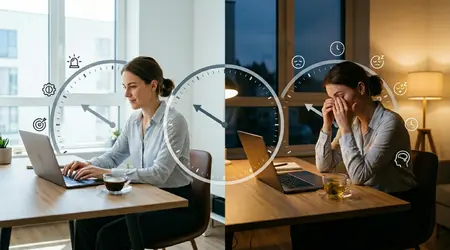
The outdated corporate demand for an identical 9-to-5 workday inflicts severe economic and physical damage on millions of naturally late-rising workers.
Your specific chronotype is not a lazy habit or a lack of discipline; it is an immutable genetic trait determined by the length of your PER3 clock gene.
Forcing a natural night owl into an early morning strategy meeting is the cognitive equivalent of demanding a marathon runner compete with a sprained ankle.
Dr. Till Roenneberg’s extensive research into societal sleep patterns highlights a dangerous phenomenon known as social jetlag.
This occurs when the chronic discrepancy between biological time and social obligations forces people to live permanently out of sync with their internal programming.
The data shows that this persistent misalignment causes a measurable drop in weekly workplace productivity and long-term cognitive endurance.
Consider a creative director who struggles to draft basic concepts at 9:00 AM but experiences a brilliant surge of innovative clarity at 9:00 PM.
By restructuring corporate workflows to allow asynchronous project contributions, forward-thinking tech companies are unlocking massive hidden reserves of human potential.
Embracing this biological diversity transforms frustrating workplace friction into a streamlined asset for modern creative industries.
Read more: The Bizarre Science Behind Negative Mass
What Is the Real Impact of Social Jetlag?
Social jetlag creates a profound, continuous state of exhaustion that replicates the psychological disorientation of flying across multiple time zones every single weekend.
Workers suffer from fragmented focus, elevated irritability, and a reliance on stimulants to survive basic daily routines.
This artificial schedule slowly erodes executive function and severely damages creative problem-solving capabilities over time.
How Can Teams Optimize Asynchronous Work Schedules?
Modern organizations can easily maximize collective output by mapping complex project demands directly to individual employee chronotypes.
Early risers excel at tackling analytical problem-solving and structural organization during early morning hours.
Meanwhile, late-shifting team members can take over deep-focus creative writing and complex coding tasks later in the evening.
Which Genes Explicitly Determine Your Daily Energy?
Specific variations within your core clock genes, particularly CLOCK and PER3, dictate your natural biological preference for morning or evening activity.
These genetic sequences control the precise speed at which your body builds up and clears out sleep pressure throughout the day.
You cannot alter this genetic reality through willpower any more than you can consciously change your height.
Why Is Circadian Disruption Becoming a Public Health Crisis?
The modern world has effectively weaponized artificial blue light against human biology, plunging global populations into a state of permanent circadian confusion.
This constant exposure to bright screens after sunset completely suppresses natural melatonin production, tricking the brain into believing it is still noon.
The discipline of chronobiology warns that this artificial environment actively promotes systemic inflammation and metabolic dysfunction.
A landmark study published in The Lancet established that long-term disruption of circadian rhythms increases the risk of developing type 2 diabetes by over 40%.
When sleep cycles fracture, the body naturally struggles with insulin resistance, elevated blood pressure, and impaired cardiovascular recovery.
Our current lifestyle habits are rapidly creating a silent, slow-motion public health emergency across industrialized nations.
Think of your body as a busy urban department store that requires a closed night shift for deep cleaning and inventory restocking.
If shoppers never leave the building, the aisles quickly accumulate trash, the shelves fall apart, and operations collapse into total chaos.
That chaotic state mirrors exactly what happens to your brain and liver during prolonged periods of sleep deprivation.
How Does Blue Light Alter Your Brain Chemistry?
Short-wavelength blue light directly stimulates specialized intrinsically photosensitive retinal ganglion cells, signaling the brain to halt all melatonin synthesis immediately.
This biological reaction triggers an artificial state of high alertness that prevents the brain from entering deep, restorative sleep stages later that night.
Over time, this chemical disruption causes chronic cognitive fatigue and severe emotional volatility.
What Is the Link Between Shift Work and Disease?
Night-shift workers experience a profound, continuous conflict between their physical behavior and the natural environmental light cycle.
This chronic misalignment leaves the immune system severely compromised, leaving the body highly vulnerable to metabolic syndromes and gastrointestinal distress.
The World Health Organization even classifies overnight shift work as a probable human carcinogen due to this systemic strain.
How Does Time-Restricted Feeding Protect Your Metabolism?
Locking your daily food consumption into a strict 10-hour daytime window allows your peripheral metabolic clocks to fully sync with your brain.
This intentional window ensures your digestive tract restfully shuts down well before your core body temperature drops for evening sleep.
This simple habit optimizes insulin sensitivity, reduces systemic inflammation, and naturally stabilizes your daily energy levels.
Body Clock Optimization Strategy
The following matrix provides an evidence-based framework for aligning your daily activities with your natural biological peaks for maximum efficiency.
| Time Window | Biological State | Optimal Activity | Avoiding |
| 06:00 AM – 09:00 AM | Cortisol surging, high alertness | Strategic planning, light exercise | Heavy meals, immediate screen time |
| 10:00 AM – 02:00 PM | Peak cognitive function, low reaction time | Complex problem solving, deep focus | Mindless administrative work |
| 02:00 PM – 04:00 PM | Post-prandial alertness dip | Routine administrative tasks, breaks | Demanding analytical decisions |
| 05:00 PM – 07:00 PM | Maximum muscle strength, high lung capacity | High-intensity athletic training | High caffeine intake, napping |
| 09:00 PM – 11:00 PM | Melatonin release, dropping core temp | Winding down, reading, dimming lights | High-intensity workouts, blue light |
Why Should Medicine Embrace Circadian Scheduling?
The emerging medical frontier of chronotherapy proves that the therapeutic value of a medication changes dramatically based on when it enters the body.
For example, delivering chemotherapy at specific hours when cancer cells are actively dividing but healthy cells are resting minimizes toxic side effects.
This strategic approach represents a massive shift toward hyper-personalized, biologically aware healthcare.
Applying principles of chronobiology to daily life removes the exhausting guesswork from productivity, transforming wellness from a stressful chore into an effortless system.
By honoring our internal clocks, we gain easy access to natural reservoirs of focus, vitality, and long-term physical health.
True human performance is not about working harder; it is about working at the exact biological moment nature intended.
How has aligning tasks with your natural energy levels shifted your productivity? Share your personal experience in the comments below!
Frequently Asked Questions
Can I permanently change my genetic chronotype?
No, you cannot permanently alter your core genetic chronotype, as it is hardwired into your DNA.
However, you can carefully use targeted morning sunlight and evening light mitigation to slightly shift your daily alertness window by an hour or two.
How long does it take to recover from a major circadian disruption?
As a general rule of thumb, your biological clock requires approximately one full day of recovery for every single time zone crossed or night shift worked.
True cellular realignment demands consistent light exposure patterns and highly disciplined, predictable meal schedules over several consecutive days.
Does caffeine use fix a broken circadian rhythm?
Caffeine does not repair a disrupted biological rhythm; it merely masks sleep pressure by temporarily blocking adenosine receptors in your brain.
Relying on stimulants actually delays your natural sleep onset further, severely fracturing your deep sleep architecture and worsening long-term fatigue.
