
Dynasphere: The One-Wheel Vehicle That Never Took Off
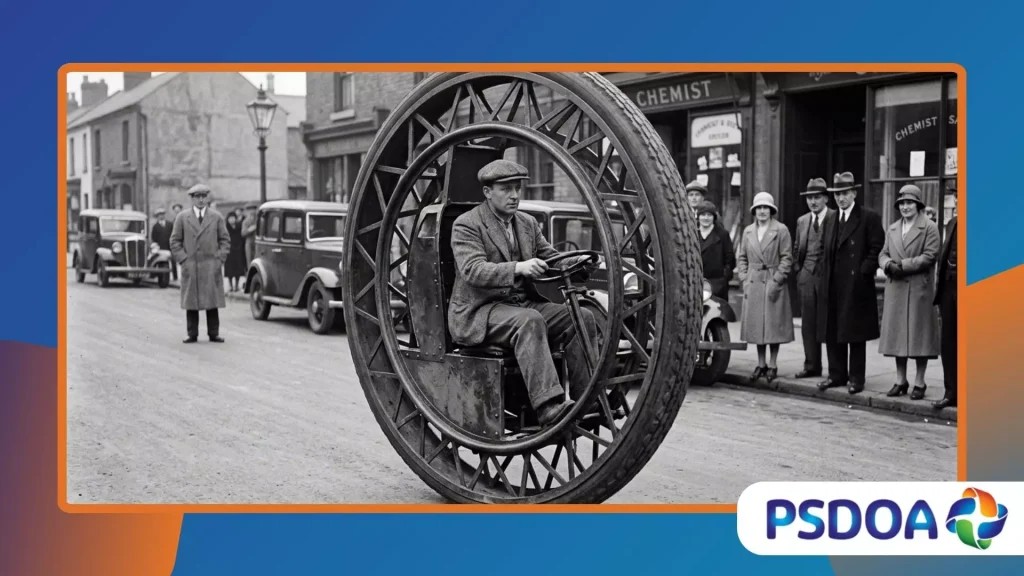
Dynasphere designs represent one of the most fascinating chapters in the history of alternative transportation, capturing the ultimate retro-futuristic dream.
Anúncios
Invented by Dr. J.A. Purves in 1930, this bizarre monowheel vehicle aimed to revolutionize how commuters navigated modern roadways.
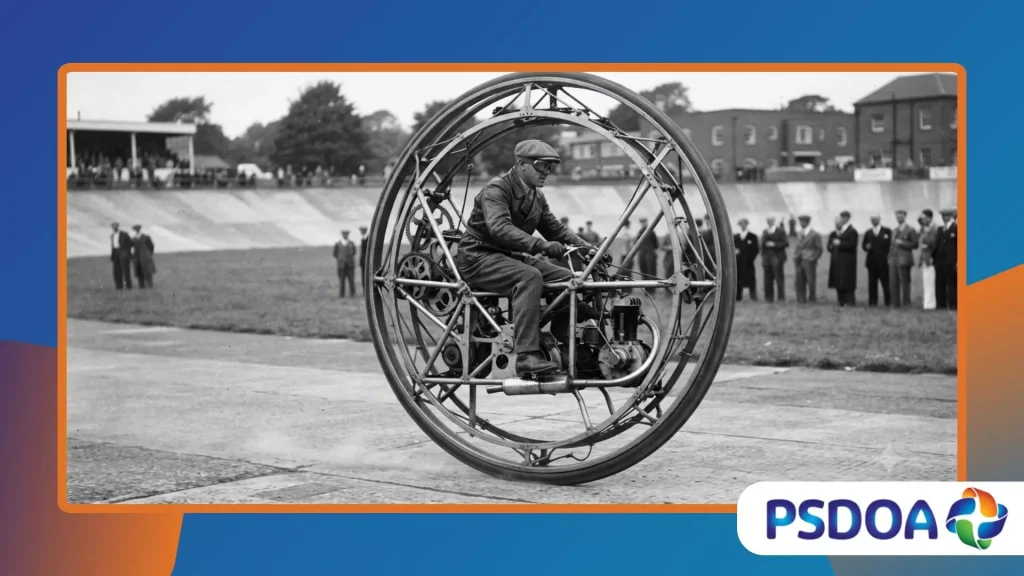
The machine consisted of a massive, ten-foot-tall latticed iron framework that completely enclosed the driver and an internal combustion engine.
Purves believed this aerodynamic shape minimized energy loss, positioning his invention as the ultimate successor to the standard, four-wheeled automobile.
A Quick Blueprint of This Historic Transport Miracle
- The Blueprint: A direct look into the mechanical architecture and balancing systems of the monowheel.
- Operational Flaws: An investigation into steering issues, visibility blocks, and the terrifying phenomenon of gerbiling.
- Modern Legacy: How twentieth-century engineering missteps continue to inspire alternative micromobility solutions in 2026.
What Is the Mechanical Concept Behind This Monowheel?
The structural premise of the wheel relied on placing the passenger cabin inside a massive, singular rolling tire structure.
Dr. Purves engineered the vehicle so that the inner platform remained stationary on small internal rollers while the outer lattice shell rotated.
By utilizing a two-horsepower motor, the internal weight shifts forward, forcing the outer rim to roll forward along the pavement.
This unique arrangement meant the vehicle literally climbed its own inner wall to generate continuous forward momentum.
How Does the Propulsion System Move the Wheel Forward?
The engine drives the internal gears directly against the tracks built into the massive outer steel hoop. As the motor revs, it pushes the passenger carriage up the front interior curve of the wheel structure.
Gravity continuously pulls that heavy carriage back down toward the earth, which forces the exterior frame to rotate along the road.
Have you ever wondered how a simple hamster wheel would look if we attached a modern gasoline engine to it?
++ Forgotten Military Robots From WWII
Why Did the Inventor Believe It Was Superior to Cars?
Purves argued that a single-wheel contact point dramatically reduced tire friction and maximized fuel efficiency compared to heavy cars.
He mathematically demonstrated that moving a circular mass required less raw torque than turning multiple independent axels simultaneously.
His early documentation claimed the vehicle could achieve high speeds with a remarkably small, lightweight motor system.
This efficiency promise captured global attention during an era when industrial fuel economy became a critical economic talking point.
Also read: How We Nearly Had a Global Pneumatic Mail System
Which Materials Were Used to Build the Prototype?
Engineers constructed the frame from lightweight steel tubing and lined the exterior traction strip with high-durability rubber compounds.
The internal seating area utilized simple canvas and leather suspended on shock-absorbing springs to protect drivers from road vibrations.
Later iterations even explored utilizing transparent celluloid panels to shield passengers from wind while maintaining an open view.
This deliberate material choice kept the prototype remarkably light despite its daunting, two-and-a-half-meter vertical footprint.
Why Did This Revolutionary Concept Fail to Overtake Automobiles?
Steering and braking proved to be the ultimate structural downfalls for the ambitious Dynasphere during live road tests.
Because the steering system relied entirely on shifting the driver’s body weight or tilting the internal frame, precise maneuvers became impossible.
A sudden turn required shifting the heavy internal carriage left or right, which often caused unpredictable skidding on wet roads.
This lack of control made navigating bustling urban environments incredibly hazardous for operators and pedestrians alike.
Read more: The Clockwork Airplane That Never Got Off the Ground
What Is the Dangerous Phenomenon Known as Gerbiling?
The most terrifying structural flaw occurred during rapid braking or sudden acceleration when the inner carriage lost its structural equilibrium.
If the driver stopped too quickly, the internal cabin would spin wildly around the inside of the rotating outer wheel.
This distressing effect mirrored a panicked hamster looping inside a wheel, completely blinding and disorienting the vehicle’s operator.
Consequently, safe operation required impossibly gradual speed changes, which rendered the vehicle entirely impractical for competitive real-world transit.
How Did Poor Forward Visibility Impact the Driver?
The massive latticed frame and the structural support beams sat directly in front of the operator’s forward field of view.
Drivers had to peer through spinning iron bars and mesh to see oncoming traffic or unexpected road hazards.
Mud, debris, and rain kicked up by the rolling tire quickly coated the internal viewscreen and mechanics.
This visibility block transformed everyday driving into a stressful guessing game, destroying any realistic chance of widespread commercial adoption.
Why Was Market Production Blocked by the Automobile Industry?
Established automakers had already invested billions into assembly lines optimized for conventional four-wheeled chassis designs by the mid-1930s.
Presenting a radical alternative that required completely separate road infrastructure and driving licensing met massive corporate resistance from Detroit and European manufacturers.
The vehicle simply offered too much financial risk for conservative investors who preferred predictable, incremental automotive updates.
Without institutional backing or capital, the invention remained confined to dusty patent offices and occasional newsreels.
What Engineering Lessons Do We Learn from the Past?
Studying historical failures like the original Dynasphere helps modern developers understand the intricate balance between physics and human ergonomics.
Innovation requires more than raw efficiency; it demands intuitive control interfaces and reliable safety mechanisms that protect passengers under extreme conditions.
Modern transport designers often look back at these eccentric blueprints to find inspiration for solving contemporary urban congestion challenges.
The historic trial runs proved that radical thinking is necessary, even if initial prototypes fail to capture commercial markets.
How Do Modern One-Wheel Devices Differ from Historic Prototypes?
Today’s electric unicycles and self-balancing hoverboards solve old structural issues by utilizing advanced digital gyroscopes and high-speed microprocessors.
Instead of relying on manual weight shifting, electric motors adjust torque thousands of times per second to prevent dangerous gerbiling.
This technological evolution shows that the foundational dream was completely sound; the inventor simply lacked the computerized stabilizers required to make it safe.
The integration of modern software turned a deadly twentieth-century novelty into a practical twenty-first-century micromobility tool.
Why Is Weight Distribution Critical in Monowheel Engineering?
The center of gravity must remain perfectly low and stable to keep the passenger carriage horizontal during erratic speed changes.
If the weight shifts too high, the entire physics model collapses, resulting in severe handling loss or complete mechanical roll-overs.
Modern simulation software allows engineers to map these exact force vectors before building physical prototypes, saving years of dangerous experimentation.
This data-driven approach ensures that modern alternative vehicles maintain perfect balance across diverse terrains.
What Role Does Nostalgia Play in Modern Transit Innovation?
Looking back at vintage concepts inspires a sense of wonder that encourages designers to break away from boring, boxy vehicle formats.
The whimsical nature of early monowheels reminds the engineering community that transportation can be genuinely exciting and artistically daring.
This historic curiosity fuels a vibrant subculture of makers who build working replicas using lightweight carbon fiber and modern electric drivetrains.
By blending vintage aesthetics with modern reliability, these creators breathe new life into forgotten ideas.
The structural breakdown below contrasts the ambitious historical design targets against the verified operational realities recorded during testing.
| Design Feature | Original Target Metric | Real-World Performance Outcome |
| Top Speed | 30 Miles Per Hour | Unstable past 15 mph due to intense cabin oscillation |
| Steering Type | Lateral shifting mechanism | Ineffective steering radius; highly prone to side-skidding |
| Chassis Weight | Under 1,000 Pounds | Lightweight but heavily compromised by uneven balance |
Redefining the Horizon of Personal Transportation
The historical trajectory of the Dynasphere proves that visionary concepts often arrive long before the technology required to support them exists.
While the original prototypes never filled our highways, their bold rejection of standard automotive design conventions remains deeply inspiring.
Today, as we seek green, compact transit alternatives for crowded smart cities, the spirit of the monowheel lives on in electric micromobility.
True innovation requires the courage to fail spectacularly while chasing a cleaner, faster, and more exciting world.
What forgotten historic invention do you think deserves a modern, high-tech revival? Share your thoughts in the comments below and engage with our community of tech historians.
Frequently Asked Questions
Could the Dynasphere carry more than one passenger?
The initial prototypes featured a single seat, but Dr. Purves later drafted blueprints for a larger, two-passenger variant powered by a more robust engine block.
Did any major accidents occur during the public testing phases?
While no fatalities were recorded, several test drivers suffered minor injuries and severe motion sickness due to the violent cabin tilting and gerbiling effects.
Where can someone see a surviving prototype of the vehicle today?
No original functional models survived the scrap drives of World War II, but detailed replicas and original British Pathe film reels are preserved across online museum archives.
