
La timidez de las copas: por qué algunos árboles nunca se tocan entre sí.
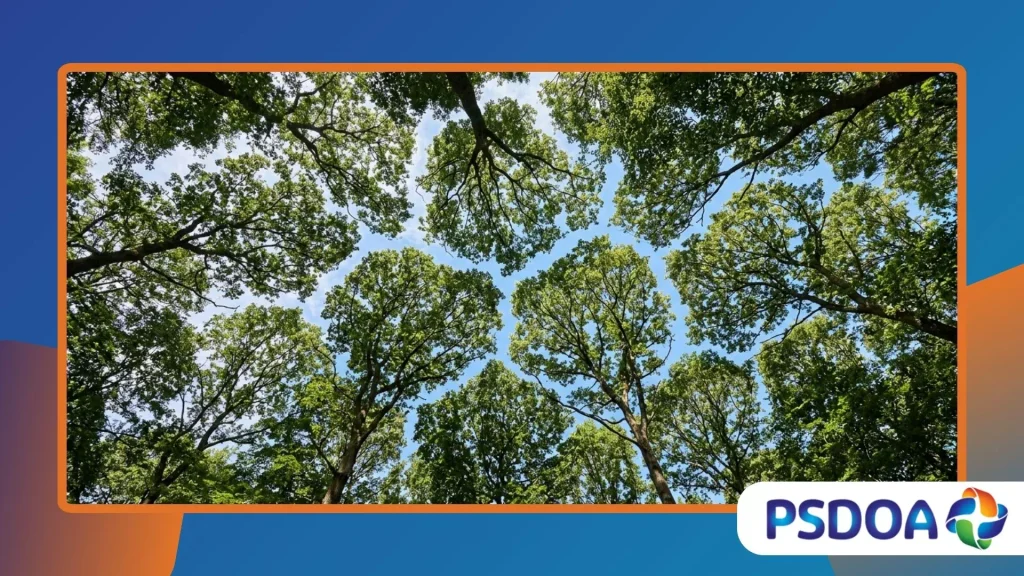
Crown Shyness defines a breathtaking botanical phenomenon where the upper canopy branches of mature trees meticulously avoid touching, creating delicate channels of open sky.
Anuncios
Walking through dense forests of camphor trees or eucalyptus groves reveals intricate jigsaw puzzles of negative space separating adjacent foliage crowns.
Botanists and forestry researchers worldwide continue exploring the precise biological mechanisms driving this mesmerizing aerial segregation across diverse forest ecosystems.
Observing these shimmering gaps inspires profound wonder regarding nature’s sophisticated intelligence and silent communication systems.
Unraveling this arboreal mystery requires examining rigorous scientific studies, wind friction dynamics, and light-sensing phototropic behaviors among competing canopy trees.
Anuncios
Forest ecologists note that these precise physical boundaries prevent aggressive pest transmission while optimizing sunlight absorption for every individual tree.
Think of each canopy crown as an independent sovereign nation respecting strict territorial borders in the sky. Are you ready to discover the fascinating biological secrets behind this breathtaking botanical phenomenon?
Navigating Arboreal Canopy Mysteries
- Investigating phototropic light sensors and mutual shading responses among competing forest trees.
- Analyzing abrasive wind friction dynamics that prune delicate terminal branches prematurely.
- Evaluating pest deterrence benefits resulting from separated canopy foliage structures.
- Documenting scientific field research methodologies used to study mature forest crowns.
What Biological Mechanisms Drive Crown Shyness in Forests?
Crown Shyness occurs primarily because terminal branch tips possess extraordinary sensitivity to lateral light levels, halting their horizontal growth upon detecting neighboring foliage.
Botanical research published by the International Journal of Plant Sciences demonstrates that trees utilize specialized photoreceptors to measure red-to-far-red light ratios reflected from adjacent leaves.
Imagine plants possessing sophisticated optical sensors that warn them against encroaching upon neighboring living space.
This remarkable photosensory awareness allows massive canopy trees to share finite airspace harmoniously without triggering aggressive physical combat.
Furthermore, physical abrasion during heavy windstorms plays a secondary role by snapping delicate leaf buds and twigs where neighboring crowns sway together.
When violent gusts sweep through dense woodlands, colliding branches batter each other repeatedly until a distinct boundary trench emerges.
This mechanical pruning keeps the aerial gaps pristine, preventing destructive friction wounds from infecting the vascular system.
Biological adaptation and physical wind forces collaborate continuously to maintain these stunning geometric patterns overhead.
How Do Photoreceptors Detect Neighboring Foliage?
Specialized plant proteins called phytochromes detect subtle changes in light quality bouncing off nearby green leaves, signaling the presence of botanical competitors.
Upon registering this reflected shadow signal, the tree’s cellular growth hormones redirect energy downward and upward rather than outward. This elegant photosensory response stops lateral branch expansion instantly.
++ Nieve marina: La extraña ventisca submarina en las profundidades oceánicas
Why Is Wind Abrasion Crucial for Canopy Gaps?
During intense windstorms, towering trees sway several feet in opposite directions, causing their outermost twigs to whip against adjacent branches with immense kinetic energy.
This violent mechanical collision strips away tender buds and leaves before they can bridge the gap. Constant friction carves clean, permanent boundaries across the upper forest canopy.
Lea también: Velos de polvo: capas atmosféricas que tiñen de púrpura las puestas de sol.
What Role Do Parasitic Insects Play in Separation?
Maintaining physical separation between individual tree crowns creates an effective natural moat that hinders the crawling migration of defoliating caterpillars and leaf-eating beetles.
Parasites find it exceptionally difficult to cross open air gaps, protecting the broader forest ecosystem from catastrophic localized infestations. Structural spacing acts as an ingenious biological defense mechanism.
Where Can You Observe Crown Shyness Around the World?
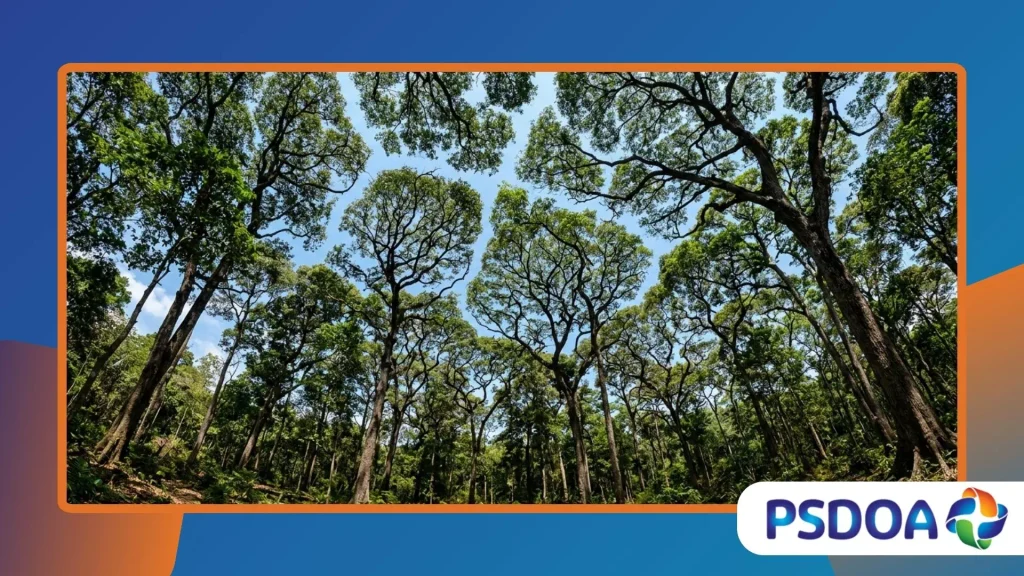
Crown Shyness manifests most dramatically in specific tree species that exhibit extreme lateral growth inhibition, including camphor trees, lodgepole pines, and certain eucalyptus varieties.
Visitors trekking through tropical rainforests in Southeast Asia or temperate eucalyptus forests in Australia frequently look upward to admire these intricate geometric canopies.
Think of looking up into these towering woodlands as gazing through a magnificent stained-glass window designed entirely by botanical architects.
Field naturalists record these breathtaking canopy formations primarily in old-growth forests experiencing steady, uniform wind conditions.
Ecological surveys confirm that while camphor and eucalyptus species display the most striking canopy gaps, various other deciduous and evergreen trees demonstrate similar spacing behaviors.
The phenomenon requires mature stands growing under optimal stocking density where gentle breezes facilitate consistent branch abrasion without causing catastrophic windthrow.
Observing these natural boundaries offers a profound reminder of the silent, orderly coordination governing complex forest ecosystems. Every woodland tells a unique story of adaptation and survival.
Leer más: Nubes Mammatus: Explicación de las nubes de tormenta con forma de burbuja
Why Are Camphor Trees Famous for Canopy Gaps?
Mature camphor trees feature dense, rounded foliage clusters that maintain remarkably sharp, distinct borders when planted in close proximity along urban avenues and forests.
Their vigorous vertical growth combined with sensitive lateral tips creates textbook examples of aerial spacing. Botanists frequently study camphor groves to analyze uniform light interception efficiencies.
How Do Eucalyptus Forests Exhibit Aerial Spacing?
Tall eucalyptus trees growing in dense Australian groves sway gracefully in coastal winds, producing wide, shimmering channels of blue sky between their crowns.
These distinct gaps allow maximum sunlight penetration down to understory shrubs while reducing canopy friction damage. The visual contrast against bright daylight is truly unforgettable.
What Environmental Conditions Favor This Phenomenon?
Consistent wind patterns, high species uniformity, and dense canopy stocking represent ideal environmental prerequisites for developing pronounced aerial separation zones.
Isolated trees or sparse woodlands rarely display these intricate patterns because lateral branches encounter zero crowding pressure. Nature requires community pressure to sculpt these magnificent boundaries.
Why Is Crown Shyness Vital for Forest Health and Survival?
Crown Shyness provides profound ecological advantages that ensure the long-term survival, structural resilience, and photosynthetic efficiency of mature forest ecosystems worldwide.
By preventing abrasive limb collisions, trees conserve vital metabolic energy that would otherwise be wasted repairing constant bark damage and physical wounds.
Imagine an efficient solar panel array where individual panels maintain precise spacing to avoid casting counterproductive shadows on neighboring units.
This optimized architectural layout maximizes overall energy harvest across the entire woodland canopy.
Conservation biologists emphasize that maintaining healthy canopy gaps supports microclimate stability by allowing adequate sunlight penetration to nourish diverse understory plant communities below.
When light filters evenly through these aerial channels, smaller ferns, mosses, and saplings thrive without suffering from total light starvation.
The entire forest ecosystem functions as a harmonious, interdependent living superorganism sustained by intelligent spatial organization.
Understanding these delicate balances deepens our profound respect for natural environmental design.
How Does Energy Conservation Benefit Mature Trees?
Repairing torn bark and bruised vascular tissue demands massive amounts of stored carbohydrates and cellular energy that trees desperately need for vertical growth and seed production.
Halting lateral expansion eliminates chronic wounding, allowing the plant to allocate resources toward deep root development and disease resistance. Efficiency ensures multi-century longevity.
Why Is Understory Sunlight Penetration Essential?
Unbroken, tightly overlapping canopies would plunge forest floors into absolute darkness, suffocating all foundational ground flora and preventing new tree seedlings from germinating.
The delicate gaps created by canopy spacing permit life-giving sunbeams to reach the soil, securing the next generation of forest growth. Light distribution maintains generational continuity.
What Makes Aerial Spacing an Evolutionary Masterpiece?
Millions of years of natural selection have refined these precise physiological responses, proving that stationary plants possess remarkable behavioral adaptations to optimize resource sharing.
Trees balance cooperation and competition flawlessly within crowded forest environments. Evolution continually perfects survival strategies without requiring conscious thought.
Forest Canopy Characteristics Comparison Matrix
The structured table below contrasts the ecological characteristics of forests exhibiting canopy separation with standard dense woodlands.
| Ecological Dimension | Forests with Canopy Spacing | Standard Dense Woodlands |
| Canopy Structure | Precise geometric channels of open sky between crowns | Overlapping, dense foliage creating continuous shade |
| Pest Transmission Rate | Low (open air gaps impede crawling insect migration) | High (interlocking branches allow rapid pest spread) |
| Wind Damage Risk | Reduced (branches glide past each other cleanly) | High (severe friction breaks interlocking limbs) |
| Understory Light Access | Optimized (sunlight filters evenly through gaps) | Minimal (forest floor remains in perpetual darkness) |
Embracing the Astounding Architectural Wisdom of Nature
Crown Shyness serves as a humbling reminder that the natural world operates through sophisticated, silent mechanisms far beyond our immediate human comprehension.
By mastering light sensing and structural spacing, mature trees create magnificent aerial masterpieces that protect forest health and optimize solar energy.
Take time to look upward during your next woodland hike and appreciate the intricate botanical boundaries framing the sky.
How does observing such natural intelligence change your perspective on environmental conservation? Share your experience in the comments below!
Preguntas frecuentes
Do all tree species exhibit crown shyness in dense forests?
No, crown shyness occurs primarily in specific tree species such as camphor trees, certain eucalyptus varieties, and black mangroves that possess high sensitivity to lateral light and wind abrasion.
Does crown shyness harm the health of the participating trees?
Quite the contrary, maintaining precise canopy separation protects trees from physical abrasion wounds, reduces pest transmission risks, and conserves vital metabolic energy for long-term growth.
How wide are the typical gaps between separated tree crowns?
The open channels of sky separating mature tree crowns typically range from a few inches to several feet, depending on tree species, wind velocity, and overall forest density.
Can human intervention artificially induce this canopy phenomenon?
While foresters can prune trees to create artificial gaps, true crown shyness is an entirely natural, self-organizing biological response driven by the trees’ internal photosensory and mechanical feedback systems.
Why do scientists still debate the primary cause of canopy spacing?
Researchers debate whether phototropic light avoidance or mechanical wind pruning acts as the dominant driver because field studies show both factors contribute significantly depending on the specific forest ecosystem.
