
Coche Trampa para Ratones: El Vehículo Olvidado Impulsado Únicamente por Muelles
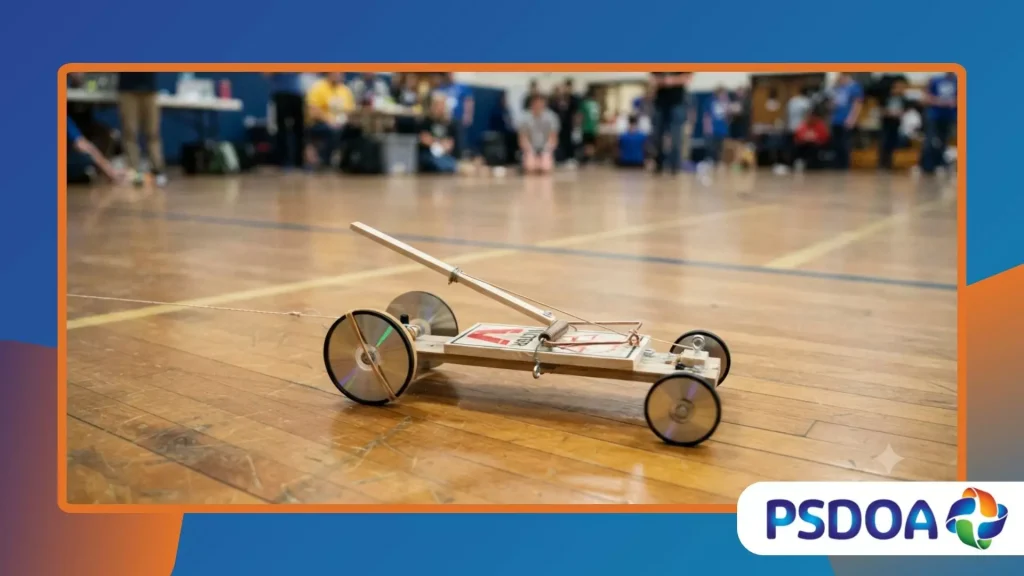
Coche con trampa para ratones La física representa una fascinante intersección entre la energía cinética, la eficiencia mecánica y la curiosidad histórica que continúa intrigando a estudiantes e ingenieros en 2026.
Anuncios
Si bien el transporte moderno acapara los titulares con las redes eléctricas y las pilas de hidrógeno, este sencillo dispositivo demuestra que la energía potencial, cuando se captura correctamente, puede producir resultados extraordinarios.
Construidos principalmente con artículos domésticos básicos y el mecanismo de resorte de una trampa estándar, estos vehículos en miniatura demuestran las leyes fundamentales de la termodinámica de una manera que pocos otros proyectos pueden lograr.
Sirve como recordatorio de que la innovación no siempre requiere materiales de alta tecnología.
Aprovechando la energía almacenada en un muelle metálico en espiral, estos vehículos transforman la tensión en movimiento rotacional mediante un ingenioso sistema de palanca y cuerda.
Anuncios
Los constructores suelen dedicar semanas a optimizar las relaciones de transmisión, la fricción de los ejes y la distribución del peso para obtener la máxima distancia o velocidad de la limitada fuente de energía.
Esta búsqueda de la eficiencia resalta la belleza de la física en movimiento, donde cada gramo de masa y cada milímetro de longitud de cuerda importan.
Al analizar la historia de estos dispositivos, encontramos un paralelismo perfecto con el desafío más amplio de la conservación de la energía.
Navegando por la mecánica del movimiento en miniatura
- Los principios físicos fundamentales de los sistemas de propulsión por resorte.
- Retos de ingeniería para minimizar la fricción y maximizar la transferencia de energía.
- Contexto histórico y valor pedagógico de estos pequeños coches de carreras.
- Consejos prácticos para construir tu propio vehículo de alto rendimiento en casa.
¿Qué es un coche trampa para ratones y por qué fascina a los ingenieros?
A Coche con trampa para ratones Funciona como un proyecto clásico de física que utiliza el chasquido repentino de una trampa con resorte para enrollar una cuerda alrededor de un eje de transmisión.
Al tirar de la cuerda mediante la palanca, se fuerza a las ruedas a girar, convirtiendo la energía potencial del resorte tensado en energía cinética.
Esta elegante solución transforma un sencillo dispositivo de control de plagas en un vehículo tractor sorprendentemente eficiente, capaz de recorrer distancias significativas con una sola descarga.
La transición de la tensión estática al movimiento dinámico se produce en una fracción de segundo.
Los ingenieros se sienten atraídos por estas construcciones porque encapsulan los desafíos fundamentales del diseño automotriz dentro de una estructura pequeña y manejable.
Te ves obligado a lidiar con problemas del mundo real, como la inercia rotacional, la resistencia a la rodadura y la integridad estructural, sin las ventajas de un motor de combustión.
Para alcanzar la perfección se requiere un profundo conocimiento de la física, lo que lleva a los constructores a experimentar con diferentes materiales para reducir la resistencia aerodinámica.
Se trata de una clase magistral de optimización que proporciona información profunda sobre cómo se comporta la energía en sistemas cerrados.
¿Cómo influye la palanca en el rendimiento?
La longitud del brazo de palanca determina la distancia que recorre la cuerda durante la rotación inicial, actuando esencialmente como la transmisión del vehículo.
Un brazo más largo proporciona mayor torque, lo cual es excelente para la aceleración inicial, pero agota la energía del resorte mucho más rápido.
Encontrar el punto óptimo en la longitud de la palanca es la decisión más importante que toma un constructor.
++ Robots militares olvidados de la Segunda Guerra Mundial
¿Por qué reducir la fricción es el factor más importante?
En un sistema con un presupuesto energético tan reducido, la fricción es el enemigo definitivo que detiene el progreso antes de que el resorte se desenrolle por completo.
Los profesionales suelen utilizar rodamientos especializados para los ejes y ruedas ligeras y pulidas para garantizar que el vehículo se deslice con la mínima resistencia.
Incluso el peso de la cuerda o el grosor del eje pueden marcar la diferencia entre el fracaso y una carrera que bata récords.
Lea también: Cómo estuvimos a punto de tener un sistema global de correo neumático.
¿Pueden estos dispositivos enseñarnos sobre eficiencia energética?
Por supuesto, porque proporcionan una representación visual de cómo se pierde energía en forma de calor, sonido y vibración mecánica.
Mediante el análisis de una carrera, los estudiantes aprenden a identificar con precisión dónde se desperdicia energía, como por ejemplo en ruedas inestables o cuerdas que se deslizan.
Este proceso de diagnóstico es idéntico a los retos a los que se enfrentan los aerodinamistas en el sector automovilístico comercial.
¿Cómo evolucionó esta idea hasta convertirse en un pilar de la pedagogía?
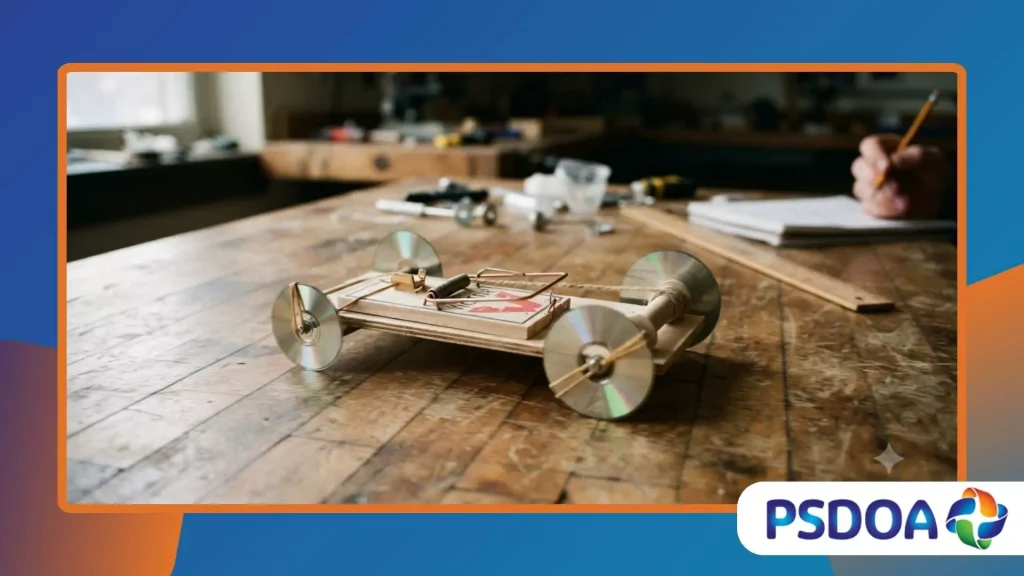
El concepto de un Coche con trampa para ratones Hace décadas, se introdujo en las aulas como una forma práctica de enseñar las leyes del movimiento de Newton en un entorno real.
A finales del siglo XX, se había convertido en un rito de iniciación para los estudiantes de física de secundaria y bachillerato de todo el mundo.
Los educadores pronto se dieron cuenta de que la construcción de estas máquinas obligaba a los estudiantes a interactuar con conceptos abstractos como el par motor y la fricción, haciendo que las fuerzas invisibles de la naturaleza se volvieran repentinamente tangibles.
La sencillez de los componentes permitía que cualquiera pudiera participar, independientemente de su situación económica.
Más allá del aula, estos pequeños vehículos de carreras evolucionaron hasta convertirse en circuitos de ingeniería competitivos donde los entusiastas ponen a prueba los límites de lo que puede lograr un resorte de metal.
En las competiciones de 2026, es frecuente ver vehículos capaces de recorrer más de 30 metros (100 pies) utilizando únicamente la energía almacenada en un pequeño muelle helicoidal.
Esta evolución, desde un proyecto científico básico hasta un pasatiempo sofisticado, pone de manifiesto nuestro deseo humano innato de resolver problemas mecánicos complejos con recursos limitados. Sigue siendo un experimento atemporal de ingenio.
Leer más: El avión mecánico que nunca despegó
¿Cuáles son los principales beneficios pedagógicos?
La construcción de estos vehículos fomenta un proceso de diseño iterativo en el que el fracaso es una parte esencial, en lugar de algo que se desaconseja, del ciclo de desarrollo.
Los estudiantes aprenden a formular hipótesis, ponerlas a prueba, ajustarlas y volver a ponerlas a prueba, que es el método fundamental de toda investigación científica.
Este enfoque de aprendizaje activo desarrolla habilidades de pensamiento crítico que trascienden el laboratorio de física.
¿Por qué los aficionados siguen construyéndolos hoy en día?
Resulta profundamente gratificante crear algo que funcione a la perfección basándose en principios matemáticos que uno mismo ha calculado.
En un mundo dominado por la electrónica y el software opacos, hay algo profundamente gratificante en una máquina donde cada interacción mecánica es visible y comprensible.
Se trata de una experiencia táctil que conecta al constructor con la física del mundo real.
¿Cómo ha influido la tecnología en los diseños modernos?
Si bien la fuente de energía sigue siendo la misma, la impresión 3D y la fabricación de precisión han permitido a los constructores modernos crear componentes de chasis increíblemente ligeros y perfectamente equilibrados.
Estos avances significan que los vehículos actuales son significativamente más eficientes que los fabricados hace veinte años.
El espíritu del proyecto permanece inalterado, pero el potencial de rendimiento se ha elevado significativamente gracias a los materiales modernos.
¿Cuáles son los principales retos de ingeniería para los constructores?
Dominar el Coche con trampa para ratones Requiere un delicado equilibrio entre peso, par motor y velocidad, que varía según el objetivo final.
Si buscas la máxima distancia, debes diseñar para que sea extremadamente ligero y para que la liberación de energía sea lenta y prolongada, evitando así que las ruedas giren sobre sí mismas.
Por el contrario, un coche de carreras enfocado en la velocidad exige un par motor inicial elevado, sacrificando la distancia total a cambio de una salida rápida y explosiva que le permita abandonar la pista en segundos.
Comprender esta dicotomía es esencial para cualquiera que aspire a ganar una carrera.
Además, gestionar la interfaz entre la cuerda y el eje es un arte que a menudo distingue a los campeones de los principiantes.
El uso de un eje cónico o un diferencial autoblocante especializado permite cambiar la relación de transmisión del vehículo durante la marcha, lo que posibilita una aceleración suave que no desperdicia energía.
También hay que tener en cuenta las condiciones de la superficie de la pista, ya que incluso la más mínima partícula de gravilla puede desestabilizar un vehículo diseñado para tener un peso mínimo.
Cada pequeño ajuste cambia la personalidad del vehículo y su rendimiento final.
¿Cómo influye el grosor de la cuerda en las relaciones de transmisión?
Una cuerda más delgada permite un mayor número de rotaciones alrededor del eje, lo que aumenta efectivamente la "relación de transmisión" y la distancia potencial que puede recorrer el coche.
Sin embargo, la cuerda debe ser lo suficientemente resistente como para soportar el chasquido inicial de la trampa, que puede ser sorprendentemente violento.
Equilibrar la resistencia de una cuerda con su delgadez es un clásico problema de optimización en ingeniería.
¿Por qué es fundamental la alineación de las ruedas para el éxito?
Incluso un motor diseñado a la perfección no sirve de nada si el vehículo no puede circular en línea recta, ya que cualquier desviación genera un desperdicio de energía.
Los constructores dedican horas a alinear los ejes para asegurar que el coche mantenga una trayectoria perfectamente recta durante toda la carrera. Un vehículo que se desvía está, en esencia, desperdiciando su limitada energía potencial.
¿Se pueden usar varias trampas juntas?
Los constructores más experimentados suelen utilizar dos o más resortes conectados en serie o en paralelo para multiplicar la energía potencial total disponible.
Esto aumenta significativamente la complejidad del enrutamiento de las cuerdas, lo que requiere una coordinación precisa para garantizar que ambas trampas se activen en perfecta sincronización.
Es una ruta popular para quienes buscan establecer nuevos récords de distancia.
Resumen estadístico: Comparación del rendimiento energético
La siguiente tabla compara los resultados típicos de diferentes enfoques de diseño para un Coche con trampa para ratones basado en el objetivo principal de optimización del constructor.
| Prioridad de diseño | Enfoque mecánico principal | Resultado de rendimiento promedio |
| Velocidad/Aceleración | Brazo de palanca corto, eje de gran diámetro | Alcanza de 5 a 10 mph en menos de 2 segundos. |
| Larga distancia/Resistencia | Brazo de palanca largo, microrodamientos, chasis ligero | Recorre entre 80 y 120 pies en una sola liberación. |
| Híbrido/Equilibrado | Carrete de engranajes variables, estructura aerodinámica | Recorre entre 40 y 60 pies a velocidad moderada. |
| Precisión/Seguimiento | Soportes de eje reforzados, neumáticos con agarre de goma. | Mantiene una trayectoria recta a menos de 5 cm del objetivo. |
Conclusión
El legado de la Coche con trampa para ratones Su vigencia no se debe a que compita con los coches de 2026, sino a que enseña los principios fundamentales de la ingeniería.
Al eliminar los complejos sistemas de combustible y sensores, nos quedamos con la belleza pura y sin adornos de la conversión de energía.
Tanto si eres un estudiante que aprende a calcular el par motor como si eres un aficionado que busca batir un récord de distancia, estos vehículos ofrecen una experiencia accesible y profunda en el dominio de la mecánica.
Te invitamos a desempolvar esas piezas antiguas, a dar rienda suelta a tu creatividad y a comprobar hasta dónde te puede llevar un poco de tensión de resorte.
¿Has construido alguna vez uno de estos coches de carreras o tienes algún consejo de diseño original que quieras compartir? ¡Cuéntanos tu experiencia en los comentarios!
Preguntas frecuentes
¿Por qué mis ruedas giran sobre sí mismas cuando se activa la trampa?
Este problema común, conocido como "sobrecalentamiento", se produce cuando el par inicial de la trampa supera la fricción disponible entre los neumáticos y el suelo.
Esto se puede solucionar aumentando la longitud de la palanca para ralentizar la liberación de energía o añadiendo más agarre a los neumáticos para mejorar la tracción.
¿Puedo construir un coche que funcione en varios pisos?
Si bien estos vehículos de carreras están diseñados para superficies planas y lisas, agregar dirección ajustable en las ruedas delanteras puede permitir que su vehículo circule por curvas suaves.
Sin embargo, debido al limitado presupuesto energético de un solo resorte, navegar por terrenos complejos o inclinados resulta extremadamente difícil y requiere una eficiencia mecánica muy alta.
¿Cuál es el error más común que cometen los constructores?
El error más frecuente es construir un chasis demasiado pesado, lo que consume la energía del muelle simplemente al intentar mover el peso del propio vehículo.
Prioriza la reducción extrema de peso antes de añadir relaciones de transmisión complejas; un coche ligero con un diseño básico casi siempre tendrá un mejor rendimiento que uno pesado y complejo.
