
Social Facilitation: Why Audiences Change Human Performance
Social Facilitation is a psychological phenomenon where the presence of observers fundamentally alters how individuals execute tasks, boosting proficiency during simple actions while triggering friction during complex challenges.
Anúncios
When eyes fixate upon us, our underlying nervous system activates physiological arousal, fundamentally reshaping cognitive focus, motor execution, and biological stamina.
Experienced public speakers, professional athletes, and corporate leaders frequently observe this sudden shift in energy, yet few comprehend the precise psychological mechanisms driving such behavioral transformations.
Human evolutionary biology hardwired our brains to care deeply about social standing, transforming every watching eye into a subtle signal of potential evaluation.
Consequently, understanding how social observation dictates human output provides an essential strategic blueprint for modern productivity, high-stakes communication, and collaborative workplace design.
What to Expect in This Guide
- Understanding Social Facilitation: Mechanics of audience presence and performance shifts.
- Why Presence Alters Behavior: Physiological arousal, evaluation apprehension, and task complexity.
- Mastering Audience Dynamics: Practical strategies for high-stakes presentations and team productivity.
- Empirical Data Overview: Structured breakdown of psychological impact across scenarios.
- Strategic Takeaways & FAQ: actionable conclusions and answers to frequent questions.
What Is Social Facilitation and How Does Presence Alter Human Performance?
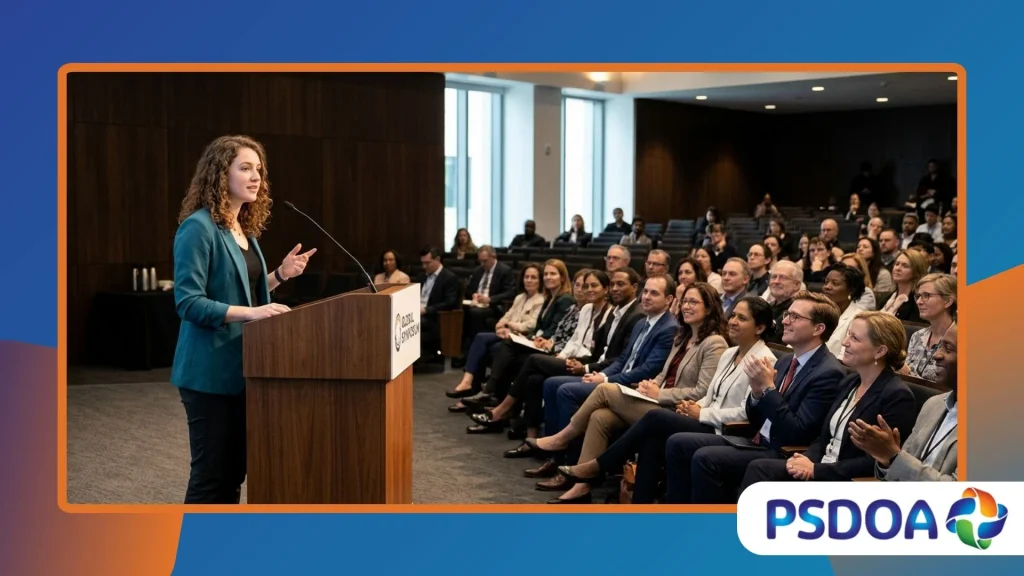
What Are the Core Psychological Drivers of Audience Performance Shifts?
Audience presence triggers an immediate spike in bodily arousal, accelerating heart rate and elevating mental alertness to process external social signals.
In 1898, psychologist Norman Triplett conducted the first official sports psychology study, observing that competitive cyclists rode significantly faster when racing alongside peers than against a clock.
This instinctual drive stems from evolutionary biology, where survival depended on monitoring group dynamics and avoiding social exclusion within competitive tribal environments.
Modern neuroimaging studies demonstrate that observed individuals show heightened activation in the prefrontal cortex and amygdala, sharpening sensory processing instantaneously.
Consequently, simple or well-rehearsed actions become smoother under observation, converting raw social energy into physical momentum and focus.
However, when an individual faces a novel or intricate task, that identical spike in arousal often degrades performance through cognitive overload.
Social Facilitation operates through drive theory, which posits that heightened nervous system activation strengthens an individual’s dominant, most practiced behavioral response.
If a task is thoroughly mastered, the dominant response leads directly to success, allowing social pressure to amplify speed and accuracy.
Conversely, when attempting complex tasks requiring deliberate working memory, heightened arousal introduces distracting thoughts, increasing error rates substantially.
Recognizing this basic neurological split allows professionals to curate their environments strategically, ensuring optimal mental states for every unique task requirement.
++ Friendship Inflation: Why Maintaining Social Circles Feels Harder
How Does Evaluation Apprehension Differ From Simple Distraction Mechanisms?
Evaluation apprehension occurs when performers actively anticipate judgment from onlookers, shifting their internal focus from task execution to social impression management.
Psychologist Robert Zajonc expanded early research by demonstrating that mere presence alone elevates drive, while Nicholas Cottrell proved that anticipation of critical evaluation amplifies this physiological response even further.
Imagine a skilled classical pianist performing a simple warm-up scale flawlessly before a casual friend, yet stumbling when the exact same scale is observed by a stern competition judge.
The physical presence remains constant, but the cognitive load explodes as the brain actively calculates potential social status costs.
This mental friction drains precious working memory resources, depriving complex problem-solving routines of necessary processing power.
On the other hand, distraction-conflict theory suggests that an audience creates a literal divided-attention scenario, forcing the brain to split focus between the immediate task and the observing crowd.
This internal cognitive conflict causes a sudden surge in cognitive effort, which paradoxically aids quick, instinctual tasks by narrowing attentional focus onto central cues.
For instance, an experienced sprinter tunes out background noise and runs faster, utilizing the distraction to silence internal doubt and perform automatically.
However, for intricate intellectual work, such as drafting complex software code or solving multi-variable calculus equations, this narrowed focus cuts off necessary lateral thinking pathways.
Balance requires managing social exposure intentionally, matching environmental scrutiny to the specific cognitive complexity of the work at hand.
Why Does Task Complexity Determine Outcome Under Social Scrutiny?
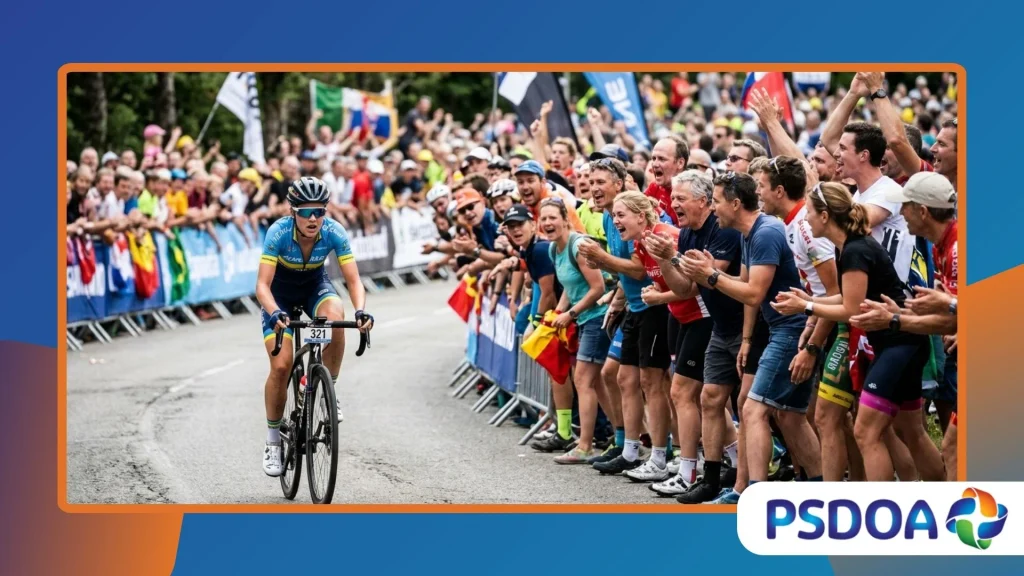
Why Do Simple Tasks Benefit While Complex Tasks Suffer Friction?
Simple, highly repetitive tasks rely predominantly on procedural memory, allowing the human brain to execute movement patterns without demanding heavy conscious intervention.
When an audience observes an expert performing a routine operation, elevated arousal acts as a natural biological catalyst, speeding up execution times while maintaining high precision.
Think of an experienced barista crafting signature espresso drinks during a morning rush; the watchful eyes of eager patrons sharpen execution rather than causing hesitation.
Because the motor pathways are deeply consolidated, the dominant biological response is inherently correct, turning social pressure directly into enhanced output.
This dynamic explains why well-rehearsed theater performers often deliver their finest shows before packed houses rather than empty auditoriums.
Conversely, complex tasks demand active reasoning, working memory, and deliberate decision-making routines located in the prefrontal cortex.
When social pressure surges during unmastered challenges, the resulting anxiety floods cognitive channels with self-monitoring thoughts, causing what psychologists refer to as “choking under pressure.”
A financial analyst building an unfamiliar quantitative model will likely experience severe mental fatigue if forced to construct formulas under the direct observation of senior directors.
The social presence disrupts delicate problem-solving loops, forcing the brain to divide energy between calculating variables and worrying about professional competence.
Effective organizational management requires protecting employees from continuous observation during exploratory, creative, or complex learning phases.
Also read: Why People Are Forming Emotional Bonds With AI Companions
How Can Teams Structure Environments to Harness Social Dynamics Safely?
Organizations can strategically leverage Social Facilitation by tailoring work environments specifically to the cognitive demands of different professional assignments.
Open-plan offices and collaborative digital rooms work exceptionally well for routine data entry, basic administrative processing, or high-volume physical assembly.
In these contexts, mutual visibility creates a supportive ambient pressure that reduces procrastination, boosts energy, and keeps focus locked on clear operational targets.
By establishing shared work areas for execution-focused responsibilities, leaders harvest the positive performance boosts of social observation without over-taxing employee emotional reserves.
For deep creative work, novel problem-solving, or complex strategic planning, organizations must provide private, low-scrutiny environments to foster psychological safety.
Allowing engineers, strategists, and writers to work isolated from constant micro-observation prevents evaluation apprehension from suffocating innovation and experimental risk-taking.
Once strategies are solidified and skills thoroughly honed through private practice, teams can then reintroduce group settings to review, polish, and execute.
This deliberate oscillation between private cognitive space and public collaborative performance ensures teams maximize productivity without triggering debilitating anxiety.
Modern workplace design must reflect these psychological realities rather than forcing all employees into uniform, high-visibility spaces.
How Can Professionals Master Audience Pressure for Personal Growth?
How Do Experts Convert Performance Anxiety Into Constructive Psychological Energy?
Elite performers across athletics, public speaking, and corporate leadership master audience dynamics by actively cognitive-reappraising their physiological arousal responses.
When heart rates rise and palms sweat before a high-stakes presentation, untrained individuals interpret these biological signals as symptoms of impending failure or panic.
In contrast, seasoned professionals reinterpret elevated adrenaline as positive readiness, viewing the body’s natural response as necessary fuel for sharp execution.
This subtle shift in mindset transforms potential threat responses into challenge states, maintaining executive function and preserving access to working memory resources.
By embracing social pressure as a performance enhancer rather than a threat, professionals consistently harness audience energy to deliver memorable results.
Over-preparing through systematic simulation represents another essential strategy for transforming performance friction into consistent high-level execution under pressure.
By practicing presentations, athletic routines, or pitch decks before artificial audiences or mock panels, performers convert novel, complex tasks into automated, dominant responses.
When the actual event occurs, the physiological arousal triggered by the real audience naturally reinforces those masterfully pre-programmed behavioral patterns.
Furthermore, utilizing self-distraction techniques during initial learning phases prevents premature exposure to social scrutiny, building baseline competence before entering high-visibility arenas.
Strategic skill development requires respecting this sequence: master skills in quiet isolation, then validate and elevate them under public scrutiny.
Read more: Social Snacking: How Small Interactions Reduce Loneliness
What Role Does Digital Visibility Play in Modern Remote Work Behavior?
The digital age has expanded audience dynamics beyond physical rooms into virtual collaboration platforms, persistent video meetings, and constant productivity tracking tools.
Remote workers frequently experience continuous web-camera monitoring during virtual meetings, triggering evaluation apprehension even while working entirely alone from home office environments.
This perpetual virtual audience can exhaust mental energy faster than traditional office setups because workers continuously manage their onscreen facial expressions while trying to process complex information.
Modern Social Facilitation research emphasizes that digital presence creates unique cognitive strains that require deliberate structural boundaries to sustain long-term focus and wellness.
To prevent digital fatigue, modern professionals and managers should establish clear protocols regarding camera usage and real-time monitoring tools.
Turning off video feeds during complex internal technical discussions allows team members to dedicate full cognitive capacity toward analytical problem-solving without feeling judged.
Conversely, turning cameras on during routine status updates or celebratory team gatherings can boost engagement and strengthen social cohesion effectively.
Isn’t it time we stop treating constant online visibility as a universal proxy for actual employee productivity?
Balancing digital presence with focused autonomy ensures teams remain energetic, innovative, and mentally resilient across remote work landscapes.
Comparative Analysis of Social Scrutiny Impacts Across Performance Conditions
| Performance Context | Audience Type | Primary Psychological Mechanism | Impact on Simple/Mastered Tasks | Impact on Complex/Novel Tasks | Recommended Operational Strategy |
| Physical Office / Open Space | Co-workers & Managers | Mere Presence & Evaluation Apprehension | Significant speed & accuracy increase | Increased cognitive load & error rates | Use open areas for routine execution, quiet pods for deep work |
| Virtual Video Conference | Remote Team & Directors | Continuous Visual Self-Monitoring | Moderate engagement boost | Rapid mental fatigue & reduced creativity | Keep cameras optional during complex analytical sessions |
| High-Stakes Live Stage | External Judges & Clients | Acute Evaluation Apprehension | High energy delivery & rapid execution | High risk of choking without preparation | Over-rehearse material to convert complex tasks into dominant habits |
| Solitary Deep Work Space | None (Isolated Environment) | Autonomous Internal Focus | Potential energy drop / procrastination | Optimal conditions for innovation & learning | Schedule isolated time blocks for initial learning and strategy |
Mastering Social Dynamics for Peak Performance
Understanding audience dynamics allows individuals and organizations to stop leaving performance outcomes to chance, transforming social pressure from an unpredictable threat into an intentional productivity tool.
By recognizing that social exposure amplifies mastered habits while disrupting unpracticed cognitive tasks, managers can structure workflows that preserve psychological safety while driving operational efficiency.
Professionals who systematically practice high-stakes skills in private before stepping into public arenas will consistently leverage biological arousal to achieve superior results.
Designing work ecosystems around human evolutionary biology ultimately unlocks higher creative output, lowers unnecessary burnout, and respects the natural nuances of human cognition.
As workplace environments continue to evolve across physical and digital spaces, mastering the balance between visibility and privacy remains a central pillar of sustainable performance.
Embracing Social Facilitation principles equips leaders to build resilient, high-performing teams capable of thriving under modern scrutiny.
Try auditing your daily task schedule this week, moving complex creative work to quiet, low-scrutiny windows while reserving high-visibility group sessions for execution and alignment.
How will you adjust your environment today to harness audience dynamics for your next big challenge? Share your thoughts and personal workplace experiences in the comments below!
Frequently Asked Questions
What is the primary difference between social facilitation and social loafing?
Social facilitation occurs when an individual’s performance changes because they are being directly observed or working alongside peers, boosting routine task output through heightened physiological arousal.
In contrast, social loafing occurs when individuals exert less effort in a group setting because their individual contributions are pooled and cannot be evaluated separately, leading to reduced personal accountability.
How does audience expertise affect performance outcome during complex tasks?
When an audience consists of recognized experts or critical evaluators, evaluation apprehension increases significantly compared to being observed by neutral or non-expert peers. This heightened social scrutiny elevates physiological arousal, which severely consumes working memory capacity and increases error rates during complex, unmastered tasks.
Can social facilitation improve performance during creative brainstorming sessions?
Direct social observation during initial creative brainstorming often hinders output because ideation requires complex, lateral cognitive processing vulnerable to evaluation apprehension. Teams generate higher quality, innovative ideas when members brainstorm individually in private first, before aggregating and refining concepts within a collaborative group setting.
Why do some athletes perform better in front of large crowds while others choke?
Athletes who perform exceptionally under pressure have converted their physical actions into deeply ingrained procedural memory through rigorous practice, allowing elevated arousal to enhance their dominant, flawless response. Those who choke often experience explicit self-monitoring, where high social pressure forces their conscious mind to interfere with automatically execution pathways.
How can managers reduce negative social scrutiny in remote work environments?
Managers can mitigate negative virtual scrutiny by setting clear guidelines for camera usage, encouraging asynchronous communication for complex projects, and avoiding invasive digital monitoring software. Providing team members dedicated periods of unobserved focus allows them to tackle difficult cognitive challenges without experiencing constant evaluation anxiety.
