
The Personal Helicopters Inventors Thought Everyone Would Own
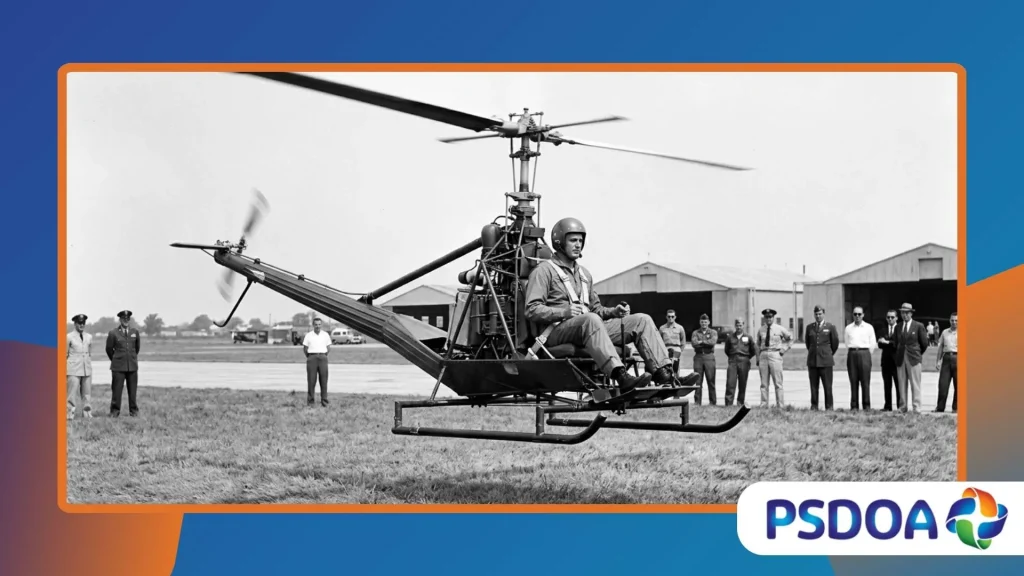
Personal helicopters captured the mid-century American imagination as aviation visionaries confidently predicted every suburban garage would soon house a flying commuter machine.
Anúncios
Mid-century industrial designers envisioned bustling aerial highways spanning across metropolitan skylines, transforming daily ground traffic jams into obsolete historical memories.
Historical archives from popular mechanics magazines illustrate ambitious inventors tinkering with strap-on rotor packs and single-seat rotary aircraft.
Society genuinely believed personal aviation would democratize flight just like the affordable automobile revolutionized personal land transit.
Navigating this fascinating technological detour requires examining the bold engineering prototypes, regulatory hurdles, and safety nightmares that grounded these airborne dreams.
Aviation historians constantly study why ambitious inventors failed to transition experimental backyard contraptions into mainstream consumer commercial products.
Think of these forgotten flying machines as magnificent technological stepping stones toward modern drone logistics and urban air mobility.
Are you ready to explore why your suburban garage never received that promised rotorcraft?
Navigating Mid-Century Aviation Ambitions
- Investigating post-World War II inventor prototypes designed for everyday suburban commuters.
- Analyzing strict Federal Aviation Administration regulatory barriers and airspace safety protocols.
- Evaluating high mechanical complexity, fuel consumption, and prohibitive manufacturing cost factors.
- Documenting the historical transition from personal rotorcraft dreams to modern drone logistics.
What Were the Most Famous Experimental Personal Rotorcraft Designs?
Personal helicopters like the ingenious Hiller-Copter and the strap-on Bensen Gyrocopter dominated aviation exhibition halls during the booming nineteen-fifties industrial era.
Visionary engineer Igor Bensen marketed build-it-yourself rotary kits that allowed adventurous hobbyists to assemble flying machines right inside backyard garden sheds.
Imagine stepping out of your front door, strapping a lightweight aluminum rotor harness onto your shoulders, and lifting off effortlessly.
Aviation museum archives in Washington document how these bold amateur experiments pushed rotary aerodynamics into uncharted mechanical territory.
Historical manufacturing reports published by the Aviation Heritage Society indicate that hundreds of enthusiasts purchased experimental blueprints despite severe operational risks.
However, operating these ultra-lightweight contraptions demanded exceptional pilot coordination, perfect weather conditions, and nerves of absolute steel.
A single gust of crosswind could destabilize the rotor disc, sending amateur pilots spinning uncontrollably toward disastrous ground collisions.
Thrill-seeking ambition frequently outpaced practical engineering safety standards during this wild experimental golden age.
How Did the Bensen Gyrocopter Function in Practice?
The Bensen Gyrocopter relied on an unpowered rotor that spun freely via aerodynamic autorotation while a small rear pusher engine provided forward thrust.
Pilots controlled pitch and roll by shifting their body weight or manipulating a direct overhead mechanical linkage bar.
++ Forgotten Military Robots From WWII
Why Did the Hiller-Copter Captivate Suburban Families?
Stanley Hiller promoted his revolutionary coaxial rotor design as the ultimate family runabout that could land safely on standard residential suburban lawns.
Promotional newsreels depicted smiling businessmen commuting above congested urban bridge traffic without a single traffic worry.
Also read: How We Nearly Had a Global Pneumatic Mail System
What Role Did Military Funding Play in Early Experiments?
Early single-seat rotor research received substantial backing from defense agencies seeking agile reconnaissance platforms for frontline combat infantry units.
Civilian prototypes often borrowed surplus military turbine components to reduce experimental construction expenses significantly.
Why Did Personal Rotorcraft Fail to Reach Mass Consumer Markets?
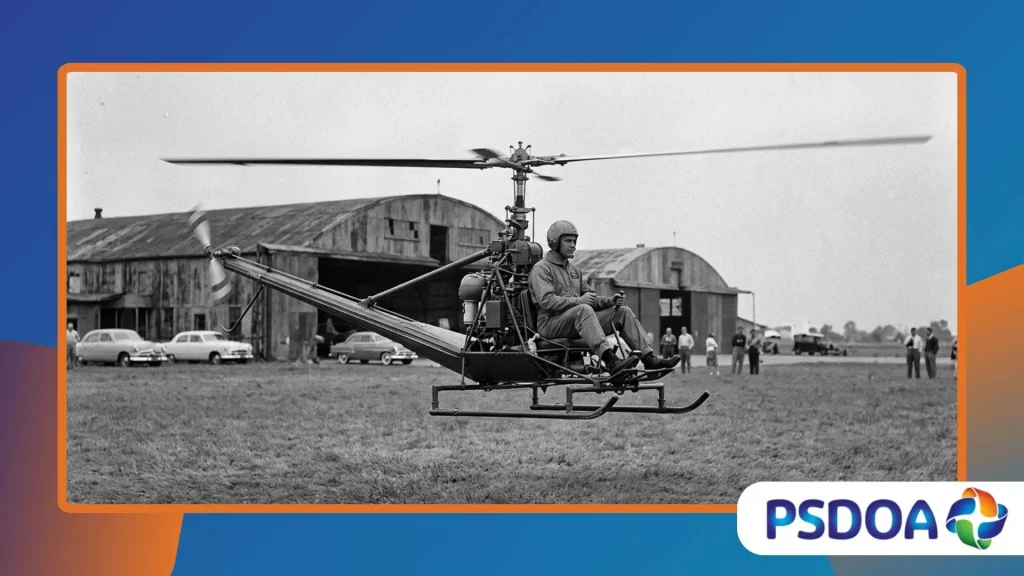
Personal helicopters ultimately remained elusive because skyrocketing manufacturing costs, complex mechanical maintenance, and terrifying safety hazards terrified everyday potential buyers.
Unlike automobiles that tolerate erratic driver behavior and minor mechanical neglect, rotary aircraft demand absolute perfection during every single flight cycle.
Think of flying a personal rotorcraft like balancing on a tightrope across Niagara Falls while juggling flaming torches without a safety net.
Historical accident statistics compiled by federal transit safety boards forced regulators to impose crushing certification requirements on manufacturers.
Market viability vanished completely when average consumers realized that learning to pilot a helicopter required hundreds of expensive flight training hours.
Furthermore, neighborhood noise ordinances, complex air traffic control corridors, and liability insurance expenses made urban backyard commuting legally impossible.
Public enthusiasm rapidly evaporated as reality replaced futuristic science fiction magazine fantasies with grounded practical economics. The dream of aerial commuting quietly faded into aviation history obscurity.
Read more: The Clockwork Airplane That Never Got Off the Ground
How Did High Maintenance Costs Deter Average Buyers?
Maintaining precision gearboxes, complex swashplate linkages, and delicate rotor blades required professional mechanic intervention after every few operating hours.
Servicing costs quickly surpassed the annual purchase price of a brand-new luxury family automobile.
Why Were Airspace Regulations Insurmountable for Commuters?
Government aviation agencies prohibited low-altitude urban flight corridors to protect pedestrians from falling debris and catastrophic mechanical rotor failures.
Navigating controlled metropolitan airspace required expensive radio telemetry and licensed commercial pilot credentials.
What Safety Hazards Ended the Personal Aviation Dream?
Deadly blade-stalling phenomena, engine failure vulnerability at low altitudes, and the extreme difficulty of emergency autorotation landings frightened potential investors away.
Without failsafe autonomous stabilization systems, fatal accidents plagued early civilian prototypes.
How Did Early Inventors Tackle Complex Aerodynamic Stabilization Challenges?
Personal helicopters presented monumental stabilization engineering hurdles because single-rotor designs generated uncontrollable torque forces that continuously spun the fuselage backward.
Brilliant engineers experimented with coaxial counter-rotating blades, tandem rotors, and tail-fan stabilization systems to neutralize these violent rotational forces safely.
Imagine trying to paddle a sleek canoe using an uncoordinated pair of oars while sitting atop a spinning top.
Historical patent office logs reveal thousands of eccentric mechanical stabilization patents filed by desperate inventors during the mid-century era.
Aerodynamic research papers published by the National Advisory Committee for Aeronautics highlight the excruciating trial-and-error process required to achieve stable hovering flight.
Early inventors lacked modern computer-aided design software and digital flight control microprocessors, relying entirely on physical counterweights and mechanical linkages.
Every successful hover represented a triumph of sheer human persistence over unforgiving laws of physics and momentum.
Modern engineers solved these exact stability challenges decades later through computerized drone gyroscopes.
How Did Coaxial Rotor Systems Neutralize Torque?
Using two large rotor discs spinning in opposite directions on a single vertical mast successfully cancelled out fuselage counter-torque without needing tail rotors.
This clever mechanical layout maximized lift efficiency while shortening overall aircraft dimensions.
Why Were Tail Rotors Critical for Traditional Layouts?
Single-main-rotor designs required a vertical anti-torque propeller mounted on an extended tail boom to prevent the cabin from spinning uncontrollably.
Managing tail rotor foot pedals demanded constant, exhausting multi-limb coordination from inexperienced pilots.
What Mechanical Innovations Prefigured Modern Flight Computers?
Early inventors utilized weighted flybar stabilizer paddles positioned above the main rotor hub to dampen abrupt wind gusts mechanically.
These primitive stabilizing paddles acted as mechanical ancestors to modern digital electronic stabilization gyroscopes.
Forgotten Aviation Prototype Comparison Matrix
The structured table below contrasts historical personal rotorcraft concepts with modern urban air mobility drone platforms across key engineering metrics.
| Engineering Metric | Mid-Century Personal Helicopters | Modern eVTOL Urban Drones |
| Control Complexity | High manual multi-limb coordination required | Automated computer-assisted fly-by-wire stabilization |
| Noise Pollution | Deafening combustion engine and rotor slap | Quiet multi-rotor electric propulsion systems |
| Safety Record | High accident rates due to lack of automation | Redundant electric motors and ballistic parachute recovery |
| Market Accessibility | Prohibitive training costs and strict regulations | Automated autonomous taxi services for urban commuters |
Reimagining Urban Air Mobility Through Modern Technology
Personal helicopters proved that while mid-century inventors failed to put a rotorcraft in every garage, their bold vision directly inspired today’s electric vertical takeoff revolution.
Modern aerospace engineers now utilize advanced battery cells, artificial intelligence stabilization, and quiet carbon-composite blades to revive urban aerial commuting safely.
By learning from historical failures, twenty-first-century innovators are finally turning yesterday’s science fiction dreams into sustainable urban transit reality.
Take a moment to reflect on the future of personal urban transportation in our changing cities. Which modern flying vehicle concept excites your imagination the most today? Share your thoughts in the comments below!
Frequently Asked Questions
Why did inventors believe everyone would own a personal helicopter?
Post-World War II optimism, rapid manufacturing advancements, and popular science magazine illustrations convinced the public that aviation would soon mirror automobile ownership.
Are personal rotorcraft legal to fly today without a license?
No, operating any motorized aircraft requires rigorous Federal Aviation Administration pilot certification, medical clearance, and strict adherence to national airspace regulations.
What killed the consumer market for backyard helicopters?
Prohibitive purchase prices, expensive maintenance requirements, complex flight training hurdles, and terrifying safety hazards ended the mass consumer aviation dream.
How do modern urban air mobility vehicles differ from old prototypes?
Modern electric vertical takeoff and landing vehicles utilize computerized stabilization, multiple redundant electric motors, and autonomous flight controls to eliminate manual piloting errors.
Can I still buy historical experimental helicopter kits?
While vintage plans exist in aviation museum archives, flying uncertified experimental rotorcraft requires specialized builder licensing and extreme personal liability risk.
