
The Post-WWII Vision of Atomic Cars
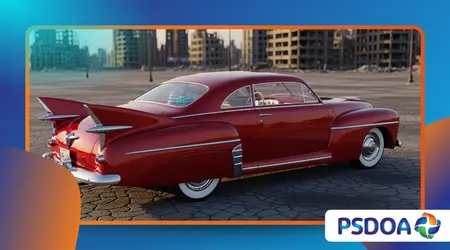
Post-WWII Vision of Atomic Cars promised a future where your vehicle could drive 5,000 miles on a single pellet of uranium, ending the fuel pump era.
Anúncios
In the 1950s, the world viewed the atom as a friendly servant that would soon power every home and personal transport device across America.
Engineers at major firms believed that the internal combustion engine was a relic, destined to be replaced by small, efficient, and clean nuclear reactors.
This technological optimism ignored the massive safety hurdles of the time, focusing instead on the radical freedom of unlimited, nearly free energy for everyone.
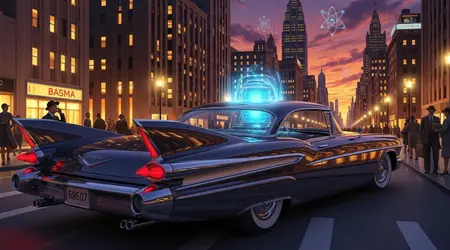
Scientists envisioned cars that looked like spaceships, featuring tailfins and glass bubbles, reflecting a culture obsessed with the dawning of the “Atomic Age” possibilities.
We now look back at these forgotten blueprints as a fascinating crossroads where human ambition met the harsh realities of nuclear physics and radiation.
Retrospective of Nuclear Mobility
- Theoretical Power: How physicists intended to miniaturize power plants to fit into a standard passenger car chassis safely and efficiently.
- The Ford Nucleon: Exploring the most famous conceptual model that became the definitive icon of the nuclear-powered automotive dream during the fifties.
- Shielding Challenges: The struggle to protect passengers from radiation without making the vehicle weigh dozens of tons due to necessary lead shielding.
- Public Perception: Why the initial excitement for “atomic” everything eventually turned into fear as the Cold War reality set in for consumers.
What defined the dream of a nuclear-powered car?
The Post-WWII Vision of Atomic Cars was centered on the idea of a “serviceable power capsule” that could be swapped at local specialized charging stations.
Drivers would not “refuel” in the traditional sense; they would simply replace their reactor core every few years at a designated facility.
This concept aimed to eliminate the smog and noise of gasoline engines, offering a silent and incredibly powerful driving experience for the growing middle class.
It represented the ultimate expression of mid-century modernism, where science could solve every human problem through the sheer power of the atom.
How did the Ford Nucleon function?
The 1958 Ford Nucleon concept featured a reactor in the rear, utilizing steam turbines to turn the wheels through a sophisticated electric drive system.
It moved the passenger cabin far to the front to maximize the distance between the humans and the radioactive core behind them.
Engineers assumed that smaller reactors would eventually be invented, making the heavy shielding of large power plants unnecessary for personal travel in the future.
This design remains one of the most striking examples of how the Post-WWII Vision of Atomic Cars influenced automotive aesthetics and engineering.
++ Vacuum-Powered Elevators: Why They Didn’t Take Off
Why was uranium seen as the fuel of the future?
Uranium was marketed as a “miracle fuel” that was thousands of times more energy-dense than coal or oil, promising a world of abundance.
This energy density meant that a car could theoretically last its entire mechanical lifespan without ever needing a fuel refill from the owner.
The vision suggested a world where gasoline wars and oil dependence were things of the past, replaced by a clean, domestic energy source.
However, the technical complexity of maintaining millions of miniature reactors on public roads was a logistical nightmare that designers rarely addressed.
Why did these atomic visions never reach production?
The Post-WWII Vision of Atomic Cars eventually collapsed under the weight of physics, as radiation shielding proved far too heavy for any practical vehicle.
To protect a family from a small reactor, a car would need feet of lead, making it impossible to stop or steer.
Furthermore, the risk of a simple fender-bender turning into a local nuclear disaster made the technology uninsurable and socially unacceptable for the general public.
One crash on a busy highway could theoretically contaminate an entire city, creating a risk profile that no government was willing to accept.
Also read: The Flying Platforms of the Cold War Era
What happened to the Studebaker-Packard Astral?
The Astral was another wild concept from 1957 that featured a single-wheeled gyro-stabilized design powered by an ionic engine or a small nuclear reactor.
It looked like a flying saucer on wheels, intended to be used on land, sea, and even in the air for short hops.
While beautiful, the Astral was a fantasy that ignored the heat dissipation issues inherent in putting a reactor inside a small, enclosed passenger cabin.
It serves as a reminder that the Post-WWII Vision of Atomic Cars was often driven more by stylists than by nuclear scientists.
Read more:Forgotten World Fairs That Showcased Now-Lost Tech
How did public opinion shift against nuclear cars?
As the 1960s approached, the reality of radioactive fallout and the threat of nuclear war began to darken the public’s perception of the atom.
People no longer saw nuclear power as a “magic” solution, but as a dangerous force that required strict isolation and containment.
The transition from “Atoms for Peace” to the fear of “The Day After” essentially killed the market for any consumer product with the word “atomic.”
Safety regulations became tighter, and the dream of the atomic commuter car faded into the realm of science fiction and old magazines.
Is there a modern equivalent to the atomic car?
While we don’t use uranium pellets, the Post-WWII Vision of Atomic Cars lives on in the current push for long-range electric vehicles.
Today’s solid-state batteries and hydrogen fuel cells aim to provide the same “unlimited” feel that the atomic scientists once promised to the public.
In 2026, we see a renewed interest in Small Modular Reactors (SMRs) for industrial use, though they are still far too large for personal transport.
The spirit of the atomic age continues to drive us toward finding a singular, high-density energy source that frees us from fossil fuels.
Are nuclear batteries used in space today?
Radioisotope Thermoelectric Generators (RTGs) are essentially “nuclear batteries” used in space probes like Voyager and the Mars rovers to provide power for decades.
These systems prove that the Post-WWII Vision of Atomic Cars was technically possible for remote, unmanned missions where radiation shielding is less critical.
However, these RTGs produce very low amounts of power relative to their weight, making them unsuitable for the high-torque needs of a family car.
They remain the closest we have come to the dream of an “everlasting” power source for a moving vehicle in the modern world.
Could fusion ever power a personal vehicle?
Fusion power, which is the current “Holy Grail” of energy in 2026, promises even more energy than fission with significantly less radioactive waste.
However, fusion reactors currently require massive magnetic containment fields that could never fit inside a garage or a standard car chassis in our lifetime.
If fusion is ever miniaturized, we might see a resurgence of the Post-WWII Vision of Atomic Cars in a much safer and cleaner format.
For now, the dream of the nuclear-powered family sedan remains a beautiful, chrome-plated relic of a time when we thought anything was possible.
Comparison of 1950s Atomic Concepts
| Concept Model | Year | Proposed Power | Key Design Feature | Outcome |
| Ford Nucleon | 1958 | Fission Reactor | Swappable Rear Capsule | Scale Model Only |
| Simca Fulgur | 1958 | Atomic/Electric | Voice Control & Radar | Concept Art/Model |
| Arbel Symétric | 1958 | Nuclear-Electric | Glow-in-the-dark paint | Prototype only |
| Studebaker Astral | 1957 | Iconic/Nuclear | Single-wheel Gyro | Show Car Only |
| Ford Seattle-ite | 1962 | Compact Nuclear | Six-wheel steering | Design Study |
The Sunset of the Radioactive Dream
The Post-WWII Vision of Atomic Cars serves as a poignant reminder of an era where optimism was the primary fuel for innovation.
We have examined how the dream of the 5,000-mile uranium pellet captured the imagination of a generation, only to be defeated by the immovable laws of radiation and weight.
While we may never drive a Ford Nucleon through our neighborhoods, the desire for clean, limitless energy that drove those 1950s engineers is the same one fueling our green revolution today.
History shows that even “failed” ideas like the atomic car pave the way for the real breakthroughs of the future. We may have traded uranium for lithium, but the quest for the ultimate journey remains the same.
If safety were not an issue, would you feel comfortable driving a car powered by a small nuclear reactor in your backyard? Share your experience in the comments!
Frequent Questions
How much would an atomic car have cost in 1958?
While they never reached price lists, historians estimate a nuclear car would have cost ten times more than a standard Ford due to the exotic materials.
The price of the reactor core alone would have exceeded the cost of a luxury home in the suburbs at the time.
Did any nuclear car prototype ever actually move?
No full-scale, nuclear-powered car was ever built or driven on a public road; most were 3/8 scale models or non-functional show cars.
The weight of the required lead shielding ensured that any attempt at a prototype remained stuck in the design lab or on the display floor.
Why was the cabin placed so far forward?
Designers used distance as a primary safety feature; by putting the driver as far as possible from the rear reactor, they reduced radiation exposure.
This “forward-control” look became a staple of the Post-WWII Vision of Atomic Cars and influenced many futuristic van designs of the era.
Are there still nuclear-powered vehicles today?
Only in the military and specialized science sectors, such as aircraft carriers, submarines, and large icebreakers that need to stay at sea for years.
These vessels are large enough to carry the massive shielding required to keep the crew safe from the high-energy reactors.
What is the “Atomic Age” design style called?
The style is often referred to as “Googie” or “Populuxe,” characterized by sweeping curves, starbursts, and aerodynamic shapes that look like rockets.
It was the visual language of the Post-WWII Vision of Atomic Cars, reflecting a society that looked toward the stars for its future.
