
Why the World Abandoned the Dream of Moving Walkways in Cities
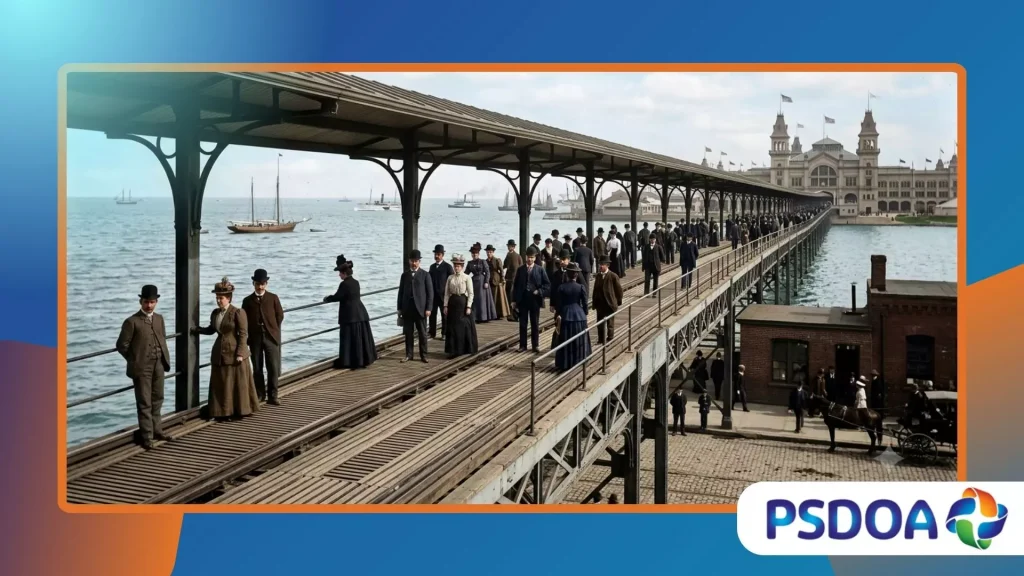
The dream of moving walkways in cities captivated visionary urban planners during the industrial boom eras, promising a futuristic world free from traffic gridlock.
Anúncios
Instead of navigating chaotic streets filled with smoke and noise, citizens would simply step onto continuous, multi-speed horizontal conveyor belts.
This fascinating architectural concept aimed to revolutionize public transit by transforming static sidewalks into dynamic, highly efficient human distribution networks.
However, as we look around our modern metropolitan landscapes in 2026, these mechanical pathways remain strictly confined within airport terminals.
Core Structural Insights
- The Visionary Blueprint: Early urban theorists designed continuous-motion mechanical sidewalks to completely replace traditional short-range downtown transit options.
- The Mechanical Friction: Severe engineering limitations, astronomical power requirements, and continuous maintenance needs rapidly derailed large-scale outdoor municipal installations.
- The Human Element: Unpredictable passenger behavior, severe legal liability issues, and high injury rates permanently cooled municipal interest in horizontal transit.
What Launched the Mid-Century Urban Conveyor Craze?
How Did the 1900 Paris Exposition Spark the Trend?
The dazzling dawn of continuous mechanical mass transit officially debuted at the historic 1900 Paris Exposition, known as the Exposition Universelle.
Engineers constructed a massive, elevated loop called the Rue de l’Avenir (Street of the Future), which transported over fifty thousand visitors daily.
This incredible engineering marvel featured three distinct, parallel wooden platforms moving at varying speeds, allowing passengers to transition smoothly from a standstill.
Art nouveau painters, high-profile politicians, and global inventors marvelled at how effortlessly the wooden slats glided across the scenic French capital.
The resounding success of this temporary exhibition convinced global planners that mechanical sidewalks would soon dismantle the absolute dominance of horse-drawn carriages.
This successful demonstration ignited an international design frenzy, inspiring intense structural proposals across major European and North American metropolitan financial hubs.
Why Did Mid-Century Urban Planners Embrace This Transit Vision?
During the roaring fifties, cities faced massive congestion crises as millions of affordable consumer automobiles suddenly flooded narrow, historic downtown streets.
Forward-thinking urban architects viewed the traditional automobile not as a symbol of personal freedom, but as an incredibly inefficient logistical nightmare.
They argued that packing thousands of heavy metal boxes into compact commercial zones would inevitably cause permanent gridlock and paralyze commerce.
By incorporating the dream of moving walkways in cities, planners hoped to banish cars completely from dense downtown shopping and business districts.
Designers envisioned a multi-layered urban paradise where citizens walked through lush pedestrian plazas while high-speed mechanical pathways handled longer commuter journeys.
This bold engineering philosophy promised to return valuable public space to pedestrians, creating cleaner, quieter, and fundamentally healthier communities.
++ Forgotten Military Robots From WWII
What Role Did Science Fiction Play in Shaping Public Expectations?
Popular mid-century science fiction literature and mainstream entertainment channels consistently portrayed the horizontal conveyor belt as an absolute baseline requirement of advanced civilization.
Celebrated author Robert A. Heinlein famously detailed complex, continent-spanning moving road networks in his classic 1940 short story The Roads Must Roll.
Similarly, popular animated television programs like The Jetsons cemented this exact architectural layout in the minds of the baby boomer generation.
These compelling, highly stylized media portrayals created an intense consumer expectation that traditional static walking would soon become completely obsolete.
People expected their cities to evolve into fluid, synchronized machines that operated with the continuous, mesmerizing efficiency of a factory assembly line.
This cultural momentum forced municipal transit boards to dedicate real financial resources toward studying horizontal conveyor implementation.
Why Did Mechanical and Engineering Realities Defeat the Dream?
How Does the Kinetic Friction of Continuous Motion Destroy Equipment?
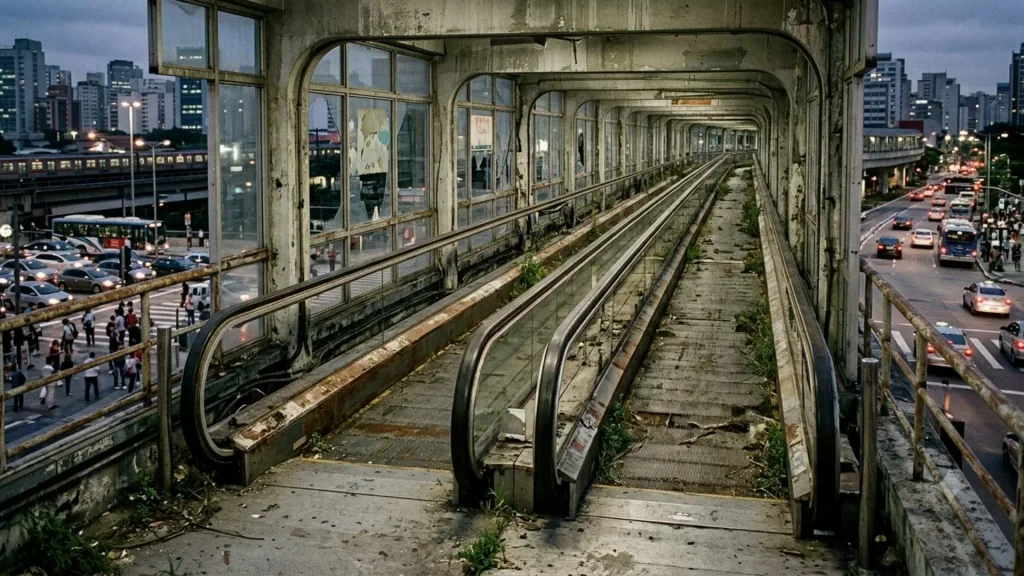
The primary engineering obstacle that permanently shattered the dream of moving walkways in cities centers on the brutal physics of continuous mechanical operation.
Unlike an elevator or a subway car that enjoys frequent rest intervals at scheduled stations, a municipal sidewalk must run non-stop.
This constant, unrelenting kinetic friction generates immense thermal stress, rapidly grinding down steel rollers, driving chains, and delicate gear mechanisms.
Exposing these incredibly complex, highly synchronized mechanical networks to unpredictable outdoor weather elements like torrential rain, freezing ice, and corrosive road dust accelerates component failure.
A single stray pebble or dropped metal coin can easily jam the interlocking metal comb plates, triggering a catastrophic emergency system shutdown.
The sheer mechanical fragility of these systems renders them utterly impractical for the punishing realities of unshielded, open-air municipal operation.
Also read: How We Nearly Had a Global Pneumatic Mail System
Why Is the Energy Consumption of Horizontal Transit Astronomically High?
To move a massive train or a traditional transit bus efficiently, motors only require a surge of electricity during the initial acceleration phase.
Once the vehicle achieves its cruising velocity, momentum handles a significant portion of the workload, vastly reducing the total energy demand.
A continuous conveyor belt system, however, requires massive, unyielding electrical current every single second it operates just to overcome internal friction.
An independent transit energy study conducted by the technical archives of the global transport board reveals a stark environmental reality.
Maintaining a one-mile continuous moving sidewalk requires over five times the total energy consumption of running a standard electric tramway loop.
In our current 2026 climate landscape, dedicating such immense power grids to short-range pedestrian movement represents an indefensible ecological and financial choice.
Read more: The Clockwork Airplane That Never Got Off the Ground
What Solves the Problem of Multi-Speed Integration Safely?
To move commuters across a sprawling downtown core at useful speeds, a mechanical walkway must travel at minimum fifteen miles per hour.
However, a human being cannot safely step directly from a stationary concrete curb onto a steel platform moving at that velocity.
Planners tried solving this dangerous physical barrier by implementing parallel, cascading speed zones that required users to hop sequentially across tracks.
This complex arrangement turned a simple morning commute into a stressful, high-stakes agility test that severely alienated elderly or disabled citizens.
The moment a single passenger loses their footing on a high-speed zone, a cascading wave of human collisions instantly follows down the line.
Engineering a safe, reliable, and universally accessible acceleration mechanism for open public spaces remains an unsolved technical riddle.
What Socio-Legal Barriers Caused the Ultimate Abandonment?
How Did Legal Liability Fears Halt Municipal Infrastructure Projects?
Modern municipal legal frameworks are inherently risk-averse, prioritizing public safety and minimizing financial exposure to catastrophic class-action personal injury lawsuits.
Traditional stationary concrete sidewalks carry virtually zero inherent liability for a city, as pedestrians are entirely responsible for keeping their own balance.
Introducing a highly complex, moving mechanical floor into a crowded public zone completely shifts that immense legal burden onto the municipality.
Consider the terrifying reality of high-density metropolitan crowds navigating a mechanical sidewalk during sudden emergencies, like severe weather or fire panics.
If the system experiences an abrupt mechanical failure or an emergency braking event, hundreds of packed commuters would instantly launch forward.
Insurance corporations flatly refused to underwrite the astronomical financial risks associated with the dream of moving walkways in cities, killing projects before construction.
Why Did Vandalism and Garbage Ruin Public Infrastructure Adaptations?
An airport terminal represents a highly controlled, continuously monitored indoor environment where security guards and cameras closely watch every single passenger.
In sharp contrast, open public city streets are highly volatile zones exposed to continuous littering, intentional vandalism, and random debris accumulation.
Discarded chewing gum, crushed aluminum soda cans, and shredded paper garbage easily slip through the tiny gaps between moving floor slats.
Once this sticky, abrasive urban refuse penetrates the protective outer casing, it fouls the delicate internal track lubrication and destroys sensitive electronic sensors.
Vandals can easily disable an entire downtown transit artery by simply jamming a thick wooden stick into the main emergency stop mechanism.
The immense cost of providing twenty-four-hour physical security just to protect a mechanical floor quickly proved completely unsustainable for local governments.
How Did the Rapid Rise of Better Alternatives Displace the Technology?
As municipal transit budgets tightened significantly toward the late twentieth century, highly flexible, non-mechanical pedestrian alternatives successfully captured the spotlight.
Cities began investing heavily in protected bike lanes, lightweight electric scooters, and highly efficient micro-mobility networks that require zero expensive mechanical infrastructure.
Why would a modern city spend millions building a fragile, power-hungry moving floor when a simple painted bike lane achieves superior results?
These modern decentralized transit choices allow commuters to chart their own unique pathways across the city grid at a fraction of the cost.
The incredible rise of ridesharing apps and smart on-demand shuttle fleets has completely solved the historic “last-mile” transit dilemma.
The continuous conveyor belt quickly transformed from a gleaming symbol of future progress into an obsolete, remarkably rigid transit relic.
Urban Pedestrian Transit Architecture Analysis
The comparative table below highlights why the dream of moving walkways in cities ultimately lost ground to competing urban mobility strategies.
| Transit System Type | Initial Capital Cost | Energy Demand Metric | Vandalism Vulnerability | Universal Inclusivity |
| Moving Walkways | Extremely High | Ultra-High (Continuous) | Severe (Open Mechanics) | Poor (High Fall Hazard) |
| Traditional Trams | Moderate to High | Low (Intermittent Boost) | Low (Shielded Systems) | Excellent (Level Ramps) |
| Micro-Mobility (E-Bikes) | Minimal | Very Low (Battery-Based) | Moderate (Replaceable) | Moderate (Requires Balance) |
| Static Pedestrian Plazas | Very Low | Zero (Human-Powered) | None (Pure Concrete) | Perfect (Total Accessibility) |
The Sunset of the Mechanical Sidewalk
The beautiful but flawed dream of moving walkways in cities serves as an enduring, powerful monument to an era of unbridled technological optimism.
It was a brilliant, deeply romantic design philosophy that treated human commuters like precious cargo, aiming to streamline physical movement through sheer mechanical dominance.
Ultimately, the chaotic, unpredictable reality of open-air urban life permanently broke the rigid gears of this over-engineered industrial fantasy.
As we continue redesigning our metropolitan spaces to face the ecological challenges of 2026, we find that simplicity beats complex machinery.
True urban accessibility is achieved not by building expensive moving floors, but by crafting walkable, green, and completely vehicle-free pedestrian streets.
The moving walkway did not fail because engineers lacked vision; it failed because human cities are living, breathing communities, not factory floors.
Do you think modern engineering should attempt to revive high-speed mechanical walkways, or belong permanently in the past? Share your technical thoughts and favorite urban design concepts in the comments below!
Frequently Asked Questions
Why do moving walkways work perfectly in airports but fail on city streets?
Airports offer a climate-controlled, secure environment free from dirt, weather, and vandalism, which protects the delicate internal mechanics from unexpected damage.
Did any major city ever build a permanent outdoor moving sidewalk?
A few cities attempted brief, semi-sheltered experimental loops during the mid-twentieth century, but high maintenance costs and injuries forced their removal within years.
How fast could a modern urban moving walkway safely travel today?
Standard airport models max out at roughly three miles per hour, as exceeding this speed creates severe balance hazards for boarding passengers.
Do moving walkways present a specific danger to guide dogs or service animals?
Yes, the interlocking metal teeth at the exit comb plates can easily pinch sensitive paws, requiring service animals to be carried across transitions.
