
Underground Cities Built to Survive Ancient Invasions
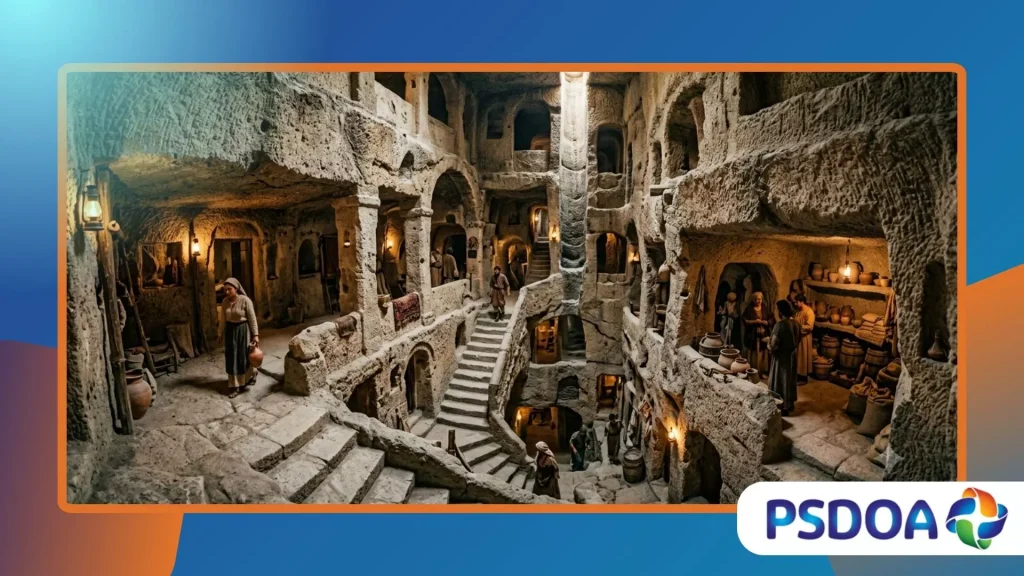
Underground cities built to survive ancient invasions represent a fascinating chapter of human ingenuity, showcasing how entire civilizations vanished beneath the earth to escape brutal surface warfare.
Anúncios
These subterranean complexes demonstrate historical engineering marvels, serving as massive, self-sustaining survival shelters that kept thousands of citizens safe during prolonged military sieges.
As archeologists uncover fresh layers of these subterranean labyrinths in 2026, we gain incredible insight into ancient military defensive strategies and architecture.
Walking through these dark, rock-cut corridors reveals a sophisticated world hidden beneath our feet, constructed during moments of absolute desperation.
These spaces contained living quarters, ventilation shafts, and freshwater systems, allowing populations to thrive completely isolated from the terrifying conflicts raging above.
Exploring this forgotten heritage reshapes our modern understanding of human resilience, survival technology, and community preservation during ancient dark ages.
Highlights of Subterranean History
- Architectural Survival: Engineering defensive complexes deep inside volcanic rock formations allowed entire communities to completely disappear from sight.
- Strategic Isolation: Advanced ventilation systems, secret entryways, and heavy stone doors effectively blocked invading armies from penetrating these sanctuaries.
- Cultural Preservation: Subterranean living spaces preserved religious traditions, social structures, and valuable resources during catastrophic external geopolitical upheavals.
What Is the Origin of These Subterranean Fortresses?
How Did Volcanic Geology Enable Massive Excavation Projects?
Soft volcanic tuff stone allowed ancient societies to carve out sprawling multi-level complexes using rudimentary iron hand tools with relative ease.
This unique geological formation, found abundantly in regions like Cappadocia, hardened upon contact with air, creating exceptionally durable internal supports.
Generation after generation expanded these caves deeper into the earth, establishing interconnected networks of secure rooms.
Ancient builders carefully calculated structural weight distribution, leaving thick stone pillars intact to prevent catastrophic ceiling collapses across multiple subterranean levels.
These engineering decisions allowed complexes to safely descend over eighty meters beneath the surface, remaining perfectly hidden from marauding armies.
Without these specific geological conditions, building such massive defensive sanctuaries would have remained an absolute physical impossibility.
Why Did Geopolitical Chaos Force Entire Populations Underground?
Continuous waves of invading forces, from Roman legions to marauding armies, turned open surface plains into highly dangerous combat zones.
Local populations required a reliable, instantaneous defense mechanism when traditional city walls failed to withstand prolonged military pressure.
Retreating into underground cities built to survive ancient invasions offered a brilliant tactical advantage, rendering the population entirely invisible to scouts.
How could an invading army conquer a society that vanished completely into the earth without leaving a single trace?
This strategic invisibility frustrated conquerors, who frequently marched right past these hidden strongholds without ever realizing wealth lay directly underfoot.
Subterranean retreats transformed vulnerable farmers into untouchable phantoms, preserving the core population from enslavement or total annihilation.
++ The Kingdom of Aksum: Africa’s Forgotten Superpower
Which Historic Eras Triggered Subterranean Construction?
Archeological excavations confirm that the primary construction phases coincided directly with intense periods of religious persecution and imperial expansion.
Early Hittites likely carved the initial foundational levels, which later Christian populations expanded massively during the collapse of Roman stability.
Each distinct historical era left clear marks on the stone, updating defensive mechanisms to counter evolving military threats.
These spaces served as reactive, evolving military architecture rather than static emergency shelters, expanding whenever surface conflicts intensified.
Families spent months listening to the distant, muffled sounds of warfare filtering down through deep ventilation shafts while maintaining daily routines.
This subterranean lifestyle became a permanent cultural adaptation, defining regional survival strategies for consecutive centuries.
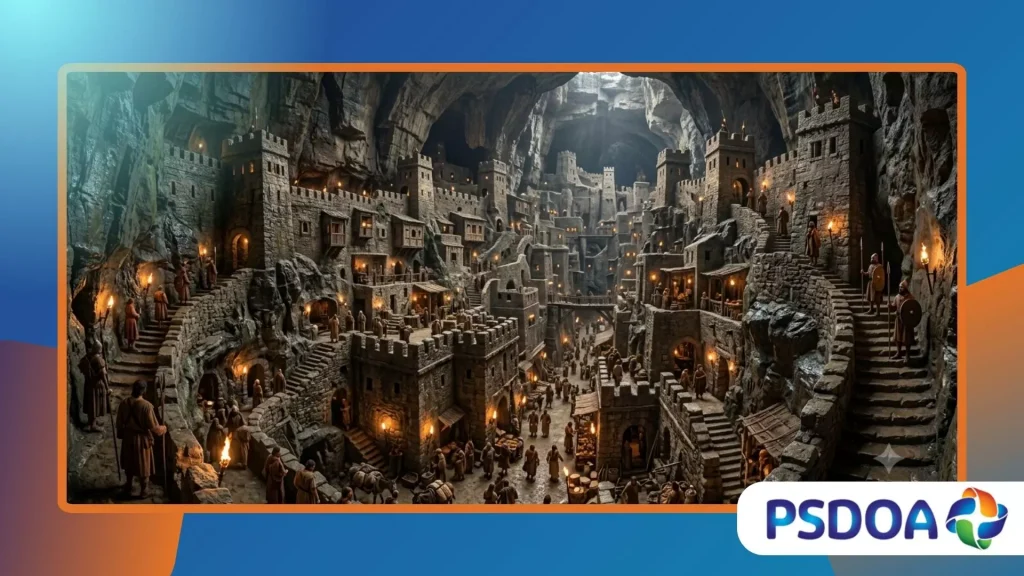
How Did Subterranean Infrastructure Sustain Human Life?
How Do Ancient Ventilation Shafts Circulate Fresh Air?
Maintaining breathable air quality across dozens of deep subterranean levels required a profound understanding of natural thermodynamics and physics.
Master builders carved massive vertical air shafts extending from the deepest floors all the way up to the surface.
These primary shafts utilized natural atmospheric pressure differentials, creating a continuous chimney effect that pulled fresh air downward.
Smaller horizontal micro-tunnels branched off from the main air shafts, delivering a steady breeze into individual family living quarters.
This brilliant layout prevented toxic smoke from cooking fires from pooling inside the living spaces, venting it safely into hidden valleys.
These vents mimic the complex lung systems of living organisms, keeping the air surprisingly fresh and cool.
Also read: The Ancient City Hidden Beneath Modern Mexico City
What Methods Kept Secret Water Systems Safe from Poisons?
Invading armies frequently poisoned local surface rivers, using biological warfare to force besieged surface cities into immediate, unconditional surrender.
To counter this deadly tactic, underground architects disconnected their internal wells entirely from vulnerable, external surface water systems.
Deep aquifers collected pure groundwater safely beneath the lowest living levels, far beyond the reach of enemy sabotage.
These secret wells operated on independent vertical channels, preventing surface troops from discovering the water source even if they found the shaft.
This secure water supply allowed thousands of citizens to endure months of isolation without ever facing the threat of dehydration.
Securing these clean, deep water sources formed the absolute baseline of all subterranean survival planning.
Read more: Operation Northwoods: The Declassified False Flag Proposal
How Did Heavy Rolling Stone Doors Block Intruders?
If an enemy discovered a hidden entrance, massive circular stone doors weighing up to five hundred kilograms stood ready.
These monolithic boulders rested inside deep guide tracks, requiring multiple men to roll them into place from the inside.
A small central hole allowed defenders to spear attackers while remaining completely safe behind impenetrable rock barriers.
The clever design made it physically impossible to open these heavy doors from the outside, turning corridors into deadly traps.
Invaders found themselves jammed into narrow, dark choke points, facing unseen defenders who knew every inch of the labyrinth.
These stone wheels transformed simple dirt tunnels into high-tech military checkpoints that successfully repelled elite foreign forces.
What Do Recent Archeological Discoveries Reveal to Us?
Why Is Derinkuyu Considered an Engineering Wonder?
Derinkuyu stands as the ultimate achievement of ancient subterranean architecture, capable of housing up to twenty thousand citizens simultaneously.
Recent 2026 laser scans reveal the true scale of this complex, showing sophisticated stable areas, schools, and communal dining halls.
This immense scale proves these structures were underground cities built to survive ancient invasions, functioning as permanent shadow municipalities.
Archeologists recently discovered that Derinkuyu connects directly to neighboring subterranean complexes via narrow, miles-long underground transit tunnels.
This incredible regional network allowed different hidden communities to coordinate defensive actions, share vital food resources, and launch surprise counter-attacks.
Discovering these deep connections fundamentally reshapes our modern understanding of ancient civic planning and military logistics.
How Does Modern Technology Uncover Hidden Chambers?
Ground-penetrating radar and satellite thermal imaging allow modern researchers to look directly through solid stone without damaging historic sites.
These advanced non-invasive tools locate empty voids hidden deep beneath agricultural fields, revealing completely undocumented subterranean living sectors.
Each newly mapped room provides invaluable data regarding how ancient families organized their daily lives during crises.
Digital 3D modeling programs map the complex airflow patterns, proving these ancient builders possessed advanced engineering knowledge.
This tech reveals that many seemingly random tunnels actually served to redirect floodwaters away from vulnerable grain storage areas.
Modern science continues to validate the brilliant architectural choices made by these desperate, ancient builders.
What Artifacts Prove Long-Term Subterranean Habitation?
Excavations constantly yield large numbers of heavy stone olive presses, large storage jars, and deep soot-stained cooking hearths.
These physical items prove that communities did not merely hide for days, but actually lived underground for months.
Grinding stones and carbonized seed fragments indicate that these societies maintained massive, carefully managed grain reserves beneath the earth.
The sheer volume of household waste found in ancient trash pits indicates highly organized, long-term communal living structures.
Specialized trash shoots directed waste to isolated, sealed bottom chambers, preventing dangerous diseases from spreading through the population.
Every single recovered artifact tells a story of incredible discipline, meticulous planning, and profound social cooperation.
Architectural Efficiency of Historical Shelters
The informative matrix below details the defensive capabilities, structural depth, and unique survival features of famous ancient underground cities.
| Historic Complex | Maximum Capacity | Maximum Depth | Primary Geological Medium | Key Defensive Feature |
| Derinkuyu (Turkey) | 20,000 Citizens | 85 Meters | Soft Volcanic Tuff | Rolling stone doors, dead-end traps |
| Kaymakli (Turkey) | 3,000 Citizens | 40 Meters | Volcanic Ash Strata | Narrow corridors, low overhead ceilings |
| Ozkonak (Turkey) | 600 Citizens | 30 Meters | Layered Granite Tuff | Oil-pouring holes above entryways |
| Naours (France) | 3,000 Citizens | 22 Meters | Dense Chalk Formations | Hidden chimneys, livestock corrals |
| Matiata (Turkey) | 70,000 Citizens | 50 Meters | Soft Limestone Beds | Underground cities built to survive ancient invasions |
The Enduring Legacy of Subterranean Innovation
Reflecting upon these incredible architectural achievements reveals that underground cities built to survive ancient invasions represent the ultimate triumph of human preservation.
These ancient societies refused to surrender to despair, completely redefining the physical boundaries of architecture to protect their families.
The deep stone corridors stand as silent, immortal monuments to human ingenuity, surviving long after empires crumbled into dust.
Understanding these subterranean spaces challenges us to rethink our modern concepts of urban resilience, defensive architecture, and community cooperation.
As modern researchers continue to map these dark, hidden spaces, we uncover timeless lessons regarding unity, courage, and adaptation.
The stories carved into this deep stone remind us that even in darkness, human civilization finds a way to endure.
Have you ever explored an ancient cave system or a historic underground city? Share your personal travel experiences and historical insights in the comments section below!
Frequently Asked Questions
How did people illuminate these pitch-black underground rooms without suffocating from toxic smoke?
Ancient citizens burned clean linseed oil inside small recessed wall niches, producing minimal smoke while providing reliable, localized illumination throughout rooms.
Did children born inside these subterranean sanctuaries ever get to see real sunlight?
Families only used these shelters during active surface invasions, returning to their normal surface farming villages once the immediate danger passed.
How did communities handle livestock and domestic animals during long periods of isolation?
The upper levels featured specialized stables with carved stone mangles, keeping valuable horses, goats, and cattle safe from enemy raiders.
Are there still undiscovered underground cities hidden beneath the fields of modern Turkey?
Yes, modern ground radar scans regularly detect massive, unmapped subterranean voids, suggesting many ancient shelters remain completely untouched by archeologists.
