
How Balloons Were Once Considered Tools of Global Communication
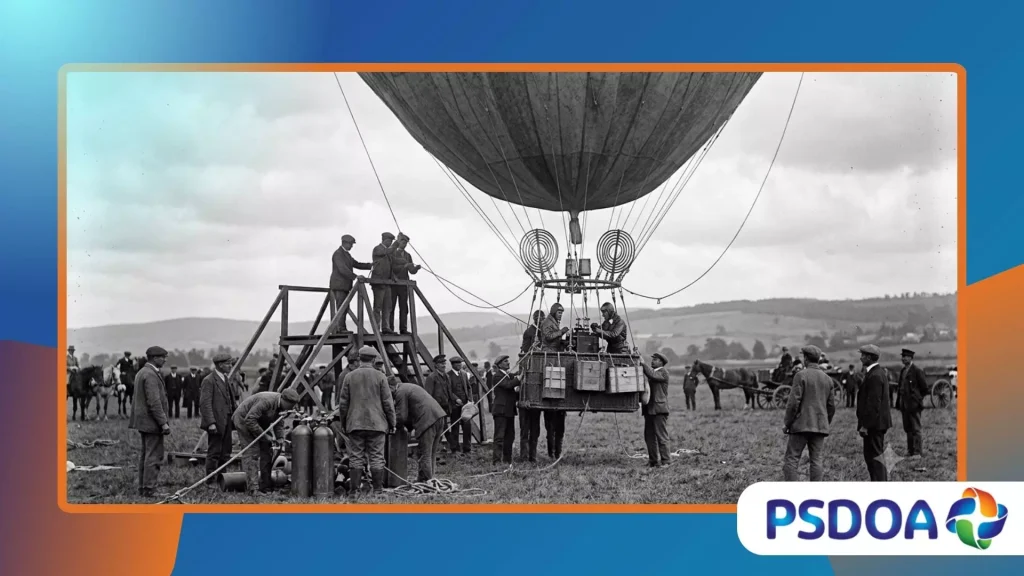
Balloons were once considered tools of global communication, long before satellites mapped our skies or digital fiber-optic cables spanned the dark depths of our oceans.
Anúncios
In the late eighteenth and nineteenth centuries, visionary scientists and daring aeronauts genuinely believed that these floating canvas spheres would establish the world’s very first interconnected network.
They saw the atmosphere not as an empty, silent void, but as a dynamic highway capable of carrying letters, diplomatic dispatches, and cultural ideas across previously impassable continental borders.
This forgotten aerial ambition represented a massive leap in human imagination, transforming how baseline societies conceptualized distance, geography, and international relations.
Inventors poured their life savings into steering mechanisms, wind mapping, and gas formulas, certain that the future of global peace lay in the clouds.
Though wires and electricity eventually won the telecommunications race, analyzing this romantic era reveals a brilliant, alternative path that technological history almost took.
Highlights of the Aerial Communication Era
- The Vision: Utilizing atmospheric currents as a natural, borderless postal network.
- Key Experiments: From the Siege of Paris mail drops to early transatlantic attempts.
- The Legacy: How ballooning pioneered modern meteorological tracking and air rights.
Why Did Humanity Look to the Skies for Connectivity?
The early industrial world faced a severe logistical crisis because information could only move as fast as a galloping horse or a wind-driven sailing ship.
When the Montgolfier brothers successfully launched the first manned hot air balloon in France, onlookers did not just see a spectacular theatrical stunt; they saw a revolutionary vehicle that could bypass mud-clogged roads, hostile military borders, and treacherous mountain ranges.
Thinkers of the Enlightenment immediately realized that if a vessel could stay aloft indefinitely, it could carry written knowledge to the farthest corners of the Earth without needing tracks or roads.
This atmospheric ambition sparked an intense global fascination with wind currents, as early meteorologists rushed to map the invisible rivers of air flowing above our heads.
They believed that just as ocean trade winds guided wooden ships to foreign ports, predictable stratospheric currents could carry mail-laden balloons reliably between major world capitals.
It was a beautiful, democratic vision of human connectivity where geographic isolation would completely vanish, allowing ideas to float freely into closed societies and forever changing international diplomacy.
What Was the Atmospheric Route Concept?
The core concept relied on the brilliant idea that the Earth’s atmosphere contains distinct, stacked layers of predictable wind patterns moving in varied directions.
Aeronauts believed that by simply adjusting their altitude, they could catch a specific aerial current that would carry them directly toward their destination.
This approach treated the sky like a giant, multi-layered conveyor belt capable of delivering messages across vast oceans without burning heavy fuel.
++ Forgotten Military Robots From WWII
How Did They Plan to Standardize Flight Paths?
To make this network practical, early aviation pioneers began compiling the world’s first comprehensive atmospheric charts, meticulously recording wind speeds and directions at different altitudes.
They designed specialized guide-ropes and ballast systems to help pilots maintain precise altitudes within these desired currents for days at a time.
The ultimate goal was establishing permanent, predictable aerial mail routes that operated on fixed seasonal schedules, much like ocean liners.
Also read: How We Nearly Had a Global Pneumatic Mail System
Who Were the Main Advocates of This Movement?
Brilliant visionaries like the American aeronaut John Wise led the charge, dedicating their lives to proving that balloons were once considered tools of global communication across continents.
Wise argued tirelessly that a constant westward current existed high above the United States, which could easily carry mail bags from New York to Europe in mere days.
His passion inspired a generation of inventors, investors, and public officials to view the open sky as the ultimate frontier for peaceful global commerce.
How Did Early Balloon Communication Work in Practice?
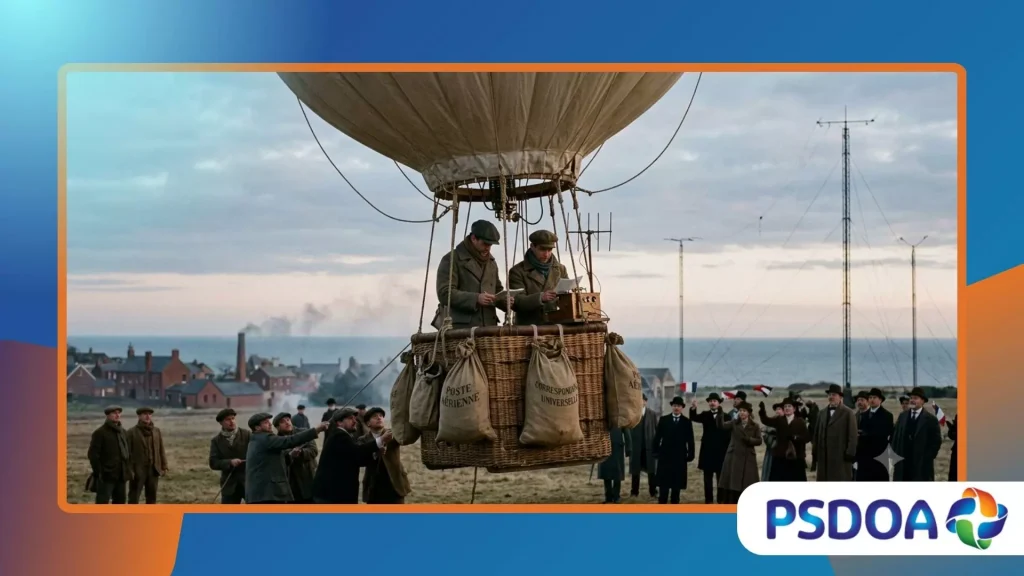
The practical execution of balloon messaging was an elegant mix of basic physics, daring piloting, and clever mechanical engineering.
Because early balloons could not be steered against the wind, operators relied on unmanned, smaller pilot balloons to test local air currents before launching the main craft.
These vessels carried specialized waterproof mail bags, complex barometers to track altitude changes, and detailed logbooks wrapped in protective oilskin cloth to survive accidental water landings.
When a balloon reached its destination zone, the pilot would release message packets attached to small parachutes, or the entire craft would land to deliver the cargo.
During major military conflicts, this irregular method became a vital lifeline for trapped populations who were completely cut off from traditional ground infrastructure.
These daring flights proved that the sky could serve as a functional, albeit unpredictable, post office long before airplanes were even a distant dream.
Read more: The Clockwork Airplane That Never Got Off the Ground
What Technologies Were Used to Protect Messages?
Inventors developed ingenious, lightweight, and waterproof containers made from zinc, treated canvas, and natural rubber to protect valuable paper documents from extreme moisture.
Many of these message pods included bright cork floats and long, colorful streaming ribbons so that ground observers could easily spot them landing in fields or oceans.
Some advanced designs even featured small, mechanical timing releases that automatically dropped mail bags after a specific number of hours aloft.
How Did Unmanned Mail Balloons Operate?
Unmanned balloons used slow-burning fuses or automated clockwork mechanisms to systematically release bundles of letters over targeted geographic areas as they drifted with the wind.
This clever method allowed agencies to distribute news, political pamphlets, and personal correspondence across vast distances without risking human lives in uncharted airspace.
The success of these automated drops fascinated the public, offering a surreal preview of what modern airmail systems would eventually achieve.
Historical Milestones of Balloon Communication
The following historical timeline highlights the critical moments when floating vessels moved from experimental novelties to vital networks of human connection.
| Era / Event | Primary Communication Function | Historical Impact & Operational Success |
| 1859 John Wise Flight | Transatlantic mail attempt across the US | Carried 123 letters; proved long-distance atmospheric drifting was possible. |
| 1870 Siege of Paris | Official government mail and military dispatches | Launched 66 balloons, successfully delivering over 2.5 million vital letters. |
| 1897 Andrée Expedition | Arctic exploration and scientific message relay | Used buoys and homing pigeons; highlighted extreme risks of polar currents. |
What Led to the Decline of This Aerial Network?
The beautiful dream of an atmospheric postal system ultimately collided with the harsh realities of unpredictable weather and rapid rival technological breakthroughs.
A balloon remains entirely at the mercy of the wind; a sudden summer storm or an unexpected shift in air currents could easily blow a critical message hundreds of miles off course.
This total lack of precise directional control made it impossible to compete with the absolute reliability demanded by modern commercial businesses and rapidly growing government bureaucracies.
Furthermore, the simultaneous invention of the electric telegraph delivered a crushing blow to the ballooning movement by allowing information to travel instantly along copper wires.
Suddenly, sending a message across a continent took seconds rather than days, making the most advanced balloon network look painfully slow and obsolete overnight.
Humanity quickly abandoned the unpredictable winds of the sky, choosing instead to build grounded, wired networks that offered flawless precision and instantaneous global contact.
Why Was Weather the Ultimate Enemy?
The sheer unpredictability of localized storms, shifting jet streams, and freezing high-altitude temperatures made maintaining a reliable, time-sensitive communication schedule completely impossible.
Sudden heavy rain or thick ice could add immense weight to a balloon’s envelope, forcing it down prematurely into dense forests or turbulent seas.
Without modern radar or satellite forecasting, every single launch was a dangerous gamble against nature that frequently resulted in lost cargo.
How Did the Telegraph Displace Balloons?
The electric telegraph offered something that balloons never could: absolute, instantaneous transmission of data regardless of ground weather conditions or atmospheric chaos.
While a mail balloon might take days to drift between distant cities, a telegraph operator could transmit the exact same text in a few minutes.
This revolutionary speed shift completely transformed global journalism, banking, and military strategy, leaving slow-moving atmospheric vessels far behind in the dust.
What Architectural Limitations Hindered Ballooning?
Early gas bags suffered from constant, slow leakage through their stitched fabric seams, which severely limited their total flight time and operational range.
Scaling up these fragile systems required enormous, dangerous amounts of highly flammable hydrogen gas and massive, expensive manufacturing facilities that local governments simply could not justify.
These structural vulnerabilities meant that while balloons were once considered tools of global communication, they could never achieve industrial reliability.
What Is the Modern Legacy of Balloon Communication?
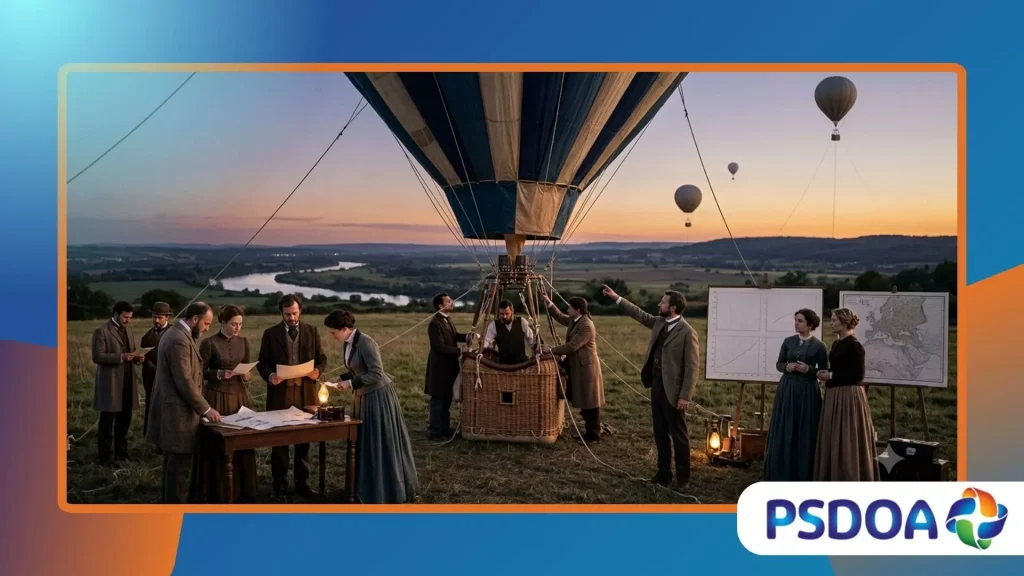
Although the dream of a balloon-based postal service faded, the fundamental concept of using high-altitude vessels for global connectivity never truly died.
Today, tech giants and aerospace researchers use advanced, solar-powered stratospheric balloons to beam high-speed internet to remote, impoverished regions of our planet.
These modern vessels do not carry paper letters; instead, they carry digital transponders that bridge the digital divide for millions of isolated people.
This evolution is like a high-tech echo of the past, proving that the original pioneers were not foolish dreamers; they were just centuries ahead of their time.
Modern atmospheric science has validated their core belief that the stratosphere offers a unique, cost-effective platform for wide-scale data distribution without expensive ground infrastructure.
The spirit of the nineteenth-century aeronaut lives on in our ongoing quest to connect the world through the open sky.
How Is Modern Technology Reviving the Concept?
Today’s aerospace engineers use highly durable synthetic polymers and automated steering algorithms that allow balloons to navigate changing wind currents by altering altitude.
These autonomous platforms can hover over a specific geographic area for months, providing stable cellular coverage to regions devastated by natural disasters.
This application shows that balloons were once considered tools of global communication because their natural spatial advantages remain incredibly valuable today.
Why Are Balloons Cost-Effective Today?
Launching a traditional orbital satellite requires millions of dollars, massive rockets, and intense regulatory approval, whereas a high-altitude balloon can be deployed for a tiny fraction of that cost.
These atmospheric vessels operate much closer to the Earth, which dramatically reduces signal latency and eliminates the need for high-powered, heavy receiving equipment on the ground.
For developing nations, this approach offers an affordable shortcut to achieving comprehensive digital infrastructure without laying thousands of miles of expensive fiber-optic cables.
How Do Environmental Concerns Shape Modern Ballooning?
As the international community prioritizes sustainability, modern stratospheric balloons offer a incredibly clean, low-impact alternative to polluting rocket launches.
Operating purely on solar energy during the day, these quiet vessels leave no toxic chemical footprint in our fragile upper atmosphere and can be recovered safely for reuse.
This ecological harmony ensures that the atmosphere remains a viable, clean highway for data transmission, honoring the original peaceful vision of early aviation.
Final Thoughts on the High-Altitude Postal Network
The fascinating history of atmospheric communication reminds us that technological progress is rarely a straight, predictable line from point A to point B.
It is a winding path filled with forgotten brilliant ideas, beautiful failures, and spectacular alternative visions that challenge our modern assumptions.
Realizing that balloons were once considered tools of global communication helps us appreciate the incredible creativity of inventors who looked at a simple cloud and saw a global network.
As we continue to expand our digital world, looking back at these forgotten inventions teaches us to think outside our current technological boxes.
The sky has always been a powerful symbol of human unity, and whether through paper letters or digital signals, our desire to connect across horizons remains unchanged.
What forgotten historical idea do you think deserves a modern comeback? Share your thoughts and experiences in the comments below to join the historical conversation!
Frequently Asked Questions
Did any country successfully run a permanent balloon mail service?
No country managed to sustain a permanent, commercial balloon mail service during peacetime due to the total lack of reliable steering mechanisms.
However, during the historic Siege of Paris in 1870, France operated a highly successful, organized emergency mail system using balloons to bypass the Prussian military blockade.
How did pilots return home after drifting away?
Because balloons could only drift with prevailing wind currents, aeronauts had to deflate their vessels upon landing, pack the heavy fabric into horse-drawn wagons, and travel back by train or boat.
This laborious recovery process added massive financial and logistical burdens to early atmospheric communication efforts.
Are balloons still used for data collection?
Yes, global meteorological organizations launch hundreds of specialized weather balloons every single day to gather critical atmospheric data, track severe storm systems, and monitor climate change patterns.
These vessels remain completely irreplaceable for accurate, real-time weather forecasting across our planet.
