
Mechanical Kitchens That Predicted Smart Homes
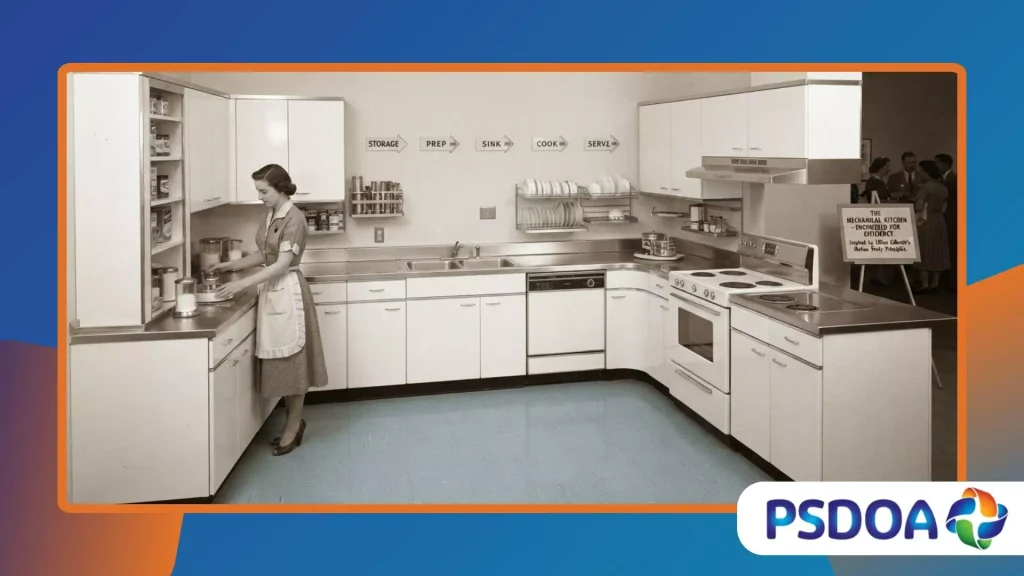
Mechanical kitchens envisioned by early twentieth-century inventors laid the vital groundwork for today’s fully automated smart homes and intelligent living spaces.
Anúncios
Decades before Wi-Fi appliances and voice-activated assistants, visionary designers dreamed of eliminating domestic labor through clever pulleys, conveyor belts, and mechanical drives.
These ingenious industrial blueprints anticipated modern home automation by prioritizing spatial efficiency, centralized control, and energy conservation.
Exploring these forgotten prototypes reveals a direct lineage connecting early mechanical engineering to contemporary digital living.
Examining these historical marvels uncovers how yesterday’s inventors conceptualized human-machine interaction long before microprocessors existed.
Early domestic visionaries treated culinary spaces as precision machinery designed to maximize human productivity and minimize physical fatigue.
Think of these vintage prototypes as the mechanical DNA of every modern automated home operating today. Can studying these forgotten blueprints help us design better, more intuitive living spaces for the future?
Exploring the Genesis of Automated Domestic Engineering
- Unpacking Lillian Gilbreth’s revolutionary ergonomic kitchen layouts and industrial efficiency studies.
- Analyzing nineteenth-century mechanical roasting spits and pulley-driven dumbwaiters.
- Investigating Vienna Kitchen prototypes designed to minimize unnecessary human steps.
- Connecting historical mechanical automation directly to modern Internet of Things ecosystems.
What Defines the Architecture of Early Mechanical Kitchens?
Mechanical kitchens revolutionized domestic architectural theory by applying factory-style assembly line principles directly to residential floor plans.
Pioneered by legendary industrial engineers like Lillian Gilbreth, these layouts organized stoves, prep counters, and sinks in a strict chronological sequence.
Imagine standing in a compact workspace where every single tool, ingredient, and utensil sat within immediate arm’s reach via rotating carousels.
Historical archives from the Smithsonian Institution document how these meticulous spatial studies permanently reduced daily culinary labor hours for homemakers.
Eliminating wasted physical movement transformed grueling domestic chores into streamlined, efficient workflows that mirrored modern industrial manufacturing plants.
Inventors utilized gravity-fed flour bins, sliding partition walls, and integrated disposal chutes to maintain absolute operational cleanliness.
When every square inch serves a distinct mechanical purpose, cooking evolves from a burdensome chore into a precise, choreographed art form.
Structural efficiency remains the timeless cornerstone of exceptional residential design.
How Did Ergonomic Layouts Reduce Physical Fatigue?
Industrial engineers tracked homemakers’ footsteps using thread-mapping techniques to identify redundant movements across traditional sprawling rooms.
Consolidating work triangles into tight, logical clusters drastically slashed daily walking distances and physical exhaustion.
++ Forgotten Military Robots From WWII
What Role Did Gravity-Fed Dispensers Play?
Built-in wall reservoirs dispensed sugar, flour, and coffee directly through bottom spouts into waiting bowls without requiring cabinet searching.
This clever mechanical automation saved valuable time during complex meal preparation.
Also read: How We Nearly Had a Global Pneumatic Mail System
Why Were Rotating Carousels Revolutionary?
Curved corner cabinets featuring pivoting shelves allowed users to access deep storage spaces instantly without bending or rummaging blindly.
This spatial innovation directly inspired modern revolving kitchen corner hardware.
How Did Pulley Systems and Mechanical Drives Operate?
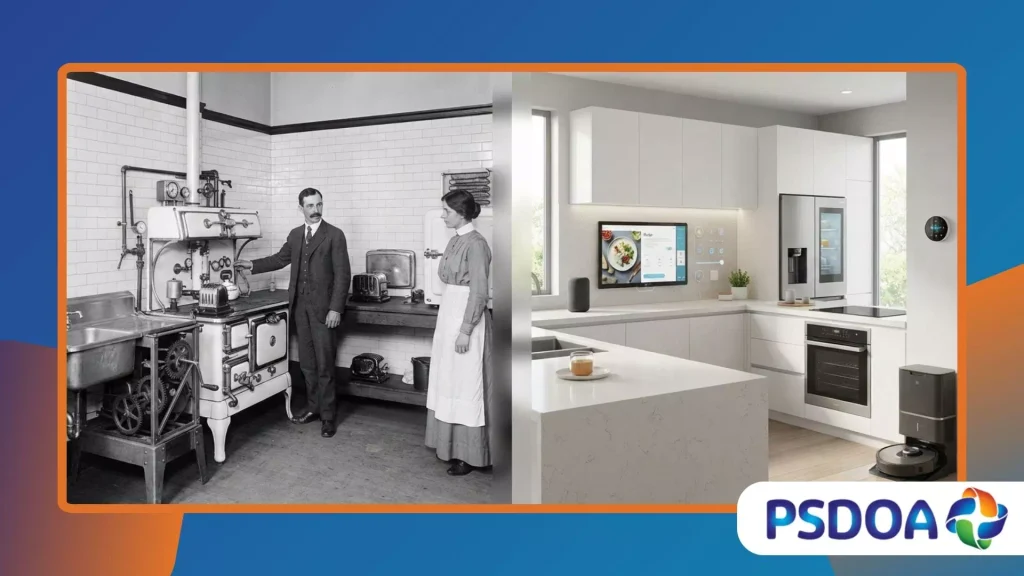
Mechanical kitchens relied heavily on intricate arrays of overhead belts, counterweight pulleys, and water-powered gadgets to perform heavy lifting tasks.
Before electricity became universally accessible in urban households, ingenious inventors harnessed gravity and manual cranks to operate dishwashers and mixers.
Picture a nineteenth-century cook turning a single brass crank that simultaneously churns butter, sharpens knives, and ventilates cooking fumes.
Engineering blueprints from the Industrial Revolution highlight the astonishing mechanical complexity packed into modest residential backrooms.
Centralized power shafts connected to external windmills or small basement water motors distributed kinetic energy throughout the entire house infrastructure.
This ingenious setup allowed multiple culinary devices to operate simultaneously from one single power source hidden behind wooden paneling.
When mechanical innovation meets domestic necessity, extraordinary feats of engineering emerge to simplify daily life. Hardware cleverness defined an era of unprecedented industrial optimism.
Read more: The Clockwork Airplane That Never Got Off the Ground
How Did Centralized Power Shafts Function?
A single rotational drive shaft powered by an external motor ran through interior walls, turning overhead belts connected to various countertop appliances.
This centralized kinetic distribution predated individual electric motors by several decades.
Why Were Counterweight Dumbwaiters Essential?
Multi-story townhouses utilized weighted rope systems to transport heavy meals, firewood, and groceries effortlessly between basement pantries and upper dining rooms.
These mechanical elevators eliminated arduous stair climbing entirely.
Can Water Pressure Drive Culinary Automation?
Early nineteenth-century dishwashers utilized high-pressure household water lines to spin internal wire racks, scrubbing dinnerware clean without electrical heating elements.
Hydraulic ingenuity solved sanitation challenges brilliantly.
What Do Historical Blueprints Reveal About Modern Smart Homes?
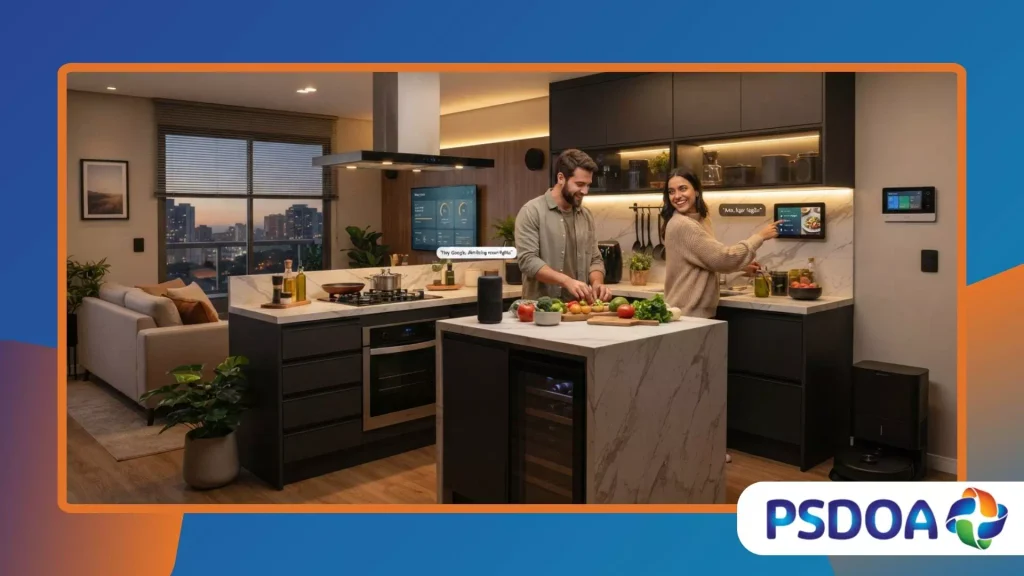
Mechanical kitchens served as the conceptual blueprint for today’s interconnected smart homes by establishing the core principle of centralized command and automation.
When twentieth-century visionaries designed futuristic modular living pods, they anticipated the seamless integration of technology into everyday architecture.
Imagine stepping into a mid-century concept home where walls rotate automatically and appliances fold flush into surrounding cabinetry.
Architectural research publications emphasize that modern IoT ecosystems are simply digital evolutions of these analog mechanical dreams.
Tracing the evolution from counterweighted pulleys to wireless smart hubs demonstrates humanity’s persistent desire to optimize living spaces through technology.
Today’s voice-activated refrigerators and automated lighting scenes fulfill the exact operational promises made by early industrial kitchen designers a century ago.
When we automate our environments, we honor a long tradition of forward-thinking engineering and practical problem-solving. Innovation is a continuous journey connecting past ambitions with future realities.
How Did Concept Homes Shape Future Living?
Mid-century exhibitions showcased fully integrated mechanical pods that inspired generations of architects to view homes as unified, responsive machines.
These exhibits planted the seeds for contemporary smart home automation.
Why Is Automation Essential for Modern Architecture?
Automating routine environmental controls like climate, lighting, and security frees up human attention for higher-level creative and professional pursuits. Efficiency remains the ultimate luxury in modern life.
Are Modern Smart Appliances Direct Descendants of Mechanical Units?
Yes, modern smart refrigerators and automated dishwashers inherit their core functional goals from early mechanical prototypes designed to minimize manual labor.
Digital technology simply replaced physical gears and pulleys.
Historical Domestic Innovation Comparison Matrix
The structured table below contrasts early mechanical kitchen solutions with contemporary digital smart home technologies across key operational categories.
| Innovation Dimension | Early Mechanical Kitchen Approach | Modern Digital Smart Home Approach |
| Power Source | Pulleys, weights, water pressure, and hand cranks | Electricity, Wi-Fi, and lithium-ion battery packs |
| Automation Control | Mechanical gears, levers, and physical linkages | Voice assistants, smartphone apps, and AI routines |
| Space Optimization | Rotating carousels and gravity-fed wall bins | Built-in smart storage and modular furniture pods |
| Core Objective | Reducing physical labor and walking fatigue | Enhancing convenience, security, and energy efficiency |
Preserving the Legacy of Analog Ingenuity in Modern Times
Mechanical kitchens remind us that the quest for effortless, highly optimized living spaces began long before the invention of microchips or smartphones.
By studying how past inventors solved domestic challenges with physical ingenuity, we gain profound appreciation for modern technological conveniences.
Embrace the spirit of creative problem-solving in your own living space by evaluating how thoughtful design improves daily routines.
What historical engineering concept inspires you to reimagine your home organization today? Share your thoughts in the comments below!
Frequently Asked Questions
What were mechanical kitchens and when did they appear?
Mechanical kitchens were early twentieth-century domestic prototypes that utilized pulleys, gears, and ergonomic layouts to minimize labor before widespread household electricity.
How did Lillian Gilbreth influence kitchen design?
She applied industrial engineering and motion study principles to residential layouts, creating the famous work-triangle concept that optimizes culinary workflows.
Did early mechanical kitchens use electricity?
Most early prototypes relied entirely on mechanical force, gravity, water pressure, and hand cranks because electricity was not yet universally available.
How do mechanical kitchens relate to modern smart homes?
Both systems share the same foundational goal of automating routine domestic tasks, centralizing control, and maximizing spatial efficiency through advanced engineering.
Why did these early mechanical systems eventually disappear?
The rapid proliferation of cheap household electricity and individual electric motors made complex centralized pulley and belt systems obsolete for residential use.
