
The Ancient Trade Hub That Vanished From History
The ancient trade hub that vanished from history remains one of the most intriguing mysteries of early human commerce, capturing the fascination of historians and modern researchers alike as new archaeological discoveries reshape our understanding of classical trade routes.
Anúncios
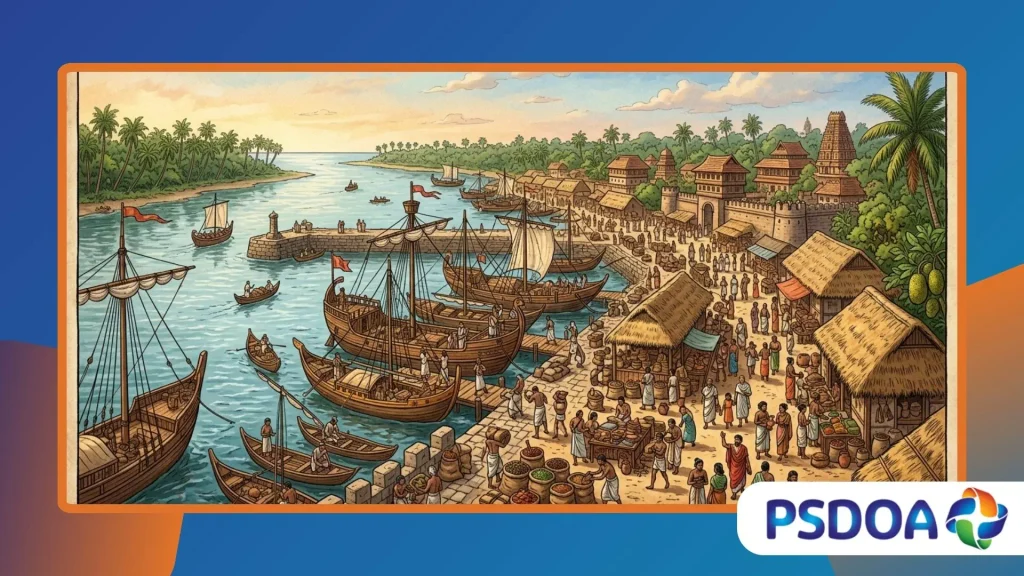
Long before modern maritime networks linked global economies, ancient hubs like Muziris along the southwestern Malabar Coast of India served as vibrant centers of international commerce, bridging distant civilizations through the exchange of precious commodities, spices, and cultural ideas.
Historical documentation from Roman chroniclers such as Pliny the Elder confirms that massive fleets sailed across the Arabian Sea to exchange Mediterranean gold, wine, and pottery for Indian black pepper, fine silk, beryl gemstones, and rare aromatics.
However, around the middle of the fourteenth century, a catastrophic flooding event along the Periyar River abruptly altered the coastline, choking the harbor with silt and effectively erasing this legendary emporium from active navigation maps.
Understanding how a once-flourishing metropolis vanished offers vital insights into the fragile nature of economic infrastructure faced with environmental volatility and shifting political alliances.
Recent field excavations led by the Kerala Council for Historical Research at Pattanam have unearthed millions of artifacts, including amphorae fragments, Roman coins, and ancient brick structures, validating the real-world historical foundation behind this celebrated commercial center.
The tragic collapse of this regional powerhouse demonstrates how quickly trade monopolies can dissolve when natural disasters disrupt strategic maritime access.
As current investigative techniques combine satellite imagery, sediment core analysis, and carbon dating, researchers are finally piecing together the precise layout and economic reach of this lost global market.
What You Will Discover in This Article
- Why Did the Ancient Trade Center Disappear from Classical Maps?
- How Did Natural Disasters Wipe Out the Harbor Infrastructure?
- What Role Did Shifting Maritime Routes Play in Its Decline?
- Why Did Contemporary Historians Lose Track of Its Real Location?
- How Did This Forgotten Commercial Hub Connect Global Civilizations?
- Which Exotic Goods Dominated the Ancient Trade Exchanges?
- How Did Monsoonal Navigation Rules Enable Cross-Oceanic Commerce?
- What Cultural Exchanges Took Place Within the Vibrant Port City?
- Why Are Modern Archaeological Finds Rewriting Its Historical Legacy?
- How Are Recent Pattanam Excavations Uncovering Lost Artifacts?
- What Do Ancient Marine Sediments Reveal About the Final Cataclysm?
- Why Does the Rediscovery of This Emporium Matter for History Today?
- Comparative Overview of Lost Ancient Trade Centers
- The Lasting Heritage of a Forgotten Maritime Giant
- Frequently Asked Questions
Why Did the Ancient Trade Center Disappear from Classical Maps?
How Did Natural Disasters Wipe Out the Harbor Infrastructure?
Geological records indicate that a severe flood along the Periyar River in 1341 CE altered the coastal topography, depositing massive silt loads that effectively sealed off the deepwater access of the harbor.
This violent natural catastrophe altered river courses overnight, turning a navigable estuary into a landlocked lagoon and trapping merchant vessels while preventing incoming ships from docking safely.
The destruction of port facilities destroyed storage warehouses, damaged urban housing, and abruptly halted the seasonal maritime operations that sustained the local economy for over a millennium.
Without a functional harbor to accommodate ocean-going ships, the thriving metropolis rapidly lost its commercial vitality, forcing merchants to abandon the region in search of viable alternative ports nearby.
What Role Did Shifting Maritime Routes Play in Its Decline?
The sudden loss of harbor accessibility coincided with broader geopolitical realignments across the Indian Ocean trading network, which favored emerging ports capable of handling larger merchant fleets.
As rival regional centers like Calicut and Cochin developed modern harbor facilities, foreign traders quickly redirected their maritime voyages to these safer and more accessible destinations.
The realignment of commercial networks left the former metropolis isolated from lucrative international supply chains, causing its economic influence to diminish rapidly within a few generations.
Consequently, the complex trade relationships that once tied the region to Mediterranean, Arabian, and Chinese markets dissolved, leaving behind a decaying coastal settlement stripped of its historic mercantile importance.
++ The Kingdom of Aksum: Africa’s Forgotten Superpower
Why Did Contemporary Historians Lose Track of Its Real Location?
Historical records from Greek, Roman, and Tamil classical literature provided detailed descriptions of the port’s immense wealth, yet offered vague geographical coordinates that confounded later cartographers.
Over centuries of coastal erosion and silting, the original shoreline retreated significantly, burying urban structures beneath layers of river sediment and dense vegetation.
Scholars debated its exact location for generations, with many dismissing the grandiose accounts of Roman chroniclers as poetic exaggeration or mythical folklore.
The absence of standing stone monuments further complicated identification efforts, causing this ancient trade hub that vanished from history to fade into obscurity until modern archaeological science intervened.
How Did This Forgotten Commercial Hub Connect Global Civilizations?
Which Exotic Goods Dominated the Ancient Trade Exchanges?
The port acted as the primary clearinghouse for black pepper, often referred to as “black gold” in classical antiquity due to its extraordinary value in European markets.
Mediterranean merchants brought massive quantities of gold and silver coinage, fine Italian wines, coral, glasswork, and frankincense to exchange for local spices, fine cotton textiles, ivory, and semi-precious stones.
Roman naturalists lamented the immense drain of imperial bullion sending millions of sesterces eastward annually to satisfy the insatiable appetite for exotic luxury imports.
This reciprocal trade enriched local dynasties and established sophisticated banking, storage, and taxation systems designed to facilitate high-volume international transactions across diverse cultural zones.
Also read: The Ancient City Hidden Beneath Modern Mexico City
How Did Monsoonal Navigation Rules Enable Cross-Oceanic Commerce?
Ancient navigators relied on the predictable seasonal shifts of the Indian Ocean monsoon winds to complete daring open-sea voyages between the Arabian Peninsula and the Malabar Coast.
Greek navigator Eudoxus of Cyzicus and later Roman mariners mastered these wind patterns, allowing merchant vessels to cross the open ocean in mere weeks rather than hugging treacherous coastlines.
Ships departed Egyptian ports on the Red Sea during midsummer, propelled by the southwestern monsoon, and returned during winter months when northeast winds blew back toward Africa.
This sophisticated understanding of seasonal meteorology transformed the harbor into a critical timing node where international fleets anchored for months awaiting favorable sailing conditions.
Read more: Operation Northwoods: The Declassified False Flag Proposal
What Cultural Exchanges Took Place Within the Vibrant Port City?
Beyond physical commodities, the commercial metropolis fostered an extraordinary multicultural environment where Roman sailors, Middle Eastern merchants, Chinese traders, and local craftsmen lived and worked alongside one another.
Epigraphic evidence reveals the presence of multicultural residential quarters, diverse religious practices, and bilingual legal contracts crafted to settle commercial disputes among foreign merchants.
The exchange of mathematical knowledge, botanical expertise, shipbuilding techniques, and culinary traditions enriched both Eastern and Western societies during this era of early globalization.
Think of this bustling port as the ancient world’s equivalent of Wall Street, where diverse cultures blended to drive global enterprise.
Why Are Modern Archaeological Finds Rewriting Its Historical Legacy?
How Are Recent Pattanam Excavations Uncovering Lost Artifacts?
Systematic archaeological excavations at Pattanam have unearthed thousands of Mediterranean artifacts, including West Asian pottery, Roman amphorae sherds, terra sigillata tablewares, and glass beads originating from distant imperial workshops.
Archaeologists have uncovered structural remains of ancient wharf facilities, bollards, canoes carved from single tree trunks, and warehouse foundations dating from the 3rd century BCE to the 4th century CE.
These physical discoveries confirm that the site maintained direct, high-density trade connections with the Mediterranean basin, Persian Gulf, and South China Sea.
The overwhelming quantity of imported material culture establishes beyond doubt that the settlement functioned as a premier international commercial center rather than a simple regional market town.
What Do Ancient Marine Sediments Reveal About the Final Cataclysm?
Geological core samples extracted from the Periyar River delta reveal thick layers of flood-deposited sediment containing organic material dated precisely to the mid-fourteenth century.
Sedimentological analysis indicates a catastrophic deposition event consistent with torrential monsoon flooding, delta displacement, and massive riverine soil erosion that transformed the coastal landscape.
These scientific findings match medieval textual accounts describing massive landscape shifts along the southwestern coast of India during the same period.
The physical evidence demonstrates how environmental instability destroyed coastal infrastructure, turning a strategic maritime gateway into an inaccessible wetland overnight and sealing the fate of the ancient trade hub that vanished from history.
Why Does the Rediscovery of This Emporium Matter for History Today?
Rediscovering this lost commercial center challenges long-held Eurocentric narratives regarding the development of early global economic networks and maritime exploration.
The evidence proves that complex, highly organized transoceanic trade systems existed centuries before the European Age of Discovery formally commenced.
Today, modern interdisciplinary research combines satellite radar imagery, archaeobotany, and ancient DNA analysis to reconstruct the daily life, diet, and health of its cosmopolitan population.
As ongoing excavations reveal additional layers of material culture, this rediscovered metropolis serves as a powerful reminder of how human economic triumph remains forever linked to environmental realities.
Comparative Overview of Lost Ancient Trade Centers
| Historical Trade Center | Primary Region | Peak Operational Era | Primary Trade Goods | Cause of Historical Decline |
| Muziris / Pattanam | Southwestern India | 3rd Century BCE – 14th Century CE | Black Pepper, Gems, Silk, Gold | Catastrophic River Flooding & Silting |
| Berenike | Red Sea, Egypt | 3rd Century BCE – 6th Century CE | Spices, Textiles, Aromatics, Elephants | Silting of Harbor & Imperial Political Instability |
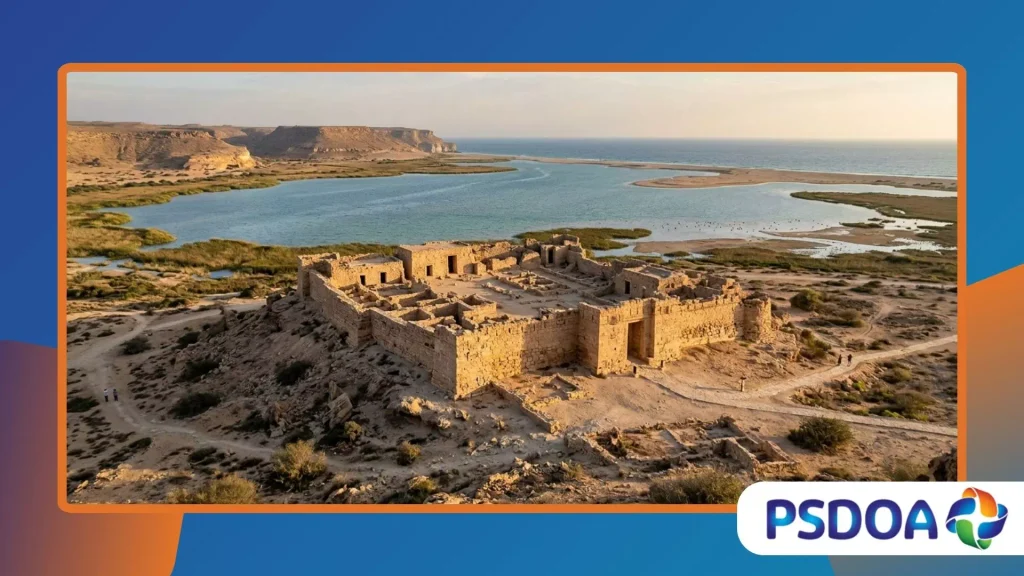
| Sumhuram (Khor Rori) | Dhofar, Oman | 3rd Century BCE – 5th Century CE | Frankincense, Myrrh, Mediterranean Goods | Sandbar Formation & Changing Trade Routes |
| Tamralipti | Bengal, India | 3rd Century BCE – 8th Century CE | Silk, Spices, Copper, Buddhist Artifacts | River Course Shifts & Coastal Erosion |
The Lasting Heritage of a Forgotten Maritime Giant
The rise and fall of this legendary commercial power highlights the fundamental fragility of ancient infrastructure when confronted with unstoppable environmental transformations.
Through centuries of silence, the forgotten port retained its legendary status in classical literature, waiting for modern archaeology to unearth its physical foundations and restore its proper place in world history.
Today, ongoing research at sites like Pattanam offers a fascinating window into early cross-cultural cooperation, economic interdependence, and maritime innovation across the Indian Ocean network.
As scientists continue analyzing recovered artifacts and mapping buried harbor structures, this legendary market continues to teach modern society valuable lessons about resilience, trade dynamics, and ecological vulnerability.
Reflecting on the dramatic story of this ancient trade hub that vanished from history, we are reminded that even the most powerful economic centers remain vulnerable to nature’s unpredictable forces.
The physical remains preserved beneath coastal sediments provide an invaluable link between ancient economic systems and our contemporary interconnected world.
As archaeological techniques advance, researchers will undoubtedly uncover further secrets buried beneath the soil, illuminating forgotten chapters of human history for generations to come.
How do you think modern coastal cities will adapt to environmental changes compared to ancient trade ports? Share your thoughts and join the conversation in the comments below!
Frequently Asked Questions
What made this ancient trade center so important to the Roman Empire?
The port was the primary global source of high-quality black pepper, exotic spices, fine gemstones, and luxury textiles that were highly prized across Mediterranean markets.
Roman elites spent vast sums of gold and silver bullion annually to secure these goods, making the trade route a crucial driver of imperial economic policy and international diplomacy.
How did archaeologists finally locate the physical remains of the lost port?
Archaeologists identified the site through systematic field surveys, geophysical analysis, and carbon dating at Pattanam near Kodungallur in Kerala, India.
Excavations revealed extensive Mediterranean pottery sherds, Roman coins, ancient brick structures, and wharf infrastructure that matched classical geographical descriptions, providing conclusive physical evidence of the legendary trade port.
What natural disaster caused the immediate destruction of the harbor infrastructure?
A catastrophic flood along the Periyar River in 1341 CE deposited massive quantities of silt and clay into the estuary, drastically altering the coastline and blocking deepwater maritime access.
This sudden topographical transformation rendered the harbor unusable for large ocean-going merchant vessels, leading to the rapid economic decline and eventual abandonment of the city.
Which classical historical sources documented the existence of this trade hub?
The port was documented in classical Western texts such as Pliny the Elder’s Naturalis Historia, the anonymous navigation guide Periplus of the Erythraean Sea, and Ptolemy’s Geography.
Additionally, ancient Tamil Sangam literature contains numerous poetic references to foreign merchant ships arriving with gold and departing laden with local black pepper.
Why is the study of this lost commercial port relevant in modern times?
Studying this ancient trade hub that vanished from history provides crucial insights into early global trade networks, cross-cultural exchange, and ancient maritime navigation techniques.
Furthermore, its abrupt destruction illustrates how vulnerable major commercial infrastructure and coastal settlements are to major environmental disasters and climate-driven landscape changes.
