
Backrooms Communities: How Internet Lore Became Shared Mythology
Backrooms Communities represent one of the most compelling examples of collaborative digital storytelling in modern internet culture, transforming a single anonymous imageboard post from 2019 into a sprawling, multi-platform mythological universe by 2026.
Anúncios
What started as an eerie photograph of damp yellow wallpaper and humming fluorescent lights quickly evolved beyond a simple creepypasta into a structured, participatory world built by thousands of writers, filmmakers, game developers, and digital archivists.
Unlike traditional top-down entertainment franchises owned by major studios, this phenomenon thrives on decentralized authorship, where fans debate canon, catalog endless architectural levels, and produce independent cinema that rivals commercial horror.
Understanding how this niche aesthetic became a cultural touchstone requires looking closely at the social mechanics behind collaborative world-building.
Today, young audiences increasingly seek shared spaces where they can actively shape narratives rather than passively consume them, turning liminal spaces into mirrors of contemporary digital anxiety.
Across forums, video platforms, and indie gaming storefronts, dedicated contributors maintain complex wikis, enforce strict tonal guidelines, and negotiate creative differences in real time.
The result is a living folklore system that demonstrates how online subcultures construct meaning, establish community governance, and turn collective imagination into enduring mythology.
What You Will Discover in This Article:
- How an anonymous 4chan post evolved into an organized, multi-platform storytelling ecosystem.
- The editorial rules, wiki governance models, and creative disputes that shape canon across different fan hubs.
- Why liminal space aesthetics resonate deeply with modern audiences and fuel independent film and gaming projects.
- A comparative breakdown of the major platforms driving this digital folklore in 2026.
- Answers to the most common questions surrounding the origins, major creators, and cultural impact of the phenomenon.
How Did Backrooms Communities Turn a Single Post Into a Shared Mythology?
What Sparked the Original 2019 Post and Its Early Viral Spread?
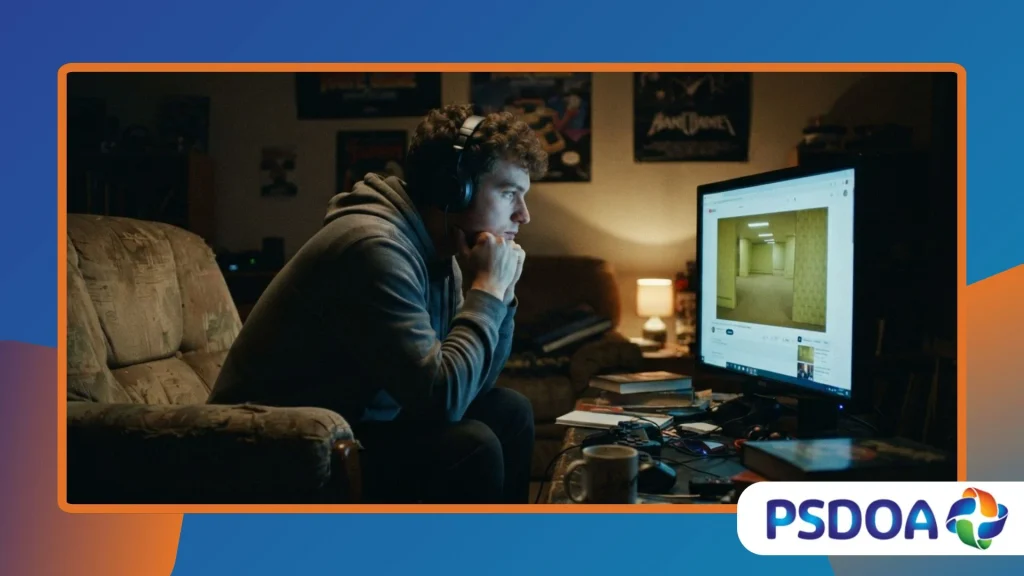
On May 12, 2019, an anonymous user on 4chan’s /x/ paranormal board uploaded a slightly tilted photograph showing an empty room with faded yellow wallpaper, stained commercial carpeting, and harsh overhead fluorescent tubes.
Another user replied with a short, atmospheric paragraph warning readers that “no-clipping” out of reality in the wrong areas lands a person in the Backrooms, a monotonous maze of roughly six hundred million square miles of randomly segmented empty rooms.
That brief exchange captured a universal, unsettling sensation: the uncanny feeling of standing inside an empty office building, hotel hallway, or closed shopping mall after hours.
Within weeks, screenshots of the thread circulated across Reddit, Twitter, and Tumblr, inspiring digital artists and amateur writers to imagine what might lurk beyond the first yellow corridor.
Rather than fading like most internet memes, the concept invited immediate participation because the original text left almost everything unexplained.
Contributors did not need special software or studio budgets to add to the mythos; they only needed a camera, a knack for unsettling prose, or basic photo-editing skills to capture empty transitional spaces.
Think of the original post like an open-source software kernel released without a user interface: the core code was tiny and simple, yet millions of developers could build entire operating systems on top of it.
By late 2019, dedicated subreddits such as r/backrooms had already accumulated tens of thousands of subscribers who treated the fictional dimension as a real, mappable territory.
How Do Collaborative Wikis Organize Thousands of Competing Stories?
As thousands of writers began submitting new levels, entities, and survival guides, informal social media feeds struggled to keep track of continuity.
Fans solved this problem by adopting the collaborative wiki model pioneered by the SCP Foundation, launching dedicated repositories like the Backrooms Wiki on Wikidot and the Fandom Backrooms Database.
These platforms introduced structured templates, numbering systems, and peer-review greenlighting processes that transformed loose creepypasta posts into standardized pseudo-scientific reports.
Today, active Backrooms Communities maintain thousands of distinct entries, ranging from Level 0’s endless mono-yellow maze to subterranean transit hubs and flooded concrete structures.
Managing a shared universe without a single copyright holder requires rigorous editorial discipline, and volunteer administrators enforce strict quality standards to prevent narrative collapse.
New submissions typically pass through critique forums where veteran reviewers evaluate pacing, clinical tone, and originality before granting publication approval.
When a page receives consistently low ratings from registered members, automated or moderator-led deletion protocols remove it to preserve overall archive quality.
Through this decentralized peer-review system, ordinary internet users built an editorial infrastructure capable of curating massive amounts of crowdsourced fiction while keeping internal lore remarkably coherent.
++ Analog Horror Fandoms: Why ARG Communities Decode Every Clue
Why Did Independent Filmmakers and Game Developers Accelerate Mainstream Reach?
While wikis established written canon, visual creators propelled the mythology into mainstream pop culture during the early 2020s and beyond.
In January 2022, teenage filmmaker Kane Parsons known online as Kane Pixels uploaded a found-footage short titled The Backrooms (Found Footage) to YouTube using Blender and Adobe After Effects.
The video earned tens of millions of views, introduced the fictional Async Research Institute, and eventually led to an A24 feature film adaptation produced alongside Atomic Monster and Chernin Entertainment.
That breakthrough proved that community-incubated internet folklore could transition directly into theatrical cinema without losing its grassroots identity.
Simultaneously, independent game developers flooded platforms like Steam and Roblox with cooperative survival titles that let players explore liminal corridors together.
Games such as Escape the Backrooms by Fancy Games and The Complex: Found Footage attracted hundreds of thousands of players, turning solitary reading into shared social experiences streamed live on Twitch and YouTube.
According to industry tracking from SteamDB and public creator disclosures, top Backrooms-inspired titles have collectively sold millions of copies on PC alone while generating billions of views across short-form video platforms.
Visual and interactive media lowered the barrier to entry, welcoming casual viewers who never visited a wiki into the broader mythological fold.
Why Do Backrooms Communities Thrive on Liminal Aesthetics and Collective Rules?
What Psychological Needs Do Liminal Spaces Fulfill for Modern Readers?
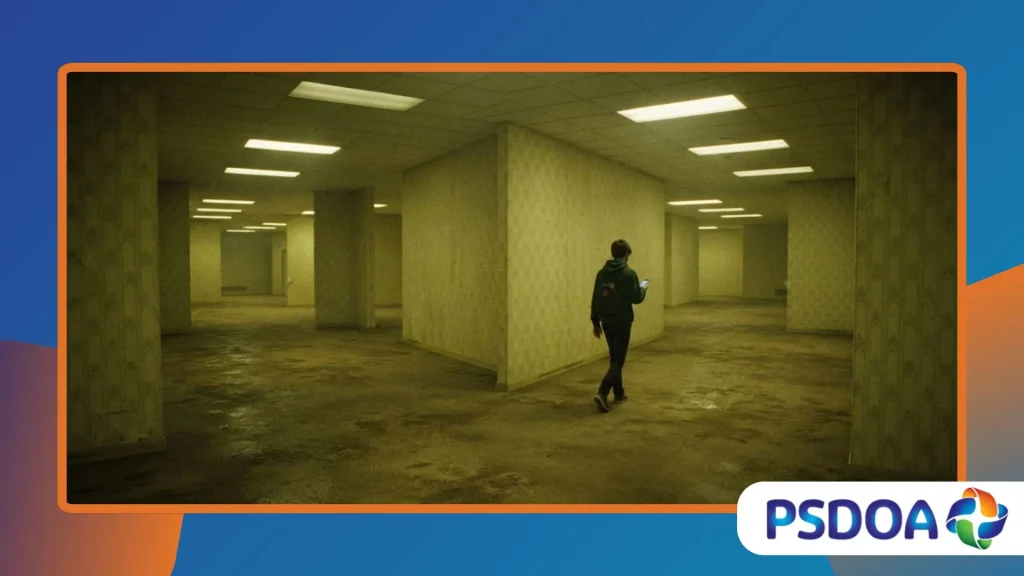
Psychologists and media scholars point out that liminal spaces transitional zones like empty airports, deserted school corridors, and vacant strip malls trigger a distinct blend of nostalgia and mild dread known as kenopsia.
In an era dominated by hyper-personalized algorithms, constant notifications, and crowded urban environments, the fantasy of slipping into an endless, quiet architectural void offers a paradoxical form of relief.
For many participants in Backrooms Communities, exploring these sterile spaces provides a safe sandbox to process feelings of isolation, burnout, and alienation in modern digital life.
The horror rarely relies on cheap gore; instead, it stems from familiar corporate architecture stretched to an impossible, indifferent scale.
Consider a real-world example of how everyday life feeds directly into this creative loop: a night-shift hospital janitor or retail worker finishes a late shift, snaps a photo of a flickering fluorescent hallway on their phone, and uploads it to a community forum.
Within hours, other members collaborate to write an environmental log describing the hallway’s acoustic anomalies, temperature drops, and survival protocols.
That simple workflow turns mundane, often exhausting real-world environments into sites of shared mystery and artistic validation.
Readers recognize their own lived surroundings inside the fiction, which makes the mythology feel eerily plausible rather than distant or fantastical.
++ Sephora Kids Trend: The New Consumer Microculture
How Do Canon Wars and Faction Splits Shape Community Identity?
Whenever an internet subculture grows large enough to attract diverse creative visions, ideological disagreements over “true” canon inevitably emerge.
Within this ecosystem, a major philosophical divide separates purists who favor the lonely, entity-free existential dread of the original 2019 post from expansionists who enjoy complex taxonomies of monsters, survivor colonies, and trade networks.
You can see this tension clearly in the divergence between the Wikidot archive, which emphasizes grounded psychological horror and strict literary standards, and the Fandom wiki, which embraces sprawling multiverse lore and higher-action survival tropes.
Meanwhile, fans of Kane Pixels’ YouTube series often treat the Async Research Institute timeline as its own standalone continuity.
Rather than destroying the subculture, these creative schisms actually strengthened its longevity by allowing multiple interpretations to coexist peacefully.
Experienced contributors learned to label their work by specific canons or universes, much like comic book readers distinguish between different multiverse imprints.
If a writer dislikes monster-heavy combat stories, they can contribute exclusively to minimalist liminal photography boards; if another creator loves faction politics, they can build intricate outpost histories on Wikidot.
Have you ever noticed how the most enduring mythologies in human history from ancient Greek legends to Arthurian tales survived precisely because different storytellers adapted them to fit their own local audiences?
Also read: Mushroom Foraging Groups: Nature Meets Counterculture
What Real-World Research Explains Participatory Internet Folklore?
Folklorists and digital anthropologists increasingly study online creepypasta networks as legitimate modern equivalents of oral storytelling traditions.
Research published in academic venues such as the Journal of American Folklore and studies on digital vernacular culture by institutions like the Oxford Internet Institute highlight how networked communities use “ostension” acting out or documenting legends as if they were real to build social trust.
Even though every participant knows the yellow hallways do not physically exist beneath reality, roleplaying as field researchers, archivists, and survivors creates a powerful sense of shared belonging.
The fiction becomes a social glue that connects geographically dispersed creators across dozens of countries.
Another concrete example demonstrates how this collaborative governance operates in practice during major archive migrations or moderation disputes.
When spam waves or low-effort trends threatened to overwhelm major subreddits and wikis between 2022 and 2025, volunteer moderators implemented “greenlight” checklists requiring authors to secure two independent critiques before publishing new level entries.
That policy immediately reduced low-quality submissions while mentoring younger writers in narrative pacing, clinical formatting, and constructive peer feedback.
Through shared standards and mutual accountability, online hobbyists informally taught one another creative writing, digital archiving, and collaborative project management.
How Are Backrooms Communities Evolving in 2026 and Beyond?
How Have AI Tools and Content Moderation Changed Creative Standards?
By 2026, the rapid proliferation of generative image and text tools forced Backrooms Communities to draw sharp ethical and aesthetic boundaries around human authorship.
Because automated generators can easily churn out endless pictures of empty yellow rooms, major wikis, subreddits, and YouTube curation channels enacted strict bans on uncredited AI-generated text and synthetic liminal photography.
Moderators and veteran creators recognized that the emotional power of a liminal image comes from knowing a real human stood in an actual empty building and captured a genuine moment in time.
Consequently, authentic real-world photography, custom 3D Blender modeling, and verifiable human prose now carry higher cultural prestige than ever before.
Community moderation teams rely on metadata inspection, peer verification, and transparent revision histories on platforms like Wikidot to uphold these authenticity rules.
Writers who take the time to research architectural acoustics, lighting temperatures, and realistic bureaucratic language consistently earn top community ratings and feature placements.
In an internet landscape increasingly crowded with automated filler, these subcultures have deliberately positioned themselves as sanctuaries for human-crafted weird fiction.
Protecting human creative agency has become a core pillar of community identity, ensuring that every new level or short film reflects genuine artistic intent.
What New Formats Are Driving the Next Wave of Digital Storytelling?
Beyond traditional wiki entries and first-person found-footage videos, creators in 2026 are pushing the mythology into interactive audio dramas, alternate reality games (ARGs), and spatial computing experiences.
Independent audio producers release simulated cassette tapes and archival radio broadcasts that listeners explore while commuting, blending ambient sound design with slow-burn investigative storytelling.
Meanwhile, small development studios use Unreal Engine 5 to build photorealistic, non-Euclidean exploration games that react dynamically to player microphone input and movement speed.
These technical innovations deepen the sense of physical presence without sacrificing the minimalist mystery that made the premise captivating in the first place.
Cross-platform storytelling has also matured, with creators linking YouTube analog horror series, hidden web portals, and interactive Discord investigation events into unified seasonal arcs.
Instead of passively waiting for a single author to upload the next chapter, audience members collaborate to decode spectrograms, translate fictional corporate memos, and vote on expedition routes.
This participatory structure transforms spectators into active co-investigators, blurring the boundary between audience and author.
As tools for 3D rendering and spatial audio become more accessible, grassroots creators continue to outpace traditional media companies in experimental narrative design.
Comparative Overview of Major Backrooms Hubs in 2026
| Platform / Hub | Primary Content Format | Governance & Quality Control | Dominant Creative Tone |
| Backrooms Wikidot | Structured articles, level logs, and survival tales | Strict greenlight peer-review and member voting thresholds | Grounded psychological horror and clinical documentation |
| Fandom Backrooms Wiki | Extensive level databases, entity guides, and faction lore | Open wiki editing with active moderator cleanup teams | Expansive multiverse world-building and action survival |
| YouTube (Kane Pixels & Indie Creators) | 3D CGI found-footage shorts and analog horror series | Algorithmic discovery, creator curation, and audience feedback | Cinematic realism, corporate sci-fi mystery, and dread |
| Reddit (r/backrooms & r/LiminalSpace) | Real-world photography, artwork, and canon discussions | Community upvotes, flair filtering, and anti-AI rules | Nostalgic, atmospheric, and visually driven exploration |
| Steam & Roblox Indie Games | Multiplayer co-op horror and exploration simulators | User reviews, developer patches, and speedrun leaderboards | Tense, interactive teamwork and environmental puzzle-solving |
The Enduring Power of Decentralized Digital Folklore
From a single anonymous reply on an obscure imageboard to theatrical cinema, bestselling indie games, and rigorously curated literary archives, Backrooms Communities prove that the internet remains a fertile engine for authentic modern mythology.
By combining stark architectural nostalgia with open-source storytelling rules, thousands of everyday writers, photographers, and animators built a shared universe that belongs to everyone and no one at the same time.
Their commitment to peer review, human authorship, and emotional resonance shows how digital subcultures can self-organize into sophisticated creative institutions without corporate oversight.
If you have explored a favorite level, created liminal photography, or followed an indie analog horror series, share your favorite corner of this universe in the comments below.
Frequently Asked Questions (FAQ)
What are Backrooms Communities?
They are decentralized online groups of writers, digital artists, photographers, game developers, and filmmakers who collaboratively build and curate stories set inside the Backrooms universe.
Operating across platforms like Wikidot, Reddit, YouTube, and Discord, members establish shared rules, document fictional levels, and produce independent media based on the original 2019 internet legend.
Who originally created the Backrooms concept?
An anonymous user on 4chan’s /x/ paranormal board created the foundational text on May 12, 2019, in response to a photo of an empty, yellow-walled room.
Because the post was made anonymously on an ephemeral imageboard, no single individual holds copyright over the core premise, allowing the broader public to freely expand the mythology.
Are the Backrooms based on a real physical location?
The fictional infinite dimension is entirely imaginary, though the original 2019 photograph depicted a real interior space with yellow wallpaper and fluorescent lighting.
For several years, internet sleuths searched for the exact building, eventually tracing the original photograph to a former furniture store and hobby shop space in Oshkosh, Wisconsin, known as HobbyTown.
How does the Backrooms Wikidot differ from the Fandom Wiki?
The Backrooms Wikidot enforces a strict peer-review greenlighting system and member voting standards that favor grounded psychological horror, literary polish, and consistent internal canon.
In contrast, the Fandom Wiki allows broader, more accessible editing that encourages expansive multiverse concepts, hundreds of entity classifications, and action-oriented survival narratives.
Why are Backrooms stories and games so popular in 2026?
Their enduring appeal comes from the universal psychological pull of liminal spaces familiar empty buildings that evoke both childhood nostalgia and quiet existential unease paired with low-barrier creative participation.
In 2026, audiences also gravitate toward human-crafted analog horror, cooperative indie games, and community-curated wikis as refreshing alternatives to algorithmically generated mainstream entertainment.
