
Remolinos de polvo en Marte: el fenómeno meteorológico gemelo de la Tierra
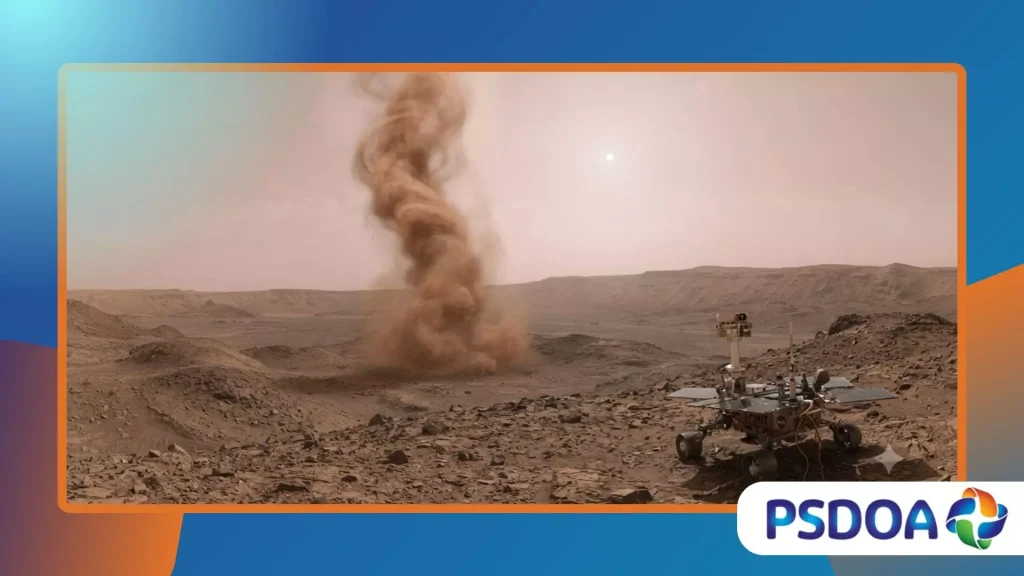
Remolinos de polvo en Marte Representan uno de los espectáculos atmosféricos más fascinantes de nuestro sistema solar, salvando la enorme brecha evolutiva entre la Tierra y el Planeta Rojo.
Anuncios
Como periodista que ha cubierto la exploración espacial y la meteorología durante años, me resulta fascinante cómo un mundo desértico, delgado, helado y aparentemente muerto, puede reflejar los sistemas climáticos volátiles de nuestro propio planeta.
Estas retorcidas columnas de polvo y viento no son meras bellas anomalías espaciales; son factores fundamentales que influyen en la matriz climática marciana.
Cuando la radiación solar calienta el suelo alienígena, desencadena corrientes convectivas que atraviesan la atmósfera dominada por el dióxido de carbono con una violencia sorprendente.
Comprender este fenómeno es apreciar el delicado equilibrio de las leyes termodinámicas que operan bajo condiciones cósmicas extremas.
Anuncios
Este artículo explora cómo estos vórtices dan forma a Marte, cómo se asemejan a los torbellinos del desierto terrestre y qué nos revelan sobre el futuro de la exploración humana en las llanuras oxidadas de nuestro planeta vecino.
Perspectivas ejecutivas: Lo que exploraremos
- El motor termodinámico: Cómo los microclimas crean gigantescos vórtices de polvo en un entorno casi de vacío.
- La conexión Tierra-Marte: Un análisis comparativo de la escala, la velocidad y el comportamiento electrostático.
- Crónicas de supervivencia robótica: La doble naturaleza de los torbellinos: como peligros mecánicos y, a la vez, como salvadores inesperados.
- Anatomía de una tormenta marciana: Métricas clave, dinámica estructural y características visuales capturadas por los rovers.
¿Qué factores impulsan la formación de remolinos de polvo en Marte?
La génesis mecánica de estas tormentas columnares depende enteramente de un marcado contraste térmico entre la superficie del planeta y su atmósfera inmediata.
Durante el verano marciano, el suelo absorbe la energía solar, alcanzando temperaturas que en ocasiones pueden aproximarse a la de una habitación confortable, mientras que el aire a tan solo dos metros de altura permanece por debajo del punto de congelación.
Este gradiente extremo obliga al aire caliente y menos denso a ascender rápidamente a través de las capas más frías, creando una potente columna térmica ascendente.
A medida que esta columna de aire ascendente se expande, las cizalladuras del viento locales y las diferencias de presión ambiental le confieren un impulso rotacional, haciendo girar la corriente ascendente hasta convertirla en un vórtice compacto y de rápido movimiento.
Debido a que la atmósfera marciana es increíblemente delgada, con una presión inferior a 11 TP3T de la presión superficial de la Tierra, el viento requiere una velocidad inmensa para levantar granos físicos de arena y polvo fino.
Una vez que la columna alcanza la velocidad de rotación suficiente, succiona el polvo hacia arriba, haciendo visible el vórtice de vacío atmosférico invisible para nuestras naves espaciales en órbita y los vehículos exploradores de la superficie.
¿Por qué la baja presión altera la dinámica de los vórtices?
En un entorno de baja densidad, la dinámica de fluidos se comporta de maneras que desafían nuestras intuiciones terrestres con respecto a los patrones climáticos y la energía cinética.
La escasa densidad del aire hace que, si bien una ráfaga de viento marciana puede alcanzar velocidades increíbles, su fuerza física se perciba como una suave brisa para un objeto en tierra.
Sin embargo, esta falta de resistencia atmosférica permite que los vórtices giren mucho más rápido y crezcan significativamente más que sus homólogos terrestres antes de perder impulso.
La baja presión también reduce el umbral necesario para que se inicie la flotabilidad térmica, lo que significa que incluso una pequeña variación de temperatura puede desencadenar una respuesta cinética masiva.
Esto crea un entorno en el que pequeñas anomalías locales se convierten rápidamente en imponentes columnas de polvo que dominan el paisaje durante horas.
++ Nieve marina: La extraña ventisca submarina en las profundidades oceánicas
¿Cómo detectan los científicos estos vórtices desde la órbita?
La detección de estos fenómenos requiere una combinación de imágenes orbitales de alta resolución y sensores meteorológicos de superficie activos que registren las caídas de presión locales.
Las sondas orbitales como el Mars Reconnaissance Orbiter (MRO) de la NASA utilizan cámaras para identificar las oscuras estelas en forma de bucle que quedan tras un vórtice que barre la brillante capa superior de polvo de la superficie.
Estas huellas parecen trazos de tinta caligráficos y caóticos sobre las dunas marcianas, proporcionando un mapa permanente de la actividad atmosférica reciente mucho después de que el viento amaine.
En tierra, los vehículos exploradores los detectan mediante caídas repentinas y bruscas de la presión atmosférica localizada, acompañadas de una breve disminución de la luz solar ambiental a medida que la columna de polvo pasa por encima.
Lea también: Velos de polvo: capas atmosféricas que tiñen de púrpura las puestas de sol.
¿Cuándo es la temporada de remolinos en el Planeta Rojo?
La frecuencia de estos fenómenos atmosféricos varía drásticamente en función de la posición orbital de Marte y la inclinación de su eje con respecto al sol.
La temporada alta se produce durante los meses de finales de primavera y verano en el hemisferio sur, cuando Marte alcanza el perihelio, su punto de mayor proximidad orbital al sol.
Durante este período, la irradiancia solar aumenta en casi 20%, inyectando enormes cantidades de energía térmica en el suelo árido y polvoriento.
La inestabilidad atmosférica resultante convierte valles tranquilos de color óxido en zonas activas donde docenas de columnas pueden formarse simultáneamente cada tarde.
¿Cómo se comparan con los aterradores torbellinos de la Tierra?
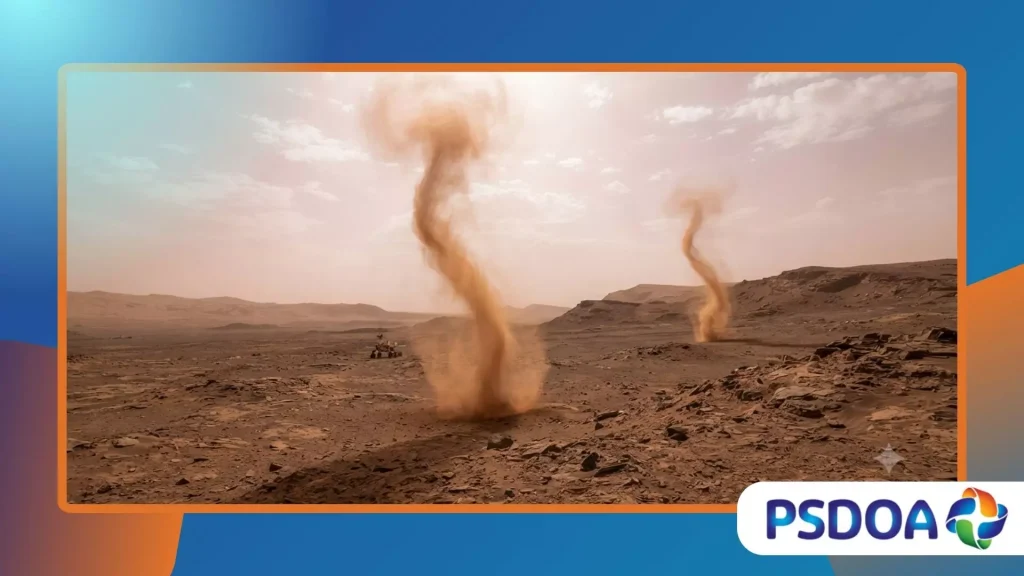
Para mirar remolinos de polvo en Marte Es como contemplar un reflejo colosal y amplificado de los pequeños torbellinos que danzan a través de los desiertos de Arizona o del interior de Australia.
¿Te has preguntado alguna vez cómo un planeta prácticamente sin atmósfera puede generar tormentas que empequeñecen a los tornados más grandes que se encuentran en la Tierra?
La respuesta reside en la ausencia de una fricción atmosférica densa, lo que permite que estas estructuras extraterrestres alcancen alturas de hasta 8 kilómetros y anchuras de cientos de metros.
Mientras que un torbellino terrestre suele ser una molestia menor que dura unos minutos y alcanza una altura de cien metros, una columna marciana es un accidente geográfico monstruoso.
Sin embargo, debido a la extrema delgadez del aire, un ser humano que se encontrara dentro de un enorme torbellino marciano solo sentiría un ligero tirón, en lugar de ser arrastrado por las intensas velocidades.
Leer más: Nubes Mammatus: Explicación de las nubes de tormenta con forma de burbuja
¿Cuál es la diferencia de escala entre altura y anchura?
La enorme diferencia de escala entre los dos planetas es uno de los descubrimientos más asombrosos de la meteorología planetaria moderna.
En la Tierra, un remolino de polvo rara vez supera los 300 metros de altura antes de que la estabilidad atmosférica y los vientos cruzados destrocen su frágil estructura térmica.
En Marte, los científicos han fotografiado columnas que se extienden a través de llanuras y que miden más de 20 kilómetros de altura, penetrando profundamente en la troposfera marciana.
Estas estructuras son más anchas que varios campos de fútbol juntos, proyectando enormes sombras sobre el terreno plagado de cráteres que pueden verse claramente desde millones de kilómetros de distancia en el espacio profundo.
¿En qué se diferencian la velocidad del viento y la destrucción física?
Las velocidades del viento dentro de estas estructuras marcianas pueden alcanzar fácilmente más de 90 kilómetros por hora, una velocidad que causaría daños estructurales considerables en la Tierra.
Sin embargo, la energía cinética de una tormenta de viento está directamente ligada a la masa de las moléculas de aire en movimiento, que son escasas en la delgada atmósfera marciana.
A modo de analogía, ser golpeado por un viento de 90 km/h en Marte se siente como ser azotado por plumas en lugar de una pared sólida de aire, lo que los hace físicamente inofensivos para la maquinaria pesada.
El principal peligro no reside en el impacto físico del viento, sino en la naturaleza altamente abrasiva de las partículas de polvo microscópicas y afiladas suspendidas en la columna.
¿Qué papel juega la electricidad estática en ambos casos?
Tanto los torbellinos terrestres como los marcianos actúan como generadores electrostáticos gigantes en movimiento debido a un proceso llamado carga triboeléctrica.
A medida que millones de granos de polvo chocan a gran velocidad dentro de la columna giratoria, las partículas más pequeñas pierden electrones y se cargan negativamente, mientras que los granos más grandes se cargan positivamente.
Debido a que los granos más pequeños ascienden a mayor altura en la columna, se genera un campo eléctrico masivo entre la parte superior del vórtice y el suelo marciano.
Este proceso crea descargas luminiscentes localizadas y campos de rayos en miniatura dentro de la columna, transformando el vórtice de polvo en un pilar crepitante y brillante de energía eléctrica.
¿Por qué son vitales los remolinos de polvo para la supervivencia de los robots y los humanos?
Durante décadas, estos patrones climáticos mecánicos han desempeñado un doble papel: el de mayor enemigo y el de salvador inesperado de nuestros exploradores robóticos.
Cuando la NASA hizo aterrizar los vehículos exploradores Spirit y Opportunity, los ingenieros esperaban que sus paneles solares se cubrieran de polvo en cuestión de meses, lo que pondría fin a sus misiones prematuramente.
En cambio, la intervención inesperada de remolinos de polvo en Marte Se limpiaron a fondo los paneles solares, aumentando los niveles de potencia de la noche a la mañana y prolongando su vida útil en más de una década.
Por el contrario, el polvo abrasivo puede infiltrarse en juntas delicadas, rayar lentes ópticas y complicar las secuencias de aterrizaje de las naves espaciales entrantes.
A medida que nos preparamos para la llegada de asentamientos humanos en las próximas décadas, comprender cómo predecir y aprovechar estas tormentas es una prioridad fundamental para las agencias espaciales de todo el mundo.
¿Cómo salvaron a los Spirit and Opportunity Rovers?
La saga de los vehículos exploradores de Marte es uno de los ejemplos más increíbles de apoyo ambiental planetario accidental en la historia espacial.
En 2005, el rover Spirit se enfrentaba a una grave crisis energética, ya que una gruesa capa de suciedad rojiza impedía el paso de la luz solar invernal.
El 12 de marzo de ese año, un gran torbellino pasó directamente sobre el robot estacionario, provocando una caída en los niveles de presión y despejando por completo las plataformas solares.
Los niveles de energía del rover aumentaron en 30% en segundos, lo que permitió a los científicos continuar explorando áreas que de otro modo habrían permanecido permanentemente fuera de su alcance.
¿Cuáles son los riesgos para los futuros hábitats humanos?
Cuando los astronautas humanos construyan finalmente hábitats en las arenas rojas, estos vórtices representarán un desafío operativo constante para los sistemas de soporte vital.
El polvo que transporta el viento no es como el lodo terrestre; es tóxico, está lleno de percloratos y tiene una textura vítrea y dentada debido a la falta de erosión por agua líquida.
Si un vórtice barre un hábitat, el polvo cargado electrostáticamente se adherirá a los trajes espaciales, las esclusas de aire y los sellos, desgastando los componentes mecánicos por fricción.
Es fundamental controlar esta contaminación por polvo, ya que permitir que estas partículas entren en los espacios habitables podría causar graves problemas respiratorios a la tripulación.
¿Podemos extraer energía cinética de los vórtices marcianos?
El concepto de capturar la energía cinética de estas tormentas ambientales está pasando de ser ciencia ficción a convertirse en un área seria de investigación en ingeniería aeroespacial.
Debido a que los vórtices aparecen de forma constante en cuencas geográficas específicas durante las largas tardes de verano, representan una fuente de movimiento mecánico altamente predecible.
Los ingenieros están diseñando turbinas eólicas ligeras de eje vertical, concebidas para girar rápidamente bajo la influencia de vientos vorticiales de baja densidad y alta velocidad.
Estos sistemas podrían proporcionar una fuente de energía secundaria útil para los hábitats durante las tormentas de polvo regionales, cuando los paneles solares quedan completamente inservibles debido a la oscuridad del cielo.
Métricas ambientales de los vórtices de aire marcianos
Las características físicas de estas anomalías atmosféricas han sido documentadas exhaustivamente mediante instrumentos que van desde el sistema REMS del rover Curiosity hasta la estación meteorológica MEDA del rover Perseverance.
Los siguientes datos ponen de manifiesto las diferencias fundamentales en la escala atmosférica, las variaciones de temperatura y la dinámica cinética entre ambos mundos.
| Métrica ambiental | Torbellinos del desierto de la Tierra | vórtices de polvo marciano |
| Altura media de columna | De 10 a 100 metros | De 1.000 a 8.000 metros |
| Velocidad de rotación del núcleo | De 30 a 50 km/h | 70 a 110 km/h |
| Caída de la presión atmosférica | 0,5% a 1% | 1% a 3% (línea base local) |
| Potencial de campo electrostático | Hasta 10 kV/m | Hasta 25 kV/m (calculado) |
| Tamaño de partícula de polvo primario | De 100 a 250 micras | De 1 a 5 micras (polvo de silicato) |
| Vida útil promedio de Vortex | De 2 a 10 minutos | De 10 a más de 60 minutos |
El legado planetario de los ciclos climáticos marcianos
En conclusión, el estudio de remolinos de polvo en Marte Nos enseña que el clima es una propiedad ineludible de cualquier planeta envuelto en una envoltura gaseosa, por muy delgada o fría que sea.
Estas imponentes columnas de polvo actúan como reguladores climáticos globales, elevando partículas finas a la atmósfera superior, donde absorben el calor solar y alteran los patrones de viento globales.
Son los artistas que esculpen los diseños cambiantes sobre la superficie del planeta, borrando las huellas antiguas mientras pintan constantemente otras nuevas sobre las dunas interminables.
Mientras miramos hacia el futuro de la migración interplanetaria, estas tormentas nos recuerdan que debemos adaptarnos a los ritmos naturales de nuestro nuevo hogar.
Representan a la vez un peligro que debe mitigarse y un recurso que debe comprenderse, sirviendo como recordatorio de las leyes físicas compartidas que unen a la Tierra y a Marte a través del vacío del espacio.
¿Qué opinas de estas imponentes tormentas alienígenas? ¡Comparte tu punto de vista en la sección de comentarios!
Preguntas frecuentes
¿Los remolinos de polvo en Marte emiten algún sonido al pasar?
Sí, emiten sonido, aunque es más tenue que el de una tormenta similar en la Tierra debido a la increíblemente baja densidad atmosférica.
En 2021, el micrófono SuperCam del rover Perseverance de la NASA capturó la primera grabación de audio de un torbellino marciano pasando directamente sobre el vehículo.
La grabación reveló un silbido bajo y silbante acompañado del tintineo rítmico de miles de diminutos granos de polvo que golpeaban el chasis metálico protector del rover.
¿Pueden estos torbellinos convertirse en tormentas de polvo globales que cubran todo el planeta?
Un solo torbellino no puede convertirse en una tormenta global, pero millones de ellos trabajando juntos pueden desencadenar estos eventos planetarios.
Los vórtices elevan enormes cantidades de polvo microscópico a la atmósfera superior, donde el calor solar calienta las partículas en suspensión y crea grandes masas de aire regionales ascendentes.
Este bucle térmico puede desestabilizar toda la atmósfera, creando un efecto descontrolado que ocasionalmente cubre todo el planeta con una espesa capa de polvo durante meses.
