
Inteligencia organoide: ¿Pueden los cerebros cultivados en laboratorio aprender tareas?
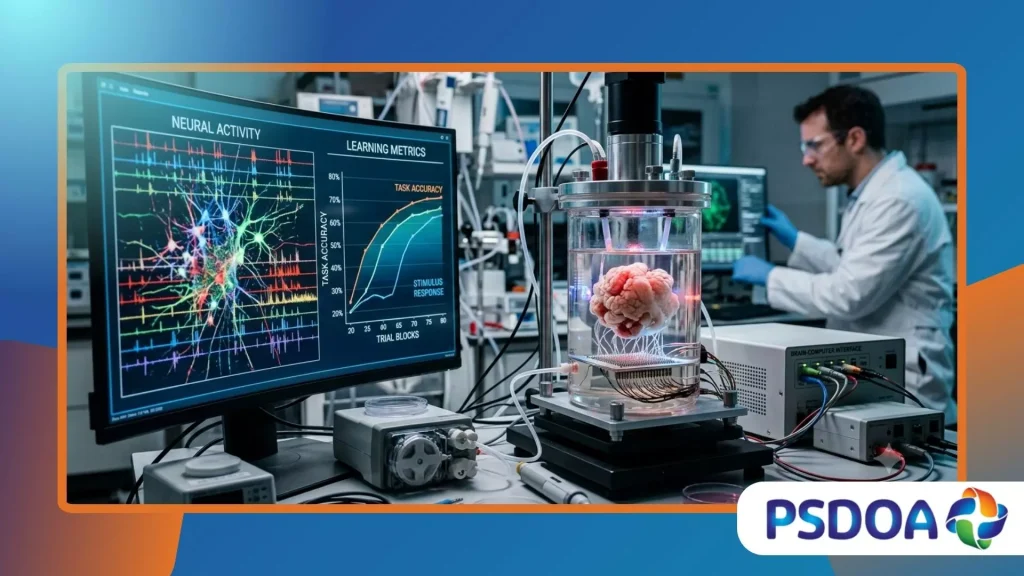
Inteligencia organoide Representa un salto revolucionario donde la biología se encuentra con la inteligencia artificial, cambiando fundamentalmente nuestra comprensión de la cognición y la capacidad computacional.
Anuncios
Como periodista que cubre descubrimientos de vanguardia, encuentro esta frontera a la vez estimulante y profundamente desafiante para nuestra visión tradicional de la tecnología.
Los científicos ya no se limitan a construir chips de silicio más grandes; en cambio, están optando por la computación biológica para sortear las limitaciones físicas.
Esta revolución aprovecha las células cerebrales humanas cultivadas en laboratorios para realizar tareas que antes requerían enormes centros de datos con un alto consumo energético.
Este análisis exhaustivo de la computación biológica explora un campo en rápida expansión, analizando su estructura, mecanismo, ventajas en eficiencia y profundas cuestiones éticas.
Anuncios
Guía de navegación rápida
- El cambio biológico: Definiendo la fusión de la neurociencia y la informática.
- Mecánica del biohardware: Cómo las células cerebrales procesan las tareas binarias.
- La revolución energética: Comparación del consumo energético del silicio con la eficiencia biológica.
- Fronteras éticas: Abordar la conciencia y los límites estructurales en el laboratorio.
¿Qué es la inteligencia organoide y por qué es importante ahora?
Comprender el cambio de paradigma biológico
El concepto de Inteligencia organoide Se refiere a un campo multidisciplinario emergente que integra cultivos tridimensionales de células cerebrales humanas con interfaces informáticas avanzadas.
Estas redes neuronales cultivadas en laboratorio, a menudo derivadas de células madre pluripotentes inducidas, imitan la complejidad estructural y funcional del cerebro humano.
A diferencia de la inteligencia artificial tradicional, que se basa en un código rígido y preprogramado, esta arquitectura biológica se adapta orgánicamente a través de la plasticidad celular.
Representa un cambio: de simular la inteligencia a cultivarla realmente en un entorno controlado.
El cambio más allá de los marcos de silicio
A medida que los microchips de silicio tradicionales se acercan a sus límites de miniaturización física, la informática requiere un medio completamente nuevo para seguir creciendo exponencialmente.
Los sistemas biológicos procesan datos complejos de forma simultánea, en lugar de secuencial, ofreciendo un modelo estructural que la informática tradicional simplemente no puede replicar.
Esta confluencia de biotecnología y hardware permite a los investigadores explorar cómo la materia orgánica almacena recuerdos y responde a los estímulos ambientales.
El objetivo final es crear biocomputadoras que ayuden, o incluso superen, a los procesadores de silicio estándar.
++ ¿Por qué algunos científicos intentan simular un universo en miniatura?
Pruebas en el mundo real e hitos actuales
Los recientes avances en laboratorio han demostrado que estos cúmulos celulares microscópicos pueden interactuar con entornos digitales en tiempo real.
Los investigadores han logrado conectar organoides neuronales a matrices de microelectrodos, lo que permite que las células reciban señales eléctricas y generen respuestas medibles.
Mediante el envío de impulsos eléctricos estructurados, los científicos pueden entrenar a estas redes biológicas para que modifiquen sus patrones de activación basándose en sistemas de retroalimentación.
Esta prueba de concepto demuestra que el tejido vivo puede procesar activamente información fuera de un organismo vivo.
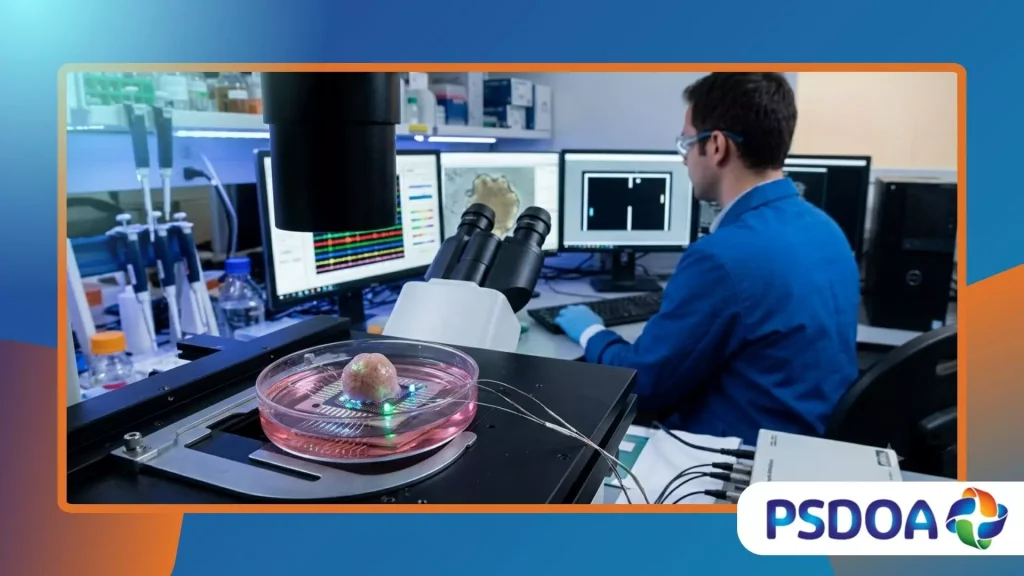
¿Cómo aprenden los cerebros cultivados en laboratorio las tareas computacionales?
Descifrando el mecanismo de aprendizaje celular
Para comprender cómo se produce el aprendizaje, es necesario visualizar cómo las neuronas forman sinapsis físicas cuando son estimuladas por corrientes eléctricas externas.
Cuando un organoide cultivado en laboratorio recibe datos de una interfaz informática, sus vías celulares internas se reorganizan para optimizar la velocidad de transmisión de la señal.
Este proceso refleja el aprendizaje humano, donde la repetición fortalece vías neuronales específicas, mientras que las conexiones no utilizadas se desvanecen de forma natural.
Mediante estimulación eléctrica selectiva, los científicos logran que estas estructuras biológicas se organicen para alcanzar objetivos de procesamiento específicos.
Lea también: Magnetorrecepción: El sentido oculto que los humanos podrían poseer
La famosa prueba de concepto del videojuego
Un ejemplo práctico famoso ocurrió cuando los investigadores entrenaron un cultivo neuronal llamado "DishBrain" para jugar al juego arcade retro. Apestar.
Mediante el uso de microelectrodos para estimular las células en función de la posición del balón, el organoide aprendió a superar los intercambios de golpes con éxito.
Imagina enseñar a un programa informático a ejecutarse no mediante líneas de código digital, sino permitiendo que las células vivas perciban el entorno digital.
Las células alteraron sus patrones de actividad eléctrica en cuestión de minutos, mostrando una forma primitiva de aprendizaje dirigido a objetivos.
Leer más: Cronobiología: Cómo los relojes biológicos influyen en el rendimiento humano
Procesamiento de variables complejas en tiempo real
Más allá de los juegos sencillos, los experimentos modernos de bioinformática desafían a estas redes neuronales a reconocer patrones y filtrar el ruido sistémico de fondo.
Cuando se expone a diferentes datos matemáticos, el organoide adapta su ritmo de activación colectiva para categorizar los distintos tipos de información entrante.
Esta capacidad de reconocimiento de patrones se produce de forma dinámica, sin los enormes conjuntos de datos que requieren los algoritmos de aprendizaje automático tradicionales para funcionar. Revela un atajo inherente y natural para la resolución de problemas, integrado directamente en la biología humana.
¿Por qué la computación biológica es más eficiente que la inteligencia artificial?
La crisis masiva de consumo de energía
Los centros de datos modernos que ejecutan modelos avanzados de inteligencia artificial consumen gigavatios de electricidad, lo que sobrecarga las redes eléctricas mundiales y requiere una infraestructura de refrigeración masiva.
En comparación, el cerebro humano funciona con aproximadamente veinte vatios de potencia mientras gestiona la lógica avanzada, el procesamiento emocional y las habilidades motoras.
Al trasladar las tareas computacionales a Inteligencia organoideLos innovadores tecnológicos esperan construir sistemas que funcionen con una fracción de los costos energéticos actuales.
Esta enorme disparidad convierte al hardware biológico en el objetivo final para el desarrollo tecnológico sostenible a largo plazo.
Comparación entre la capacidad cerebral y las supercomputadoras modernas
Consideremos las supercomputadoras más rápidas del mundo, que ocupan enormes almacenes y requieren sistemas de refrigeración propios tan solo para simular acciones neuronales básicas.
Un organoide biológico procesa variables complejas utilizando química y electricidad simultáneamente, evitando la pesada arquitectura mecánica de los servidores informáticos modernos.
Mientras que una supercomputadora consume megavatios para calcular matrices de probabilidad, las células orgánicas logran resultados similares utilizando nutrientes básicos como la glucosa.
Esta eficiencia extrema podría revolucionar por completo la forma en que la humanidad gestiona las grandes estructuras de datos sin destruir nuestro planeta.
Densidades de almacenamiento de datos en materia biológica
El ADN humano y las estructuras neuronales pueden almacenar enormes cantidades de información en espacios más pequeños que una sola partícula de polvo.
Los discos duros de silicio requieren espacio físico y temperaturas estables, mientras que la materia biológica almacena datos tridimensionalmente a través de enlaces celulares microscópicos.
Esta densa capacidad de almacenamiento significa que, en teoría, un bioordenador podría almacenar bibliotecas globales completas dentro de una única y compacta configuración de laboratorio.
Las implicaciones para la preservación de archivos y la computación descentralizada están transformando por completo nuestras hojas de ruta tecnológicas a largo plazo.
¿Qué limitaciones y fronteras éticas enfrenta esta ciencia?
La cuestión de la sensibilidad y la consciencia
A medida que estas redes neuronales cultivadas en laboratorio se vuelven más grandes y complejas, los científicos se enfrentan a la urgente cuestión de la posible conciencia primitiva.
Si un organoide puede aprender, adaptarse y responder a su entorno, ¿en qué momento merece protección ética?
Si bien los modelos actuales carecen de estímulos sensoriales como el dolor o las emociones, aumentar su tamaño podría desencadenar una conciencia básica inesperada.
Filósofos y abogados ya están trabajando junto con genetistas para definir límites claros antes de que estos sistemas adquieran funciones cognitivas avanzadas.
Los límites de la esperanza de vida biológica
A diferencia de los chips de silicio, que funcionan indefinidamente en condiciones adecuadas, el tejido biológico se deteriora, contrae infecciones y requiere un suministro constante de fluidos nutritivos.
Mantener un entorno perfectamente estéril y con temperatura controlada para un procesador orgánico supone un enorme reto logístico para las empresas tecnológicas.
Si el suministro de nutrientes fluctúa aunque sea ligeramente, todo el sistema biológico podría morir, borrando instantáneamente meses de vías neuronales aprendidas.
El desarrollo de técnicas de estabilización a largo plazo sigue siendo uno de los principales obstáculos que impiden la adopción comercial de esta tecnología.
Diversidad genética y normas de abastecimiento
La creación de estos organoides requiere células humanas, lo que plantea serias dudas sobre la propiedad, la privacidad genética y los protocolos de consentimiento informado del paciente.
Si una biocomputadora alcanza el éxito comercial, ¿quién es el propietario de la propiedad intelectual derivada del código genético de un individuo específico?
Además, las variaciones en la genética del donante podrían causar diferencias impredecibles en la forma en que los distintos organoides aprenden y procesan los datos.
Los organismos reguladores deben establecer marcos internacionales rigurosos para prevenir la explotación y garantizar un acceso equitativo a los recursos de bioinformática.
Rendimiento técnico y métricas
Para ilustrar las diferencias actuales entre los marcos computacionales biológicos y los sistemas de silicio tradicionales, la siguiente tabla desglosa los principales parámetros operativos basándose en datos recientes de 2026.
| Métrica de rendimiento | Sistemas de IA de Silicon | Sistemas de inteligencia organoide |
| Consumo de energía promedio | Megavatios ($10^6$ vatios) | Aproximadamente 20 vatios |
| Paradigma de aprendizaje | Reentrenamiento de datos masivos | Plasticidad sináptica dinámica |
| Arquitectura de procesamiento | Lineal / Secuencial | Redes 3D altamente paralelas |
| Impacto ambiental | Alta huella de carbono | Mínimo (biodegradable) |
| Limitación primaria | Disipación física del calor | Vida útil celular biológica |
La futura frontera del descubrimiento biológico
La integración de Inteligencia organoide La integración de la tecnología en el mercado general marca un punto de no retorno para la innovación humana y el descubrimiento científico.
Nos encaminamos hacia un futuro en el que la línea que separa la ingeniería mecánica del crecimiento biológico se vuelve completamente indistinguible.
Si bien su aplicación práctica se limita todavía a los laboratorios de investigación, el rápido ritmo de desarrollo promete cambios revolucionarios en la medicina y la gestión de datos.
Recorrer este camino requerirá una cooperación sin precedentes entre brillantes ingenieros computacionales y estrictos organismos de control ético.
En definitiva, el estudio de estas redes neuronales creadas en laboratorio nos enseña tanto sobre nosotros mismos como sobre la maquinaria informática avanzada.
Al observar cómo estos grupos microscópicos de células aprenden a desenvolverse en tareas digitales, desvelamos secretos de la mente humana.
El camino que tenemos por delante está plagado de obstáculos técnicos y cuestiones filosóficas, pero las posibles recompensas podrían redefinir la historia de la humanidad.
A medida que se desarrolla esta revolución biológica, la sociedad debe participar activamente en la definición del futuro de estas máquinas vivientes.
¿Qué opinas de las computadoras hechas con células humanas vivas? ¡Comparte tu opinión y únete a la conversación en los comentarios!
Preguntas frecuentes
¿Puede un organoide sentir dolor o experimentar emociones?
Las investigaciones científicas actuales indican que los organoides cultivados en laboratorio no poseen los receptores sensoriales ni las estructuras cerebrales complejas necesarias para sentir dolor o experimentar emociones.
Carecen de conexión con el cuerpo a través del sistema nervioso, lo que significa que sus respuestas son reacciones eléctricas estrictamente computacionales en lugar de sentimientos emocionales conscientes.
¿Cómo alimentan los científicos estos chips informáticos biológicos?
Los organoides neuronales se mantienen vivos dentro de cámaras de laboratorio especializadas, llenas con un flujo continuo de medio líquido rico en nutrientes.
Este fluido suministra a las células glucosa, oxígeno y aminoácidos esenciales, imitando eficazmente el sistema de suministro de sangre que se encuentra en los organismos vivos.
¿Reemplazarán pronto los organoides a los chips informáticos tradicionales?
No, Inteligencia organoide Todavía se encuentra en sus primeras etapas de desarrollo y no reemplazará a los microchips de silicio en un futuro próximo.
En cambio, es probable que las primeras aplicaciones impliquen sistemas híbridos en los que los procesadores biológicos se encarguen de tareas específicas de reconocimiento de patrones, mientras que el silicio gestione el almacenamiento estable de datos.
