
How Old Dongola Became a Forgotten Powerhouse of Medieval Nubia
Old Dongola stands silently amid the arid expanses of modern Sudan, guarding the remnants of a brilliant Christian Nubian civilization that once challenged and traded with mighty empires.
Anúncios
For centuries, this strategic urban center served as the pulsing heart of the Kingdom of Makuria, commanding the middle Nile valley with sophisticated architecture, vibrant art, and formidable political influence.
Today, sweeping winds and shifting sands whisper tales of a metropolis that flourished for over a millennium before fading into historical obscurity.
Modern archaeological excavations, particularly those led by the Polish Centre of Mediterranean Archaeology, have begun peeling back the desert layers to reveal astonishing palaces, churches, and domestic quarters that rewrite our understanding of medieval African history.
This journalistic feature explores the monumental rise, cultural zenith, and eventual decline of a vanished African powerhouse.
Readers will journey through the geopolitical strategies of Makuria, examine the breathtaking artistry preserved in medieval frescoes, and investigate the economic shifts that caused this thriving capital to slip into the shadows of collective memory.
What Drove the Rise of This Medieval African Capital?
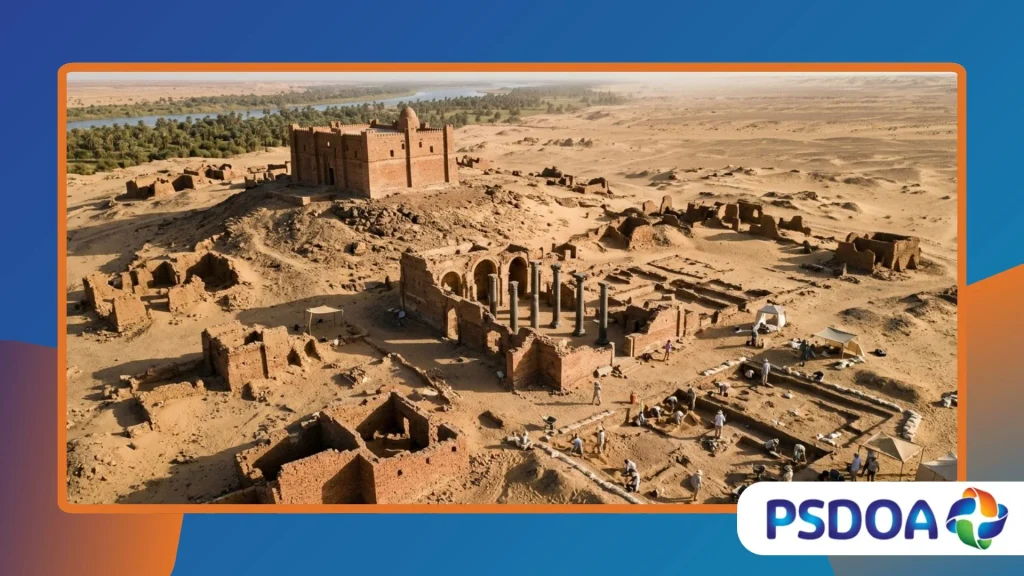
How did geographic advantages shape its dominance?
Situated strategically on the east bank of the middle Nile, the site offered natural defensive barriers against external invasions while facilitating effortless riverine communication.
The surrounding fertile floodplains provided sustainable agricultural yields, allowing the local population to feed a growing urban workforce and support centralized governance.
Control over crucial trade routes connecting sub-Saharan Africa with Egypt and the Red Sea turned the settlement into a bustling commercial hub.
Caravans laden with gold, ivory, and slaves converged here, generating immense wealth that funded ambitious construction projects and fortified urban infrastructure.
What role did Makuria play in regional politics?
The Kingdom of Makuria established itself as a formidable regional power by successfully resisting early Islamic expansions from Egypt, culminating in the famous Baqt treaty.
This diplomatic agreement secured centuries of peaceful coexistence, trade, and cultural exchange across northern borders, stabilizing the internal governance of the kingdom.
Local monarchs leveraged diplomatic marriages and strategic alliances with neighboring Nubian kingdoms like Alodia and Nobatia to consolidate their sphere of influence.
This political acumen transformed a collection of riverine settlements into a unified, respected state capable of projecting power far beyond its immediate borders.
++ The Ancient Trade Hub That Vanished From History
Why was the Nile vital for trade and defense?
The river acted as the lifeblood of the civilization, supplying fresh water for irrigation and sustaining livestock in an increasingly arid environment.
Without this consistent hydrological resource, large-scale urban life and monumental stone architecture would have been entirely impossible to sustain in the Nubian desert.
Militarily, the waterways restricted enemy troop movements and allowed rapid deployment of royal guards to volatile border regions.
Naval patrols secured commercial shipping lanes against banditry, ensuring that state revenue streams remained uninterrupted and predictable year-round.
How Did Religion and Culture Transform the Metropolis?
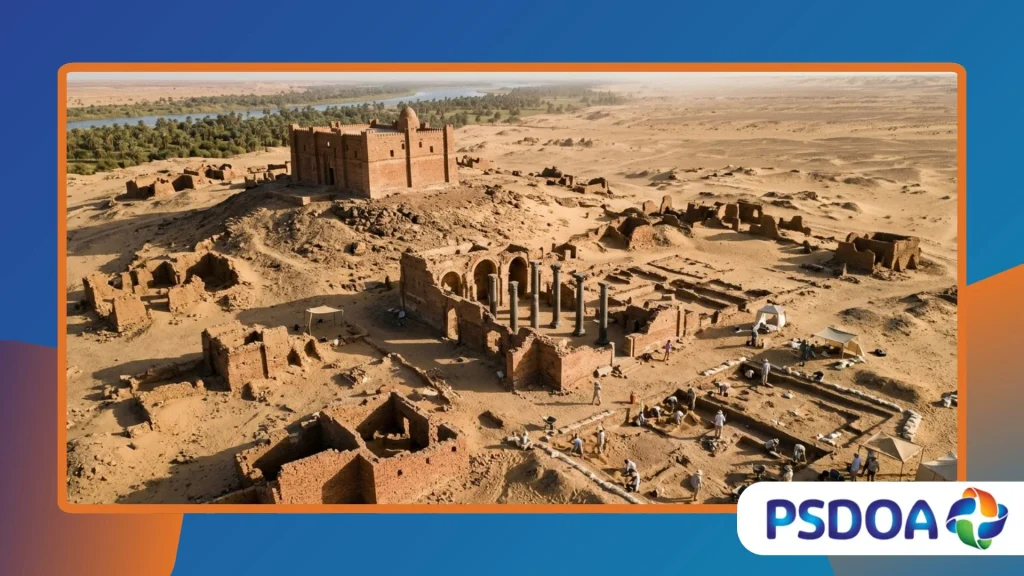
How did Christianity reshape monumental architecture?
The conversion of Makuria to Christianity in the sixth century initiated a dramatic architectural revolution across the urban landscape.
Towering cathedrals, monastic complexes, and episcopal palaces replaced traditional pagan shrines, demonstrating the profound ideological shift of the ruling elite and general populace.
Master stonemasons utilized local sandstone and red brick to erect engineering marvels, such as the iconic Church of the Granite Columns.
These sacred structures featured intricate domes, vaulted ceilings, and sprawling courtyards that reflected Byzantine influences fused with distinct indigenous Nubian artistry.
Also read: The Empire That Connected Europe and China Before the Silk Road
What secrets do the famous wall paintings reveal?
Recent archaeological discoveries within monastic ruins have uncovered exceptionally well-preserved mural paintings depicting biblical scenes, saints, and royal patrons.
These vibrant frescoes showcase a unique artistic synthesis of Byzantine iconography and African stylistic traditions, offering rare insights into medieval spiritual life.
Pigments extracted from local minerals ensured that colors remained vivid despite centuries of burial under desert sand.
Scholars study these visual narratives to understand liturgical practices, clothing styles, and the sociopolitical hierarchy of the era.
Read more: Nebra Sky Disc: The Artifact That Rewrote Ancient Astronomy
How did Islamic influences later reshape the city?
As political dynamics shifted across the region during the late medieval period, Islamic architecture began to merge with existing Christian structures.
The transformation of the grand Throne Hall into a mosque symbolizes the peaceful religious transition that occurred as new populations integrated into the urban fabric.
Mergers of trade networks brought merchants from the Arabian Peninsula, introducing diverse linguistic traditions, crafts, and Islamic legal systems.
This multicultural evolution enriched the daily life of the city, creating a vibrant cosmopolitan atmosphere before eventual abandonment.
Why Did This Flourishing Urban Center Fall into Obscurity?
What economic shifts triggered the decline?
Environmental degradation, including the gradual southward shifting of arable land and severe droughts, strained the agricultural capacity of the region.
Without sufficient food production to support urban density, populations began to disperse into smaller, more sustainable river settlements.
Concurrently, shifting international trade routes bypassed the middle Nile in favor of Red Sea ports and western African commercial arteries.
This economic isolation choked off the vital revenues that previously maintained the capital’s magnificent infrastructure and administrative apparatus.
How did external geopolitical pressures mount?
Internal dynastic instability combined with mounting pressures from Mamluk Egypt eventually fractured the centralized authority of Makuria.
Military incursions and punitive expeditions weakened the defensive capabilities of the kingdom, leading to the gradual depopulation of major urban centers.
Regional fragmentation left local chieftains competing for dwindling resources, preventing any coordinated defense against broader geopolitical realignments.
Consequently, the once-glorious metropolis was left largely deserted, its stones repurposed by pastoralist communities over subsequent centuries.
What modern archaeological missions uncovered its remains?
Pioneering excavations conducted by international teams, notably Polish archaeologists, systematically mapped the sprawling ruins and unearthed invaluable historical records.
Their painstaking work brought to light thousands of ostraca inscribed in Greek, Old Nubian, and Arabic, documenting daily administrative and religious affairs.
Advanced remote sensing technologies and conservation projects continue to protect fragile wall paintings and structural foundations from environmental erosion.
These scientific efforts ensure that the heritage of medieval Nubia is preserved for future generations and academic research.
Overview of Historical Phases
| Historical Phase | Primary Characteristics | Key Archaeological Finds |
| Early Christian Period | Rise of Makuria, architectural expansion | Granite column churches, early pottery |
| Golden Age | Commercial peak, monumental building | Throne hall, sophisticated frescoes |
| Transition & Decline | Islamic integration, economic shifting | Converted mosques, written ostraca |
Preserving the Legacy of a Forgotten Empire
The rediscovery of Old Dongola challenges Eurocentric narratives of medieval history by highlighting the sophistication, resilience, and cultural richness of African civilizations outside European spheres.
Investigating these ruins reminds modern observers of the dynamic interconnectedness of past human societies across the globe.
As conservationists and historians continue unearthing fragile artifacts from the sands, the voices of ancient Nubians echo once more into the modern world.
Share your thoughts and reflections on these fascinating historical discoveries in the comments below.
Frequently Asked Questions
Where was this medieval powerhouse located?
The archaeological site lies on the eastern bank of the Nile River in the northern state of modern-day Sudan, approximately five hundred kilometers north of Khartoum.
When did the settlement reach its historical peak?
The city achieved its greatest political, economic, and cultural prominence between the ninth and eleventh centuries during the height of the Christian Kingdom of Makuria.
What language did the inhabitants speak and write?
Citizens communicated primarily in Old Nubian for daily affairs while utilizing Greek, Coptic, and later Arabic for religious, liturgical, and official administrative documents.
Why did the capital eventually become abandoned?
A combination of environmental challenges, severe droughts, shifting international trade routes, and mounting political pressures from northern neighbors caused the gradual depopulation of the area.
Who conducts ongoing research at the ruins?
Multi-disciplinary teams of international researchers, led prominently by the Polish Centre of Mediterranean Archaeology from the University of Warsaw, conduct regular excavation and preservation projects.
