
Sleepmaxxing Communities: The Online Culture of Perfect Rest
Sleepmaxxing Communities have transformed bedtime from a passive biological necessity into a competitive, data-driven lifestyle across social media platforms in 2026.
Anúncios
Millions of users now treat nightly rest as an optimization sport, trading traditional pajamas for mouth tape, smart rings, and strict circadian light schedules.
Rather than simply hoping for eight hours of shuteye, participants in these digital subcultures analyze every REM cycle and deep-sleep spike with the intensity of elite endurance athletes.
Does turning rest into a nightly performance metric actually cure modern exhaustion, or does the obsession with flawless sleep data create a brand-new form of anxiety?
In this article, you will explore:
- The origins, core philosophy, and daily rituals driving the viral rise of nocturnal optimization subcultures.
- The specific hardware, environmental hacks, and biological protocols championed by dedicated rest enthusiasts.
- The medical realities, real-world statistics, and psychological risks associated with tracking every minute of slumber.
- A direct breakdown comparing popular viral bedtime trends against established sleep medicine evidence.
- Answers to the most pressing questions surrounding digital sleep culture, safety, and sustainable rest habits.
What Are Sleepmaxxing Communities and How Did They Emerge?
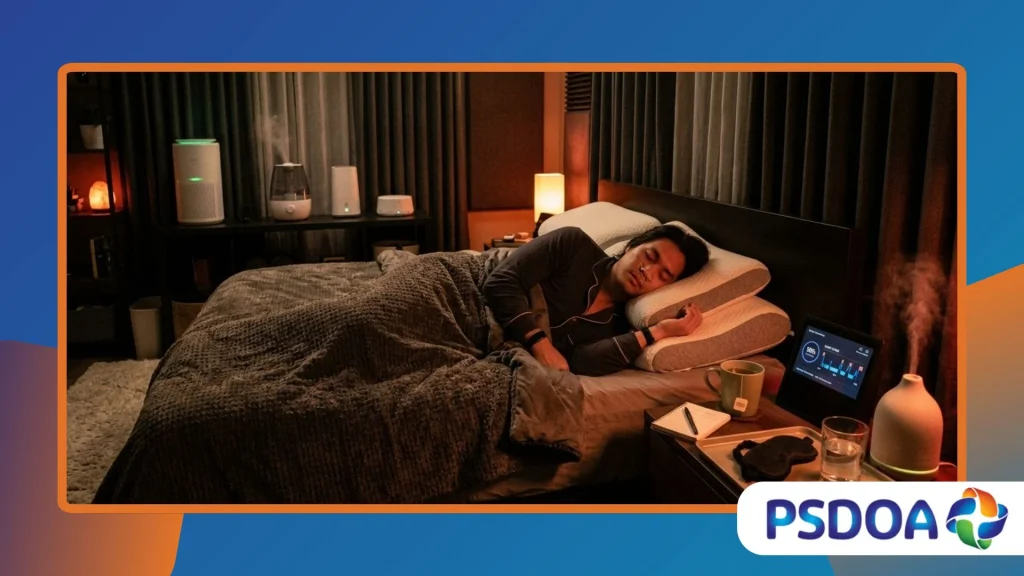
How did online wellness culture turn rest into a competitive subculture?
Digital wellness spaces shifted dramatically over the past few years as hustle culture gave way to aggressive recovery protocols.
Early biohacking forums once celebrated sleep deprivation as a badge of honor, yet younger generations flipped that script by treating high recovery scores as the ultimate status symbol.
Platforms like TikTok, Reddit, and Discord became breeding grounds for aesthetic bedtime routines that blend clinical self-tracking with aspirational consumerism.
Creators began posting morning screenshots of their biometric readiness scores, turning personal physiology into public social currency.
Within Sleepmaxxing Communities, achieving a ninety-five percent sleep efficiency rating carries the same digital prestige as running a sub-three-hour marathon.
This cultural pivot reflects a widespread reaction against chronic burnout and constant digital overstimulation.
People exhausted by endless notifications started applying the same algorithmic mindset to their bedrooms that they previously used for productivity or fitness.
Instead of unplugging naturally, members of these subcultures systematized relaxation into step-by-step checklists and strict evening curfews.
Imagine treating your bedroom like a Formula One pit stop, where every pillow angle, room temperature degree, and herbal tincture is calibrated to shave seconds off your sleep latency.
That exact mechanical precision defines how online creators turned ordinary bedtime habits into a recognizable, highly shareable lifestyle movement.
What core beliefs unite members of sleepmaxxing forums?
Participants across these digital spaces share a fundamental conviction that modern environments actively sabotage human biology.
They argue that artificial blue light, late-night meals, and irregular schedules strip away restorative deep sleep unless countered with deliberate intervention.
Consequently, members view standard medical advice like simply going to bed earlier as far too vague for optimal cognitive and physical performance.
Group discussions center on measurable biomarkers such as heart rate variability, resting heart rate, and exact minutes spent in slow-wave sleep.
Everyone in the ecosystem believes that what gets measured gets improved, even when the body is completely unconscious.
Peer accountability reinforces these beliefs through daily check-ins, gear reviews, and crowd-sourced troubleshooting threads.
When a member posts a graph showing fragmented rest after a late dinner, dozens of commenters immediately diagnose the issue and suggest targeted adjustments.
The community operates on open-source experimentation, where personal anecdotes carry heavy weight alongside published circadian research.
However, this collective enthusiasm often blurs the line between proven sleep hygiene and experimental biohacking.
Newcomers quickly learn the shared vocabulary of circadian entrainment, cortisol curves, and sleep architecture as they work to earn their place among dedicated optimizers.
++ Backrooms Communities: How Internet Lore Became Shared Mythology
Who participates in these nocturnal optimization groups?
The demographic makeup of Sleepmaxxing Communities spans far beyond Silicon Valley executives and professional athletes.
College students seeking sharper exam focus, shift workers trying to salvage broken circadian rhythms, and young professionals battling Sunday-night dread make up the bulk of active contributors.
On short-form video platforms, Gen Z creators dominate the conversation by filming elaborate “closing shift” routines for their bedrooms.
Meanwhile, older enthusiasts on specialized forums focus heavily on longevity science, hormone regulation, and long-term neurodegenerative prevention.
Despite their different motivations, both groups converge around the exact same pursuit of uninterrupted, high-efficiency rest.
Consider a typical twenty-six-year-old software developer in Austin who spends eight hundred dollars on a smart mattress cover, blocks all blue light after sunset, and logs every cup of chamomile tea in a spreadsheet.
Across the globe, a university student in London achieves a similar community standing using budget-friendly hacks like porous mouth tape, blackout curtains, and a strict ten-minute morning sunlight walk.
Both individuals actively trade tips in the same comment sections, proving that the subculture thrives on shared obsession rather than a single income bracket.
Accessibility to smartphone tracking apps has democratized entry, allowing anyone with a wearable sensor to join the nightly competition.
Which Protocols and Tools Define the Sleepmaxxing Lifestyle?
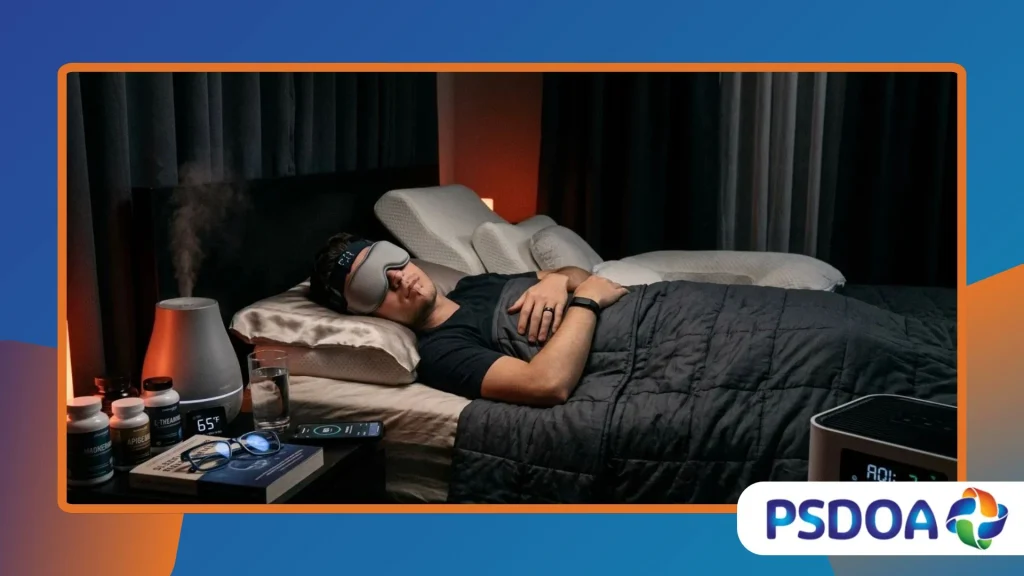
What physical devices and wearables anchor a sleepmaxxer’s routine?
Biometric tracking hardware serves as the undisputed foundation of modern nocturnal optimization. Devices like the Oura Ring, Whoop strap, and Apple Watch collect continuous overnight data on skin temperature, blood oxygen, and micro-movements.
Users wake up and immediately inspect their proprietary readiness scores before even stepping out of bed.
Beyond passive trackers, active temperature-regulating mattress pads such as Eight Sleep systems allow enthusiasts to program precise thermal curves that cool the bed during deep sleep and warm it gently before dawn.
Smart sunrise alarm clocks and dedicated bedside red-light panels round out the standard hardware toolkit found in viral bedroom tours.
Sensor accuracy and data granularity drive endless debate across community review threads.
Enthusiasts compare hypnogram charts across multiple wearables simultaneously, often wearing two different trackers to cross-verify REM staging estimates.
Manufacturers frequently release firmware updates tailored directly to these power users, adding features like chronotype coaching and snoring detection.
While the hardware provides unprecedented visibility into overnight habits, it also locks users into subscription ecosystems that gamify human biology.
Owning the right sensors signals serious commitment to the craft, turning bedside tables into miniature sleep laboratories.
++ Analog Horror Fandoms: Why ARG Communities Decode Every Clue
How do behavioral rituals and environmental hacks shape the bedroom?
Environmental engineering plays an equally massive role in eliminating every conceivable disruption to uninterrupted slumber.
Practitioners routinely seal window gaps with blackout film, run white or brown noise machines at calibrated decibels, and drop bedroom thermostats to roughly sixty-five degrees Fahrenheit.
Behavioral routines begin hours before head hits pillow, starting with strict caffeine cutoffs ten to twelve hours prior to bedtime.
Many followers adopt “digital sunsets,” locking smartphones in timed boxes and wearing amber-tinted glasses to protect natural melatonin secretion from indoor LED lighting.
Even evening hydration gets carefully rationed to prevent middle-of-the-night bathroom trips from ruining a perfect sleep score.
One prominent behavioral trend involves nasal breathing enforcement through gentle adhesive strips placed over the lips before sleep.
Proponents claim that mouth taping prevents dry mouth, reduces mild snoring, and improves oxygen uptake throughout the night.
Another staple ritual requires stepping outside within thirty minutes of waking to view direct natural sunlight, anchoring the brain’s suprachiasmatic nucleus for the upcoming night.
Together, these strict environmental and behavioral rules transform the entire twenty-four-hour day into a preparation phase for bedtime.
Every choice, from meal timing to evening exercise intensity, gets filtered through its projected impact on tomorrow morning’s recovery graph.
Also read: Mushroom Foraging Groups: Nature Meets Counterculture
Which supplements and dietary trends circulate within these spaces?
Nutritional experimentation forms the third pillar of the subculture’s optimization toolkit.
Rather than reaching for traditional over-the-counter antihistamines or prescription sedatives, Sleepmaxxing Communities favor targeted amino acids, minerals, and herbal extracts.
Magnesium glycinate and magnesium L-threonate top nearly every community recommendation list for their roles in nervous system relaxation.
Users frequently combine magnesium with L-theanine, apigenin, and glycine to build custom “sleep stacks” taken forty-five minutes before lights out.
Tart cherry juice mocktails widely dubbed the “sleepy girl mocktail” also surged in popularity as a natural dietary source of trace melatonin and anti-inflammatory compounds.
Dietary timing receives just as much scrutiny as supplement purity within active discussion threads.
Most protocols enforce a strict three-to-four-hour fasting window before bed so active digestion does not elevate core body temperature or resting heart rate.
Alcohol and high-sugar evening snacks face near-universal condemnation because wearable data visibly exposes how even a single glass of wine suppresses REM sleep.
Members routinely post before-and-after biometric charts showing dramatic heart-rate drops simply from shifting dinner two hours earlier.
Through crowd-sourced nutritional logs, the community reinforces the idea that metabolic calm is non-negotiable for restorative rest.
What Are the Real Benefits and Medical Risks of Obsessive Sleep Tracking?
Where do viral sleepmaxxing habits align with clinical sleep science?
Sleep physicians acknowledge that several core habits popularized by online subcultures reflect foundational clinical recommendations.
Maintaining a consistent wake-up time, sleeping in a cool and dark room, limiting evening alcohol, and getting bright morning light exposure are all heavily supported by decades of circadian biology research.
According to data from the Centers for Disease Control and Prevention (CDC), roughly one in three adults in the United States consistently fails to get the recommended seven or more hours of nightly rest.
By making sleep hygiene aspirational rather than boring, online creators have encouraged millions of young adults to prioritize rest over late-night screen scrolling.
Public awareness around circadian rhythms and alcohol’s disruptive impact on sleep architecture has grown significantly thanks to these peer-driven conversations.
When used casually, wearable trackers can also help individuals spot genuinely harmful lifestyle patterns.
Seeing a clear correlation between late-night stress, heavy meals, and elevated resting heart rates motivates many users to adopt healthier evening boundaries.
Behavioral sleep specialists note that positive habit stacking such as dimming lights and reading a physical book helps signal safety and predictability to an overactive nervous system.
In these constructive cases, digital communities function as supportive accountability groups that help chronically exhausted people reclaim their evenings.
The emphasis on protecting bedtime from work emails represents a healthy cultural pushback against round-the-clock availability.
What is orthosomnia and how does tracker anxiety backfire?
Problems emerge when the pursuit of a flawless recovery score triggers the exact sleeplessness users are trying to cure.
Sleep researchers have identified a clinical phenomenon called orthosomnia, defined as an unhealthy preoccupation with achieving perfect sleep tracker data.
In Sleepmaxxing Communities, staring at an app that labels a night’s rest as “poor” or “unproductive” often sparks immediate morning fatigue through the nocebo effect, even when the person actually slept fine.
Users lie awake worrying about how their tossing and turning will ruin their morning readiness percentage, creating a self-fulfilling cycle of hyperarousal and insomnia.
Consumer wearables estimate sleep stages using movement and heart rate proxies rather than brainwave electroencephalography, meaning their nightly stage breakdowns frequently contain noticeable margins of error.
Unverified viral hacks also carry tangible physical risks when adopted without medical oversight.
Pulmonologists and sleep medicine doctors repeatedly warn that mouth taping can be dangerous for individuals with undiagnosed obstructive sleep apnea, nasal polyps, or severe congestion.
Similarly, megadosing unregulated supplements like high-dose melatonin or stacking multiple sedating herbs can cause morning grogginess, vivid nightmares, or unexpected interactions with prescription medications.
Chasing optimization without clinical context leads many enthusiasts to spend thousands of dollars fixing minor fluctuations that represent completely normal human sleep variation.
True physiological recovery requires psychological surrender, which directly clashes with hyper-vigilant self-monitoring.
How can everyday sleepers adopt healthy habits without the obsession?
Striking a healthy balance requires treating sleep data as a broad weekly compass rather than a daily pass-or-fail exam.
Sleep psychologists recommend checking wearable metrics once a week or taking regular device-free weekends to reconnect with internal bodily cues of energy and alertness.
Focusing on controllable inputs, such as keeping a steady wake time and winding down in dim light, yields far better outcomes than micromanaging uncontrollable sleep-stage percentages.
If a routine feels stressful, expensive, or rigid, it directly undermines the calm mental state required to drift off naturally. Sustainable rest thrives on consistency and relaxation rather than perfectionism.
| Sleepmaxxing Trend | Community Claim | Clinical Evidence & Medical Reality | Risk Level |
| Morning Sunlight Viewing | Anchors circadian rhythm and boosts daytime alertness. | Strongly supported; early natural light regulates cortisol and evening melatonin release. | Low |
| Cool Bedroom (60–67°F) | Deepens slow-wave sleep and reduces night awakenings. | Strongly supported; falling core body temperature facilitates sleep onset and continuity. | Low |
| Wearable Sleep Staging | Measures exact REM and deep sleep minutes accurately. | Moderate accuracy; consumer sensors estimate stages via heart rate and movement, not brainwaves. | Moderate (Orthosomnia risk) |
| Mouth Taping | Forces nasal breathing, stops snoring, and boosts oxygen. | Limited evidence; poses suffocation or airway risks for people with sleep apnea or congestion. | Moderate to High |
| Multi-Ingredient Sleep Stacks | Eliminates sleep latency and maximizes recovery scores. | Mixed evidence; magnesium and L-theanine offer mild support, while supplement purity varies. | Moderate |
Finding Balance Beyond the Biometric Scoreboard
Digital rest culture reveals both our collective exhaustion and our modern instinct to solve biological problems with consumer technology.
Sleepmaxxing Communities have successfully elevated the cultural value of rest, reminding a hyper-connected generation that cognitive clarity, emotional resilience, and physical health depend on dark, quiet nights.
By popularizing morning light exposure, cooler bedrooms, and alcohol-free evenings, these online movements have turned dry medical advice into engaging daily rituals.
Yet genuine restorative rest cannot be forced through sheer willpower, expensive gadgets, or obsessive metric tracking.
The healthiest approach borrows the practical environmental upgrades from these digital subcultures while leaving behind the anxiety of nightly performance grades share your own experience with sleep tracking or bedtime routines in the comments below.
Frequently Asked Questions
What does sleepmaxxing actually mean?
Sleepmaxxing refers to an internet-driven wellness trend focused on optimizing sleep quality, duration, and recovery metrics using targeted routines, environmental adjustments, supplements, and wearable technology.
Rather than treating rest passively, practitioners actively engineer their bedrooms and daily schedules to achieve maximum physical and cognitive restoration.
Is mouth taping safe for everyone to try?
No, mouth taping is not safe for everyone and carries notable medical risks.
People with undiagnosed obstructive sleep apnea, deviated septums, chronic allergies, or sinus congestion can experience restricted airflow and worsened oxygen drops during the night, making medical consultation essential before trying it.
How accurate are smart rings and watches at tracking REM and deep sleep?
Consumer wearables are reasonably reliable at detecting when you fall asleep and wake up, as well as tracking overall heart rate trends.
However, because they do not measure direct brainwave activity like a clinical polysomnography lab study, their specific breakdowns of light, deep, and REM sleep remain educated estimates rather than medical-grade measurements.
What is orthosomnia?
Orthosomnia is a sleep disorder pattern coined by sleep researchers to describe an obsessive preoccupation with achieving “perfect” sleep scores on wearable trackers.
Ironically, the stress and perfectionism caused by monitoring nightly sleep data often trigger anxiety, hyperarousal, and genuine insomnia.
Which simple sleepmaxxing habits actually work best without spending money?
The most effective, science-backed habits cost nothing at all: waking up at the exact same time every day, getting ten to fifteen minutes of outdoor sunlight shortly after waking, keeping your bedroom dark and cool, and avoiding caffeine or heavy meals close to bedtime.
