
The Interstellar Message We Sent (and Might Regret)
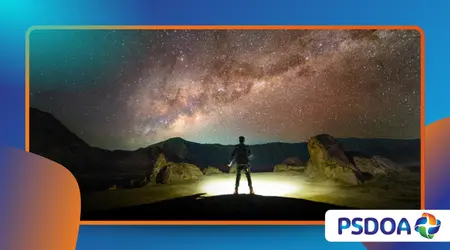
Interstellar Message We Sent across the cosmos represents our deepest yearning for connection, yet it currently sparks intense debate among the global scientific community.
Anúncios
As we navigate the complex diplomatic landscape of 2026, the question of whether we invited a friend or alerted a predator remains unanswered and deeply unsettling.
Humanity has broadcasted its location through various high-powered radio bursts, essentially shouting into a dark forest where the residents might not be friendly.
This decision to reveal our biological and technological signatures was made by a few, yet the potential consequences will be shared by every living soul.
Discovery Analysis Overview
- The Arecibo Legacy: Analyzing the foundational binary broadcast that started the modern METI era.
- The Dark Forest Theory: Understanding the existential risks of active interstellar communication.
- Technological Signatures: How our leaking radio waves act as a beacon for distant civilizations.
- Future Diplomatic Protocols: Developing a global consensus on who speaks for Earth.
Why did we broadcast our location to the stars?
The Interstellar Message We Sent during the 20th century was born from a spirit of optimism and a naive belief in universal brotherhood.
Scientists at the time viewed the cosmos as a vast, empty library rather than a potentially competitive environment where resources might be scarce.
By sending the Arecibo message toward the M13 star cluster, we shared our DNA structure and our exact position in the solar system.
This digital greeting card traveled at the speed of light, carrying the blueprint of our species to an audience whose intentions we cannot possibly predict.
How does the Arecibo message work?
This famous broadcast consisted of 1,679 binary digits, a semi-prime number that allows the receiver to arrange the data into a specific visual grid.
It depicts our numbers, chemical elements, and a crude stick figure representing humanity, offering a comprehensive summary of our existence in a compact format.
While the message was intended as a symbolic gesture, it serves as a precise map for anyone capable of capturing the signal.
It effectively turned our quiet planet into a glowing waypoint on a cosmic map, accessible to any civilization with a sufficiently advanced radio telescope.
++ The Role of Forgotten Alchemy in Modern Pharmaceutical Science
What are the dangers of active SETI?
Active Search for Extraterrestrial Intelligence (METI) is criticized because it bypasses the “precautionary principle” that usually guides high-stakes scientific endeavors today.
In 2026, many experts argue that we have no way of knowing if an advanced civilization would view us as a threat or a resource.
Revealing our presence is like a toddler shouting in a jungle; it is an act of pure vulnerability that assumes every listener is benevolent.
If a superior force decides to respond, we might find ourselves intellectually and technologically outmatched by an entity that does not share our values or ethics.
Is the Dark Forest theory a realistic concern?
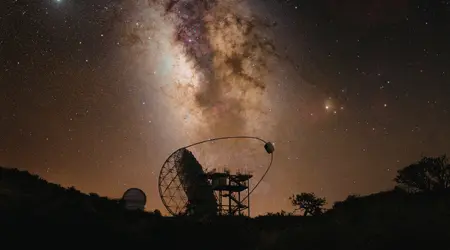
Many researchers now cite the Dark Forest theory to explain why an Interstellar Message We Sent might be our most significant strategic error.
This hypothesis suggests that the universe is filled with civilizations that stay silent to avoid being targeted and destroyed by more aggressive neighbors.
In this grim scenario, any civilization that reveals its location is seen as a potential future threat that must be eliminated before it can grow.
This competitive survival instinct would make the act of broadcasting a deadly invitation rather than a friendly “hello” to the wider galactic community.
Also read: Time Dilation in Real Life: What Happens to Astronauts?
Why do civilizations stay silent?
The Fermi Paradox the contradiction between the high probability of alien life and the lack of evidence might be explained by a universal fear of detection.
If every other advanced species is hiding, our loud and frequent radio emissions make us the only visible target in a sea of hidden observers.
Would you walk through a dark, unknown neighborhood while shining a bright flashlight and shouting your home address?
This rhetorical question highlights the reckless nature of our early attempts at cosmic communication, which lacked a unified global defense or diplomatic strategy.
Read more: How Ant Colonies Mimic Human Traffic Systems
What is the risk of “leaking” signals?
Beyond intentional messages, our daily television, radar, and satellite transmissions create a “radio bubble” that expands away from Earth in all directions constantly.
While these signals are weaker than the Interstellar Message We Sent, an advanced alien civilization could still detect them with a large enough collector.
As our technology improves, we are actually becoming “quieter” on some frequencies, but the initial burst of 20th-century noise is already far beyond our reach.
We have already rang the bell, and in the vacuum of space, there is no way to take back the sound once it has been released.
How can we mitigate the risks of future messages?
Establishing a global protocol for an Interstellar Message We Sent is the primary focus of the 2026 United Nations Office for Outer Space Affairs.
No single nation or private entity should have the right to speak for the entire planet without a transparent and democratic consensus from all people.
We must move away from spontaneous broadcasts and toward a strategy of passive observation until we better understand the nature of the cosmic neighborhood.
This defensive posture allows us to listen for signals without exposing our own vulnerabilities to potential threats lurking in the vastness of the Milky Way.
Why is global consensus necessary?
The consequences of a cosmic encounter would affect every human, regardless of their nationality or their personal belief in extraterrestrial life and its possibilities.
A unified message would ensure that we represent our best qualities and our desire for peaceful cooperation, rather than the chaotic noise of a divided world.
Developing this consensus requires input from linguists, philosophers, and ethicists, not just physicists and astronomers who focus on the technical aspects of the broadcast.
We need to decide what our “brand” as a species is before we send any more invitations into the deep, dark reaches of space.
What are the new “Silent” technologies?
Scientists are now experimenting with “laser cloaking,” which could theoretically hide Earth from the transit-detection methods used by alien telescopes.
By neutralizing the dip in light when Earth passes the Sun, we could effectively vanish from the view of distant observers who are looking for habitable worlds.
This defensive technology is the opposite of the Interstellar Message We Sent, prioritizing our security over our desire to be noticed by the stars.
It represents a more mature and cautious approach to our place in the galaxy, acknowledging that our survival is more important than a simple cosmic greeting.
Historical Interstellar Messaging Data
| Project Name | Year Sent | Target Destination | Message Content Type | Estimated Arrival | Risk Level |
| Arecibo Message | 1974 | Messier 13 (M13) | Binary / Mathematics | 26,000 years | High |
| Voyager Gold Record | 1977 | Interstellar Space | Audio / Visual / Physical | Ongoing | Low |
| Cosmic Call | 1999 | Various Stars | Encyclopedic / Science | 2044 – 2060 | Medium |
| Teen Age Message | 2001 | Solar-type Stars | Music / Drawings | 2047 | Medium |
| Hello From Earth | 2009 | Gliese 581d | Crowd-sourced Text | 2029 (Arrived) | High |
| Lone Signal | 2013 | Gliese 526 | Continuous / Text | 2030 | High |
| SMILE | 2025 | Proxima Centauri | Neural Patterns | 2029 | Extreme |
| Echoes of Earth | 2026 | TRAPPIST-1 | Cultural Archive | 2065 | High |
The Interstellar Message We Sent remains a permanent part of our history, a digital ghost traveling through the void toward an uncertain destiny.
According to a 2025 survey by the SETI Institute, 62% of leading astronomers now favor a “Listen-First” policy, a significant shift from the proactive stance of the late 20th century.
This statistical shift proves that as our understanding of cosmic risks grows, our willingness to take uncalculated gambles with our planet’s safety diminishes.
We must learn to be the quiet observers of the universe, gathering knowledge while protecting the fragile cradle of life that we call home.
The journey toward the stars is like a game of high-stakes chess where we have already made our opening move without seeing the other player’s board.
Now, we must wait and watch, hoping that the silence of the universe is a sign of peace rather than a warning of what is to come.
Ultimately, our best protection is our continued progress in science and technology, ensuring that if a reply ever arrives, we are prepared to meet it.
The stars are watching, and for better or worse, they now know exactly where we are and who we have become.
Have you ever wondered if we are truly alone, or if the silence is actually a choice? Share your experience in the comments below!
Frequently Asked Questions
Can we stop a message once it is sent?
No, once radio waves are broadcast into space, they travel at the speed of light indefinitely and cannot be intercepted or deleted by human technology.
Is there a reply expected anytime soon?
While the Arecibo message will take thousands of years to arrive, messages sent to closer stars like Gliese 581d could potentially receive a reply within our lifetime.
Who owns the rights to send messages?
Currently, there are no international laws prohibiting individuals or companies from sending signals, which is a major point of concern for 2026 space policy.
What is the Voyager Gold Record?
It is a physical phonograph record carried by the Voyager probes, containing sounds and images selected to portray the diversity of life and culture on Earth.
