
¿Por qué algunos científicos intentan simular un universo en miniatura?
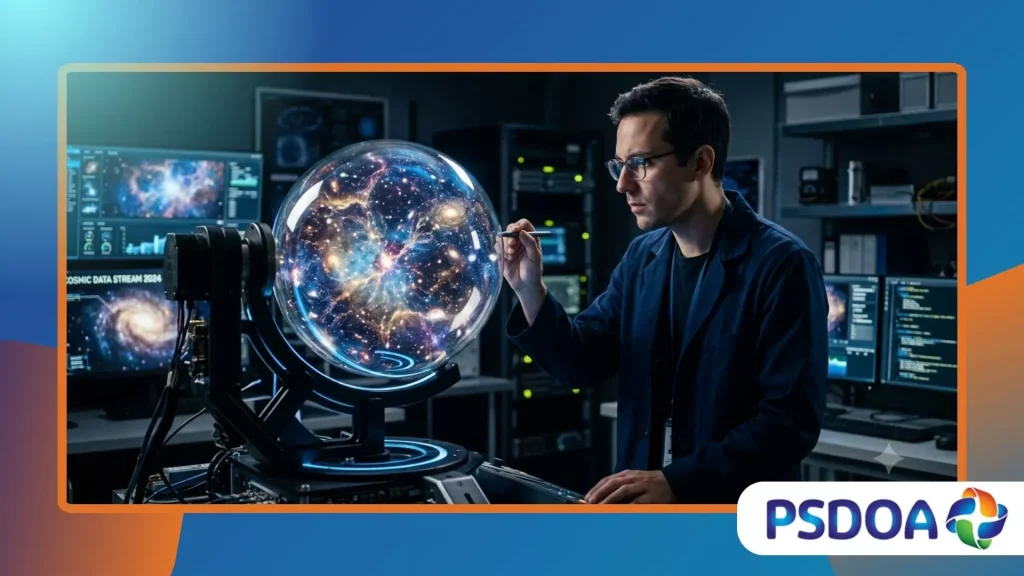
A simular un universo en miniatura La idea de estar dentro de un laboratorio puede sonar a premisa sacada de la ciencia ficción conceptual, pero en 2026 representa una de las fronteras más serias e innovadoras de la astrofísica moderna.
Anuncios
Los cosmólogos a menudo se topan con un muro insuperable porque no pueden manipular físicamente galaxias distantes ni viajar en el tiempo para presenciar el Big Bang.
Ante estas limitaciones cósmicas, equipos de investigación pioneros están recurriendo a supercomputadoras ultraavanzadas y sistemas físicos analógicos para replicar la evolución cósmica en entornos controlados.
Esta ambiciosa metodología cambia radicalmente la forma en que ponemos a prueba las leyes de la naturaleza, ofreciendo una visión sin precedentes de los misterios del espacio profundo que los telescopios tradicionales simplemente no pueden resolver.
Avances esenciales
- Modelos de silicio cósmicoActualmente, las supercomputadoras trazan la intrincada red cósmica, rastreando cómo la materia oscura guió físicamente la distribución de las galaxias a lo largo de miles de millones de años.
- Análogos de laboratorioLos fluidos cuánticos y los cristales ópticos especializados permiten a los físicos recrear los horizontes de sucesos extremos de los agujeros negros a escala de mesa.
- Resolviendo anomalías profundasLa modelización cósmica sintética proporciona un banco de pruebas dinámico para resolver la creciente tensión matemática que rodea la tasa de expansión de nuestro cosmos.
¿Por qué los astrofísicos necesitan recrear el cosmos en silicio?
¿Cómo rastrean las supercomputadoras miles de millones de años de evolución estructural?
La astrofísica moderna se enfrenta a una limitación fundamental: solo podemos observar nuestro cosmos desde un único y fugaz punto en el tiempo y el espacio.
Anuncios
Para sortear este problema, los consorcios de investigación globales utilizan enormes conjuntos de supercomputadoras para ejecutar simulaciones hidrodinámicas altamente complejas que condensan miles de millones de años en semanas de tiempo de procesamiento.
Estos modelos digitales rastrean enormes cantidades de partículas virtuales mientras interactúan a través de la gravedad, la dinámica de gases y los campos de radiación a través de inmensas extensiones del espacio profundo.
Ajustando las variables digitales, los investigadores pueden observar activamente cómo los cambios sutiles en las condiciones cósmicas primigenias alteran por completo la distribución final de las galaxias visibles.
¿Qué secretos puede revelar la microcosmología virtual sobre la materia oscura?
La materia oscura permanece completamente invisible para nuestros instrumentos estándar, sin embargo, su inmensa atracción gravitatoria forma el andamiaje invisible de todo el universo estructural.
Cuando los científicos simular un universo en miniaturaPueden probar diferentes perfiles hipotéticos para esta misteriosa sustancia para ver cuál se ajusta mejor a la realidad.
Si una simulación digital que utiliza una variante específica de materia oscura produce una red de galaxias que refleja nuestro cielo nocturno, valida ese marco teórico específico.
Este proceso computacional permite a los investigadores eliminar modelos físicos defectuosos que parecen perfectos en una pizarra, pero que fallan cuando se aplican en un entorno cambiante.
¿Qué tecnologías hacen posibles los universos sintéticos en la actualidad?
¿Cómo logran los laboratorios analógicos replicar los fenómenos del espacio profundo a escala de mesa?
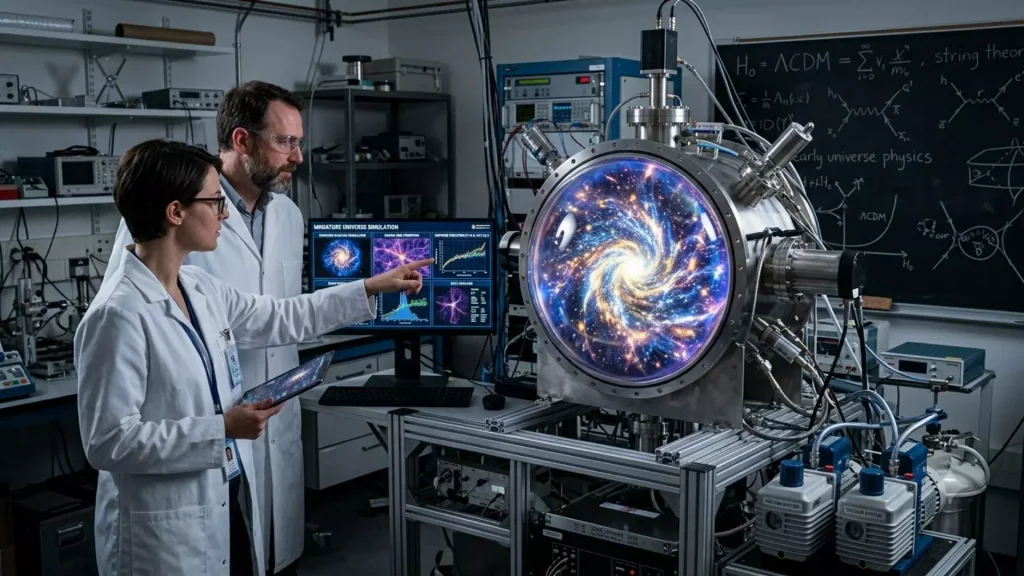
Más allá del ámbito digital de la supercomputación, los físicos experimentales están creando análogos físicos y tangibles de los fenómenos del espacio profundo utilizando equipos de laboratorio avanzados.
Los equipos utilizan estados exóticos de la materia, como los condensados de Bose-Einstein, para crear fluidos en los que las ondas sonoras se comportan exactamente como ondas de luz que viajan a través de un espacio-tiempo distorsionado.
Este ingenioso método permite a los científicos estudiar comportamientos cuánticos que son completamente imposibles de aislar al observar estructuras cosmológicas distantes del mundo real.
Imagínese estudiar las propiedades esquivas del horizonte de sucesos de un agujero negro activo sin abandonar jamás la seguridad de un laboratorio terrestre con temperatura controlada.
++ Cómo los líquenes están cambiando lo que sabemos sobre la simbiosis
¿Por qué son esenciales las redes de supercomputación ultrarrápidas para la física sintética?
Realizar una simulación cosmológica exhaustiva requiere una cantidad astronómica de potencia computacional bruta, lo que lleva al límite absoluto la tecnología de procesamiento actual.
Proyectos emblemáticos como el conjunto de simulación "Erebos", que se inaugurará en 2026, procesan múltiples petabytes de datos para calcular la interacción gravitacional de más de un billón de partículas de materia virtual.
Sin la reciente integración de unidades de procesamiento neuronal avanzadas y arquitecturas de computación a exaescala, estos modelos matemáticos masivos tardarían décadas en completarse.
Estos avances tecnológicos permiten a los equipos visualizar anomalías estructurales con un nivel de claridad comparable al de la capacidad de imagen bruta de los observatorios espaciales.
Lea también: Cómo las colonias de hormigas imitan los sistemas de tráfico humano
¿Cómo resuelven los datos del cosmos sintético los conflictos teóricos?
¿Por qué estos modelos multiescala ayudan a resolver el misterio de la tensión del Hubble?
La comunidad científica se enfrenta actualmente a una crisis masiva conocida como la tensión de Hubble, donde diferentes métodos de medición arrojan valores contradictorios para la expansión cósmica.
Los cosmólogos utilizan datos recopilados cuando simular un universo en miniatura para poner a prueba sus métodos de cálculo e identificar dónde podrían existir errores sistémicos ocultos.
Al realizar miles de iteraciones digitales distintas, los investigadores pueden identificar si los vacíos cósmicos locales están distorsionando nuestros cálculos del mundo real.
Este análisis exhaustivo de datos ayuda a cerrar la brecha entre los primeros datos de la radiación cósmica de fondo y las mediciones modernas de distancias galácticas.
Leer más: La extraña ciencia detrás de la masa negativa
¿Cómo representan los modelos sintéticos los cúmulos estelares cósmicos más antiguos?
Telescopios como el Telescopio Espacial James Webb proporcionan instantáneas impresionantes del espacio profundo primitivo, pero no pueden mostrar el nacimiento continuo de esos sistemas.
Las simulaciones digitales llenan estos vacíos de observación al mostrar la dinámica de fluidos del gas primordial a medida que se enfría y colapsa para formar las primeras estrellas.
Estos modelos muestran a los científicos exactamente hacia dónde deben apuntar nuestros telescopios espaciales más potentes para confirmar la existencia de estas antiguas zonas de formación estelar.
La relación simbiótica entre la predicción digital y la observación física acelera el ritmo de los descubrimientos, convirtiendo teorías vagas en hechos verificables.
Metodologías de simulación cosmológica
La tabla informativa que aparece a continuación compara los principales enfoques científicos utilizados para replicar fenómenos cósmicos en laboratorios modernos.
| Tipo de simulación | Plataforma tecnológica central | Objetivo científico principal | Limitación científica importante |
| Hidrodinámica digital | Clústeres de supercomputadoras de exaescala | Red galáctica y distribución de la materia oscura | Alto consumo de energía computacional |
| Análogos de fluidos cuánticos | Condensados de Bose-Einstein | Radiación de Hawking y espaciotiempo curvo | Restringido a entornos de baja temperatura. |
| Metamateriales ópticos | Matrices láser/cristalinas especializadas | Lentes gravitacionales y atrapamiento de fotones | No se puede replicar la dinámica de masas real. |
| Modelos cinéticos de plasma | Dispositivos de fusión de alta energía | Campos magnéticos primordiales | Corta vida útil de los dispositivos de plasma. |
Una nueva era de descubrimientos científicos
La elección radical de simular un universo en miniatura Representa un profundo cambio intelectual, que transforma la cosmología de una actividad puramente observacional en una ciencia interactiva.
Mediante la construcción de modelos digitales y físicos del cosmos, los investigadores obtienen el poder único de alterar variables fundamentales y observar las consecuencias estructurales inmediatas.
Esta metodología no sustituye la observación astronómica tradicional; en cambio, proporciona una guía fundamental que nos ayuda a interpretar las impresionantes imágenes capturadas por nuestros telescopios de espacio profundo.
En definitiva, estos modelos microscópicos demuestran que comprender la vasta inmensidad del espacio exterior requiere que dominemos la intrincada física de nuestras tecnologías más pequeñas.
A medida que las arquitecturas de supercomputación se vuelven cada vez más sofisticadas, la línea que separa los modelos simulados de la realidad física seguirá difuminándose.
Puede que la humanidad nunca camine físicamente entre galaxias distantes, pero gracias al poder de la simulación, podemos tener en nuestras manos los secretos de su creación.
¿Crees que las simulaciones digitales pueden realmente desvelar los últimos secretos de nuestro origen cósmico? ¡Comparte tu opinión y perspectiva en la sección de comentarios!
Preguntas frecuentes
¿Son peligrosas para nuestro planeta físico estas simulaciones de universos en miniatura?
No, los modelos digitales existen enteramente como cálculos de software seguros dentro de supercomputadoras, mientras que las configuraciones analógicas físicas solo manipulan fluidos cuánticos seguros y localizados.
¿Cuánto tiempo suele tardar en ejecutarse una simulación cósmica completa?
Dependiendo de la resolución específica y el número de partículas, una simulación exaescala completa puede tardar entre tres semanas y varios meses de procesamiento continuo.
¿Podrá un universo simulado llegar a desarrollar vida artificial genuina?
Las simulaciones actuales carecen del detalle microscópico necesario para modelar moléculas orgánicas individuales, centrándose en cambio en estructuras cósmicas masivas como cúmulos estelares y galaxias.
¿Por qué no confiar únicamente en los datos reales de los telescopios espaciales?
Los telescopios solo nos muestran el universo tal como aparece desde la Tierra, mientras que las simulaciones nos permiten observar la evolución cósmica desde múltiples ángulos y períodos de tiempo.
