
Exposómica: La ciencia de la exposición ambiental a lo largo de la vida
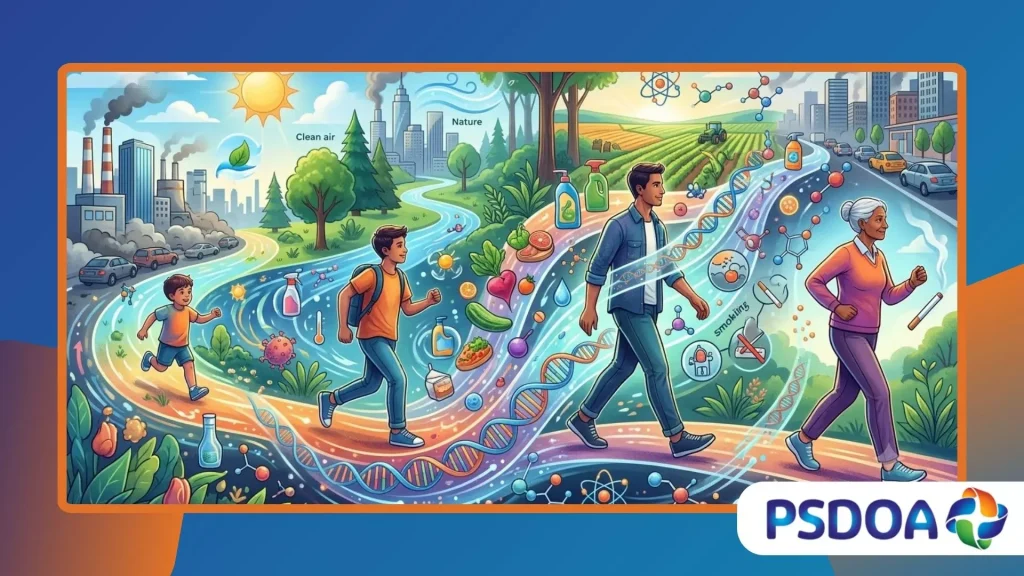
Exposomics measures the totality of environmental exposures experienced by human beings from conception onwards, transforming modern medical research.
Anuncios
Genetic code dictates our baseline vulnerabilities, yet external factors drive eighty percent of chronic non-communicable illnesses globally.
Modern clinical investigators utilize advanced mass spectrometry to map chemical residues, lifestyle habits, and airborne pollutants simultaneously.
This comprehensive paradigm shift moves medicine beyond simple genetic determinism into dynamic environmental interaction tracking.
Researchers track volatile organic compounds, dietary intake biomarkers, psychosocial stressors, and climate variables within single patient blood samples.
Anuncios
Imagine your body acting as an ultra-sensitive black box recorder that logs every atmospheric molecule inhaled.
Decoding this biological ledger reveals hidden pathways connecting everyday urban existence to long-term chronic pathology.
Are you prepared to discover how your surrounding environment silently shapes your biological destiny?
Navigating Lifetime Environmental Impact
- Mapping external chemical exposures alongside internal biological response markers.
- Evaluating chronic disease triggers through advanced high-resolution mass spectrometry.
- Understanding lifestyle and atmospheric pollutant interactions across urban populations.
- Translating environmental biomarker data into personalized preventative medical care.
What Defines the Comprehensive Scope of Environmental Tracking?
Exposomics encompasses three overlapping domains: the general external environment, the specific external environment, and internal biological activity.
General external factors include urban air pollution, regional climate shifts, and socioeconomic neighborhood stressors affecting daily life.
Specific external influences cover occupational hazards, dietary choices, tobacco consumption, and pharmaceutical drug intake patterns.
Think of these interacting domains as concentric ripples expanding outward from an individual’s daily lifestyle core.
Data compiled by the World Health Organization indicates that environmental factors contribute to nearly twenty-four percent of all global deaths.
Tracking these cumulative exposures requires immense computational power and sophisticated biometric data-logging wearables deployed across clinical cohorts.
Researchers capture real-time chemical signatures that reveal why genetically identical twins experience entirely different health outcomes.
Environmental science now matches genomics in predictive clinical precision and preventative healthcare capability.
How Do General Atmospheric Factors Impact Health?
Regional air quality variations deliver microscopic particulate matter directly into human respiratory tracts every single day.
These toxic particles cross alveolar membranes, entering systemic circulation and triggering chronic low-grade vascular inflammation. Chronic exposure accelerates cardiovascular degeneration long before clinical symptoms appear.
++ ¿Por qué algunos científicos intentan simular un universo en miniatura?
Why Are Specific Lifestyle Exposures Critical?
Dietary choices introduce complex pesticide residues, food additives, and nutritional metabolites into human digestive tracts continuously.
These ingested compounds interact directly with gut microbiota, altering metabolic pathways and systemic immune responses. Personal habits dictate biochemical vulnerability far more than inherited traits alone.
Lea también: Magnetorrecepción: El sentido oculto que los humanos podrían poseer
What Role Do Internal Biological Markers Play?
Internal bodily processes transform external chemical intrusions through metabolic enzymes, oxidative stress reactions, and hormonal shifts.
Measuring these internal transformation byproducts provides an accurate ledger of total environmental burden over time. Biological samples tell the true story of lifetime chemical interaction.
How Do Advanced Technologies Measure Chemical Burdens?
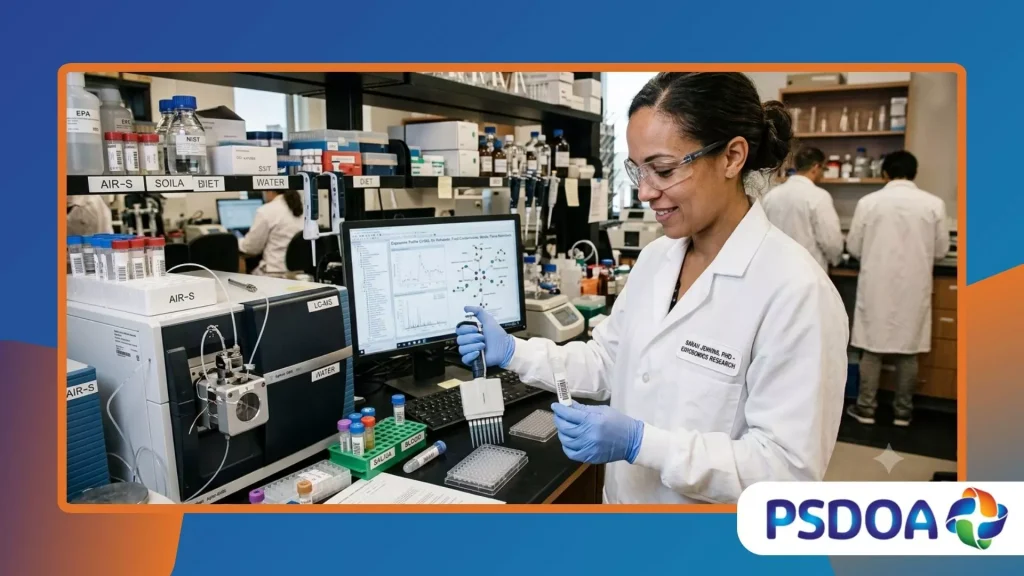
Exposomics relies heavily on high-throughput analytical chemistry platforms to detect thousands of chemical traces in minute blood volumes.
Liquid chromatography paired with tandem mass spectrometry identifies trace toxins down to parts-per-trillion concentration levels.
Consider this technology as an ultra-precise molecular microscope capable of reading an environmental fingerprint.
Clinical laboratories process complex biological samples within hours, generating comprehensive lifetime exposure profiles automatically.
Bioinformatics software integrates massive datasets, matching chemical peaks against global reference libraries to identify unknown environmental contaminants.
Researchers track how heavy metals, plasticizers, and industrial solvents accumulate inside human adipose tissues across decades.
This technological leap allows epidemiologists to establish causal links between specific pollutants and chronic disease spikes. Precision measurement turns invisible environmental hazards into quantifiable clinical data points.
Leer más: Cronobiología: Cómo los relojes biológicos influyen en el rendimiento humano
What Is High-Resolution Mass Spectrometry?
Mass spectrometry separates chemical ions based on their precise mass-to-charge ratios within intense magnetic fields.
This analytical technique resolves complex biological mixtures without requiring prior knowledge of specific target compounds.
Investigators discover unexpected chemical exposures hiding inside standard clinical blood panels easily.
How Do Wearable Sensors Capture Real-Time Data?
Compact electrochemical sensors worn on wrists track individual exposure to nitrogen dioxide and ultraviolet radiation continuously.
These devices sync with smartphones, logging exact geographic coordinates alongside real-time environmental toxicity spikes. Real-time tracking bridges the gap between laboratory tests and daily life.
Why Is Bioinformatics Essential for Data Analysis?
Advanced machine learning algorithms process terabytes of chemical biomarker data to isolate significant disease correlations.
Without automated computational pipelines, human researchers could never parse millions of interacting exposure variables. Data science transforms raw chemical signatures into actionable medical insights.
Why Is This Paradigm Shift Transforming Modern Medicine?
Exposomics revolutionizes disease prevention by identifying environmental disease drivers long before irreversible organ damage occurs.
Traditional medicine treats chronic ailments after symptoms manifest, whereas environmental tracking intercepts pathology during its silent developmental phase.
Imagine servicing an engine before warning lights flash on your dashboard, preventing catastrophic mechanical failure entirely.
Healthcare systems worldwide are shifting capital toward predictive environmental health infrastructure to reduce soaring costs.
Clinical trials now incorporate comprehensive exposure metrics to evaluate how environmental mitigation improves treatment response rates.
When physicians understand a patient’s complete chemical and lifestyle burden, therapeutic interventions become hyper-personalized.
This holistic medical model bridges the historical gap between public health policy and individual patient care. Environmental awareness becomes the ultimate prescription for longevity and wellness.
How Does Early Detection Prevent Chronic Illness?
Identifying elevated heavy metal accumulation early allows clinicians to implement targeted dietary detox protocols immediately.
Removing toxic burdens halts autoimmune inflammation cascades before chronic tissue scarring sets in. Proactive intervention preserves long-term organ function effectively.
What Impact Does This Have on Public Policy?
Empirical exposure data provides municipal governments with undeniable proof regarding industrial pollution hotspots and health hazards.
Lawmakers utilize precise biochemical mapping to draft stricter environmental protection regulations and zoning laws. Science directly drives legislative action for safer communities.
Can Personalized Medicine Adapt to Environmental Data?
Modern treatment protocols integrate individual exposure profiles to tailor pharmaceutical dosages and minimize adverse drug reactions.
Understanding environmental enzyme inhibitors prevents unexpected toxicity issues in complex multi-drug regimens. Tailored care respects the unique chemical history of every patient.
Environmental Science Methodologies Matrix
The structured table below contrasts traditional genetic epidemiology with modern environmental tracking methodologies.
| Research Dimension | Genetic Epidemiology | Environmental Tracking Approach | Primary Clinical Benefit |
| Focus Variable | Inherited DNA sequence variations | Lifetime chemical and lifestyle exposures | Identifies modifiable disease triggers |
| Technology Used | Genome-wide association arrays | Mass spectrometry and wearable sensors | Captures real-time environmental impact |
| Modifiability | Fixed biological baseline | Highly dynamic and alterable | Enables proactive preventative care |
Embracing Lifetime Environmental Awareness
Comprensión Exposomics empowers individuals and healthcare providers to take decisive control over environmental health risks.
By mapping chemical burdens and lifestyle factors, we pave the way for a truly preventative medical future.
True wellness requires looking beyond our inherited code to nurture the living environment we inhabit daily. Take time this week to evaluate your immediate surroundings and daily chemical exposures.
What environmental adjustments will you make today to safeguard your long-term health? Share your experience in the comments below!
Preguntas frecuentes
Can individual exposure profiles change over time?
Yes, exposure profiles remain highly dynamic throughout a person’s lifespan as residential locations, occupations, and dietary habits evolve.
Regular clinical monitoring can track how lifestyle modifications successfully reduce internal chemical burdens over periods of months or years.
How do researchers protect patient privacy during data collection?
Clinical investigators anonymize all biological samples and sensor data streams, stripping personal identifiers before uploading information to secure research servers.
Strict regulatory frameworks ensure individual health data remains confidential and protected against unauthorized commercial access.
Is environmental tracking available through standard doctors?
While advanced profiling currently operates primarily within specialized research cohorts and clinical trials, commercial applications are expanding rapidly.
Primary care physicians anticipate integrating basic exposure assessments into routine annual wellness exams within the coming decade.
