
Pangenome Project: The Discovery Expanding Human Genetics
Modern genetic research has long relied on a standard reference genome derived primarily from a small handful of individuals, which inherently left out millions of base pairs of genomic variation found globally.
Anúncios
By sequencing genomes from diverse populations worldwide, scientists are unlocking structural variants, insertions, and deletions that were previously invisible to medical science.
This comprehensive approach ensures that genomic medicine becomes truly inclusive and representative of global ancestry rather than favoring a narrow demographic slice.
In this exploration, we examine the structural evolution of genetic reference frameworks, the technological breakthroughs driving multi-genome sequencing, and the profound clinical implications for personalized medicine.
We also analyze the computational hurdles involved in mapping complex genomic graphs, review comparative genomic metrics through a structured data table, and address common inquiries regarding the future of clinical genetics.
What is the Human Pangenome Reference?
How Does the Pangenome Differ from Older Genomes?
The traditional reference genome acted like a single textbook for the entire human species, forcing every genetic variation to be mapped against one restricted template.
This limitation meant that unique genomic sequences present in African, Asian, Indigenous, and other diverse populations were frequently misaligned or completely ignored during diagnostic sequencing runs.
Consequently, clinical genomics suffered from an invisible bias that reduced diagnostic accuracy for non-European ancestry groups.
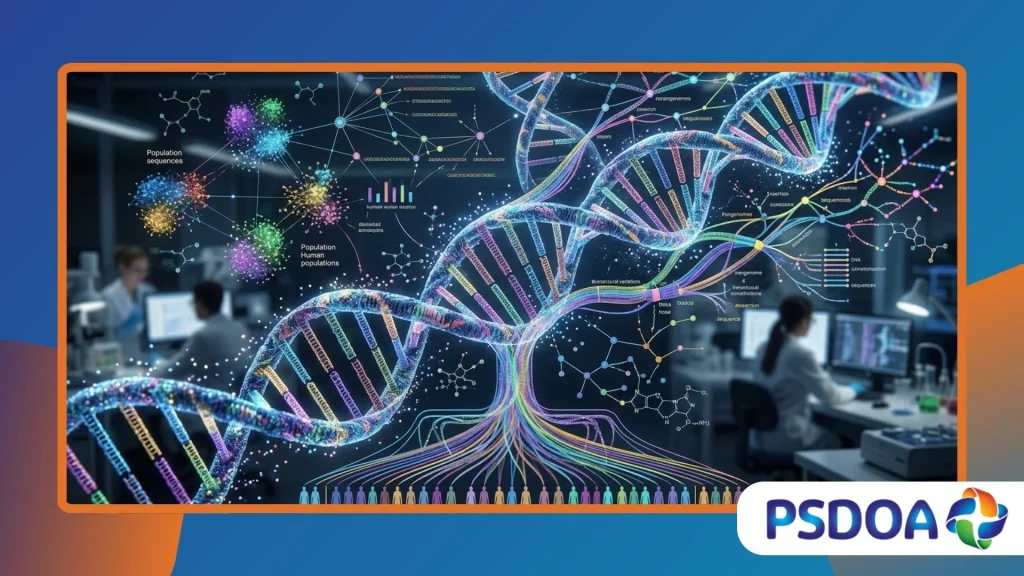
By contrast, the Pangenome Project utilizes a graph-based framework capable of representing multiple divergent alleles and complex structural variations simultaneously.
Instead of a linear string of letters, this new reference resembles an interconnected transit map where different paths represent alternative genomic sequences found across human populations.
Researchers can now accurately capture large insertions, deletions, and structural rearrangements that linear references completely missed.
This structural upgrade fundamentally transforms how geneticists interpret disease-causing variants and understand human evolutionary history.
++ A New Sense? The Discovery of Human Magnetoreception
Why Was This New Project Developed?
Genetic researchers quickly realized that relying on a single reference genome created severe blind spots in clinical diagnostics and association studies for complex diseases.
Millions of base pairs of human DNA were completely missing from the original reference, leaving a significant gap in our understanding of human genetic diversity.
Addressing these disparities required an ambitious international consortium dedicated to sequencing dozens of diverse genomes with unprecedented accuracy.
Furthermore, advancements in long-read sequencing technologies finally made it financially and technically feasible to assemble complex genomic regions without fragmentation errors.
The Human Pangenome Reference Consortium set out to bridge these gaps by constructing a high-quality draft pangenome from globally diverse individuals.
This initiative directly tackles longstanding health inequities in genomic research, ensuring that future therapeutics and diagnostic tools serve all populations equally.
Have you ever wondered how many undiscovered genetic variants might be lurking in underrepresented populations?
How Does Pangenomic Sequencing Work?
What Technologies Enable High-Accuracy Assembly?
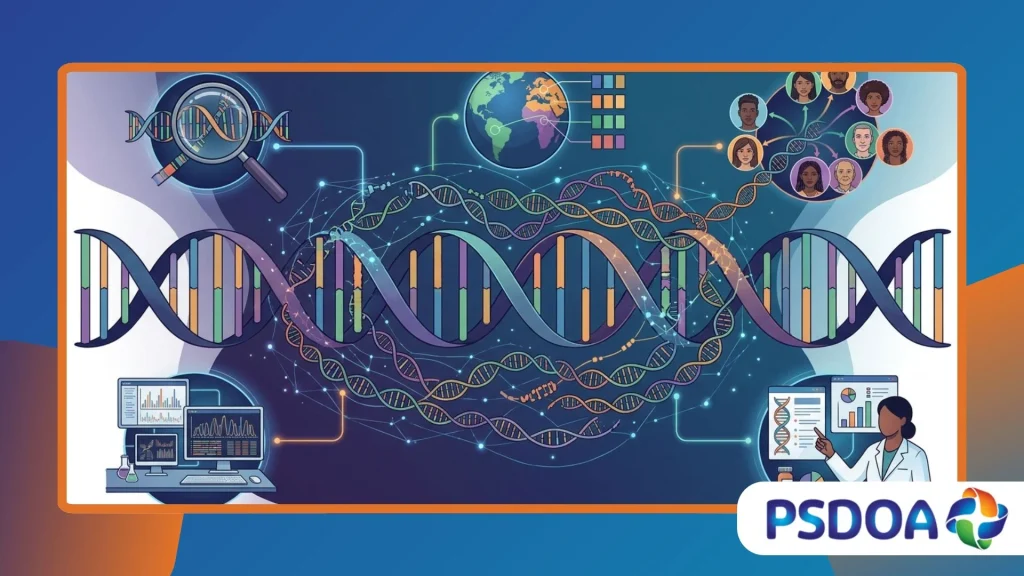
Assembling a modern pangenome requires cutting-edge sequencing platforms capable of reading ultra-long DNA strands without introducing amplification biases or alignment artifacts.
Technologies such as Pacific Biosciences HiFi sequencing and Oxford Nanopore long-read platforms allow scientists to span repetitive genomic regions and complex structural variants with remarkable fidelity.
These long reads act like large puzzle pieces, making it significantly easier to resolve highly homologous regions like the centromeres and the major histocompatibility complex.
In addition to wet-lab sequencing breakthroughs, sophisticated bioinformatics algorithms play a critical role in constructing variation graphs from massive datasets.
Specialized graph genome aligners map short and long reads directly to the pangenome graph, identifying structural differences with exceptional precision.
This synergy between advanced biochemistry and high-performance computing transforms raw sequencing data into robust, accessible reference frameworks for global researchers.
Also read: Magnetoreception: The Hidden Sense Humans May Possess
How Are Diverse Populations Sampled?
Selecting representative samples for the Pangenome Project required careful ethical oversight, community engagement, and rigorous population genetics methodologies.
Consortium researchers partnered with international biobanks and local communities to obtain cell lines from individuals representing diverse geographic regions and ancestral backgrounds.
Every participant provided informed consent, ensuring that genomic stewardship respects cultural sensitivities and promotes equitable benefit sharing.
This careful sampling strategy ensures that the resulting pangenome captures rare structural variants, copy number variations, and single nucleotide polymorphisms unique to specific lineages.
By incorporating these diverse datasets, clinical laboratories can now detect pathogenic mutations in diverse patients that would have appeared normal under the old linear reference.
The resulting genomic inclusivity marks a major milestone in modern biomedical research and public health equity.
What Are the Clinical Implications?
How Does This Improve Disease Diagnosis?
The clinical impact of transitioning to a pangenome-based reference is profound, particularly for diagnosing rare genetic disorders and complex hereditary conditions.
Traditional sequencing pipelines frequently misinterpret structural variants in repetitive or highly variable genomic regions, leading to diagnostic odysseys for affected families.
With the enhanced resolution provided by the Pangenome Project, clinicians can pinpoint pathogenic deletions or insertions that previously evaded detection.
Moreover, pharmacogenomics greatly benefits from this expanded diversity, as drug-metabolizing gene variants often vary substantially across different ancestral groups.
Accurate mapping of cytochrome P450 genes, for instance, ensures safer and more effective drug dosing tailored to an individual’s unique genetic makeup.
This precision medicine approach minimizes adverse drug reactions and maximizes therapeutic efficacy across global populations.
Read more: Chronobiology: How Body Clocks Shape Human Performance
What Role Does It Play in Oncology?
Cancer genomes are notoriously unstable, characterized by somatic mutations, chromosomal rearrangements, and extensive structural variations that mimic and amplify normal genomic diversity.
Comparing tumor genomes against a comprehensive pangenome allows researchers to distinguish between benign ancestral variants and true cancer-driving mutations with unprecedented clarity.
This distinction is vital for identifying novel oncogenic targets and designing personalized immunotherapies tailored to specific tumor profiles.
Furthermore, liquid biopsies and circulating tumor DNA analyses rely heavily on precise alignment to detect minimal residual disease and monitor treatment response over time.
Enhanced reference accuracy reduces false-positive signals caused by alignment errors in repetitive regions of the cancer genome.
As these tools transition from research laboratories to routine oncology clinics, patient outcomes will continue to improve significantly.
Comparative Genomic Metrics Overview
| Reference Framework | Primary Data Source | Structural Representation | Global Diversity Coverage | Clinical Resolution |
| GRCh38 Linear Reference | Single individual / small cohort | Linear string of nucleotides | Low (Eurocentric bias) | Standard / limited for structural variants |
| Pangenome Graph Reference | Multi-ethnic cohorts worldwide | Graph-based interconnected paths | High (Globally representative) | Enhanced / high-resolution structural mapping |
Charting the Future of Human Heredity
The ongoing evolution of genomics demonstrates that our understanding of human biology is only as robust as the reference frameworks we build upon.
Moving away from a monolithic reference genome to an inclusive, graph-based pangenome opens extraordinary avenues for scientific discovery, therapeutic innovation, and equitable healthcare delivery worldwide.
As sequencing costs continue to decline and bioinformatic pipelines mature, pangenomics will soon become the universal standard for clinical and academic research alike.
Embracing this multifaceted genomic landscape requires continuous collaboration among geneticists, ethicists, clinicians, and global communities to ensure responsible data sharing and application.
The discoveries unlocked by this initiative will reverberate across medicine for generations, reshaping our fundamental comprehension of human health and disease susceptibility.
Share your thoughts and experiences regarding the future of personalized genomic medicine in the comments below.
Frequently Asked Questions
What is the primary goal of the Pangenome Project?
The primary goal is to create a comprehensive, multi-genome reference framework that captures global human genetic diversity, replacing the outdated single linear reference genome.
Why was the traditional reference genome considered biased?
The traditional reference genome was derived primarily from a small number of individuals, mostly of European descent, which caused structural variants unique to other populations to be missed or misaligned.
How does a graph-based pangenome work?
A graph-based pangenome represents alternative alleles and structural variations as interconnected paths rather than a single fixed sequence, allowing accurate alignment for diverse genomes.
Will this research impact everyday clinical diagnostics?
Yes, it significantly improves the detection of rare structural variants and pharmacogenetic markers, leading to more accurate diagnoses and personalized treatments for diverse patient populations.
How can researchers access these new genomic resources?
All data assemblies, variation graphs, and related bioinformatics tools generated by the consortium are publicly available through major scientific repositories like the National Center for Biotechnology Information.
